
Why Finding the Right Local Pest Exterminators Matters for Your Home
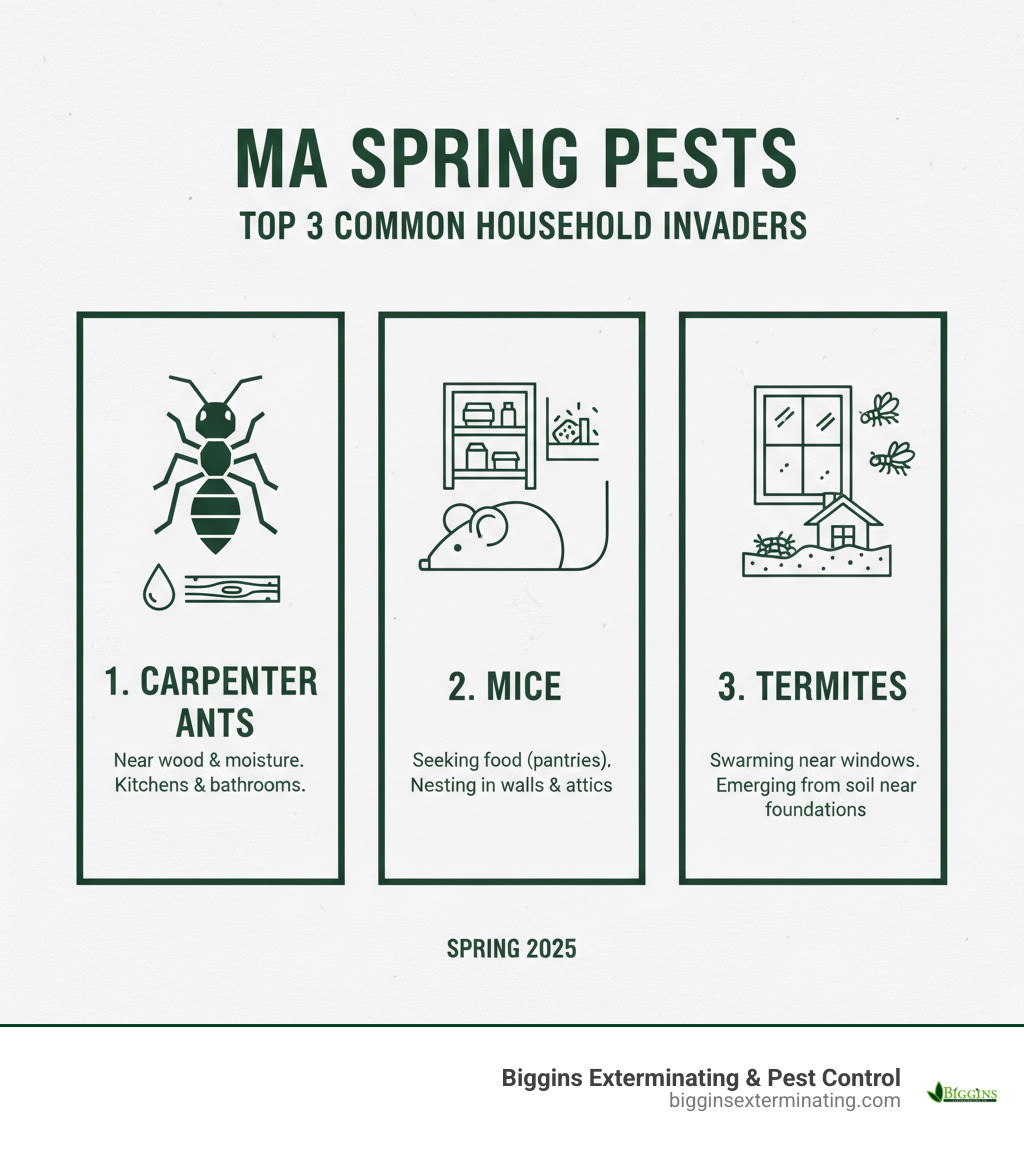
Local pest exterminators are professionals who identify, treat, and prevent pest infestations. As winter gives way to spring in Massachusetts, warmer weather signals the start of peak pest season. Ants invade kitchens, mice seek food, and termites emerge for mating flights, putting your home under siege.
You’re not alone. Approximately 21% of homeowners use pest control services annually. But how do you find a company you can trust? With so many options, it’s hard to know which exterminator will solve your problem without expensive contracts or concerning treatments.
The difference often comes down to local expertise. A company that understands Massachusetts pest behavior and seasonal patterns can create solutions that last.
Finding a Local Exterminator – Quick Guide:
- Verify Licensing & Insurance – Ensure they’re state-licensed and fully insured.
- Check Local Experience – Look for companies familiar with Massachusetts pests.
- Read Recent Reviews – Check customer testimonials and ratings.
- Ask About Guarantees – Reputable companies stand behind their work.
- Get Multiple Quotes – Compare services, not just prices.
- Avoid Long Contracts – Choose companies that don’t lock you in.
I’m Stephen Biggins of Biggins Exterminating Co., founded by my father in 1982. For over four decades, we’ve served Wilmington and surrounding communities, learning that the right local pest exterminators provide lasting peace of mind, not just a quick fix.
Local pest exterminators helpful reading:
Recognizing the Enemy: Common Pests and Telltale Signs of Infestation
After 40 years in this business, I know that pest identification is where most homeowners get stuck. You hear scratching in the walls or see tiny black dots on the counter, but what are you dealing with? Pests aren’t just annoying; they pose real health risks and can cause serious property damage. A mouse chewing wires can start a fire, and termites can compromise your home’s structure. Understanding the enemy is the first step to protecting your home.

For a deeper dive, see our guide on The Most Common Pests Found in Massachusetts and How to Prevent Them.
Common Pests in Our Region
Seasonal pest activity follows predictable patterns. Knowing when to expect certain visitors helps you stay ahead.
- Ants: Usually the first invaders of spring, looking for food and water. We see everything from tiny pavement ants to wood-damaging carpenter ants.
- Spiders: Become more active as temperatures rise. Most are harmless, but some dangerous species exist in Massachusetts.
- Rodents: Mice and rats are year-round residents, but they venture out more boldly in spring. They carry diseases and their gnawing on wires causes house fires.
- Termites: Spring is prime swarming season. These silent destroyers can eat your home’s structure for years before you notice.
- Stinging Insects: Wasps and hornets start building nests in spring under eaves, in attics, or in wall voids.
- Cockroaches: Thrive in spring’s warmth and humidity, contaminating food and spreading bacteria.
- Bed Bugs: Not seasonal, they travel home with you from hotels or public transport and are notoriously hard to eliminate.
Learning about the Lifecycle and Behavior of Pests in Massachusetts helps you predict their arrival.
Obvious Signs You Have a Pest Problem
These signs should prompt a call to local pest exterminators:
- Droppings: Mouse droppings look like dark rice grains; rat droppings are larger. Cockroach droppings resemble ground pepper.
- Gnaw marks: Fresh marks on food packaging, wood, or wires are a clear sign of rodent activity.
- Nests: Rodents use shredded paper and fabric to build nests in hidden spots. Wasp nests hang from eaves.
- Visible pests: Seeing nocturnal pests like rodents or cockroaches during the day often indicates a large infestation.
- Strange noises: Scratching, scurrying, or buzzing in walls or ceilings usually means rodents or stinging insects.
- Damaged wood: Sagging floors, hollow-sounding wood, or mud tubes on your foundation are classic signs of termites.
Our guide on Signs That You Have a Pest Infestation covers these in more detail.
Subtle Clues You Might Be Overlooking
Some signs are easy to miss:
- Unusual smells: A musty, stale odor can mean rodent urine, while an oily smell can indicate cockroaches.
- Grease marks: Dirty smudges along baseboards are from rodents rubbing against surfaces on their regular paths.
- Shed skins or wings: Discarded wings near windowsills can indicate a termite or ant swarm.
- Pet behavior changes: A dog or cat suddenly fixated on a wall or baseboard may be hearing or smelling pests you can’t detect.
- Sawdust-like frass: Fine powder near wooden structures could be from carpenter ants or termites.
These subtle signs are why we recommend learning How to Tell If You Have Termites. Early detection can save you thousands.
DIY vs. Professional: When to Call Local Pest Exterminators
When you see an ant trail, you might be tempted to grab a can of store-bought spray. Sometimes that works. But other times, a DIY approach can turn a small problem into a nightmare. I’ve seen homeowners battle what they thought were simple ants, only to find carpenter ants had caused thousands in structural damage. Understanding when to DIY and when to call local pest exterminators can save you time, money, and frustration.
DIY has its place, but it also has risks, which we cover in The Dangers of DIY Pest Control in Massachusetts.
| Feature | DIY Pest Control | Professional Extermination |
|---|---|---|
| Effectiveness | Limited, often addresses symptoms not root cause | Targeted, comprehensive, long-term solutions |
| Cost | Low initial outlay, but can be higher if it fails | Higher upfront, but often more cost-effective long-term |
| Safety | Risk of improper chemical use, exposure to pests | Trained technicians use safe, approved methods |
| Time | Time-consuming research, application, and monitoring | Efficient, quick identification and treatment |
| Guarantee | None | Often comes with warranties and follow-up services |

Scenarios for DIY Pest Control
A few ants on the counter or a single spider can often be handled yourself. The best DIY approach is prevention: sealing cracks, keeping your kitchen clean, and storing food properly are all smart ways to make your home less attractive to pests. For minor, non-damaging pests that aren’t multiplying, a DIY solution might be enough.
When Professional Intervention is Non-Negotiable
Some pest problems are too dangerous for DIY methods and demand professional expertise.
- Wood-destroying insects: Termites and carpenter ants can cause severe structural damage. Professionals have the tools to locate hidden colonies and apply effective treatments that store-bought products can’t match.
- Bed bug infestations: These pests are notoriously difficult to eliminate. They hide in tiny crevices, reproduce quickly, and resist many over-the-counter chemicals. Professional heat or chemical treatments are usually required.
- Rodent infestations: If you see one mouse, there are likely more. Rodents carry diseases and chew through wires. Our article asks Should I Call an Exterminator If I See a Mouse, and the answer is almost always yes.
- Stinging insect nests: Removing nests of wasps, hornets, or yellow jackets is dangerous. They become aggressive when threatened, and stings can be life-threatening.
- Health-risk pests: Cockroaches and rats transmit bacteria and viruses. Professional treatment is needed to ensure complete eradication and protect your family’s health.
- When DIY methods fail: If you’ve been fighting a pest problem for weeks with no success, it’s time to call in the pros. You’re likely dealing with a more complex issue than it appears.
A Look Inside the World of Professional Pest Control
When you call local pest exterminators, you’re partnering with trained professionals who use an approach called Integrated Pest Management (IPM). This focuses on long-term solutions with minimal environmental impact. After 40 years, we know why The Importance of Hiring a Professional Pest Control Service in Massachusetts is so clear.
What Services Do Local Pest Extermination Services Offer?
As a family-owned business serving Massachusetts since 1982, we offer comprehensive services custom to your situation.
- General Pest Control: Handles common spring invaders like ants, spiders, and cockroaches.
- Rodent Control Services: We identify and seal entry points to keep mice and rats out for good.
- Termite Inspection Services: Spring is prime time for inspections to prevent costly structural damage.
- Ant Exterminator: We distinguish between nuisance ants and destructive carpenter ants.
- Wasp and Hornet Removal: We safely remove nests before they become a dangerous, aggressive colony.
- Mosquito Control: We target breeding areas to reduce populations so you can enjoy your yard.
We serve residential and commercial properties throughout Andover, Bedford, Billerica, Burlington, Lexington, North Reading, Tewksbury, Wilmington, and Woburn, MA, with both Commercial Pest Control and Residential Pest Control solutions.
The Extermination Process: From Inspection to a Pest-Free Home
Professional pest control is a systematic process:
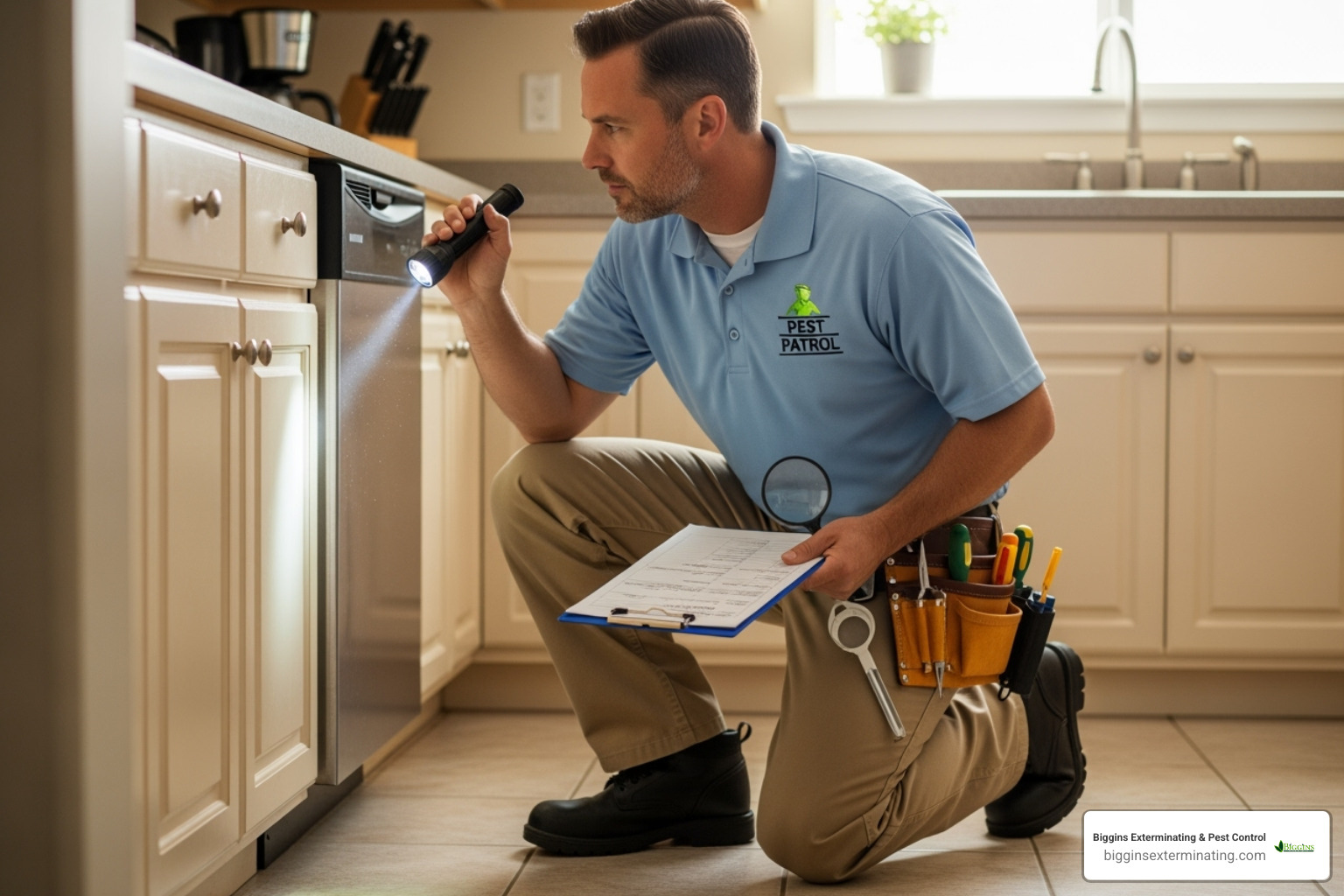
- Detailed Inspection: We examine your property inside and out to find pests and entry points. Our Pest Control Inspection Complete Guide explains our process.
- Accurate Pest Identification: Identifying the exact pest is critical for choosing the right treatment.
- Customized Treatment Plan: We create a strategy based on the pest, infestation severity, and your property’s needs.
- Application of Treatments: We use EPA-approved products and methods, applied according to strict safety protocols.
- Exclusion Work: We seal gaps and cracks to prevent future pest entry.
- Follow-up Visits: We schedule return visits to break the pest life cycle and ensure the problem is solved.
Understanding Pest Control Costs and Eco-Friendly Alternatives
Pest control costs vary. According to internet data, one-time treatments can range from $100 to $500, with severe infestations or specialized services costing $1,500 or more. Recurring plans average $50 to $200+ per month. Please remember, these are average costs based on internet data and not actual costs for Biggins Exterminating services.
Factors like pest type, infestation severity, and property size influence the price. For more details, visit our Pest Control Services Cost page.
We also offer Green Pest Control options. Our core philosophy is Integrated Pest Management (IPM), which prioritizes non-chemical solutions first. When pesticides are needed, we use low-toxicity products and targeted bait systems to ensure safety.
Choosing Your Champion: How to Select a Reputable Company
Finding the right local pest exterminators is like choosing a family doctor—you want someone knowledgeable and trustworthy. After 40 years serving Massachusetts communities like Burlington and Woburn, we know what separates a company that just shows up from one that truly solves your problem. As spring brings a surge of pest activity, it’s important to do your homework before you hire.

For more guidance, see our article on How to Choose the Right Pest Control Service for Your Needs in Massachusetts.
Your Checklist for Finding the Best Local Pest Exterminators
- Check for state licensing: In Massachusetts, all pest control companies and technicians must be licensed. Ask to see proof.
- Verify their insurance: Adequate liability insurance protects you if something goes wrong. A reputable company will happily provide proof.
- Read recent customer reviews: Look beyond star ratings to see what homeowners are saying about professionalism and results. See our Customer Reviews to learn what our clients think.
- Ask about experience with your specific pest: You want an expert on your particular enemy, whether it’s rodents, bed bugs, or termites.
- Look for professional affiliations: Certifications like QualityPro show a company’s commitment to high standards in business operations, training, and environmental stewardship. You can Learn More about QualityPro certification.
- Check their Better Business Bureau rating: An A+ rating indicates a commitment to customer satisfaction.
Essential Questions to Ask Before You Hire
Before signing anything, ask these questions:
- “What is your proposed treatment plan for my specific pest problem?” They should explain their strategy in detail.
- “Are the products you use safe for my children and pets?” A reputable exterminator prioritizes safety and can explain any necessary precautions.
- “Do you offer a guarantee on your services?” A strong guarantee shows confidence. We offer warranties that mean if pests come back, so do we—at no extra cost.
- “Are your technicians licensed, certified, and trained?” You want professionals who understand pest biology and safety protocols.
- “How long have you been in business?” Longevity often speaks to reliability. We’ve been serving Massachusetts since 1982.
- “Do I need to sign a contract?” Some companies lock you into long-term contracts. We offer no-contract services for your flexibility.
The Importance of Local Expertise and Guarantees
Choosing local pest exterminators who are from your area makes a difference. As a family-owned business rooted in Massachusetts, we understand the unique pest challenges here.
Local expertise means knowing the specific pest species and seasonal behaviors common to towns like Andover and Lexington. This knowledge comes from years of hands-on experience. It also means faster response times when you have an urgent problem.
Most importantly, community trust matters. As your neighbors, our reputation depends on treating you fairly. We stand behind our work with solid guarantees. If pests return during the warranty period, we return too. This accountability from Local Pest Control Experts provides the peace of mind you deserve.
Frequently Asked Questions about Local Pest Exterminators
We know you have questions when inviting someone into your home. After four decades serving Massachusetts families, we’ve heard them all and are happy to provide clear answers.
How do exterminators ensure the safety of my children and pets?
Your family’s safety is our top priority. We use targeted treatments that go precisely where pests are, not throughout your living space. We prioritize low-toxicity products and rely on tamper-resistant bait stations for rodents and insects, keeping treatments safely away from curious children and pets.
For some treatments, we may advise on temporary relocation for a few hours and will always explain re-entry times clearly. The goal is effective pest control without compromising your family’s wellbeing. Learn more on our page about Safe Pest Control for Pets.
What can I do to prevent pests from returning?
Long-term prevention is a team effort. Here’s what you can do:
- Seal entry points: Look for cracks in the foundation and gaps around pipes or windows. A mouse can fit through a dime-sized hole, so seal them with caulk or steel wool.
- Remove food and water sources: Store food in airtight containers, clean up crumbs, and fix leaky faucets. Don’t leave pet food out overnight.
- Maintain your landscaping: Keep shrubs and tree branches trimmed back from your home. Clear leaves and debris from around your foundation.
- Regular cleaning: Vacuum regularly, especially in corners and under furniture.
- Store firewood at least 20 feet from your house and off the ground.
These habits dramatically reduce the chance of a repeat infestation. Many tips in our Winter Pest Control Checklist work year-round.
How often should I schedule professional pest control?
The honest answer is: it depends. A one-time treatment might be enough for an isolated issue like a single wasp nest.
For most homeowners, quarterly or bi-annual plans are best for prevention. These programs address each season’s specific challenges, from spring ants to fall rodents. The right frequency depends on pest pressure in your area, your home’s location, and past issues.
Some pests, like mosquitoes, require seasonal treatments, while others, like termites, need annual inspections due to their destructive nature. Regular maintenance prevents small problems from becoming expensive disasters. We can recommend a schedule that fits your home and budget. Learn about The Benefits of Regular Pest Control Maintenance in Massachusetts.
Conclusion: Your Partner in a Pest-Free Home
As spring arrives in Massachusetts, so does peak pest season. This guide has walked you through recognizing pests, knowing when to call for help, and choosing trustworthy local pest exterminators.
The key takeaway is to act quickly. A small problem can quickly escalate into costly damage or a health concern. Waiting only makes the problem worse. This is where a reliable local partner becomes invaluable—a company that knows Massachusetts pests and can solve your problem right the first time.
At Biggins Exterminating & Pest Control, we’ve protected homes throughout Wilmington, Andover, Lexington, and surrounding areas for over 40 years. As a family-owned business, we’re your neighbors, and we take pride in protecting your home.
We offer comprehensive pest control without locking you into long-term contracts. You get four decades of experience backed by strong warranties and a commitment to your satisfaction.
Spring is for enjoying your home, not worrying about pests. Let us handle them so you can focus on what matters.
Ready to reclaim your peace of mind? Contact us today for a free estimate and a pest-free peace of mind. We’re here to help.
