
Why Bee Removal Reading MA Requires Professional Expertise
Bee removal Reading MA is a critical service for homeowners facing stinging insect problems. If you’re dealing with bees, wasps, or hornets on your property, here’s what you need to know:
Quick Answer: Professional Bee Removal Services in Reading, MA
- Honey Bee Swarms: Call a professional or beekeeper immediately. Do not spray or disturb them.
- Established Nests: Professional removal is essential, especially if located in walls, eaves, or other hard-to-reach areas.
- Emergency Situations: Same-day and 24/7 emergency service is available.
- Live Relocation: Many services offer pesticide-free honey bee relocation to preserve these vital pollinators.
- Cost Range: Simple swarm removal starts around $150-$500; structural nest removal can range from $400-$1,500+ (these are average costs based on internet data).
As spring temperatures rise in Massachusetts, stinging insects become more active. Honey bees swarm to establish new colonies, while wasps and hornets build nests under eaves, in attics, and inside wall voids. Yellow jackets, one of the most aggressive species, often nest underground.
The stakes are high when dealing with stinging insects. Industry data shows that 80% of bee colonies in Massachusetts died during one recent winter, making honey bee preservation more important than ever. Meanwhile, yellow jackets cause more emergency room visits for allergic reactions than any other stinging insect.
Proper identification is crucial. While honey bees are docile pollinators, carpenter bees drill destructive holes in wood, and bald-faced hornets are highly aggressive. Attempting DIY removal without proper identification and equipment is dangerous and can drive insects deeper into your home’s structure.
I’m Stephen Biggins, owner of Biggins Exterminating & Pest Control. Since 1982, our family has helped Reading and North Reading homeowners safely handle bee removal Reading MA situations with professional service backed by our warranty. In this guide, I’ll explain how to identify, remove, and prevent stinging insect problems.
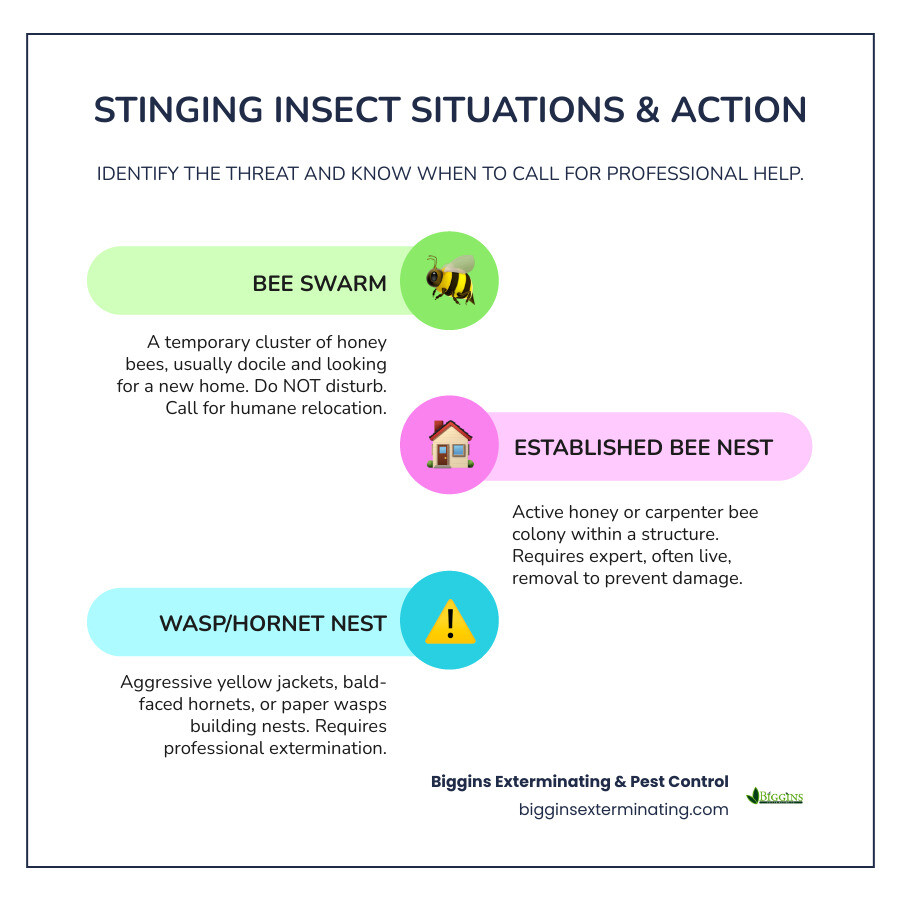
Identifying Common Stinging Insects in Reading, MA
Before tackling a stinging insect problem, you need to know what you’re dealing with. Misidentification can lead to ineffective or dangerous removal attempts. In my 40+ years in this business, I’ve seen homeowners mistake aggressive yellow jackets for gentle honey bees, with painful results.
Understanding the key differences between bees and wasps is your first step. Bees are typically hairy and stout, feeding on pollen and nectar. Wasps and hornets are smooth and slender carnivores, attracted to proteins and sugars at your barbecue. Bees build with wax, while wasps create paper-like nests. A crucial difference: honey bees sting once and die, making them more cautious. Wasps and hornets can sting multiple times and are often far more aggressive.
For visual aids to help with identification, you can see pictures of a honeybee, bees and wasps by clicking on this link here.
Honey Bees and Carpenter Bees
Honey bees are vital pollinators that deserve protection. In spring, you might see a honey bee swarm—a large, buzzing cluster of bees. While alarming, swarming bees are typically docile as they have no nest to defend. Swarming is how they reproduce, and with bee populations struggling, relocating these swarms is crucial for their survival. We work with beekeepers to safely relocate honey bees without pesticides.
Carpenter bees, however, can cause serious damage. Often mistaken for bumble bees, they have a shiny, hairless black abdomen (bumble bees are fuzzy all over). Carpenter bees drill perfectly round, 3/8-inch holes into wooden structures like eaves, decks, and siding. These tunnels weaken the wood and attract woodpeckers, causing further damage. If you see sawdust below round holes in wood, you likely have carpenter bees. For more information about how we handle wood-destroying insects, you can visit our page on carpenter ant services.
Wasps and Hornets
Wasps and hornets are generally more aggressive than bees, and their presence is a legitimate concern. Their colonies peak in late summer, increasing the chance of unwanted encounters.
- Yellow Jackets: These slender, bright yellow and black insects are notoriously aggressive. They often nest underground or inside wall voids. Disturbing a nest can trigger a swarm attack. Do NOT seal a hole if you see them entering your siding; this can drive them inside your home. Yellow jackets cause more ER visits for allergic reactions than any other stinging insect.
- Bald-Faced Hornets: A type of yellow jacket, these are large, black and white insects that build football-shaped paper nests high in trees or on homes. They are incredibly defensive and will chase threats, stinging repeatedly.
- Paper Wasps: Brown with yellow or reddish markings, they build open, umbrella-shaped nests under eaves and on porch ceilings. They will sting if their nest is threatened.
- European Hornets: The largest local hornet, these are brown and yellow and build nests in hollow trees or wall voids. Uniquely, they are active at night and attracted to lights.
Dealing with these aggressive species requires professional expertise. Learn more on our hornet and wasp removal services page.
Signs of an Infestation and When to Call for Help
A few bees in the garden is normal, but a steady stream of insects entering your home is a problem. Knowing when to call for professional bee removal Reading MA help can prevent danger and property damage. Catching a nest early in spring is far easier and less expensive to handle than a large colony in late summer.
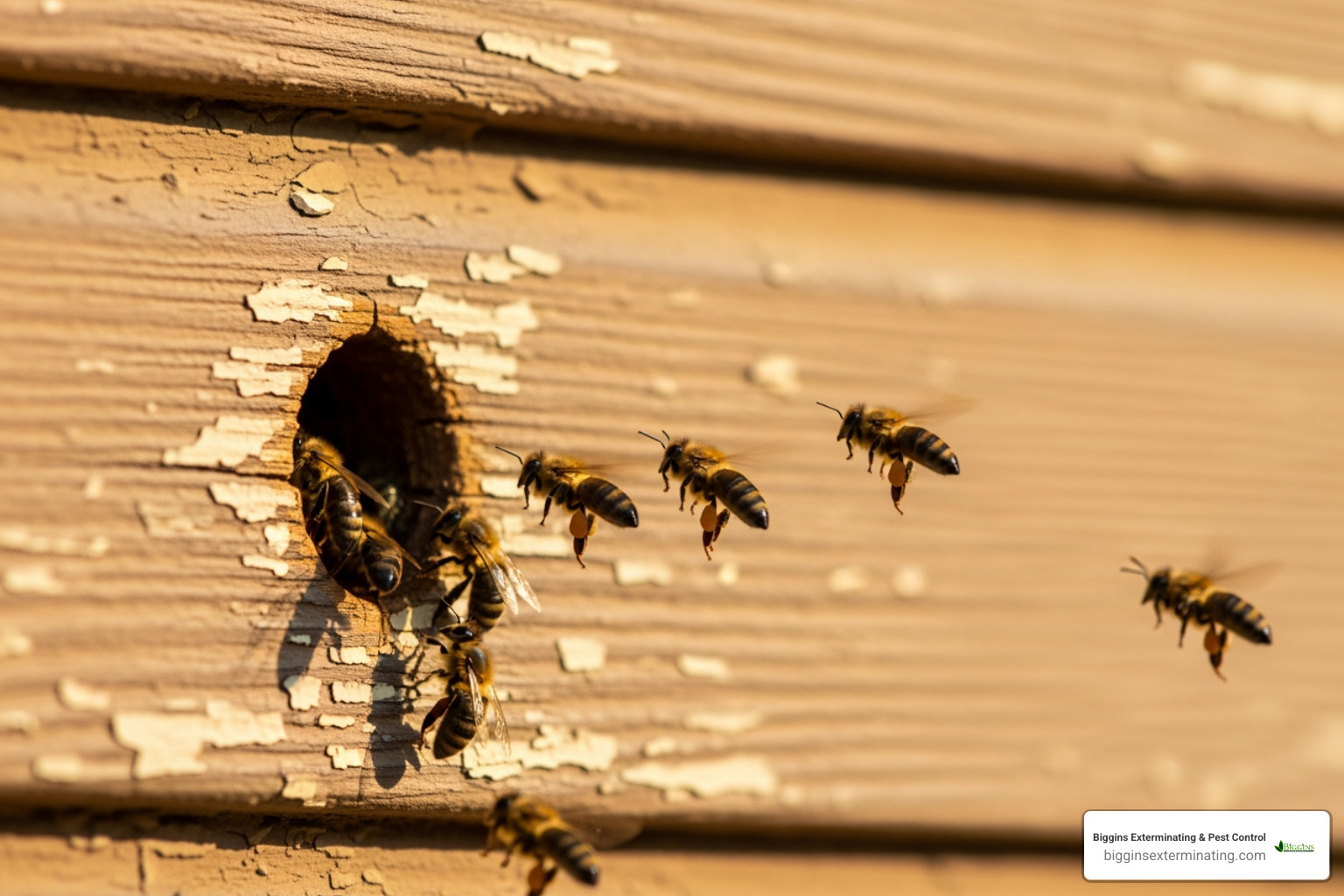
Obvious Signs You Have a Nest
- High Insect Traffic: A constant flow of bees or wasps to and from a single spot on your siding, eaves, or lawn indicates a nest.
- Visible Nests: Look for gray, football-shaped hornet nests or open, umbrella-shaped paper wasp nests under eaves and overhangs. Check under decks for the round holes of carpenter bees, often with sawdust below.
- Ground Activity: Yellow jackets often nest underground. Be cautious of insects flying in and out of a hole in your lawn, especially when doing yard work.
- Buzzing in Walls: A persistent humming sound from within your walls on warm days is a major red flag for a hidden colony.
Why DIY Bee Removal in Reading MA is Risky
Attempting to remove a nest yourself is dangerous. Wasps and hornets can sting multiple times, and even a single sting can cause a life-threatening allergic reaction (anaphylactic shock). Multiple stings are dangerous even for those without allergies.
Common DIY mistakes create bigger problems:
- Sealing Nests in Walls: Blocking the entrance for yellow jackets in a wall void will force them to find another way out—often into your living space through light fixtures or outlets.
- Incomplete Removal: Killing a honey bee colony in a wall leaves behind pounds of honeycomb. This can melt, seep through drywall, cause stains, and attract other pests like ants and rodents, leading to significant property damage.
Without proper equipment and expertise, DIY removal puts your family and home at risk. This is a job best left to professionals.
The Professional Bee Removal Reading MA Process: What to Expect
When you call us for bee removal Reading MA, you get a comprehensive process refined over 40 years to ensure your family’s safety, solve the root problem, and prevent future infestations.

Step 1: Inspection and Identification
Our process begins with a thorough investigation. A technician will survey your property to locate the nest, identify the insect species, assess accessibility, and evaluate any risks to your family and home. Is it a honey bee swarm that needs relocation or an aggressive yellow jacket colony requiring extermination? Is the nest near a doorway or high up in a tree? This critical first step determines our entire strategy for safe and effective removal.
Step 2: Safe Removal and Humane Relocation
With a clear plan, we proceed with removal. Timing is key; we often treat nests in the early morning or late evening when the insects are less active and the entire colony is present. This ensures a complete treatment in one visit.
- For Honey Bees: We prioritize their preservation. We work with local beekeepers to perform pesticide-free live relocation, moving swarms and colonies to apiaries where they can thrive.
- For Wasps and Hornets: Your safety is paramount. Our licensed technicians use professional-grade protective gear and targeted treatments to eliminate aggressive species like yellow jackets, bald-faced hornets, and paper wasps efficiently and safely.
This comprehensive approach is part of our commitment to protecting your home. Learn more on our residential pest control services page.
Step 3: Post-Removal Cleanup and Structural Repair for your Reading MA home
Removing the insects is only half the job. We ensure the problem is gone for good.
- Nest Removal: We physically remove paper wasp and hornet nests to prevent other pests from using them.
- Honeycomb Extraction: For hives inside walls, we remove all wax and honey to prevent it from melting, causing stains, and attracting other pests like ants and rodents.
- Sealing Entry Points: We seal the cracks and gaps the insects used to get in, preventing a new colony from moving in next year.
- Damage Assessment: For carpenter bee damage, we treat and seal their tunnels and advise on any necessary structural repairs.
This thorough approach to bee removal Reading MA ensures you’re not just pest-free today but protected for the long term.
How to Prevent Future Bee and Wasp Nests
The best bee removal Reading MA is the one you never need. Taking proactive steps can significantly reduce the chances of stinging insects building nests on your property. Prevention is key as spring turns to summer.
Sealing Your Home’s Exterior
Wasps, hornets, and carpenter bees seek sheltered areas to build nests. Make your home less inviting by sealing potential entry points.
- Caulking Cracks: Inspect your home’s exterior for cracks in siding, foundations, and around windows and doors. Seal any gaps with quality caulk.
- Repairing Screens: Promptly repair or replace torn window and door screens.
- Installing Mesh: Cover vents, attic openings, and chimneys with fine mesh screens to block access.
- Inspecting Rooflines: Repair loose siding, damaged soffits, or gaps under eaves where wasps and hornets love to build.
Reducing Attractants in Your Yard
Make your yard less appealing to stinging insects.
- Securing Trash: Keep outdoor trash cans tightly sealed, as yellow jackets are attracted to food waste and sugary drinks.
- Cleaning Up Fruit: Regularly pick up fallen fruit from trees, which attracts wasps.
- Avoiding Leaving Sugary Drinks Outside: Keep sugary drinks covered when outdoors.
- Professional Preventative Treatments: For recurring problems, consider our professional preventative services. We apply targeted treatments in early spring to common nesting areas, reducing the likelihood of nests forming.
Frequently Asked Questions about Bee Removal
After 40 years of helping homeowners in Reading and North Reading, we’ve heard every question about stinging insects. Here are answers to the most common ones.
What should I do if I find a bee swarm?
First, do not panic. A swarm of bees in your yard can be alarming, but they are typically docile and just looking for a new home. Do not spray them with water or pesticides, and do not disturb them. Keep your distance and call a professional or a local beekeeper immediately. Honey bee swarms are precious pollinators that can be safely relocated to a proper hive where they will thrive.
How much does professional bee removal cost?
The cost depends on the complexity of the job. These are average costs based on internet data and do not reflect our actual service prices.
- Simple Swarm Removal: Collecting a swarm from a tree branch typically costs between $150 to $500. This is a straightforward relocation.
- Established Nest Removal: Removing a nest from a structure (like a wall or attic) is more complex and can cost from $400 to $1,500+. Factors influencing the price include the nest’s location, size, species, and the extent of cleanup and repairs needed.
For a specific quote for your situation, give us a call. We provide free estimates in Reading and North Reading.
What are the health risks of bee and wasp stings?
For most people, a sting causes temporary pain, redness, and swelling. However, the risks can be severe:
- Allergic Reactions: For individuals with allergies, a single sting can trigger anaphylaxis, a life-threatening reaction that includes difficulty breathing and requires immediate medical attention. Yellow jackets are a leading cause of these emergencies.
- Multiple Stings: Even for non-allergic people, multiple stings from a disturbed nest can be dangerous and may require medical care. This is a primary reason why DIY removal is strongly discouraged. Your safety is not worth the risk.
Your Partner for Safe Bee Removal in Reading, MA
Finding a bee or wasp nest near your home is concerning. Whether it’s a buzzing in the wall or a nest near where your kids play, we understand your worry. We’re here to help.
At Biggins Exterminating & Pest Control, we’re a family-owned business that has protected Reading and North Reading families from stinging insects for over 40 years. We offer the commitment and quality we’d want for our own homes.
Safety comes first—for your family, your pets, and our technicians. That’s why we prioritize the humane relocation of honey bees whenever possible. These pollinators are too important to lose.
We don’t use long-term contracts. When you need bee removal Reading MA services, you call us, we fix the problem, and we warranty our work. It’s that simple. Our promise for over four decades is that we’ll make it right.
From inspection and identification to removal and prevention, we’re with you every step of the way. We explain our process and ensure your home is protected for the long term.
Don’t let stinging insects ruin your summer or put your family at risk. Whether you need gentle honey bee relocation or immediate removal of an aggressive wasp nest, we have the experience to handle it safely.
Ready to reclaim your yard and peace of mind? Contact us for reliable pest control in Reading, MA for a free estimate. After 40 years of serving this community, we’re not just pest control professionals—we’re your neighbors.
Like us on Facebook!
