
Why Professional Bald-Faced Hornet Extermination is Critical for Your Safety
Finding a qualified bald faced hornet exterminator is essential when these aggressive insects threaten your family’s safety. Despite their name, bald-faced hornets are a type of yellowjacket that builds large, papery nests and will attack anyone who ventures too close. You should call a professional immediately if you see a large, grey, football-shaped nest, as these insects can sting repeatedly and attack in swarms.
These black and white striped insects pose risks far beyond a typical bee sting. A single hornet can sting multiple times, and when threatened, they release pheromones that signal the entire colony to attack. With nests housing up to 700 workers, a confrontation can become dangerous fast.
Their aggressive nature makes DIY removal extremely hazardous. Professional exterminators have the specialized equipment, protective gear, and proven treatments to eliminate colonies safely. They can also remove nests from dangerous heights and hard-to-reach locations that put homeowners at serious risk.
I’m Stephen Biggins, owner of Biggins Exterminating Co. With over 40 years in business, we’ve safely removed countless bald-faced hornet nests in Massachusetts. As an experienced bald faced hornet exterminator, I know these situations require professional intervention, not risky DIY attempts.
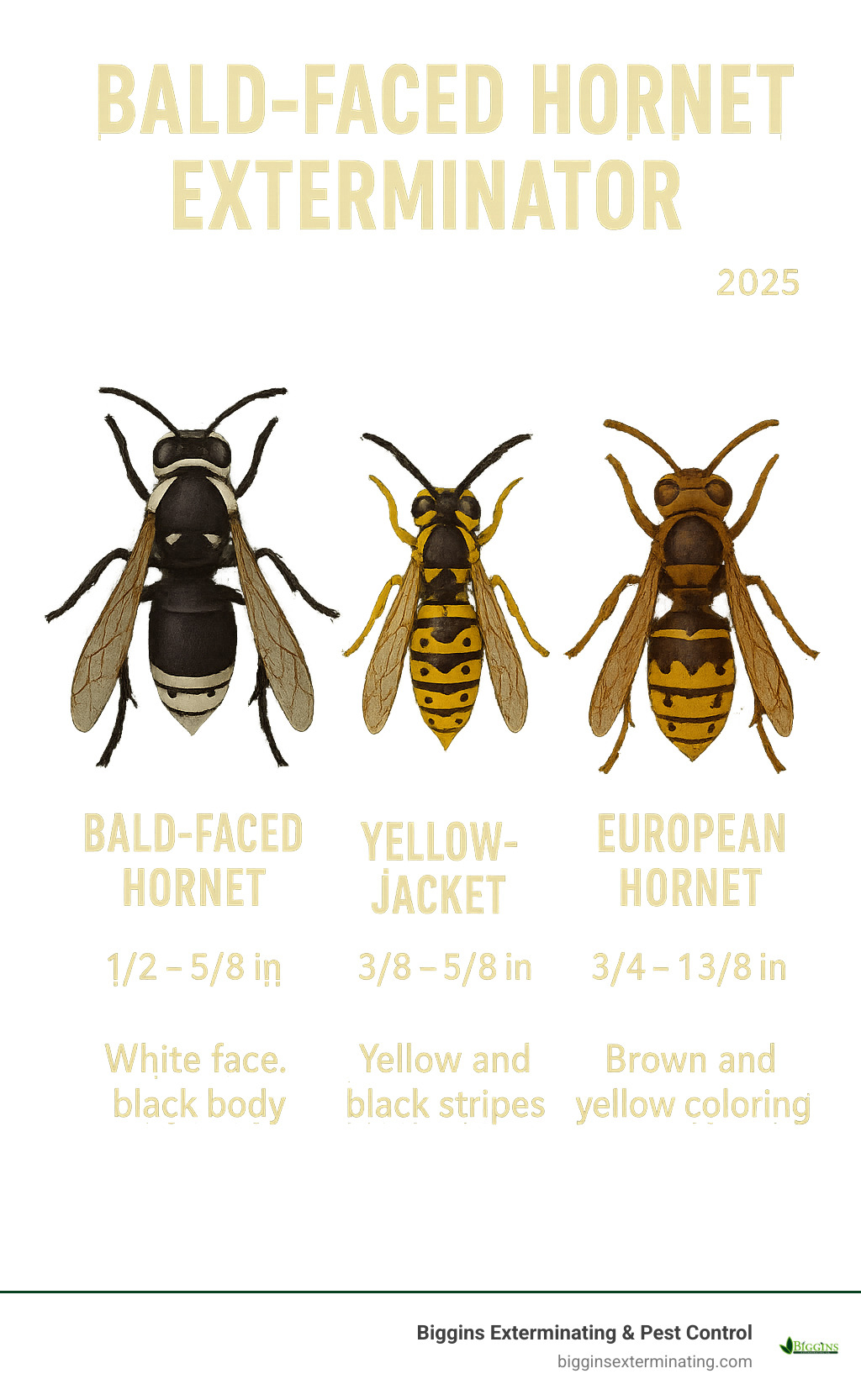
Quick bald faced hornet exterminator terms:
Identifying the Threat: Bald-Faced Hornets and Their Nests
Before dealing with a bald-faced hornet problem, it’s crucial to know what you’re up against. These aren’t harmless backyard insects; they are fiercely protective and highly social. Identifying them and their nests is the first step in keeping your family safe.
What Are Bald-Faced Hornets?
Despite their name, bald-faced hornets (Dolichovespula maculata) aren’t true hornets. They are a type of yellowjacket, more closely related to picnic crashers than the European hornet. Because they build nests high off the ground, they are often called “aerial yellowjackets.”
Bald-faced hornets are distinctive with a striking black body and prominent white or ivory markings. Their most famous feature is a bold white pattern covering most of their face, which gives them their name. You’ll also notice white bands on the end of their abdomen.
Worker bald-faced hornets are larger than most yellowjackets, measuring between 15 to 20 mm (½ to ¾ of an inch). Queens are slightly larger. Like their relatives, they are social insects living in highly organized colonies with a queen, workers, and drones. This social structure makes them formidable defenders. For more detailed information, North Carolina State University’s Extension program offers excellent scientific research on bald-faced hornet biology and ecology. If you’re curious about other stinging insects, we also have insights on Debunking Myths About Hornets and Wasps: Separating Fact From Fiction.
Signs of an Infestation and Nest Location
The most unmistakable sign of a bald-faced hornet problem is their unique nest.
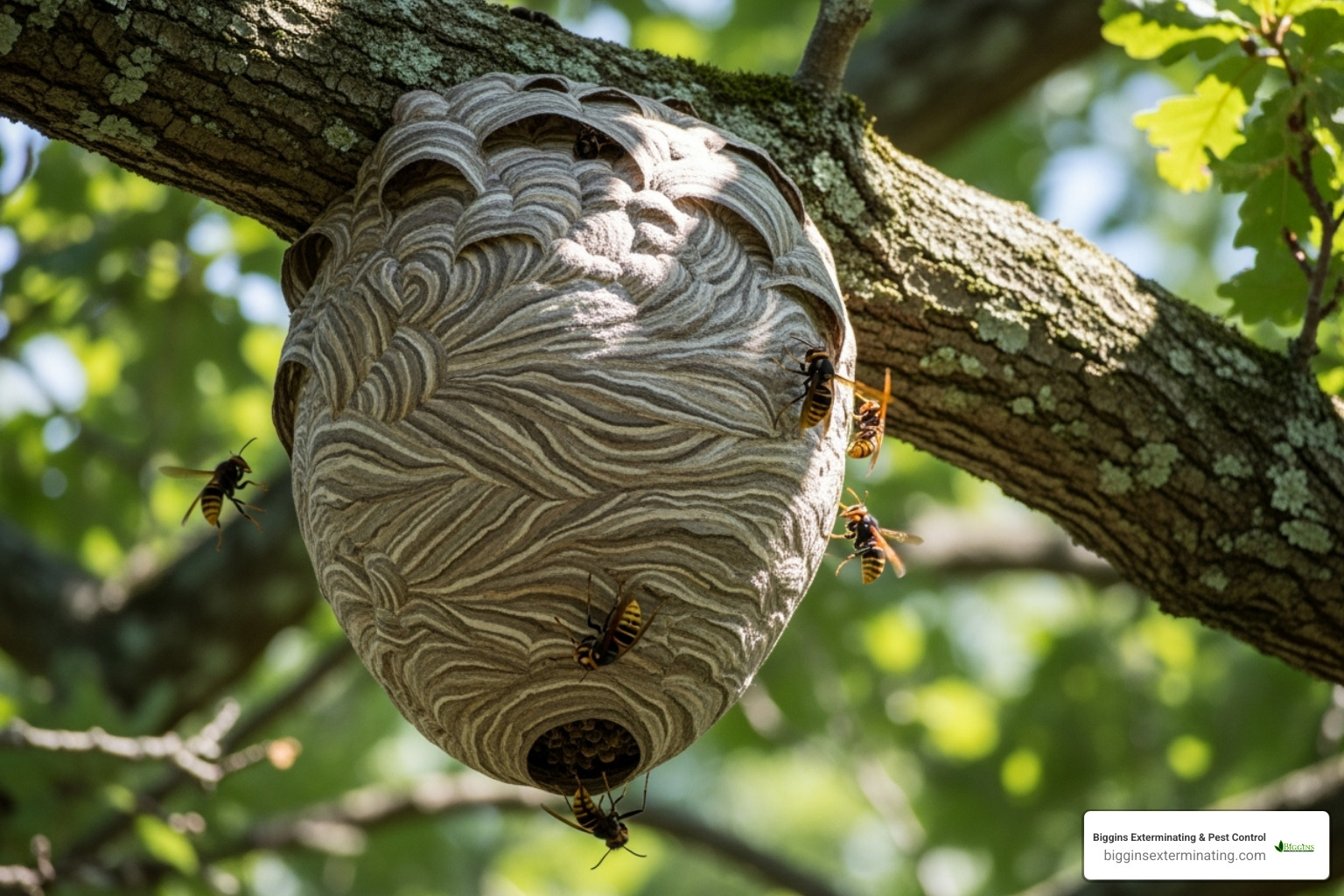
Bald-faced hornet nests are made from a papery material created by mixing chewed wood fibers with saliva, giving them a grey, marbled appearance. The nests are typically football-shaped or teardrop-shaped and enclosed with a single opening at the bottom.
A nest can grow to the size of a basketball, measuring around 60 cm tall and 45 cm across, and house 700 to 1,000 individuals by late summer. A high traffic of hornets flying in and out of the entrance indicates an active nest.
Bald-faced hornets build their nests exclusively outdoors in exposed locations. You’ll find them suspended from branches in trees and large bushes, or under overhangs like building eaves, porch ceilings, and sheds. They do not build nests underground or inside wall voids. Spotting one of these grey, papery nests means you have a bald-faced hornet problem and likely need a bald faced hornet exterminator. For more on identifying nests, check out our guide on Hornets and Wasps: Identifying Nests and Ensuring Safety.
The Dangers of a Bald-Faced Hornet Infestation
A bald-faced hornet nest on your property is a genuine safety threat. Their aggressive nature and painful stings make them one of the most dangerous stinging insects you can encounter.
Their territorial behavior is extreme. They view any movement or vibration near their nest as a threat, whether it’s from mowing the lawn or children playing nearby. When threatened, bald-faced hornets release pheromone signals, calling for backup from the entire colony. This is why DIY removal is so risky; one defensive hornet can quickly become hundreds. This situation always calls for a professional bald faced hornet exterminator. Learn more about why professional help is crucial in our guide on Protecting Your Home and Family: The Importance of Expert Nest Removal.
Aggressive Behavior and Swarm Attacks
Bald-faced hornets don’t give warnings. They attack intruders immediately. Their most dangerous trait is their swarm response system. When one hornet feels threatened, it releases alarm pheromones that trigger a coordinated attack from the entire colony within seconds.
Homeowners can suddenly find themselves surrounded by an angry swarm. The hornets’ definition of perceived threats is broad—using power tools, bumping a branch their nest is on, or simply walking too close can trigger an attack. Once an attack begins, it’s difficult to stop until the threat has retreated a significant distance.
The Risks of Multiple, Painful Stings
Unlike honeybees, bald-faced hornets have smooth stingers, allowing them to sting repeatedly. A single hornet can deliver multiple painful stings in one encounter.
Each venom injection causes immediate, intense pain, followed by throbbing that can last for hours. The area typically develops significant pain and swelling, redness, and itching for 24 hours or more.
Multiple stings deliver more venom and can cause severe reactions even in non-allergic people. The greatest concern is the risk of anaphylactic shock, a life-threatening allergic reaction. Symptoms include difficulty breathing, swelling of the face and throat, rapid pulse, and dizziness. This is a medical emergency requiring immediate treatment. Children and the elderly are at higher risk, making professional removal essential.
Why You Need a Professional Bald-Faced Hornet Exterminator
When facing a bald-faced hornet nest, the question isn’t if you should call a professional, but how quickly. These aren’t wasps you can handle with a store-bought spray. After 40+ years in this business, I’ve seen the dangerous outcomes of DIY attempts.
A bald faced hornet exterminator brings specialized equipment, proven techniques, and the knowledge to keep everyone safe while eliminating the threat. There are compelling reasons to Leave Hornet Nest Removal to Massachusetts Pest Control Experts, with safety being paramount.
The Safest Methods Used by a Bald-Faced Hornet Exterminator
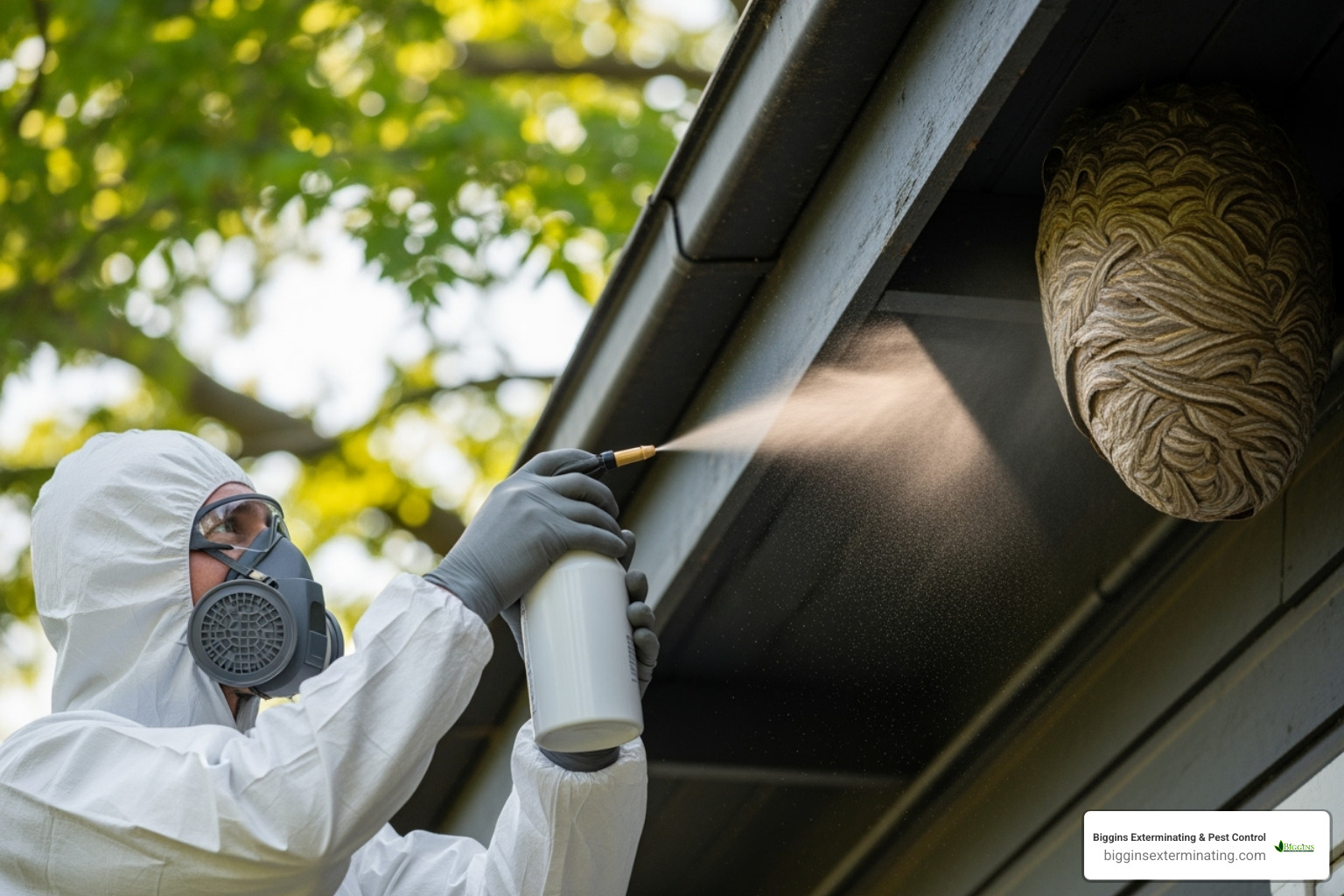
Safety is our top priority. We execute a strategic plan for every nest removal. Our technicians wear specialized, thick protective suits with reinforced veils and heavy-duty gloves, designed to prevent stings.
The specialized insecticide treatments we use are professional-grade products formulated for rapid knockdown and complete colony elimination. We target the nest entrance, allowing hornets to carry the treatment throughout the colony, reaching the queen and larvae.
Our goal is complete colony eradication, not just a temporary fix. Once the colony is eliminated (usually within 24-48 hours), we perform physical nest removal when it’s safe and feasible. Our High Quality Hornet and Wasp Removal service includes this comprehensive approach.
The Best Time for Hornet Extermination
Timing is critical for a safe removal. We’ve learned that night or early morning treatments are the safest and most effective.
During these times, bald-faced hornets are dormant inside their nest, less active due to cooler temperatures, and far less likely to mount an aggressive defense. This allows us to treat the entire colony at once, safely.
The time of year also plays a role. Early summer nests are smaller and easier to treat. By late summer, colonies can house hundreds of individuals. Our treatments are effective even against these massive populations. In winter, colonies die off naturally, leaving only queens to overwinter elsewhere. The old nests are harmless but can be removed for aesthetic reasons.
The Cost of Professional Removal
Professional removal costs reflect the specialized equipment, training, insurance, and risk involved. The costs shared here are average ranges based on internet data and not specific to our services. Please call us for an accurate quote.
Several factors impact the final cost. Nest accessibility is the biggest variable; a nest 40 feet up in a tree is more complex than one on a porch eave. The height, colony size, number of nests, and need for emergency service all affect the price.
| Factor Affecting Cost | Description | Typical Impact on Price |
|---|---|---|
| Nest Accessibility | Ease of reaching the nest (e.g., dense shrubs, high up). | Significantly higher for difficult access |
| Height of Nest | Nests on multi-story buildings or high in trees require special equipment. | Higher for liftd nests |
| Size of Colony | A small, early-season nest vs. a large, mature colony. | Higher for larger, more active colonies |
| Number of Nests | Multiple nests on one property. | Increases per additional nest |
| Location | Pricing can vary by region. | Varies by geographic location |
| Emergency Service | Urgent removal outside standard business hours. | Higher for emergency service |
Standard removal typically ranges from $150 to $600, but complex situations can range from $800 to $1,500 or more. Considering the alternative—medical bills from stings or the stress of a dangerous pest—professional removal is an investment in your family’s safety. For more on costs, see our info on the average cost of an exterminator for wasps.
Proactive Prevention: Keeping Hornets Away From Your Property
While calling a bald faced hornet exterminator is essential for an existing nest, you can take steps to make your property less inviting in the first place. An ounce of prevention is worth a pound of cure, especially with stinging insects.
What Attracts Bald-Faced Hornets to Your Yard?
To keep hornets away, understand what they need: food, water, and shelter. Adult hornets eat nectar and pollen but are also predators, hunting insects like flies and caterpillars to feed their larvae. Later in the season, they are drawn to sugary drinks, ripe fruit, and meats.
Water sources like bird baths, leaky spigots, or pet water bowls can also attract them. For shelter, queens seek protected spots to start a colony in the spring. They favor tree hollows, dense shrubs, and areas under building eaves, porch ceilings, or shed roofs.
Top Prevention Tips
While you can’t guarantee a hornet-free property, these proactive steps significantly lower your risk:
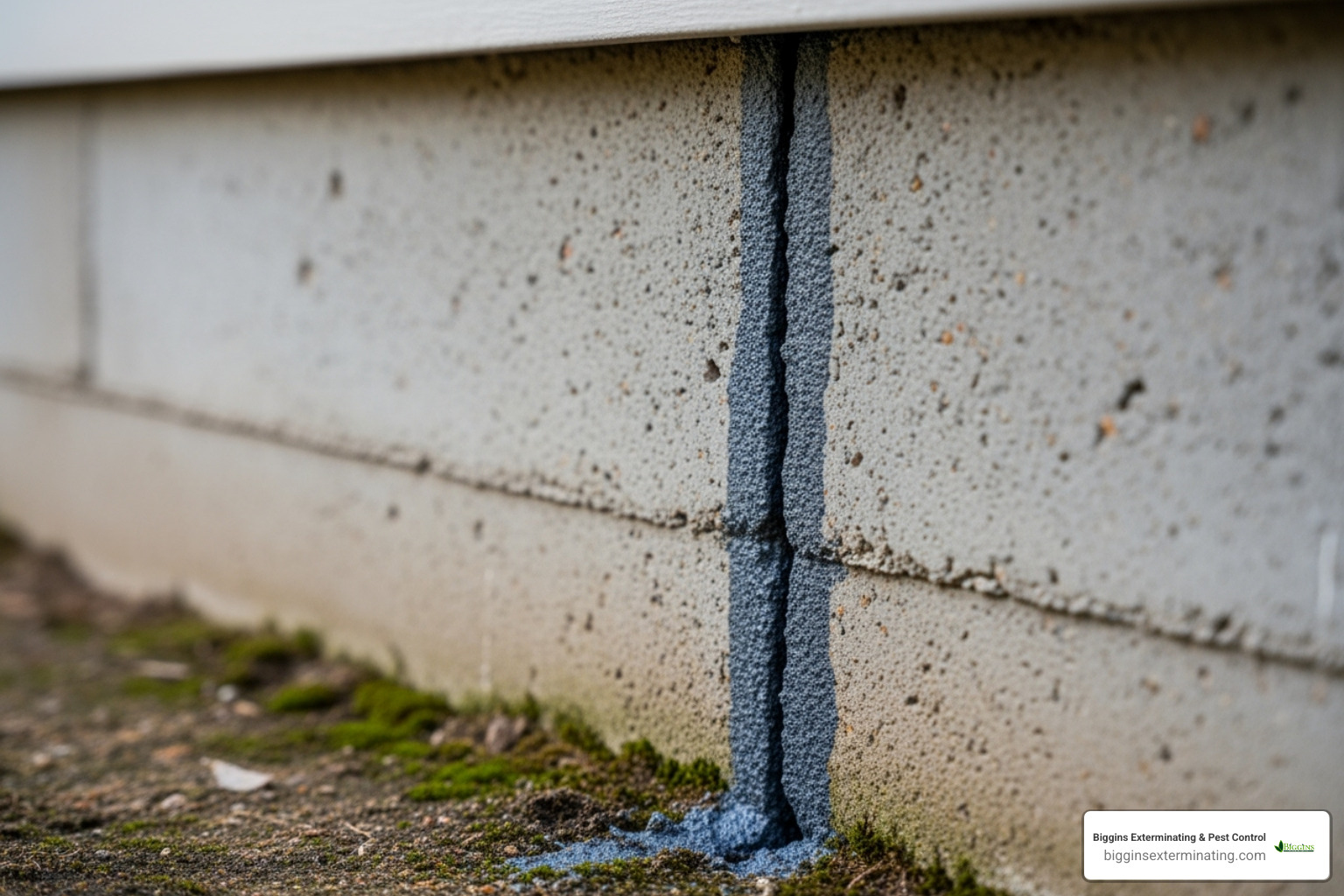
- Seal cracks and crevices: Inspect your foundation, walls, and around windows. Sealing gaps prevents queens from overwintering in your home.
- Repair torn screens: A small tear is an open invitation for insects, including hornets.
- Keep trash cans tightly sealed: Open garbage and compost are tempting food sources. Secure outdoor bins and dispose of trash regularly.
- Clean up spills: Immediately clean up sugary drinks or food spills outdoors.
- Trim trees and shrubs: Keep branches from touching your house to eliminate easy access to eaves and other potential nesting spots.
Taking these steps can make a real difference. For more hints, check out our Top 5 Ways to Prevent Hornet and Wasp Nests.
Frequently Asked Questions about Bald-Faced Hornets
We understand you have questions about bald-faced hornets, especially when they build a home too close to yours. Here are answers to some of the most common inquiries we’ve received over our 40+ years in business.
Can I remove a bald-faced hornet nest myself?
Our answer is always a firm no. We strongly advise against DIY removal. Bald-faced hornets are incredibly aggressive when defending their nests and can sting repeatedly. Without professional protective gear and specialized treatments, you risk multiple painful stings and potentially life-threatening allergic reactions (anaphylaxis). Calling a professional bald faced hornet exterminator is the only safe and smart choice.
Do bald-faced hornets reuse their nests?
No, bald-faced hornets do not reuse their nests. Their colonies are annual and last only one season. The entire colony, except for newly fertilized queens, dies off in the winter. The queens overwinter in protected spots and start brand new nests from scratch in the spring. An old, papery nest found in winter or early spring is abandoned and poses no threat.
Are bald-faced hornets beneficial in any way?
Yes, despite the danger they pose near homes, bald-faced hornets are beneficial to the ecosystem. They are predatory insects that help control populations of other pests. Their diet includes flies, other yellowjackets, caterpillars, and aphids, which can damage gardens and crops. While not primary pollinators, they do contribute to minor pollination. When their nests are far from human activity, they are helpful members of the insect world.
Conclusion
When dealing with bald-faced hornets, you’re confronting one of nature’s most aggressive defenders. These insects can sting repeatedly, attack in swarms, and fiercely protect their large colonies.
The bottom line is simple: DIY removal puts you and your family at serious risk. The potential for multiple stings and dangerous allergic reactions is too high. A qualified bald faced hornet exterminator has the specialized equipment, professional-grade treatments, and experience that cannot be replicated with store-bought products.
At Biggins Exterminating & Pest Control, we’ve protected families throughout Massachusetts for over 40 years. As a family-owned business in Wilmington, we understand the challenges bald-faced hornets present in our local communities, from Andover and Bedford to Burlington, Lexington, and Woburn.
We are committed to your safety and satisfaction. We don’t require long-term contracts and provide warranties on our work. While bald-faced hornets are beneficial in the wild, their presence near your home is too risky to ignore.
Don’t let a hornet nest turn your yard into a no-go zone. For safe, effective, and guaranteed hornet and wasp removal that puts your family’s safety first, contact our team today. We’re here to help you reclaim your property with peace of mind.
