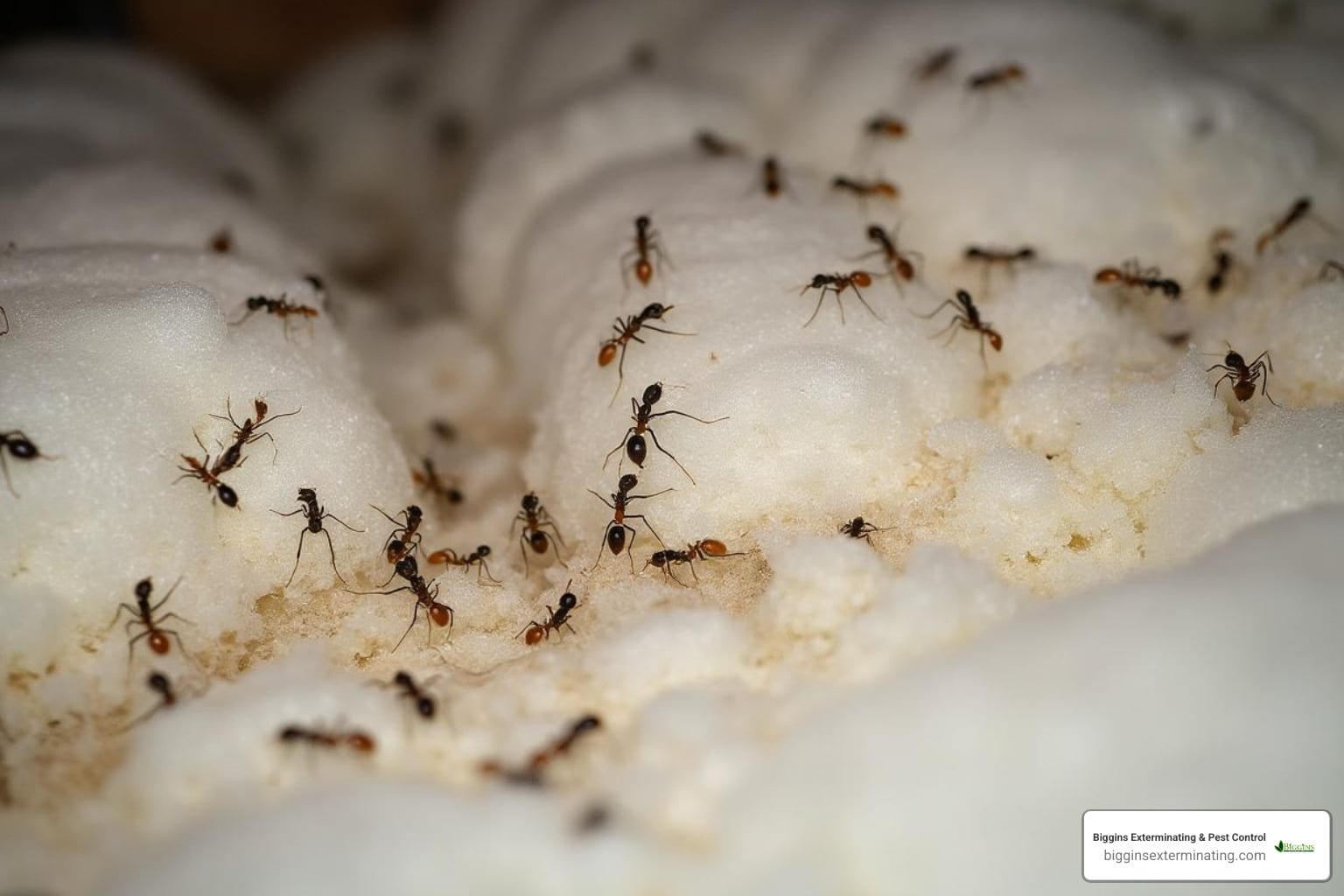
Why Your Attic Insulation Attracts Unwanted Guests
Ants in attic insulation are more common than most homeowners realize, and they can cause serious damage to your home’s thermal barrier while creating unsanitary conditions overhead. Here’s what you need to know about identifying and removing these persistent invaders:
Quick Identification & Removal Guide:
- Signs: Sawdust-like debris (frass), rustling sounds, winged ants indoors, fine dust from ceiling fixtures
- Common Species: Carpenter ants (black, 1/4-1/2 inch), acrobat ants (small, light brown), pharaoh ants (tiny, yellow-brown)
- Most Vulnerable Insulation: Rigid foam boards, followed by fiberglass batts; cellulose with boric acid is most resistant
- Immediate Action: Place sweet and protein baits along ant trails, seal entry points, eliminate moisture sources
- Professional Help Needed: When you see structural damage, multiple colonies, or can’t access the nest location
The problem often starts innocently – a few large ants wandering through your living space. But as one homeowner finded while “removing attic insulation and found some carpenter ants just hanging out under the insulation,” these pests can establish extensive tunnel networks that compromise your home’s energy efficiency and structural integrity.
Why This Happens: Attics provide ideal conditions for ant colonies – consistent temperatures, moisture from poor ventilation, and easy-to-excavate materials. A mature carpenter ant colony can contain up to 10,000 ants, but only 10-15% are visible at any time, making early detection crucial.
I’m Stephen Biggins, and in over 40 years of pest control experience, I’ve seen how ants in attic insulation can quickly evolve from a minor nuisance to a major structural concern. Our family-owned company has helped countless Massachusetts homeowners eliminate these infestations permanently, often finding hidden moisture problems and construction vulnerabilities in the process.
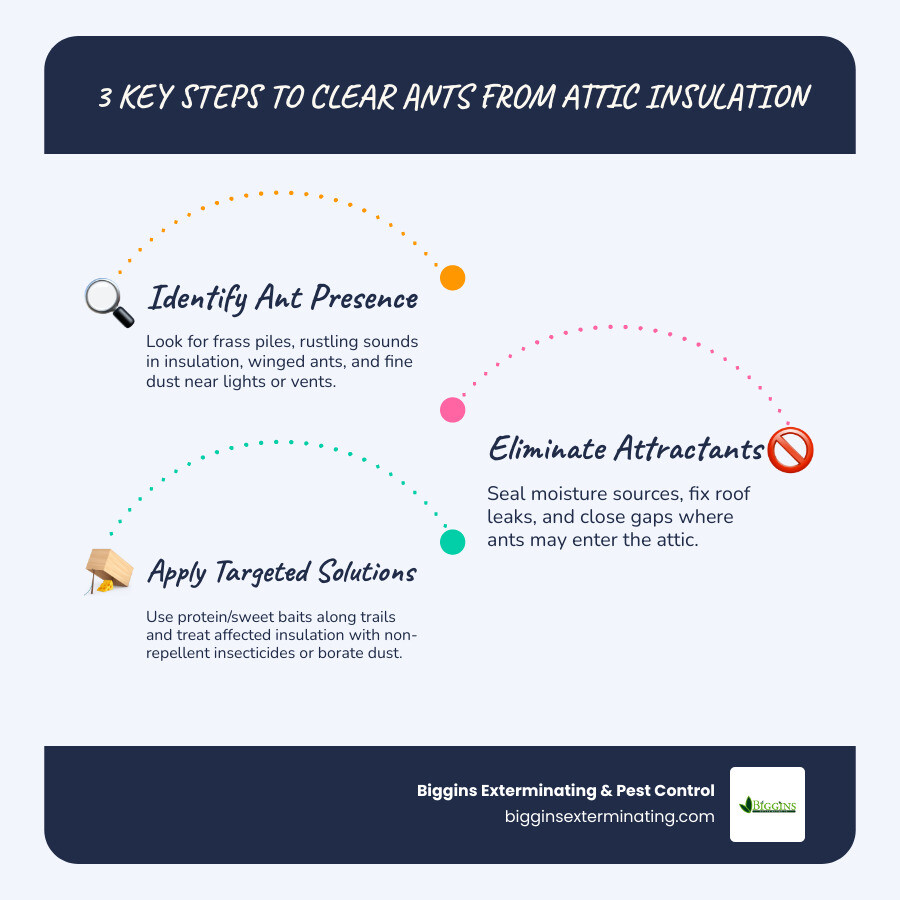
Ants in attic insulation definitions:
Why Ants Invade Attic Spaces
Understanding why ants choose your attic helps you eliminate the conditions that attract them in the first place. After decades of treating infestations, we’ve identified the key factors that make attics irresistible to these persistent pests.
Moisture is the Primary Culprit: Carpenter ants are attracted to areas with chronic moisture or previous leaks, commonly found around roof valleys, skylights, and chimneys. Even if the wood appears dry now, past water damage creates the perfect conditions for ant colonization. We regularly find infestations in attics where homeowners had no idea moisture was present.
Poor Ventilation Creates Ideal Conditions: Inadequate airflow allows humidity to build up, creating the damp environment ants crave. This is especially problematic in older homes where ventilation systems weren’t designed for modern insulation levels.
Wood Rot Provides Easy Excavation: Carpenter ants don’t actually eat wood – they excavate it to create galleries for nesting. Softened, water-damaged wood in soffits, rake boards, and roof framing provides easy tunneling opportunities.
Satellite Nest Strategy: What many homeowners don’t realize is that carpenter ants maintain both parent colonies (usually in outdoor wood) and satellite nests in structures. Your attic might house a satellite colony while the main nest remains in a nearby tree stump or deck.
Rigid Foam Attraction: Surprisingly, rigid foam insulation (XPS, EPS, and polyiso) attracts carpenter ants whether it’s damp or dry, as long as there’s a nearby moisture source. As one builder noted, “carpenter ants can infest rigid foam insulation regardless of whether it is dry or damp, as long as a moisture source is nearby.”
Temperature Gradients: Attics provide consistent temperatures that ants find appealing. Unlike outdoor nests that face temperature extremes, attic spaces maintain relatively stable conditions year-round.
Cellulose Borate Exception: Cellulose insulation coated with boric acid normally repels carpenter ants. If you find ants in cellulose insulation, it often indicates overcrowded wooden nesting sites or the presence of other pests like termites forcing ants into alternative locations.
The Hidden Appeal of Insulation Cavities
Insulation cavities offer several advantages that make them attractive to ant colonies:
Warm, Protected Voids: The space between insulation and structural elements provides shelter from weather extremes while maintaining temperatures conducive to ant activity.
Darkness and Seclusion: Ants prefer undisturbed areas, and attic spaces provide the perfect secluded environment for establishing colonies away from human activity.
Easy Tunneling Material: Soft insulation materials like fiberglass and foam allow ants to create extensive tunnel networks with minimal effort. Unlike dense wood, these materials offer little resistance to excavation.
Proximity to Food and Water: Attics often contain the plumbing and electrical systems that can provide water sources, while food sources are easily accessible by foraging down into living spaces.
Telltale Signs of Ants in Attic Insulation
Recognizing the early warning signs of ants in attic insulation can save you thousands in damage and remediation costs. We’ve compiled the most reliable indicators based on our extensive field experience.
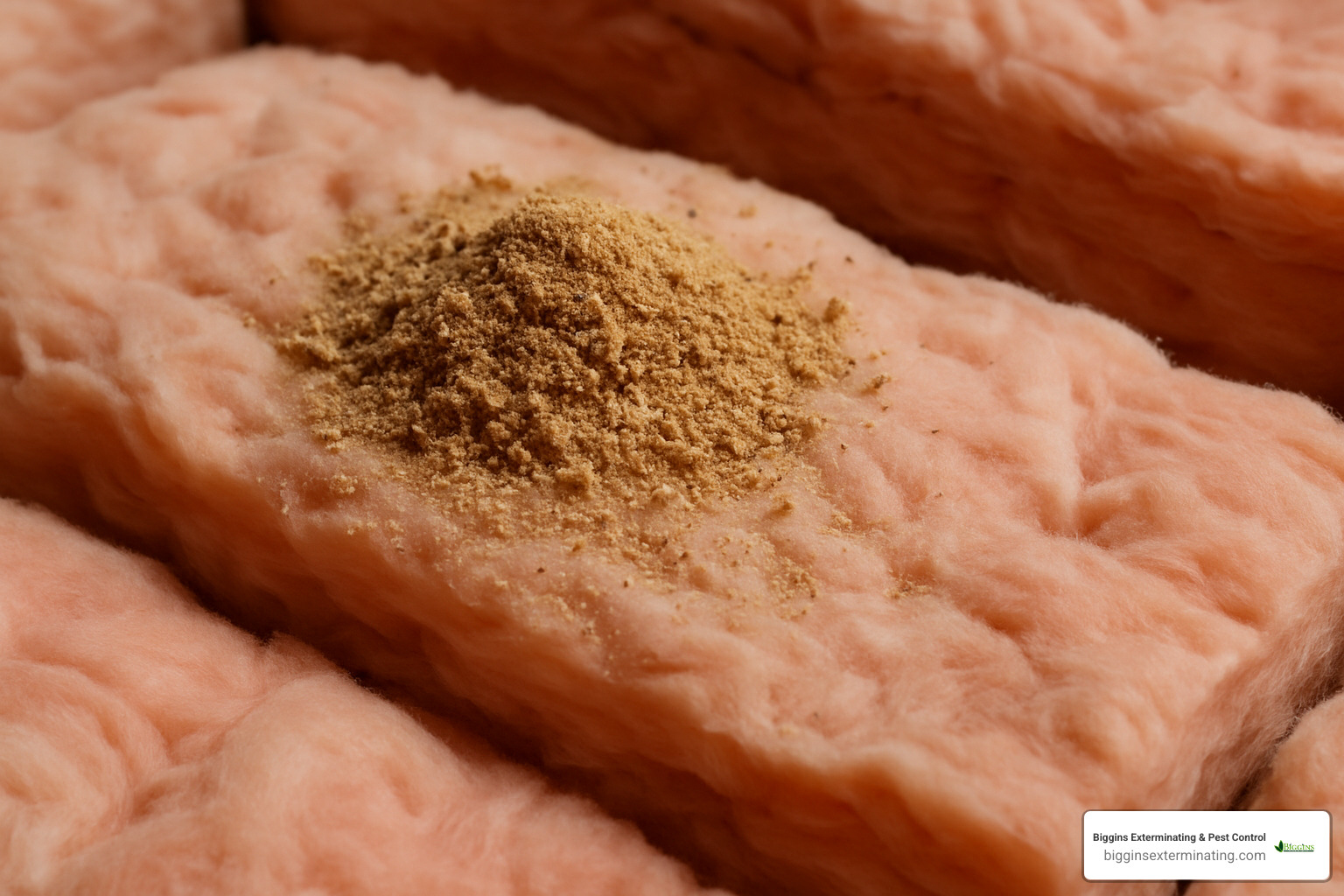
Frass Piles: The most definitive sign is frass – sawdust-like piles of chewed wood particles, insect waste, and dead insects. Unlike termite pellets, carpenter ant frass has an irregular, shredded appearance and often contains insulation fibers. Look for these piles beneath roof valleys, around skylights, and near chimney frames.
Rustling Noises: Many homeowners first notice ants through subtle sounds – a crinkling noise like cellophane or Saran wrap coming from walls or ceilings. This occurs when ants are actively tunneling through insulation materials.
Winged Reproductives: Seeing large-winged ants indoors, especially in spring, indicates a mature colony that’s been present for 3-5 years. These reproductive ants emerge when the colony is well-established and ready to expand.
Rigid Foam Dust: Fine, colored dust (typically yellow, pink, or blue matching your foam insulation) appearing on surfaces below indicates ants are actively tunneling through rigid foam boards.
Insulation Debris Trails: Trails of insulation material leading from ceiling fixtures, vents, or light switches often mark ant highways. As one homeowner described, “fine dust on our top bunk” led to finding extensive tunneling in RV ceiling insulation.
Live Ant Sightings: Finding large black ants (carpenter ants) or smaller brown ants (acrobat ants) in your living space, especially near ceiling areas, often indicates an attic colony. Only 10-15% of a colony forages at any time, so seeing even a few ants suggests a much larger population.
“Is That Termite or Ant Damage?”
Distinguishing between termite and ant damage is crucial for proper treatment. Here’s how to tell the difference:
Frass vs. Pellets: Carpenter ants produce irregular, shredded frass containing wood particles and dead insects. Termites leave uniform, pellet-shaped droppings that look like tiny rice grains.
Discarded Wings: Both insects shed wings, but ant wings are different lengths (two pairs of unequal size), while termite wings are equal in length.
Gallery Shape: Carpenter ant galleries are smooth and clean, following wood grain. Termite galleries are rough and filled with mud-like material.
Wood Preference: Carpenter ants prefer damp or previously water-damaged wood. Termites will attack healthy, dry wood.
For detailed identification help, see our guide on How to Distinguish Carpenter Ants from Termites.
Identifying Ant Species Hiding in Attic Insulation
Carpenter Ants: The most common attic invaders, measuring 1/4 to 1/2 inch long, typically black or dark brown. They prefer nesting in water-damaged wood but will tunnel through insulation to reach suitable sites.
Acrobat Ants: Smaller than carpenter ants, light brown to black, with a distinctive heart-shaped abdomen. These ants are specifically known to nest in foam insulation and can tunnel through styrofoam.
Pharaoh Ants: Tiny (1/16 inch), yellow-brown ants attracted to sweet and oily foods. Less common in attics but may establish satellite colonies in warm insulation cavities.
Size and Color Clues: Large black ants usually indicate carpenter ants, while small brown ants suggest acrobat ants. Tiny yellow ants are likely pharaoh ants.
For professional identification assistance, visit the carpenter ant ID guide.
DIY Inspection & Safe First Steps
Before calling professionals, you can conduct a preliminary inspection to assess the scope of your ant problem. Here’s our systematic approach:
Flashlight Sweep: Use a bright flashlight to examine attic spaces, focusing on areas around roof valleys, skylights, chimneys, and plumbing penetrations. Look for frass piles, tunnels in insulation, and live ants.
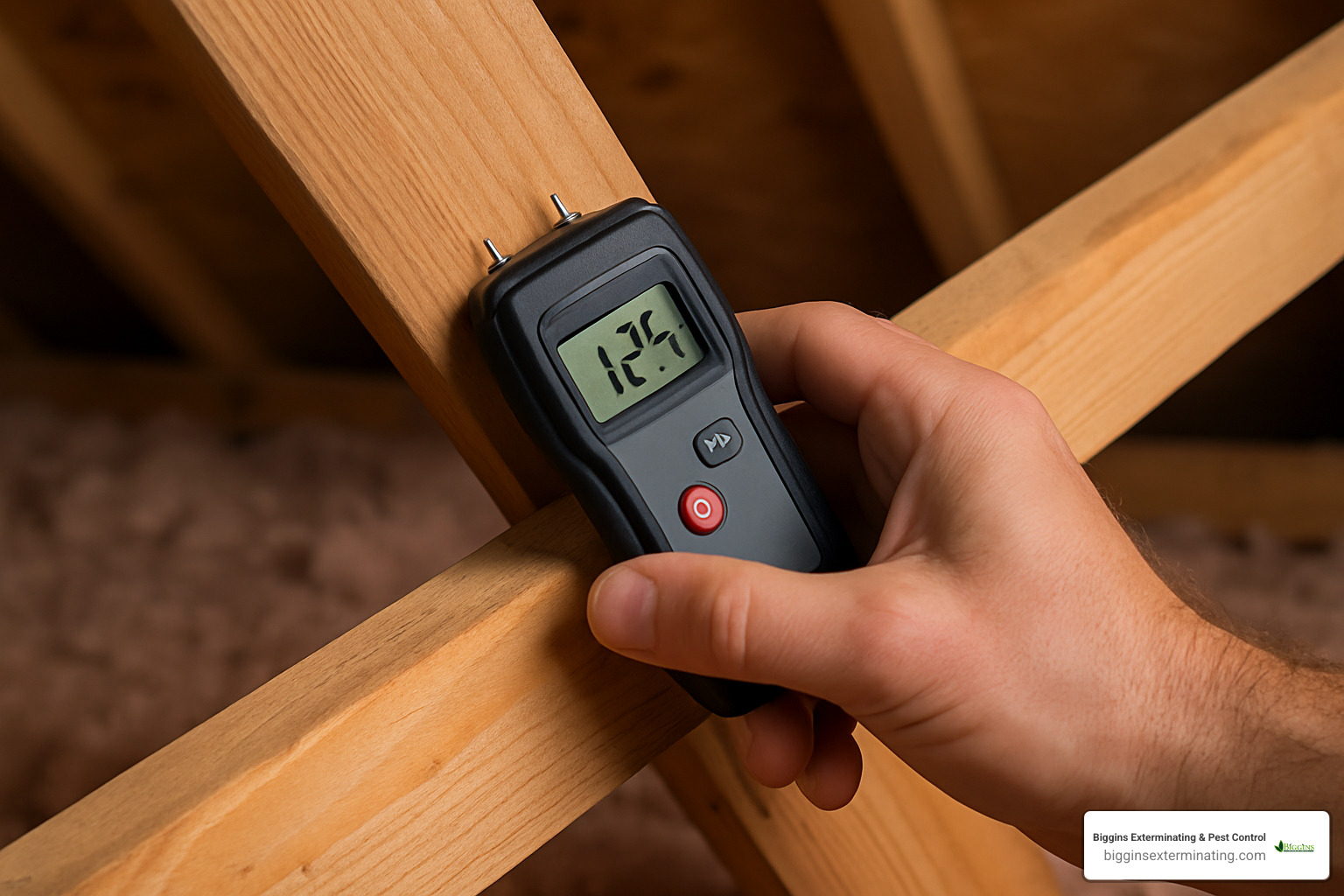
Moisture Check: Use a moisture meter to identify damp areas in wood framing. Readings above 20% indicate conditions favorable to carpenter ants.
Bait Placement: Set both sweet and protein baits along ant trails. Carpenter ants alternate between preferring sugary foods and protein sources depending on colony needs.
Sealing Gaps: Temporarily seal obvious entry points with caulk, but don’t seal all gaps until after treatment – you need ants to carry bait back to the colony.
PPE Reminders: Always wear protective equipment when working in attics – gloves, dust mask, long sleeves, and eye protection. Disturbed insulation can contain allergens and irritants.
| Insulation Type | Ant Susceptibility | Boric Acid Content | Tunneling Ease | Moisture Retention |
|---|---|---|---|---|
| Cellulose | Low | High | Moderate | Low |
| Fiberglass | High | None | High | Moderate |
| Rigid Foam | Very High | None | Very High | Low |
| Mineral Wool | Low | None | Moderate | Low |
Ants in Attic Insulation: Quick Self-Check List
- Look for Sawdust: Check beneath suspected nesting areas for frass accumulation
- Follow Foragers: Observe ant trails during evening hours when activity peaks
- Tap Wood for Hollow Sound: Damaged wood often sounds hollow when tapped
- Check Moisture Sources: Inspect areas around plumbing, roof penetrations, and HVAC systems
- Document Findings: Take photos of frass, damage, and ant activity for professional consultation
Distinguishing Insulation Types Most at Risk
Rigid Foam (Highest Risk): EPS, XPS, and polyiso boards provide easy tunneling and can harbor large colonies. The foam’s structure allows ants to create extensive gallery networks.
Fiberglass (High Risk): Loose-fill and batt fiberglass offers minimal resistance to tunneling. Ants can easily push through fibers to create pathways.
Cellulose (Lowest Risk): Boric acid treatment makes cellulose naturally ant-resistant. Finding ants in cellulose often indicates other underlying problems.
Mineral Wool (Low Risk): Dense structure and natural composition make mineral wool less appealing to ants, though they may still nest in adjacent cavities.
Eradication Methods That Really Work
After four decades of treating ant infestations, we’ve refined our approach to focus on methods that actually eliminate entire colonies, not just visible workers.
Dual Baiting Strategy: Use both sweet and protein baits simultaneously. Carpenter ants’ dietary preferences change based on colony needs – they may prefer sugar when feeding larvae but switch to protein when maintaining adults. Popular options include Terro liquid bait for sweet preference and granular protein baits.
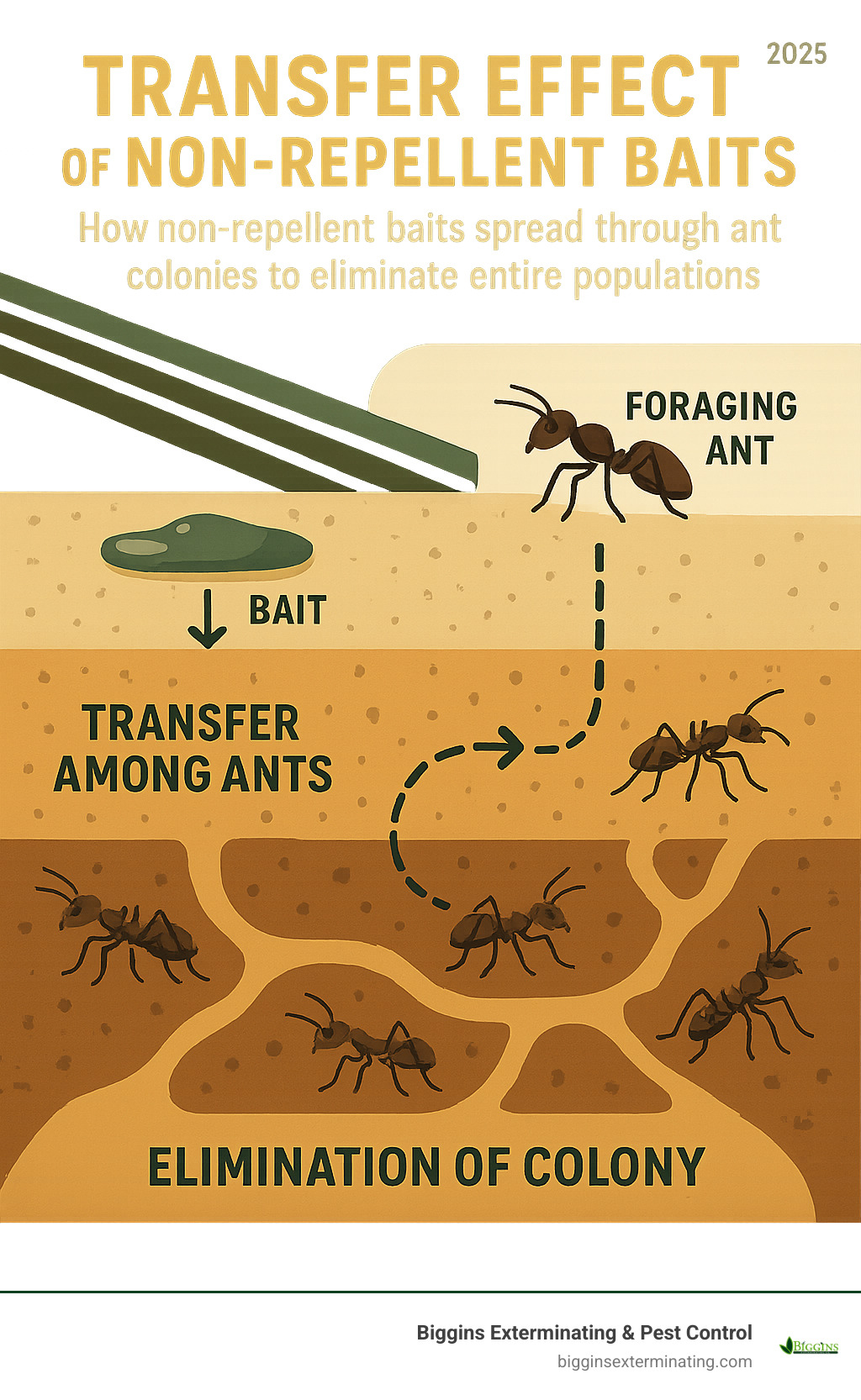
Non-Repellent Sprays: Products containing fipronil (like Termidor) create a “transfer zone” around your home’s perimeter. Ants unknowingly walk through treated areas and carry the insecticide back to the colony, eventually eliminating the entire population including the queen.
Borate Dust Application: Apply boric acid dust to wall voids, attic spaces, and other areas where ants travel. This creates long-lasting residual control in areas where sprays can’t reach effectively.
Insecticide-Treated Foam: While not commonly available, some manufacturers produce foam insulation pre-treated with insecticides. This provides built-in protection but requires special ordering.
Professional Remediation: For severe infestations, professional treatment may include removing contaminated insulation, treating structural elements, and installing pest-resistant replacement materials.
Average Cost Ranges (based on internet data, not Biggins Exterminating pricing):
- DIY baiting and sealing: $50-200
- Professional perimeter treatment: $200-800
- Extensive remediation with insulation replacement: $1,500-5,000+
Science Behind Baiting & Non-Repellent Chemistry
Understanding how modern ant control works helps you choose the most effective approach:
Sweet vs. Protein Baits: Ant colonies have changing nutritional needs. Spring colonies focus on sugary foods for energy, while summer colonies need protein for developing larvae. Using both types simultaneously increases success rates.
Fipronil Transfer Effect: This non-repellent insecticide disrupts ants’ nervous systems gradually. Treated ants remain active long enough to return to the colony and interact with nestmates, spreading the insecticide throughout the population.
Delayed Kill Mechanism: Unlike contact sprays that kill immediately, baits and non-repellent treatments work slowly. This delay is crucial – it allows treated ants to feed other colony members and share food with the queen.
Colony Collapse Timeline: Properly applied baits typically eliminate colonies within 6-8 weeks. You may see increased activity initially as more ants are attracted to baits, followed by a gradual decline.
For the latest research on these methods, see Latest research on non-repellent termiticides.
When Professional Treatment Is Mandatory for Ants in Attic Insulation
Some situations require professional intervention for safety and effectiveness:
Multiple Colonies: When you find both parent and satellite colonies, coordinated treatment is essential. Eliminating one colony without addressing others often leads to rapid recolonization.
Structural Damage: Extensive tunneling in load-bearing members requires professional assessment. We often work with contractors to determine if structural repairs are needed.
Inaccessible Nests: Colonies located behind finished walls, in cathedral ceilings, or other hard-to-reach areas require specialized equipment and techniques.
Safety Concerns: Working in confined attic spaces with insecticides requires proper ventilation, protective equipment, and experience with chemical applications.
Recurring Infestations: If DIY treatments fail after 8-10 weeks, professional intervention is needed to identify underlying attractants and apply more aggressive treatments.
For professional assessment, contact our Ant Control Exterminators team.
How to Keep Ants Out for Good
Prevention is always more cost-effective than treatment. Here’s our comprehensive approach to ant-proofing your attic:
Fix Leaks Immediately: Address any roof leaks, plumbing issues, or condensation problems. Even minor moisture sources can attract scout ants that establish new colonies.
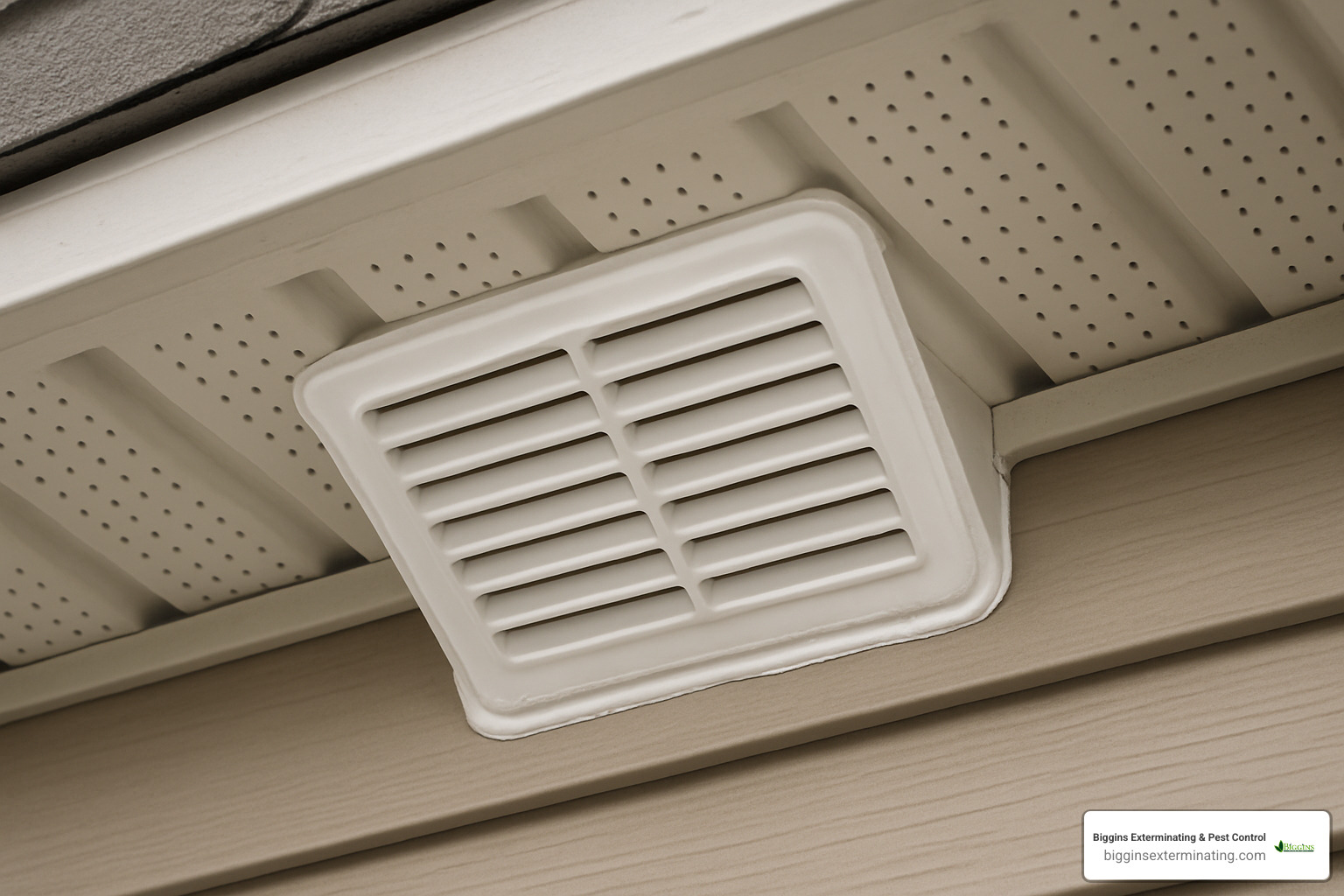
Improve Ventilation: Install proper soffit and ridge vents to maintain airflow. Good ventilation prevents moisture buildup that attracts ants and other pests.
Trim Branches: Keep tree branches at least 6 feet from your roofline. Overhanging branches act as “ant highways” providing direct access to your roof and attic spaces.
Store Firewood Away: Keep firewood piles at least 20 feet from your home and liftd off the ground. Firewood often harbors carpenter ant colonies that can migrate to structures.
Continuous Monitoring: Inspect your attic seasonally, especially in spring when ant activity peaks. Early detection prevents minor infestations from becoming major problems.
Seal Entry Points: Use caulk to seal gaps around:
- Plumbing penetrations
- Electrical conduits
- HVAC ducts
- Roof-to-wall connections
- Window and door frames
Pest-Resistant Insulation & Construction Tweaks
Borate-Treated Cellulose: This remains the most ant-resistant insulation option. The boric acid coating naturally repels carpenter ants and other insects while providing excellent thermal performance.
Mineral Wool Boards: Dense mineral wool insulation resists tunneling and doesn’t provide the easy excavation that attracts ants to foam products.
Sealed Rigid Foam Edges: If using foam insulation, seal all edges and joints with tape or caulk to prevent ant entry. Foil-faced foam with properly sealed edges offers better protection than unfaced products.
Construction Details: Pay special attention to:
- Proper flashing around roof penetrations
- Adequate vapor barriers
- Continuous air sealing
- Proper drainage away from foundations
For comprehensive prevention strategies, see our Indoor Ant Control guide.
Frequently Asked Questions about Ants in Attic Insulation
Do carpenter ants actually eat insulation?
No, carpenter ants don’t eat insulation or wood. They excavate these materials to create galleries for nesting. Carpenter ants feed on sugary substances, proteins, and other insects. When they tunnel through insulation, they’re creating pathways and nesting spaces, not consuming the material. The debris they create (frass) consists of chewed wood particles, dead insects, and insulation fibers that they discard outside their galleries.
How long does baiting take to eliminate a colony?
Complete colony elimination typically takes 6-8 weeks with proper baiting techniques. The timeline depends on several factors:
- Colony size (larger colonies take longer)
- Bait acceptance (some colonies are pickier than others)
- Seasonal factors (spring colonies respond faster)
- Competing food sources (outdoor food can slow bait consumption)
You may see increased ant activity initially as more workers are attracted to baits. This is normal and indicates the treatment is working. The population will gradually decline as the bait spreads throughout the colony.
Can ant infestations lower my home’s energy efficiency?
Yes, ant infestations can significantly impact energy efficiency in several ways:
- Tunneling creates air leaks that allow conditioned air to escape
- Damaged insulation loses R-value where galleries are created
- Moisture problems that attract ants also reduce insulation effectiveness
- Structural damage can create gaps that compromise the building envelope
We’ve measured temperature differences of 10-15 degrees in heavily infested attic areas. Addressing ant problems often improves both pest control and energy performance.
Conclusion
Ants in attic insulation represent a serious threat to your home’s integrity and energy efficiency, but with the right approach, they can be eliminated permanently. The key is understanding that successful treatment requires more than just killing visible ants – you must eliminate entire colonies and address the underlying conditions that attract them.
Throughout our 40 years serving Massachusetts communities from Andover to Woburn, we’ve learned that the most effective approach combines immediate treatment with long-term prevention. Whether you’re dealing with carpenter ants tunneling through rigid foam, acrobat ants nesting in fiberglass, or any other species, the principles remain the same: identify the species, locate the colony, eliminate the population, and prevent reestablishment.
What you see represents only 10-15% of the actual colony. Those few ants in your kitchen or bathroom likely indicate thousands more hidden in your attic insulation. Don’t wait for structural damage to become visible – early intervention saves both money and headaches.
At Biggins Exterminating & Pest Control, we’ve built our reputation on providing thorough, warrantied solutions without requiring long-term contracts. Our family-owned approach means we treat every home like our own, identifying not just the immediate pest problem but the underlying conditions that allowed it to develop.
If you’re experiencing signs of ants in attic insulation – frass piles, rustling sounds, or live ants indoors – don’t let the problem escalate. Our experienced technicians can assess your situation, identify the species involved, and implement a comprehensive treatment plan that addresses both the current infestation and future prevention.
Schedule your inspection today to protect your home’s structural integrity and energy efficiency. With proper treatment and prevention, you can enjoy peace of mind knowing your attic is protected from these persistent invaders.
Contact us for professional assessment and treatment of your ant infestation. Learn more about our comprehensive Carpenter Ant Service and find why Massachusetts homeowners have trusted our family for over four decades.