
Finding Reliable Ant Control Near You
If you’re dealing with an ant invasion, finding ant exterminators in my area is likely your top priority. Here’s a quick guide to help you locate and choose the right professional:
How to Find Local Ant Exterminators:
1. Search online directories like Angi, Yelp, or Google Maps
2. Ask neighbors for recommendations (52% of customers are referred by existing clients)
3. Check reviews – look for companies with 4+ star ratings
4. Verify credentials – ensure they’re licensed, insured, and experienced with ant control
5. Request quotes from 2-3 companies (average cost ranges $70-$195 per visit)
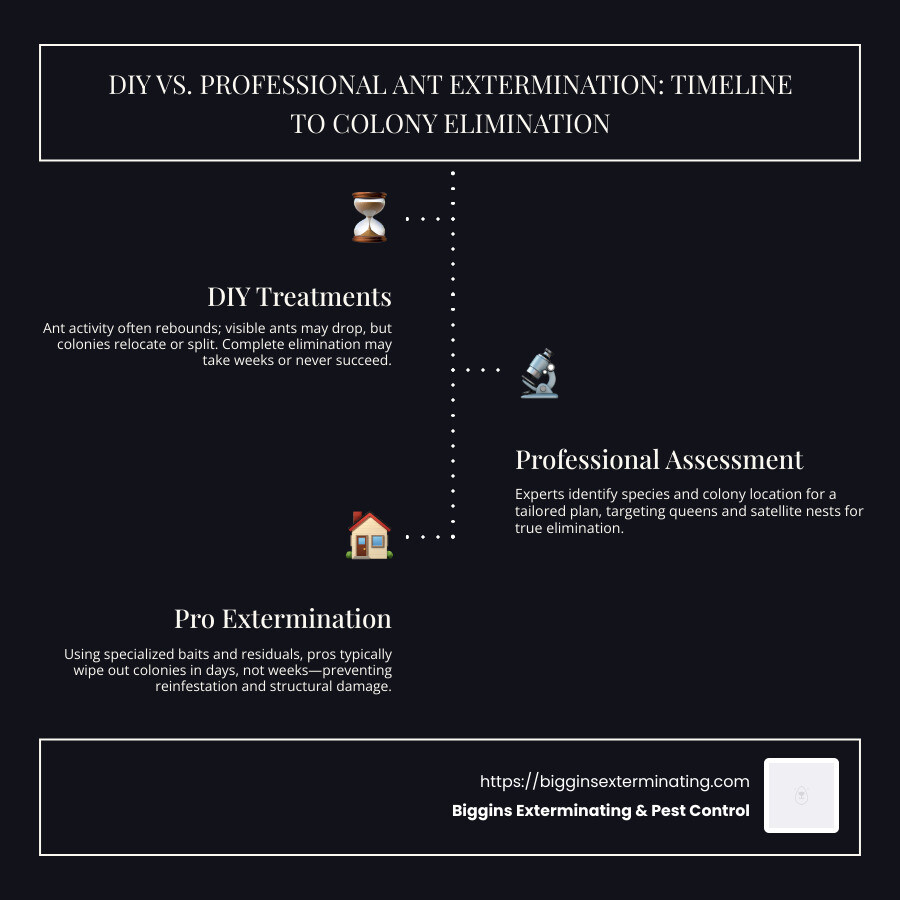
Ants are one of the most persistent household pests, with colonies that can exceed 100,000 individuals. When DIY methods fail, professional exterminators offer targeted solutions that eliminate not just visible worker ants, but the entire colony—including the queen that can live up to 9 years.
Professional ant control is especially important because different ant species require different treatment approaches. Carpenter ants, for example, can cause structural damage to your home by tunneling through wood, while pharaoh ants can contaminate food and spread disease. An experienced exterminator will identify the specific species and develop a customized treatment plan.
I’m Stephen Biggins, owner of Biggins Exterminating Co., and with over 40 years of experience working with ant exterminators in my area, I’ve helped countless families in Wilmington, MA and surrounding communities eliminate persistent ant problems with our no-contract, satisfaction-guaranteed approach.
1. Common Ant Species You’ll Meet Locally
When tiny invaders march into your home, knowing exactly who you’re dealing with makes all the difference. Here in Wilmington and throughout Massachusetts, we’ve been tracking the same cast of ant characters for over 40 years at Biggins Exterminating. Let me introduce you to your uninvited houseguests!
Carpenter Ants
These are the heavyweights of our local ant world – measuring a substantial 1/4 to 1/2 inch long, usually dressed in black or sporting a two-tone red-and-black look. While they don’t actually eat wood like termites, they’re enthusiastic excavators, hollowing out moist, decaying wood to build their nests.
What makes carpenter ants particularly tricky is their colony structure. A mature colony can house up to 50,000 workers and establish multiple satellite colonies throughout your property. I’ve seen countless homeowners tackle what they thought was a simple carpenter ant problem, only to find it was just the tip of the iceberg.
“The damage these ants cause can be serious business,” says our senior technician. “They start in damp, rotting wood but don’t hesitate to move into perfectly sound structures once they’ve established themselves.”
Pavement Ants
These little fellows (about 1/8 inch) are the ones you’ll spot emerging from cracks in your driveway or patio. Dark brown to black in color, they’re more of a nuisance than a threat to your home’s structure.
What they lack in size, they make up for in persistence! Pavement ants create distinctive foraging trails along baseboards and into kitchens, always on the hunt for crumbs and sweets. They’re incredibly common in our region, and while they won’t damage your home like their carpenter cousins, they can certainly drive you crazy with their kitchen invasions.
Odorous House Ants
Ever squished an ant and caught a whiff of something like rotten coconut or blue cheese? Congratulations – you’ve met an odorous house ant! These small dark ants have earned quite a reputation for their distinctive smell.
What makes them particularly challenging for ant exterminators in my area is their ability to form supercolonies with multiple queens. This resilience means DIY solutions often fail completely. They love setting up shop near moisture sources and have a serious sweet tooth that leads them straight to your kitchen.
Pharaoh Ants
Tiny but mighty, these yellowish ants (just 1/16 inch long) thrive in warm, humid indoor environments. They’re particularly concerning in commercial settings like restaurants and hospitals because they can spread disease organisms.
The most frustrating thing about pharaoh ants? When disturbed, their colonies readily split into multiple new colonies – a defense mechanism called “budding.” This means that many over-the-counter treatments actually make the problem worse by triggering colony splitting!
Argentine Ants
While less common in Massachusetts than in southern states, climate change is helping these invasive ants expand their territory northward. They form enormous supercolonies with multiple queens and can invade homes in staggering numbers, especially during hot, dry weather when they’re searching for moisture.
“What homeowners often don’t realize,” our technician explains, “is that the ants you see represent just 5-10% of the actual colony. The rest, including the egg-laying queen, remain hidden in nests that can be difficult to locate without specialized knowledge.”
Spot-the-Ant Checklist
Identifying which type of ant has invaded your home is crucial for effective treatment. Here’s how to tell them apart:
Carpenter Ants:
– Size: Large (1/4 to 1/2 inch)
– Color: Usually black, sometimes red and black
– Distinctive features: Heart-shaped head, bent antennae, narrow waist
– Evidence: Wood shavings (frass) that look like sawdust, hollow-sounding wood
Pavement Ants:
– Size: Small (1/8 inch)
– Color: Dark brown to black
– Distinctive features: Parallel lines on head and thorax, two spines on back
– Evidence: Small soil mounds between sidewalk cracks or along foundations
Odorous House Ants:
– Size: Small (1/8 inch)
– Color: Brown to black
– Distinctive features: Uneven thorax when viewed from side, strong odor when crushed
– Evidence: Trails following edges and electrical wires
Pharaoh Ants:
– Size: Tiny (1/16 inch)
– Color: Light yellow to reddish
– Distinctive features: Two nodes on waist, three-segmented club on antennae
– Evidence: Trails near moisture sources, inside wall voids
When dealing with satellite colonies, the challenge multiplies. These secondary nests can be established far from the main colony, creating the impression that you’re dealing with multiple infestations when it’s actually one large, interconnected ant network.
The risk of damage varies significantly by species. While carpenter ants pose the greatest structural threat, all ants can contaminate food, create unsanitary conditions, and generally make your home feel less like your own.
For a more detailed guide specifically about carpenter ants and the specialized treatment they require, visit our carpenter ant control page.
2. Red-Flag Signs of an Infestation
Nobody wants to find they’re sharing their home with thousands of tiny tenants, but catching an ant problem early can save you significant headaches down the road. As we’ve seen countless times at Biggins, recognizing these warning signs early often means simpler, less expensive treatments.
Visible Ant Trails
The most obvious red flag is spotting those organized lines of ants marching determinedly across your floor or countertop. Unlike some random insect wanderers, ants are social creatures that communicate brilliantly with each other. They leave invisible chemical trails (pheromones) that essentially create highways between food sources and their nest.
“I always tell customers that seeing one or two random ants isn’t necessarily cause for alarm,” says our lead technician. “But when you see them forming orderly lines along your baseboards or following electrical cords, that’s when you know they’ve established a regular commute to work in your kitchen.”
Frass (Wood Shavings)
If you notice what looks like tiny piles of sawdust near wooden areas in your home, you might be looking at carpenter ant frass. Unlike termites that actually consume wood, carpenter ants are more like remodelers – they excavate galleries in wood to create their living spaces, pushing out the debris as they work.
This frass typically consists of wood particles mixed with bits of insect parts (including deceased ants). It often accumulates in small piles beneath the nest entrance points, looking like coarse sawdust. Finding these little debris piles near baseboards, window sills, or door frames is a strong indicator of carpenter ant activity.

Rustling Sounds in Walls
This might sound like something from a horror movie, but large carpenter ant colonies can indeed be audible, especially during their most active periods at night. The sound is usually described as a faint rustling or crackling noise – similar to cellophane being crumpled.
One Wilmington homeowner called us convinced she had mice in her walls. “I kept hearing these weird scratching sounds at night,” she told us. When our technicians inspected, they finded an extensive carpenter ant colony that had been gradually expanding for years.
Hollow-Sounding Wood
Grab a screwdriver handle and gently tap on wooden surfaces where you suspect ant activity. Wood that sounds hollow may indicate carpenter ant galleries within. This becomes particularly concerning when you find it in structural elements like support beams, floor joists, or window frames.
Winged Ants (Swarmers)
If you suddenly notice flying ants inside your home, especially during spring or early summer, this typically signals a mature colony nearby. These winged ants are the reproductive members (also called alates or swarmers) that emerge to mate and establish new colonies.
“Many people confuse termite swarmers with ant swarmers,” our team often explains. The key differences are that ants have a distinctly pinched waist and bent antennae, while termites have straight antennae and a uniform body width.
Food Theft
Finding ants in sealed food containers or consistently spotting them around pet food bowls indicates they’ve established regular foraging patterns in your home. Ants have diverse tastes but are particularly drawn to sweet foods (like spilled juice or honey), greasy items, and protein sources.
“We had one customer in Tewksbury who couldn’t figure out why her cat’s food bowl was always swarming with ants every morning,” recalls our technician. “We traced the problem to a massive odorous house ant colony that had established itself in her wall cavity adjacent to the kitchen.”
Electrical Problems
Though less common, certain ant species (particularly carpenter ants) can occasionally damage electrical wiring, leading to intermittent shorts or other electrical issues. The insulation around wires can be attractive nesting material for some ant species, and their activity can gradually wear away protective coverings.
When the Colony Moves Indoors
Understanding why ants relocate indoors helps us predict and prevent infestations before they become established.
Seasonal Migrations
Ants are surprisingly sensitive to environmental changes. During extreme weather conditions – excessive rain, drought, or significant temperature fluctuations – they often seek shelter indoors. Here in Massachusetts, we typically see increased indoor ant activity during early spring (as temperatures warm) and fall (as temperatures cool).
“It’s almost like clockwork,” notes our founder Stephen Biggins. “Every April, our phones start ringing with ant complaints as the colonies activate after winter and start exploring new territory.”
Moisture Hotspots
Areas with consistent moisture problems act like ant magnets, especially for carpenter ants that prefer damp wood for their initial nest establishment. When we conduct home inspections for ant exterminators in my area searches, we pay special attention to:
Bathrooms with leaky plumbing: Even slow drips create ideal conditions for ants, particularly around toilet bases and under sink cabinets.
Kitchens: The combination of water sources and food makes kitchens prime real estate for ant colonies, especially under sinks and behind appliances.
Laundry rooms: Washing machine hoses and water heaters can develop small leaks that go unnoticed but create perfect ant habitats.
Water-damaged areas: Previous water damage, even if seemingly dry now, often leaves wood softened and more appealing to carpenter ants.
Poorly ventilated spaces: Attics, crawl spaces, and wall voids with high humidity levels create attractive nesting sites.
Window frames: Condensation that accumulates around windows can damage wood and attract moisture-loving ants.
“Prevention truly is always less expensive than treatment,” we regularly remind our Biggins customers. “Fixing those moisture problems and sealing entry points might not be exciting weekend projects, but they’re far less costly than dealing with an established colony that’s made itself at home in your walls.”
3. DIY vs. Professional: Who Wins the Ant War?
When ants march into your home, it’s tempting to reach for that can of spray or box of ant traps at the hardware store. Many homeowners try the DIY route before searching for ant exterminators in my area. But is handling it yourself really the most effective approach? Let’s look at what happens when homeowners wage their own ant wars versus calling in the professionals.
The DIY Approach: Limitations and Risks
That $8 ant spray might seem like a bargain compared to professional service, but there’s more to the story. Store-bought baits and sprays often provide only temporary relief because they’re designed to tackle symptoms, not the source.
Most DIY products have serious limitations. They typically target only specific ant species, meaning the product that worked for your neighbor’s kitchen invaders might be completely ignored by the ants in your bathroom. And even when ants do take the bait, these products rarely reach the queen who remains safely nestled deep within the colony, continuing to produce thousands of new workers.
Perhaps the most concerning risk of DIY treatments is triggering what exterminators call “colony splitting” or budding. When certain ant species—particularly pharaoh ants—sense danger from improper treatment, they don’t retreat – they multiply! The colony splits into multiple smaller colonies, each with its own egg-laying queen. Research published in the Journal of Economic Entomology found that improper treatments can actually increase pharaoh ant populations by up to 30% through this survival mechanism.
“Last summer, I had a customer in Tewksbury who used three different types of ant spray before calling us,” shares one of our technicians. “When we arrived, instead of one ant trail in the kitchen, they had four separate trails throughout the house. Their DIY efforts had actually made the problem worse.”
Safety is another significant concern with DIY treatments. Without proper training, it’s easy to apply too much product or use it in areas where it might contaminate food preparation surfaces or be accessible to children and pets. Many homeowners don’t realize that some common ant sprays shouldn’t be used near air ducts or ventilation systems where residues can circulate throughout the home.
The Professional Advantage
Professional exterminators bring several crucial advantages to the ant battlefield. First is expertise in ant identification. With over 700 ant species in North America and dozens common to Massachusetts, knowing exactly what you’re dealing with is half the battle. Different ants require different treatment approaches, and professionals are trained to identify species by their appearance, behavior, and nesting habits.
Professionals also have access to commercial-grade products that simply aren’t available to consumers. These products are often:
- More concentrated and effective than retail options
- Non-repellent, meaning ants can’t detect them and won’t avoid treated areas
- Specifically formulated to exploit ant social behavior through trophallaxis (food sharing)
- Applied with specialized equipment that ensures precise targeting
The science behind professional ant control goes beyond just stronger chemicals. At Biggins Exterminating, we practice Integrated Pest Management (IPM), a comprehensive approach that combines targeted treatments with prevention strategies. This includes identifying and sealing entry points, recommending habitat modifications, and developing a customized plan based on your specific situation.
“They were very professional and easy to work with.” — Deb J.
The scientific understanding of ant social behavior also informs professional treatments. Research from Stanford University has shown that ants’ social structure makes them particularly vulnerable to certain treatment methods that exploit their food-sharing behavior. Professional exterminators leverage this science to ensure treatments reach the queen and entire colony, not just the visible workers. You can learn more about this fascinating research on ant social behavior and colony dynamics.
Hidden Costs of Failed DIY
The true cost of unsuccessful DIY ant control extends far beyond the price of those store-bought products. Many homeowners don’t realize they’re actually spending more by delaying professional treatment.
First, there’s the cumulative cost of repeated treatments. Those $8-15 products add up quickly when you’re buying new ones every few weeks because the ants keep returning. Many customers tell us they’ve spent $100-200 on various products before finally calling us.
For carpenter ants, the stakes are even higher. These wood-destroying insects can cause significant structural damage if left untreated. By the time many homeowners call for professional help, carpenter ants have already damaged support beams, floor joists, or window frames. Repairs for extensive carpenter ant damage can run into thousands of dollars—far more than what professional treatment would have cost initially.
There are health considerations too. Some ant species can contaminate food or spread disease organisms. Pharaoh ants, for instance, have been known to carry Salmonella and Streptococcus bacteria. The longer an infestation persists, the greater the potential health risk to your family.
A customer in North Reading shared: “We tried every ant spray and bait from the hardware store for three months. The ants would disappear for a week, then come back stronger. After Biggins treated our home, they were gone within days, and we haven’t seen them since. I wish we’d called them first—would have saved money and frustration.”
When it comes to ant control, the old saying often proves true: sometimes you have to spend money to save money. Professional treatment might seem like a bigger upfront investment, but it typically provides faster, more complete, and longer-lasting results than the DIY approach—saving you money, time, and headaches in the long run.
4. How Pros Identify and Eliminate Each Species
When you’re dealing with a serious ant problem, there’s a world of difference between what ant exterminators in my area can do versus typical DIY approaches. Professional exterminators don’t just spray and pray—they bring specialized knowledge and tools to the battle.
Professional Inspection Tools and Techniques
Ever wonder how the pros can tell exactly what type of ants you have and where they’re hiding? It’s not magic—it’s methodology.
Our technicians at Biggins know exactly where different ant species like to set up shop. Carpenter ants gravitate toward damp wood areas, often in roof overhangs or near tree stumps close to your house. Pavement ants, true to their name, love foundation cracks and the spaces under stones. If you’ve got odorous house ants, we’ll check mulch beds and wall voids near plumbing. And those tiny pharaoh ants? They’re usually hanging out in warm spots near food and water, including inside electrical outlets.
But knowing where to look is just the beginning. We also bring specialized equipment that homeowners simply don’t have access to.
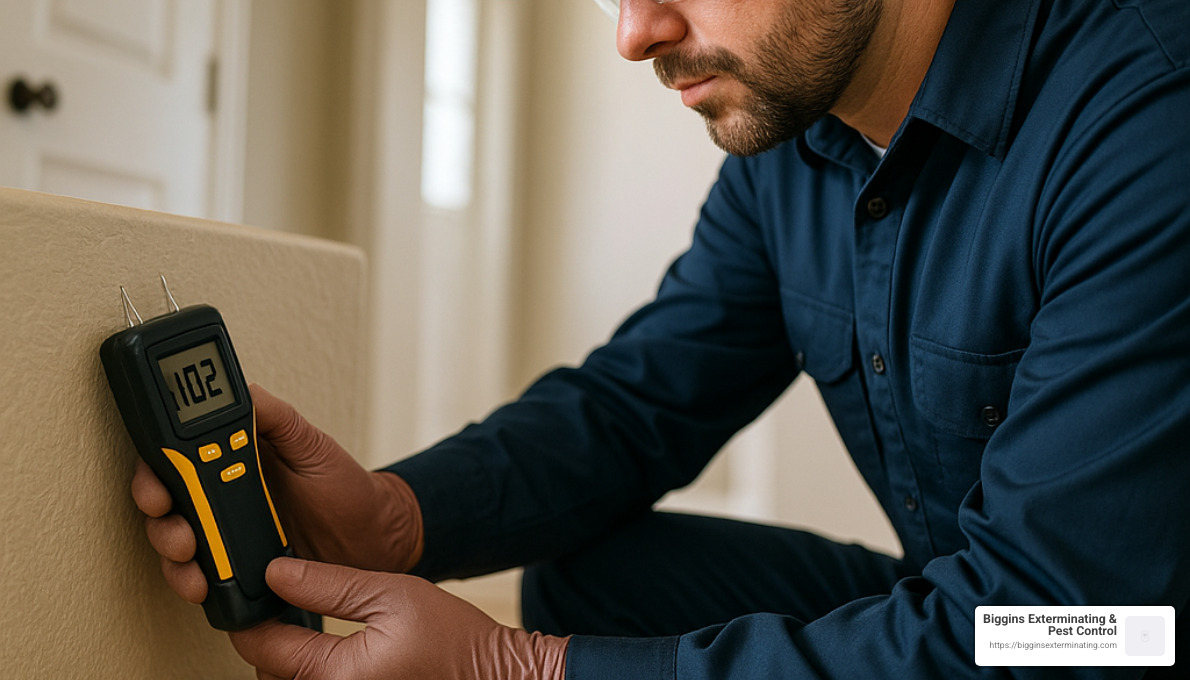
Moisture meters help us detect damp wood where carpenter ants might be tunneling. For harder-to-find colonies, we might use infrared cameras to spot the heat signatures of large ant gatherings inside walls. We can even peek inside wall voids using fiberoptic scopes without damaging your home.
One of my favorite techniques is what we call “bait acceptance testing.” Different ant species are picky eaters—some prefer sweets, others go for proteins or greases. By offering small samples of various baits, we can see which ones your particular ants prefer before we deploy the full treatment. This isn’t just guesswork—it’s strategic.
Species-Specific Treatment Strategies
When it comes to actually eliminating ants, one size definitely doesn’t fit all. Each species requires its own approach.
Carpenter ant control requires a multi-pronged strategy because these wood-destroyers are persistent. We typically use direct nest treatments with specialized non-repellent insecticides or dusts, combined with perimeter treatments around your foundation. If we suspect nests in your walls, we’ll do targeted void treatments. We’ll also place baits along their travel routes and help you identify and fix moisture problems that attracted them in the first place.
“I remember a home in Tewksbury where the carpenter ants had been active for years,” shares our senior technician. “The homeowners had no idea until we showed them how to tap on the wood and recognize that hollow sound. We treated the colony directly and within three days, the rustling sounds they’d been hearing had completely stopped.”
Pavement ants might seem less threatening, but they can invade in huge numbers. For these, we focus on crack and crevice treatments along foundations, granular baits in exterior nesting areas, and liquid residual treatments around entry points. We’ll also recommend sealing those foundation cracks to prevent future invasions.
Odorous house ants love sweets, so we use that preference against them. Sweet-based gel or liquid baits placed along active trails work wonders. We combine this with non-repellent perimeter treatments and often recommend eliminating aphids on nearby plants—those little bugs produce honeydew that odorous house ants love.
Pharaoh ants require an especially delicate touch. Spray the wrong product, and you’ll cause the colony to split into multiple new colonies—making your problem worse! For these tiny invaders, we use only carefully placed baits, never sprays. We’ll place multiple bait stations throughout the structure, monitor them regularly, and replace as needed.
Inside the Pro Toolbox
What makes professional treatments so effective? It’s partly the tools and products we have access to—things you won’t find on hardware store shelves.
Non-repellent insecticides are the secret weapon in our arsenal. Unlike over-the-counter sprays that ants can detect and avoid, these advanced formulations are completely undetectable to ants. Workers walk right through treated areas, pick up the insecticide, and unknowingly carry it back to the colony. When they groom each other and share food, they spread the treatment throughout the entire colony—including to the queen and developing young.
Borate dust is particularly effective against carpenter ants. We can apply it into wall voids and other enclosed spaces where spray can’t reach. It’s a slow-acting insecticide that adheres to the ants’ bodies and gets ingested during their grooming routines.
Gel bait syringes allow us to place tiny amounts of bait exactly where it’s needed—in cracks, crevices, and along active ant trails. We have different formulations to match different species’ food preferences.
For outdoor treatments, granular baits help us eliminate colonies in soil, mulch, or under pavers. And for longer-lasting protection, we often use microencapsulated insecticides that provide extended residual control, with the active ingredient protected in tiny capsules that release over time.
“What separates professionals from DIY approaches is our understanding of ant biology,” explains our lead technician at Biggins Exterminating. “We know how to exploit ant behavior—like their food-sharing habits—to deliver treatment to the entire colony, including the queen.”
Want to learn more about our comprehensive approach to ant control? Visit our ant control page for detailed information about our services.
5. Step-by-Step Ant Extermination & Prevention Process
When you hire ant exterminators in my area like Biggins Exterminating, you’re getting a systematic, proven process that addresses not just the symptoms but the root cause of your ant problem. Here’s what to expect from a professional ant control service:
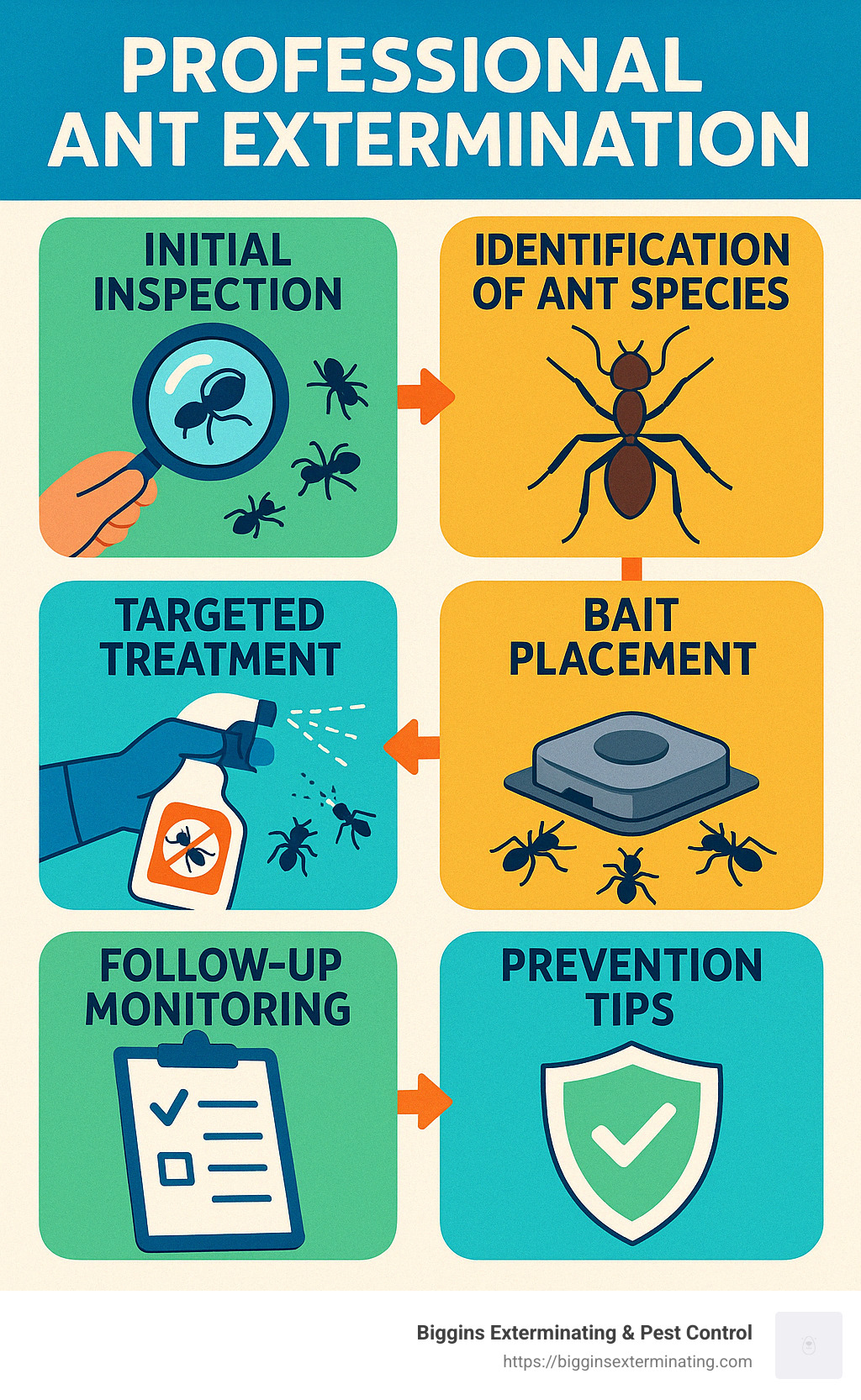
Initial Inspection
The journey to an ant-free home begins with a thorough inspection of your property. When our Biggins technicians arrive, they don’t just look for visible ants—they become detectives searching for the bigger story.
“The inspection is perhaps the most crucial step,” says our senior technician. “We’re not just looking for where the ants are now, but understanding why they’re there and how they’re getting in.”
Our experts carefully examine active ant trails and foraging patterns, watching how they move and where they disappear into walls. We check windows, doorframes, and foundation perimeters for tiny entry points that most homeowners would never notice. We also look for moisture issues that might be attracting ants—that slow drip under your sink might be an ant magnet!
Food sources both inside and outside the home get special attention. Sometimes it’s as simple as a forgotten cereal spill behind the stove or fruit trees too close to your home. We also examine conducive conditions like overhanging tree branches that create ant highways directly to your roof or mulch piled high against your foundation creating perfect nesting conditions.
Species Identification
Did you know that spraying odorous house ants with the wrong product can actually make your problem worse? Different ant species require completely different treatment approaches, which is why accurate identification is essential.
Our technicians are trained to identify all common Massachusetts ant species on sight. We look at size, color, behavior patterns, and even examine specimens under magnification when needed. This identification isn’t just interesting trivia—it guides our entire treatment plan and determines which products will be most effective for your specific invaders.
Customized Treatment Plan
Once we know what we’re dealing with, we develop a custom approach specifically for your home and ant species. No cookie-cutter treatments here!
For interior spaces, we might recommend targeted crack and crevice applications, focusing on the specific pathways your ants are using. Gel baits work wonderfully for sweet-loving species like odorous house ants, while protein-based baits might be better for others. For carpenter ants hiding in wall voids, we often use specialized dust applications that the ants will carry back to their colony.
Outside your home, we create a protective barrier with foundation perimeter treatments and strategically place granular baits in landscaped areas where colonies might be established. We’ll identify specific entry points and treat them directly, while also creating wider barrier applications to prevent new invasions.
Treatment Application
With our plan in place, our technicians get to work using a combination of methods designed to ensure complete colony elimination.
We often use non-repellent insecticides that are completely undetectable to ants. This is a key professional advantage—when workers contact the material, they don’t die immediately but instead carry it back to the colony, spreading it to other ants through grooming and food sharing. It’s like a Trojan horse that eventually reaches the queen.
Targeted baiting is another cornerstone of professional treatment. We strategically place gel, liquid, or granular baits exactly where ants will find them and carry the active ingredient back to the colony. For hard-to-reach areas like wall voids where nests might be hiding, we use specialized dust applications that penetrate deep into hidden spaces.
We also implement exclusion methods, sealing entry points to prevent reinfestation. After all, the best way to deal with ants is to keep them from getting inside in the first place!
Follow-Up Inspection
Unlike one-and-done services that leave you hoping for the best, we believe in ensuring the problem is fully resolved. That’s why our standard service includes a follow-up visit.
During this visit, we evaluate how effective the initial treatment has been. Are there still signs of activity? Has the colony been eliminated? Do we need to adjust our approach? We’ll address any remaining activity and fine-tune the treatment plan if necessary. This is also a perfect time for you to ask questions about what you’re seeing (or hopefully not seeing!) around your home.
Prevention Recommendations
The final step in our process is helping you prevent future problems. We provide customized recommendations based on your specific home and the conditions we’ve observed.
Moisture control is often at the top of our list—fixing leaky pipes and faucets, improving drainage around the foundation, addressing areas of standing water, and ensuring proper ventilation in crawl spaces and attics. Ants need water to survive, so eliminating excess moisture makes your home much less attractive.
We’ll also advise you on food source elimination strategies, like proper food storage in sealed containers, regular cleaning of crumbs and spills, smart pet food management, and proper garbage containment.
For long-term protection, we provide structural recommendations such as trimming tree branches away from your house (eliminating ant highways), maintaining a mulch-free zone next to the foundation, sealing cracks and gaps, and replacing any water-damaged wood that might attract carpenter ants.
“Prevention is just as important as elimination,” our team at Biggins Exterminating emphasizes. “We want to solve your current problem and make sure it doesn’t return.”
By following this comprehensive process, we don’t just get rid of your current ant problem—we help ensure they don’t march back in again. That’s the difference professional ant exterminators in my area can make for your home.
6. How Much Do Ant Exterminators in My Area Cost?
When you’re dealing with an ant invasion, understanding the potential costs helps you budget appropriately and avoid sticker shock. As you search for ant exterminators in my area, you’ll find that pricing varies widely based on several factors – but don’t worry, I’ll break it all down for you.
Factors Affecting Ant Control Pricing
Not all ant problems are created equal, and neither are their solutions. Several key elements influence what you’ll pay:
The severity of your infestation makes a significant difference – catching a small problem early typically costs much less than addressing a full-blown invasion that’s spread throughout your home.
The type of ants causing trouble matters too. Carpenter ant treatments generally come with higher price tags because they require more thorough inspections and specialized treatments to address their wood-damaging habits. These destructive pests demand more attention than typical nuisance ants.
Your property size naturally affects pricing as well. Larger homes require more treatment materials, time, and labor – all factors that influence the bottom line. The same goes for accessibility – if technicians need to access hard-to-reach spaces like wall voids or crawl spaces, expect some additional costs.
“Many customers are surprised that different ant species require different treatment approaches,” shares our customer service team at Biggins Exterminating. “That’s why we always conduct a thorough inspection before providing a quote – we need to understand exactly what we’re dealing with.”
Average Residential Costs for “ant exterminators in my area”
Based on industry data (not specific to Biggins Exterminating), here’s what homeowners typically pay for professional ant control:
One-Time Treatments:
Most basic ant treatments range from $70-$200 for a single visit. If you’re dealing with carpenter ants, expect to pay between $150-$500 due to their more complex treatment needs. For severe infestations that have spread throughout your home, costs can climb to $300-$800 for comprehensive treatment.
Monthly Service Plans:
Many homeowners prefer ongoing protection. Basic monthly pest control plans that include ant management typically run $23-$65 per month, while premium plans with additional guarantees and comprehensive coverage might range from $45-$195 monthly.
Quarterly Service Plans:
Quarterly visits offer a middle ground between monthly service and one-time treatments. Basic quarterly service averages $100-$300 per quarter, while more comprehensive quarterly plans might cost $200-$450.
Annual Service Plans:
Annual plans often provide the best value for consistent protection. Basic annual service typically ranges from $300-$650, while comprehensive annual protection might cost $500-$1,200 for year-round peace of mind.
These figures represent internet averages based on nationwide data, not actual quotes from Biggins Exterminating. Our pricing is customized to your specific situation, and we pride ourselves on transparent, competitive rates without requiring long-term contracts.
Commercial & Specialty Pricing From Ant Exterminators in My Area
Commercial properties face different ant control challenges and pricing structures:
Restaurants typically pay between $50-$298 monthly for standard ant control services, with high-end facilities or severe infestations potentially reaching $300-$900 monthly. Restaurant ant control is particularly important due to health code requirements and the presence of food preparation areas.
Apartment buildings and multi-family homes generally see monthly service costs of $51-$642 per building, though complex-wide treatments vary significantly based on the number of units and property layout.
Warehouses and industrial facilities typically invest $100-$400 monthly for basic service, with larger facilities potentially paying $500-$1,500+ monthly depending on square footage and complexity.
Healthcare facilities require specialized approaches, with monthly costs typically ranging from $200-$600 for focused ant control, or $400-$1,200+ for comprehensive pest management programs that address multiple pest concerns.
“When comparing quotes from different ant exterminators in my area, look beyond just the price,” advises our team at Biggins Exterminating. “Consider what’s included in the service, whether there’s a guarantee, and if follow-up visits are covered. The cheapest option isn’t always the best value if it doesn’t solve your problem.”
Unlike many competitors who lock customers into long-term contracts, Biggins Exterminating offers no-contract options with service warranties. We believe our results should keep you coming back – not a binding agreement. This approach gives you peace of mind without the long-term commitment, allowing you to experience our service before deciding on ongoing protection.
When comparing prices, investing in comprehensive, professional treatment from the start often saves money in the long run by preventing repeated infestations, property damage, and the frustration of dealing with persistent ant problems.
7. Are Treatments Safe for Kids, Pets & the Planet?
When inviting ant exterminators in my area into your home, safety naturally becomes your top priority. As a parent or pet owner, you want effective solutions without compromising the health of your loved ones. The good news? Modern pest management has evolved dramatically over the years, and today’s treatments are significantly safer than those used in previous decades.
Today’s Safer Treatment Options
At Biggins Exterminating, we understand your concerns and have carefully selected treatment options that balance effectiveness with safety:
Targeted Application Methods have replaced the old-fashioned “spray everything” approach. Instead of dousing your entire home with chemicals, we use precision techniques that place products exactly where needed – in cracks where ants travel, inside wall voids where they nest, or in bait stations they’ll find while foraging. This targeted approach means less product used and minimal exposure for your family.
“We treat homes as if our own children and pets live there,” explains our lead technician. “Because many of us are parents and pet owners ourselves, safety isn’t just a selling point – it’s our personal commitment.”
Lower Toxicity Formulations represent another significant advancement in modern pest control. Today’s professional-grade products are designed to affect insects’ unique biological systems while having minimal impact on mammals. These formulations work effectively at very low concentrations, dry quickly to reduce contact exposure, and many are virtually odorless – no more vacating your home due to overwhelming chemical smells.

Eco-Friendly Options have become increasingly popular, and for good reason. Many of our customers prefer treatments derived from natural sources, and we’re happy to offer green alternatives when appropriate:
Botanical-based insecticides harness the natural defensive compounds found in certain plants. Mineral products like diatomaceous earth and boric acid provide physical rather than chemical control. Growth regulators work by preventing insect development rather than through immediate toxicity. And microbial options target specific pest physiologies without harming beneficial insects.
Understanding Re-Entry Times and Safety Protocols
One of the most common questions we hear is, “How soon can we return home after treatment?” With modern ant control methods, the answer is usually “very soon.”
Most liquid applications dry within 1-2 hours, after which normal activity can resume. Baits are strategically placed in locations inaccessible to curious fingers and paws, or secured inside tamper-resistant stations. When we apply dust treatments inside wall voids, the product remains contained where ants travel, not where your family does.
For homes with pets, we provide specific guidance to ensure their safety. We’ll ask you to cover fish tanks and turn off air pumps during application. Water and food bowls should be picked up before treatment and replaced afterward. And we’ll explain which areas pets should avoid until treatments have dried completely.
For families with young children, we take extra precautions. Baits are never placed where little hands might reach them. Liquid applications focus on cracks, crevices, and perimeters rather than open surfaces. And we always provide clear instructions about post-treatment precautions custom to your specific situation and the products used.
“A mother in Billerica was particularly concerned about her crawling infant,” recalls our technician. “We adjusted our entire treatment plan to focus on exterior prevention and used only the gentlest interior methods in carefully selected locations. Six months later, they’re still ant-free, and she has complete peace of mind.”
The Science of Targeted Ant Control: Trophallaxis
Perhaps the most fascinating advancement in safe ant control comes from understanding ant social behavior – particularly a process called trophallaxis, or food sharing among colony members.
Modern ant baits and non-repellent insecticides work brilliantly because they exploit this natural behavior. When a foraging ant finds our bait, it doesn’t die immediately. Instead, it carries the treatment back to the colony, sharing it with other workers, larvae, and eventually the queen through their food exchange system.
This approach is not only more effective (since it reaches the hidden 90-95% of the colony you never see), but it’s also safer for your family because it requires minimal active ingredient. The ants essentially do the work of distributing the treatment throughout their colony, allowing us to use less product while achieving better results.
“Safety is never compromised at Biggins Exterminating,” our operations manager emphasizes. “We’ve invested in extensive training to ensure our technicians understand exactly how to maximize effectiveness while minimizing risk to your family, pets, and the environment.”
When you choose Biggins for your ant control needs, you’re not just getting rid of pests – you’re getting the peace of mind that comes from knowing the job will be done right, with your family’s wellbeing as our top priority.
8. Residential vs. Commercial Ant Control Services
The battle against ants looks quite different depending on whether you’re protecting your family home or safeguarding your business. While the enemy remains the same, the stakes, requirements, and approaches vary significantly between these environments.
Residential Ant Control: Protecting Your Home
When ant exterminators in my area visit your home, their focus extends beyond just killing ants. They’re protecting your sanctuary and peace of mind.
In your kitchen—the heart of most ant invasions—professionals take special care with treatments around cabinets, appliances, and pantries. Unlike DIY approaches, they use application methods specifically designed to be safe around food preparation surfaces while still eliminating the threat.
“Kitchens are ant magnets,” explains our lead technician at Biggins Exterminating. “But they’re also where your family gathers and prepares meals. We balance effectiveness with safety, using targeted applications that reach the ants but minimize human contact.”
Structural protection takes center stage when carpenter ants are involved. Our technicians thoroughly inspect attics, crawl spaces, and wall voids—places homeowners rarely see but where these wood-destroying pests often establish their colonies. We also identify moisture issues that attract carpenter ants in the first place, helping address the root cause of your infestation.
Family safety remains paramount throughout the process. We select products and application methods suitable for homes with children and pets, providing clear communication about any waiting periods before re-entering treated areas. Most importantly, we work to minimize disruption to your daily routine—because effective pest control shouldn’t turn your life upside down.
Many homeowners also worry about the aesthetic impact of pest control. That’s why we emphasize discreet treatment methods that don’t detract from your home’s appearance, while focusing on preventing visible ant trails that might embarrass you when entertaining guests.
Commercial Ant Control: Protecting Your Business
For businesses, ant control isn’t just about comfort—it’s about compliance, reputation, and sometimes even survival.
Health code compliance forms the cornerstone of commercial ant control services. Our technicians provide detailed documentation of all treatments for regulatory inspections and adhere to industry-specific requirements. Whether you run a restaurant, healthcare facility, or retail store, we understand the regulations governing your industry and ensure our treatments help you maintain compliance.
“The stakes are often higher in commercial settings,” notes our commercial division manager at Biggins Exterminating. “A restaurant can be shut down due to an ant infestation, while a homeowner faces inconvenience but not necessarily financial loss. We tailor our approach accordingly.”
Business continuity remains top-of-mind in our commercial services. We schedule treatments to minimize disruption to your operations—offering early morning, evening, or weekend appointments when needed. For sudden infestations that threaten your business, our emergency response capabilities provide peace of mind. And when we arrive, our discreet service vehicles and uniformed technicians maintain your professional image.
Liability protection represents another crucial aspect of commercial services. We provide comprehensive documentation of all services performed, conduct risk assessments, and offer prevention recommendations to help shield your business from potential issues. Regular inspections catch problems before they develop into situations that might impact your customers or reputation.
Different facilities present unique challenges that require specialized approaches. Food processing areas demand treatment protocols that ensure food safety. Healthcare settings operate under strict chemical use guidelines to protect vulnerable patients. Warehouses require strategies that protect inventory from contamination while still effectively controlling pests.
Choosing Service Frequency with Ant Exterminators in My Area
Finding the right service frequency depends on your specific situation and risk factors.
One-time services work well for addressing isolated infestations in specific areas. Many homeowners prefer this approach when they encounter occasional ant problems rather than ongoing issues. It’s also ideal for those who prefer to call as needed rather than investing in preventive maintenance.
Quarterly services provide the perfect balance for most residential properties, offering preventive maintenance that adjusts to seasonal ant activity patterns throughout the year. This frequency works especially well for properties with historical ant problems that need regular attention without monthly visits.
Bi-monthly services step up the protection for higher-risk situations. If your property sits on a wooded lot where ant populations thrive, or you’ve experienced severe infestations in the past, this more frequent schedule helps maintain continuous protection. Many commercial properties with moderate risk also benefit from this approach.
Monthly services provide the highest level of ongoing protection, typically chosen by restaurants, food service establishments, and healthcare facilities with zero-tolerance policies. Properties experiencing ongoing or severe pest pressure may also require this frequency to maintain control.
When emergencies strike, our 24/7 emergency services provide critical support for time-sensitive situations—whether it’s a restaurant facing an imminent health inspector visit or a sudden, severe infestation threatening your business operations.
“What sets Biggins Exterminating apart is our flexibility,” our service coordinator explains. “Unlike companies that lock you into long-term contracts with predetermined schedules, we offer service options without contracts. This allows you to adjust frequency based on your actual needs rather than being trapped in a one-size-fits-all arrangement.”
Whether you’re protecting your family home or safeguarding your business reputation, understanding these differences helps you choose the right approach and service frequency for your specific ant control needs.
9. How to Choose the Best Ant Exterminator Near You
Finding reliable ant exterminators in my area can feel overwhelming when you’re dealing with an unwanted invasion. With so many companies claiming to be the best, how do you separate the truly professional exterminators from those who might leave you with lingering problems?
Essential Qualifications to Look For
Start by checking that any company you’re considering has the proper credentials. A legitimate pest control company should have state pesticide applicator licenses and carry liability insurance—this protects both you and them if anything unexpected happens during treatment. Many quality companies also belong to professional associations like the National Pest Management Association, which holds members to high standards.
Experience matters tremendously when it comes to ant control. Different ant species require different approaches, so ask potential exterminators about their specific experience with your type of problem. If you’re dealing with carpenter ants, for instance, you’ll want someone who regularly handles these wood-destroying pests, not just general ant control.
Transparency is another critical factor. The best companies will provide clear service agreements that spell out exactly what’s included, what’s not, and how much it will cost—without surprise fees later. They should be able to explain their treatment protocols in terms you can understand and set realistic expectations about outcomes.
A strong warranty speaks volumes about a company’s confidence in their work. Look for guarantees of at least 30 days, though many quality companies offer much longer protection. At Biggins Exterminating, we stand behind our work with solid warranties because we believe results matter more than contracts.
Finally, reputation remains one of the most reliable indicators of quality. Check online reviews on platforms like Google, Yelp, and Angi. Pay attention to how companies respond to negative reviews—even the best companies occasionally have unhappy customers, but how they address problems says a lot about their customer service philosophy.

Red Flags to Watch Out For
While researching ant exterminators in my area, be alert for warning signs that might indicate less-than-professional service. Companies that offer to treat your home without first conducting a thorough inspection should raise immediate concerns. Each ant infestation is unique, and proper treatment begins with proper identification and assessment.
Be cautious about pricing that seems too good to be true—it usually is. Quality ant control requires professional-grade products and trained technicians, which comes at a reasonable cost. Conversely, extraordinarily high prices don’t necessarily indicate superior service. The best companies charge fair market rates for their expertise.
Watch out for high-pressure sales tactics, especially those pushing you to sign long-term contracts on the spot. Quality pest control companies like Biggins Exterminating earn your business through results, not contractual obligations.
Other red flags include technicians who can’t clearly explain their treatment methods, companies lacking proper licensing, or businesses with numerous unresolved complaints. Your home deserves better than that.
Questions to Ask Ant Exterminators in My Area Before Hiring
A conversation with potential exterminators can reveal a lot about their professionalism and expertise. Start by asking about their approach: “How will you identify which ant species is in my home?” A good exterminator will explain their identification process and why it matters for effective treatment.
Follow up with questions about their specific treatment methods: “Will you locate and treat the nest, or just the visible ants?” Surface treatments might provide temporary relief, but eliminating the colony requires targeting the source.
Safety concerns should be high on your list. Ask what products they’ll use and whether they’re safe for children and pets. Inquire about any necessary precautions before or after treatment, and how long treated areas should remain undisturbed.
Service terms matter too. Will they come back if the ants return after treatment? Are follow-up visits included in the price? Do they require a long-term contract? At Biggins Exterminating, we believe in no-contract service with solid warranties because we’re confident in our results.
Don’t hesitate to ask about the company itself: How long have they been in business? Are their technicians licensed and background-checked? What kind of training do they receive? A well-established company with properly trained staff is more likely to provide reliable service.
“When we talk with potential customers, we want them to ask questions,” shares our customer service team at Biggins Exterminating. “Those questions help us understand their specific concerns and show them how our approach differs from others. We never rush anyone into scheduling because we want them to feel completely comfortable with their choice.”
With over 40 years serving Wilmington and surrounding communities, Biggins Exterminating has built a reputation for effective, customer-focused ant control. We earn your business through results, not contracts.
For more information about our local ant extermination services, visit our local ant exterminators page.
10. Guarantees, Service Frequency & Long-Term Prevention
When you’re searching for ant exterminators in my area, understanding what happens after the initial treatment is just as important as the treatment itself. Long-term protection requires a thoughtful approach to both guarantees and prevention strategies.
Understanding Service Guarantees
Nothing provides peace of mind quite like a solid service guarantee. When evaluating ant control companies, pay close attention to what they promise if the ants return:
Most reputable companies offer some form of warranty, but they’re not all created equal. Basic warranties might cover just 30 days, while premium guarantees can extend for a full year. Some companies include unlimited free retreatments, while others might charge a “service fee” for return visits—which can quickly add up.
The most valuable guarantee is what’s sometimes called a “Nix Guarantee”—a promise to eliminate your ant problem completely or provide additional service at no extra charge. But read the fine print carefully! Look for clear language about what constitutes a “return” of ants, whether retreatments are truly free, and any conditions that might void your warranty.
“We’ve seen customers come to us after their previous exterminator’s ‘guarantee’ turned out to have so many loopholes it was practically worthless,” shares Stephen Biggins. “At Biggins Exterminating, we keep it simple—if the ants come back during your warranty period, we come back too, at no additional cost. And we never lock you into long-term contracts just to get a decent guarantee.”
Optimal Service Frequency for Year-Round Protection
Ants don’t operate on a convenient schedule, and in New England’s changing climate, different seasons bring different challenges. Understanding this seasonal pattern helps determine the ideal service frequency:
Spring (March-May) is when ant colonies become active after winter dormancy. Carpenter ants begin foraging as temperatures rise, and many species start establishing new satellite colonies. This makes spring the perfect time for preventive treatments—before infestations become entrenched.
By Summer (June-August), ant activity reaches its peak. Multiple generations develop during these warm months, and colonies can expand dramatically. Regular monitoring and maintenance treatments are crucial during this high-pressure period.
As Fall (September-November) approaches, many ant species begin seeking winter shelter—often in your warm, cozy home. This season represents your last chance to eliminate colonies before they overwinter. Perimeter treatments are particularly important during fall to prevent this seasonal migration indoors.
During Winter (December-February), outdoor activity decreases, but indoor infestations can continue unabated. This quieter season provides an excellent opportunity for structural repairs and exclusion work to prepare for the coming spring.
For truly comprehensive protection, most professionals recommend quarterly service (four visits per year) as a minimum baseline. Properties with recurring problems often benefit from bi-monthly visits (six per year), while commercial properties or homes with severe infestations might require monthly attention.
“Consistent maintenance is always more effective—and ultimately less expensive—than waiting for major infestations to develop,” explains our senior technician. “It’s like changing your oil regularly versus waiting for your engine to seize.”
Long-Term Prevention Strategies
Professional ant control doesn’t end with spraying and baiting. The most effective long-term solution combines targeted treatments with environmental modifications that make your property less attractive to ants.
Structural modifications play a crucial role in keeping ants outside where they belong. Sealing foundation cracks, installing door sweeps, repairing damaged screens, and addressing wood-to-soil contact around your foundation can dramatically reduce entry points. These small repairs might seem insignificant, but they can make a huge difference in preventing reinfestation.
Moisture management is equally important, especially for carpenter ants that prefer damp wood. Fixing leaky pipes, improving drainage around your foundation, repairing roof leaks, and ensuring proper ventilation in crawl spaces and attics eliminates the moist conditions that attract many ant species.
Your landscape choices also influence ant activity. Maintaining a vegetation-free zone around your foundation creates a buffer zone that ants are reluctant to cross. Trimming tree branches away from your roof eliminates natural bridges into your home, while removing tree stumps and managing mulch depth (keeping it to 2-3 inches maximum) reduces nesting sites.
Finally, proper sanitation remains one of your strongest defenses. Storing food in sealed containers, regularly cleaning crumbs and spills, removing garbage promptly, and not leaving pet food out overnight all help eliminate the food sources that attract ants in the first place.
“Think of ant prevention like home maintenance,” suggests our senior technician at Biggins Exterminating. “Regular, small efforts prevent bigger problems down the road. Just as you wouldn’t wait for your roof to collapse before fixing a leak, don’t wait for a full-blown infestation before implementing prevention strategies.”
At Biggins Exterminating & Pest Control, we’ve been protecting Wilmington homes from ants for over 40 years. Our family-owned business approaches every job with the care and attention to detail that comes from treating your home as if it were our own. We believe in building relationships, not just completing transactions—which is why we never require long-term contracts to get our best service and guarantees.
For more detailed information about our comprehensive approach to exterminating ants, visit our exterminating ants page.
Frequently Asked Questions about Ant Extermination
What warranty should I expect from a local ant exterminator?
When searching for ant exterminators in my area, warranty coverage should be one of your top considerations. A quality ant control company should stand behind their work with at least a 30-day warranty, though many reputable professionals offer more extensive protection.
At Biggins Exterminating, we believe in accountability, which is why we back our treatments with comprehensive service warranties custom to each treatment plan. We want you to feel confident that your ant problem will be solved—not just temporarily masked.
The best warranties clearly spell out what you’re getting. Look for details about the duration (anywhere from 30 days to a full year is standard in our industry), whether return visits are completely free or involve nominal service fees, and any conditions that might affect your coverage. Also check whether the warranty covers just the treated areas or your entire property.
I always caution homeowners about those too-good-to-be-true “lifetime guarantees” that some companies advertise. When you read the fine print, these often require continuous paid service or come with significant limitations that make them less valuable than they first appear.
How often should I schedule preventive treatments?
Finding the right frequency for preventive ant treatments is a bit like determining how often to service your car—it depends on several factors unique to your situation.
Your property’s location plays a significant role. Homes nestled in wooded areas or surrounded by lush landscaping typically need more frequent service, as these environments naturally harbor more ant colonies. Meanwhile, urban properties with less surrounding vegetation might maintain protection with less frequent treatments.
Your history with ant problems also matters. If you’ve battled recurring infestations, quarterly or even bi-monthly service provides the consistent protection you need. Homes without significant past issues might do well with bi-annual maintenance visits.
The type of ants in your area makes a difference too. Carpenter ants, with their potential to cause structural damage, warrant more vigilant monitoring than nuisance species like pavement ants.
Here in Massachusetts, our seasonal patterns create natural treatment windows. Most properties benefit from at least spring and fall treatments, with summer treatments added during peak ant activity seasons.
For most homes in the Wilmington area, we typically recommend quarterly service as a baseline preventive program—think of it as seasonal protection that keeps you covered year-round. Of course, we’re always happy to adjust this based on your specific situation and needs.
Are there natural or green options that really work?
Yes! If you’re concerned about traditional pesticides, you’ll be pleased to know that several effective “green” ant control options exist. While they often work best as part of an integrated approach rather than standalone solutions, these natural methods can provide significant relief.
Food-grade diatomaceous earth creates an effective barrier against crawling insects, while botanical oils like rosemary, peppermint, and thyme serve as natural repellents that many ant species avoid. Boric acid baits offer lower toxicity than many synthetic options while still delivering results. For outdoor control, beneficial nematodes can target ant colonies in the soil, and sticky barriers around trees and plants can prevent ants from accessing food sources.
That said, natural approaches do have some limitations worth considering. They typically require more frequent application than conventional treatments and often have shorter residual activity. Their effectiveness can vary significantly depending on which ant species you’re dealing with. For severe infestations, we sometimes recommend starting with conventional treatment to gain control, then transitioning to natural maintenance methods.
“Green doesn’t always mean completely chemical-free,” as our technician likes to explain. “It means using the least toxic, most targeted approach that will effectively solve the problem. Sometimes that’s a botanical oil, sometimes it’s a carefully placed conventional product used in minimal amounts.”
At Biggins Exterminating, we’re happy to discuss eco-friendly options for your home. Our integrated pest management approach focuses on minimizing pesticide use regardless of which treatment path you choose, ensuring both effectiveness and environmental responsibility.
Conclusion
Finding effective ant exterminators in my area doesn’t have to feel like searching for a needle in a haystack. After helping thousands of Massachusetts homeowners over the past 40 years, we’ve seen how understanding your enemy is half the battle when it comes to ant control.
Throughout this guide, we’ve walked through everything you need to know about professional ant control – from identifying those tiny invaders in your kitchen to implementing strategies that keep them from returning. We’ve explored why carpenter ants require different approaches than odorous house ants, and why that DIY spray might actually make your pharaoh ant problem worse instead of better.
Timing matters when dealing with ants. What starts as a few scouts on your countertop can quickly become a full-blown invasion with multiple satellite colonies. This is especially true with carpenter ants, where delayed treatment can mean the difference between a simple extermination and costly structural repairs.
At Biggins Exterminating, we believe in straight talk and lasting results. That’s why we don’t lock you into long-term contracts like many national chains do. Our family-owned business has thrived in Wilmington and surrounding communities because we treat your home like our own – with care, attention to detail, and proven methods that actually work.
We understand that inviting someone into your home to spray for pests requires trust. That’s why we back our ant treatments with solid warranties and take the time to explain exactly what we’re doing and why. Our technicians aren’t just trained in pest control – they’re trained to listen to your concerns and answer your questions in plain English, not pest control jargon.
Whether you’re dealing with tiny pharaoh ants in your bathroom, odorous house ants in your kitchen, or carpenter ants potentially damaging your home’s structure, professional help provides the most reliable path to a long-term solution. The peace of mind that comes from knowing the problem is truly solved – not just temporarily masked – is worth its weight in gold.
For more information about our comprehensive approach to exterminating ants, reach out for a consultation today. We serve families and businesses throughout Wilmington, Andover, Bedford, Billerica, Burlington, Lexington, North Reading, Tewksbury, and Woburn with the same dedication and attention to detail that has defined our business for over four decades.
Let’s tackle your ant problem together and create the pest-free environment your family deserves.
