
Why Professional Ant Extermination Matters More Than You Think
Ant extermination becomes urgent the moment these tiny invaders turn your kitchen into their own highway system. Ants are among the world’s most successful insects, and a single colony can contain up to 500,000 members. Because only a small percentage of workers ever venture out, spraying the few you see won’t stop the infestation.
Quick Ant Extermination Overview:
- Signs of infestation: Ant trails, visible ants, small piles of dirt, wood shavings
- Common attractants: Food crumbs, spills, pet food, water sources, damp areas
- DIY methods: Clean up food sources, seal entry points, use soapy water on trails
- Professional treatment: Targets entire colonies, uses non-repellent insecticides, guarantees results
- Prevention: Seal cracks, store food properly, fix leaks, maintain clean surfaces
Left unchecked, a queen can lay hundreds of eggs daily, allowing colonies to rebound quickly after a surface spray. Pheromone highways, satellite nests, and wood-tunnelling species like carpenter ants make total elimination tricky.
Professional ant extermination focuses on the queen. By identifying the species, locating all nests, and applying non-repellent products that workers carry home, technicians create a “transfer effect” that silently wipes out the entire colony.
I’m Stephen Biggins, owner of Biggins Exterminating & Pest Control. After more than 40 years helping Massachusetts homeowners, I know lasting ant control comes down to three things: correct identification, precise treatment, and solid prevention.
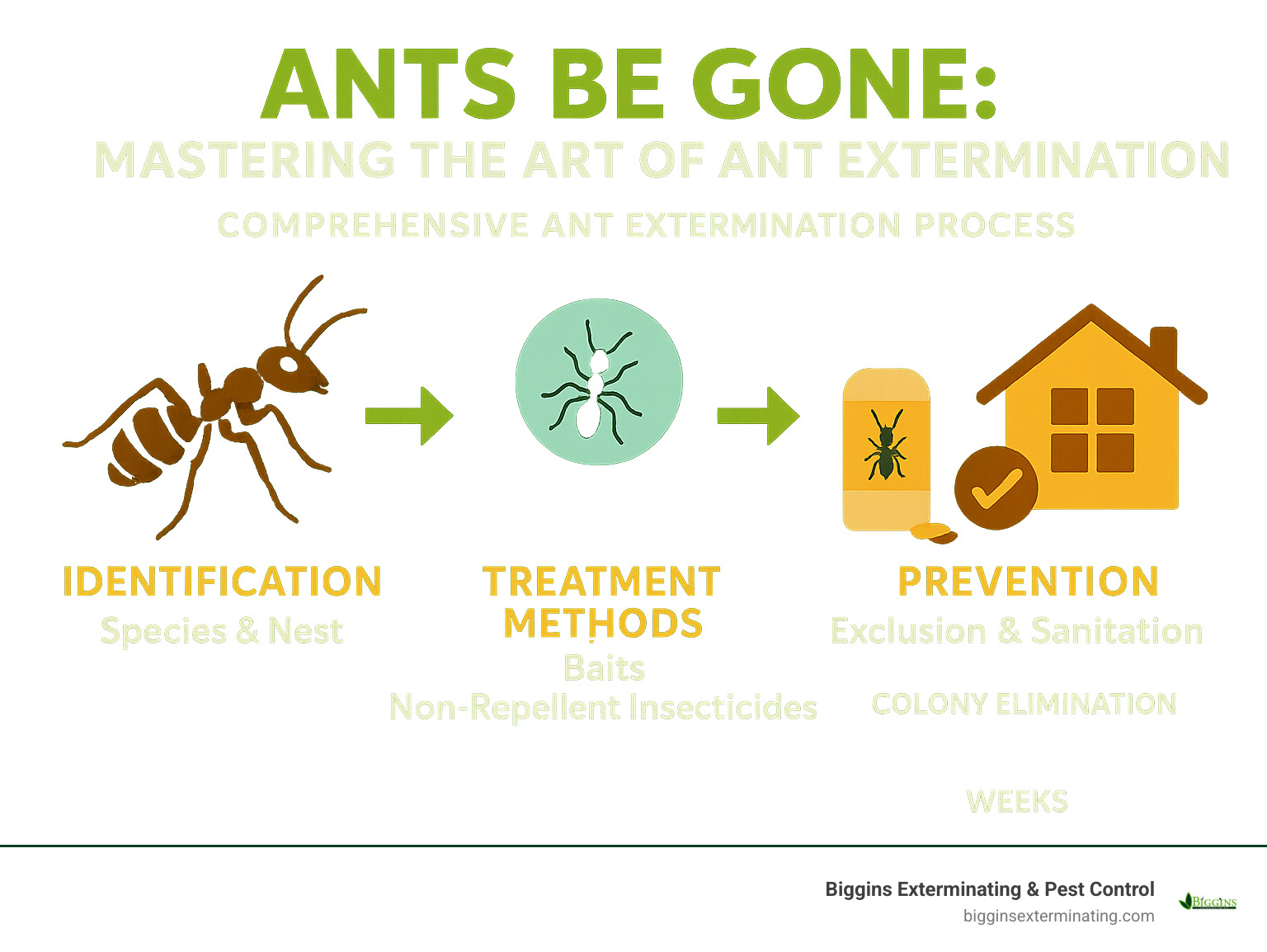
Ant extermination terms explained:
Identifying an Ant Infestation: Know Your Unwanted Guests
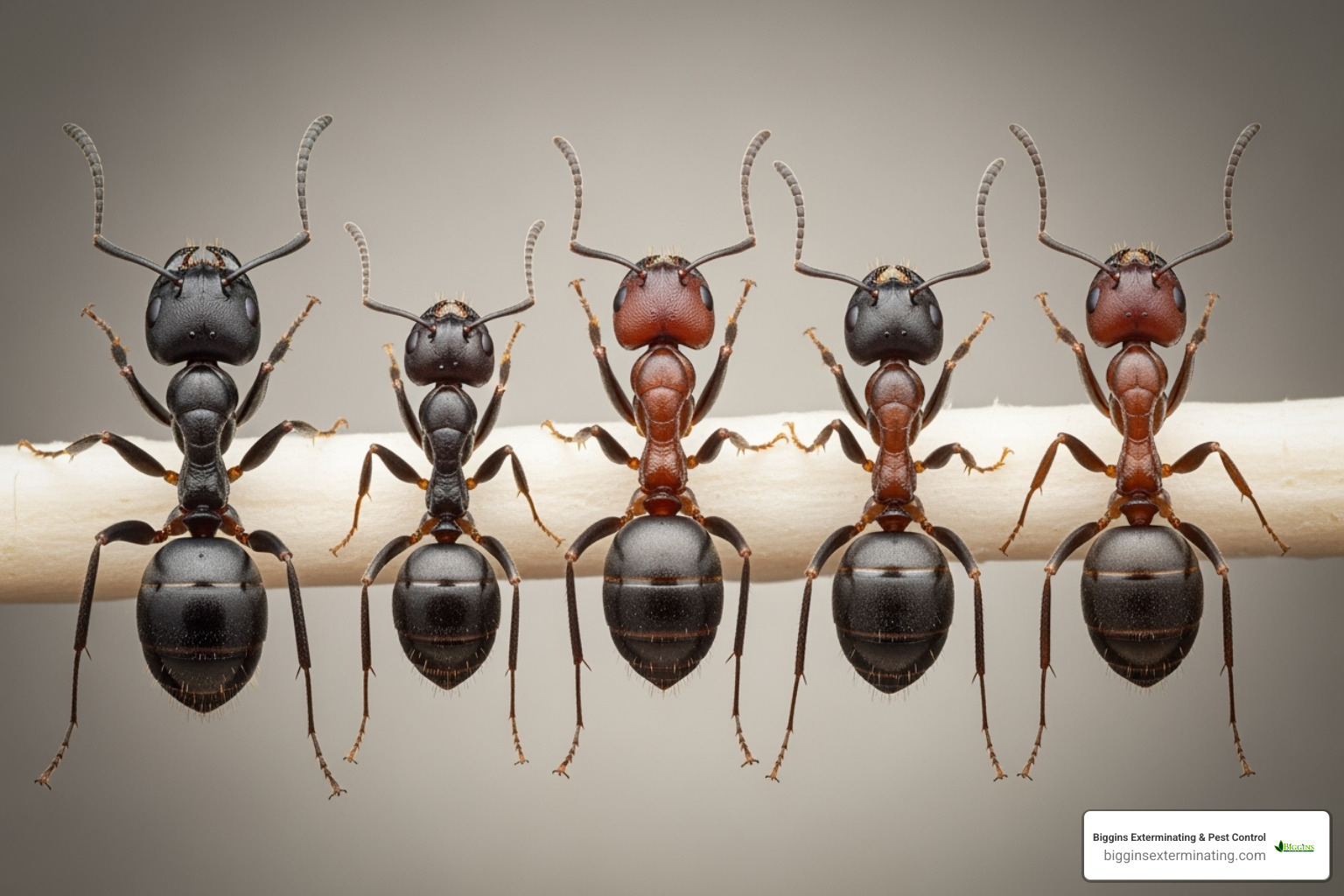
Early detection is half the battle. Ants leave invisible pheromone trails that link their nests to food, water and shelter. Understanding those signs lets you act before a few foragers turn into a full-blown colony.
Common Signs of an Ant Problem
- Live ants & trails – marching lines on counters or floors represent only about 20 % of the colony.
- Nests & anthills – small mounds outdoors; hidden wall voids indoors.
- Wood shavings (frass) – sawdust-like piles signal carpenter ants. Check our guide on Do Carpenter Ants Have Wings?.
- Rustling in walls – especially at night, often indicates carpenter ant tunnels.
What Attracts Ants to Your Home?
Ants are after three essentials: food, water and shelter.
Food: Crumbs under appliances, sticky spills, unsealed containers and pet dishes are prime targets.
Water: Leaky pipes, condensation and damp wood offer hydration.
Shelter: Wall voids, crawl spaces and foundation cracks provide nesting sites.
Need help? See our House Ants Pest Control service.
Common Ant Types and Their Dangers
| Ant Type | Size | Look | Primary Threat |
|---|---|---|---|
| Carpenter | 1/4–1/2 in | Large, black/brown | Structural wood damage |
| Pavement | 1/8 in | Dark brown/black | Food contamination |
| Odorous | 1/8 in | Brown/black | Foul smell; contamination |
Carpenter ants excavate galleries in damp wood, threatening structural integrity. Pavement and odorous house ants spread bacteria across food surfaces. Fire ants (rare in MA) can deliver painful stings. For identification tips, see How to Distinguish Carpenter Ants from Termites and Do Carpenter Ants Bite?.
Pinpointing the Source: How to Locate an Ant Nest
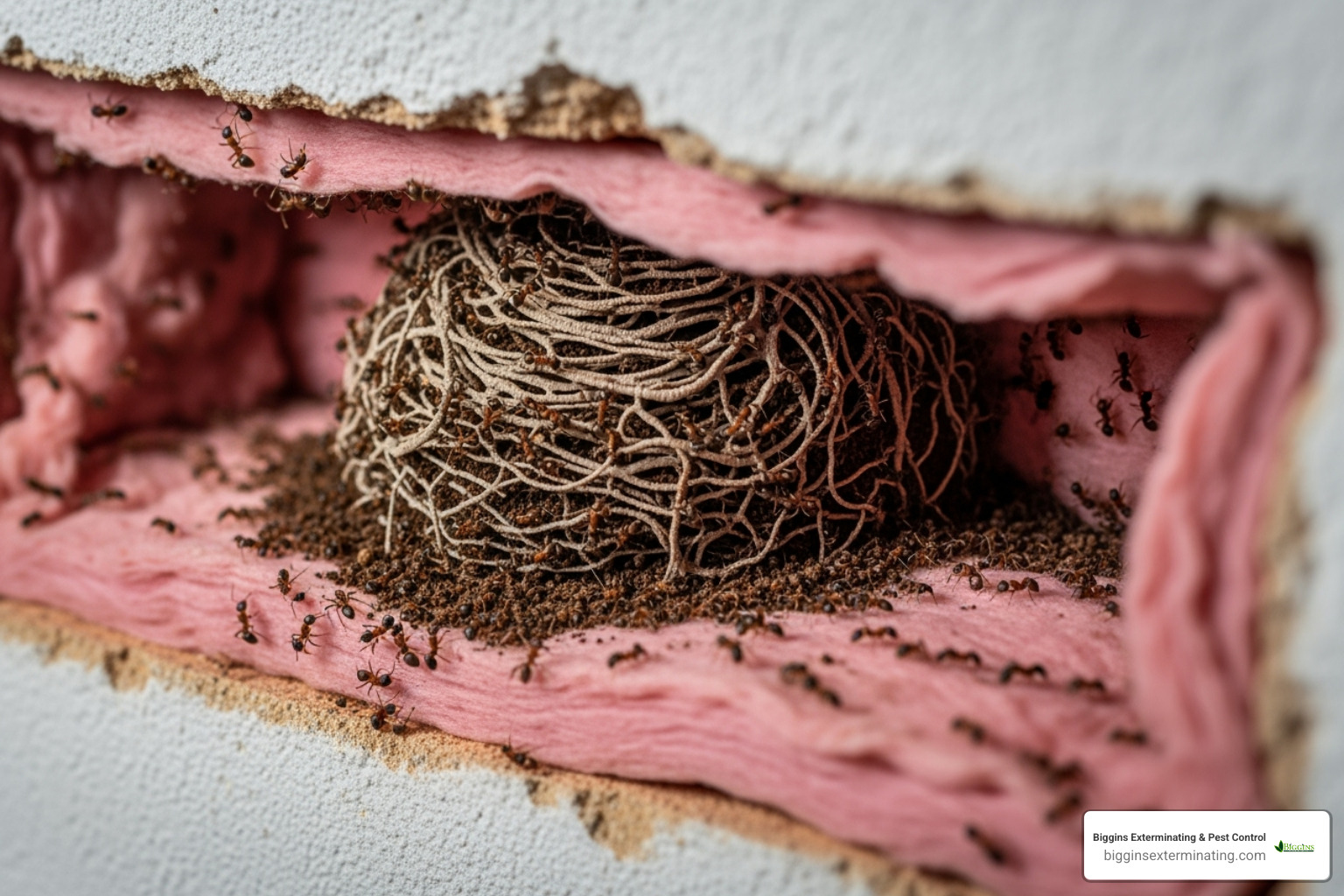
Finding the ant nest is like solving a mystery – and it’s the most critical step in successful ant extermination. You can spray visible ants all day long, but if you don’t eliminate the source, they’ll keep coming back. Think of it this way: you’re not just dealing with the ants you see, but with the thousands hiding behind your walls.
The secret to locating ant nests lies in becoming an ant detective. Following the trail back to its source requires patience, but it’s your best strategy. Watch those busy foragers as they march along their invisible highways – they’re essentially giving you directions to their home base.
Peak activity times are your friend here. Ants are most active during early morning and evening hours, when temperatures are cooler and they feel safer venturing out. Grab a cup of coffee at dawn or settle in after dinner to observe their movement patterns. You’ll be surprised how much you can learn just by watching.
In our four decades of experience, we’ve found ant nests in some pretty creative places. Kitchens are ant magnets – they love setting up shop under appliances where it’s warm and humid, or inside wall voids near plumbing where moisture collects. Bathrooms offer similar appeal, with nests commonly found behind tiles, under sinks, and around tubs and showers where small leaks provide perfect conditions.
Basements present their own challenges for ant extermination. These areas often harbor nests in foundation cracks, around utility pipes, or tucked away in stored materials you rarely disturb. Wall voids throughout your home can house entire colonies, especially near moisture sources like pipes or areas with poor ventilation.
Don’t forget to look up – attics can harbor significant ant populations, particularly in insulation where they’re undisturbed. Our guide on Ants in Attic Insulation covers this common problem area in detail.
Foundation cracks around your home’s exterior often reveal outdoor nests. Look for small mounds of dirt or sand that mark nest entrances, typically near foundation walls, under porches, or nestled in landscape materials. These outdoor colonies often send foraging parties inside your home.
Here’s where things get tricky: satellite colonies. Carpenter ants, in particular, are notorious for establishing multiple nests. They might have their main colony outside under your deck, but create satellite colonies inside your walls. This makes ant extermination more complex because eliminating just one nest won’t solve your problem.
Our Indoor Ant Control service takes the guesswork out of nest location. We use our experience to identify likely nesting sites and employ targeted strategies to eliminate all colonies, not just the obvious ones.
Tackling the Problem: DIY vs. Professional Ant Extermination
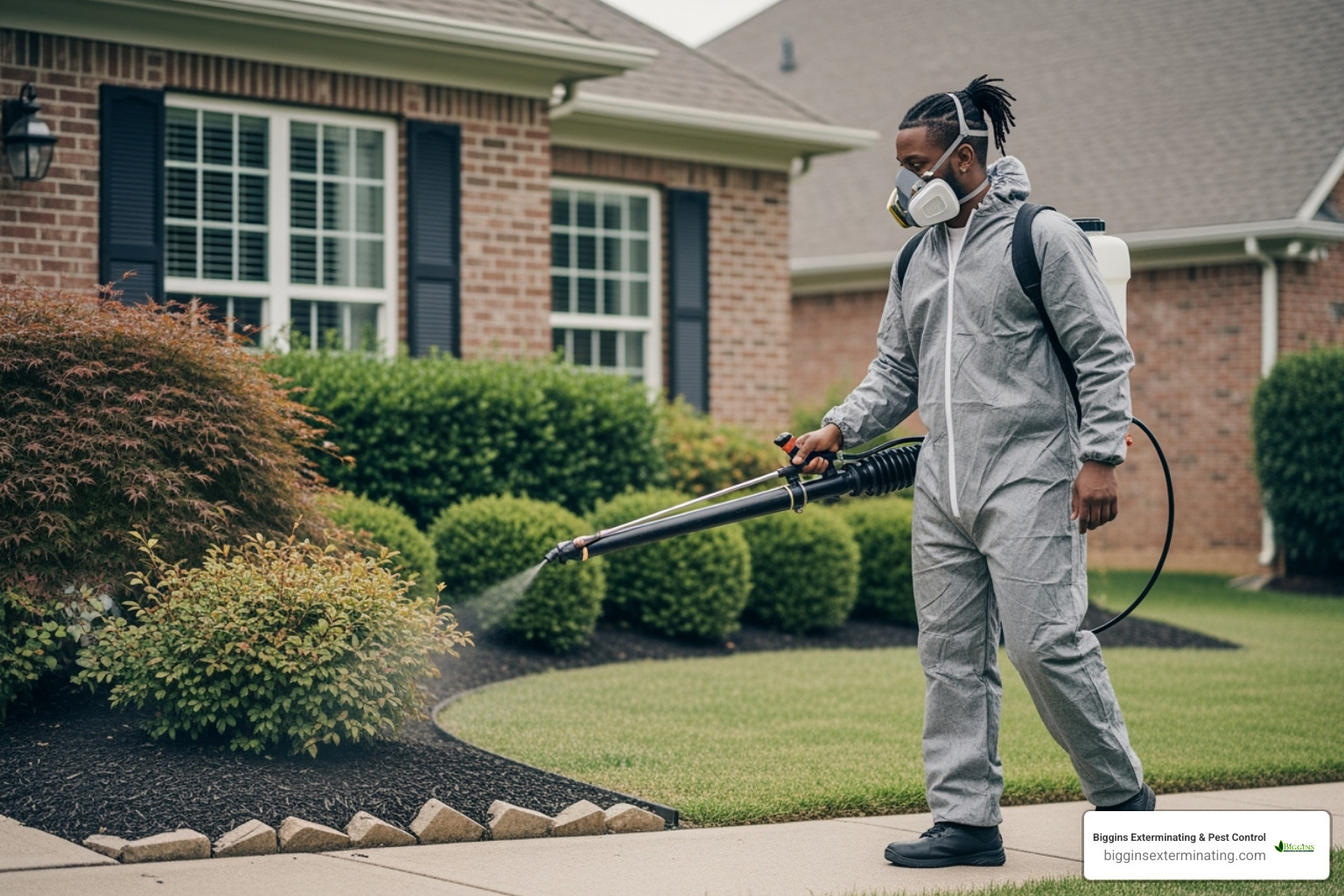
Seeing a line of ants often tempts homeowners to grab the nearest spray. Quick DIY fixes can work for minor issues, but they rarely reach the queen hidden deep inside walls or soil.
Effective DIY Options
- Clean & sanitize: Soapy water erases pheromone trails; vacuum up visible ants.
- Seal entry points: Caulk cracks around windows, doors and pipes.
- Natural disruptors: Vinegar or soapy water on trails, cinnamon or diatomaceous earth at entry points.
For outdoor tips, see Natural Ant Control Outside and Sugar Ant Pest Control.
DIY works best as prevention or for very small colonies. Once ants are established, professional help is usually faster and cheaper in the long run.
Why Bring in the Pros?
- Hidden colonies: The ants you see are a fraction of the population.
- Correct ID: Treatments differ for carpenter, pavement and odorous house ants.
- Transfer effect: Non-repellent products stick to workers, who carry them back to eliminate the queen.
- Integrated Pest Management (IPM): Combines inspection, treatment, exclusion and monitoring for lasting results.
- Guarantees: Biggins backs every service—no contracts required.
Curious about carpenter ants? Read Can Pest Control Get Rid of Carpenter Ants? or explore our Carpenter Ant Service.
Fortifying Your Home: Long-Term Ant Prevention

The best ant extermination strategy is preventing ants from entering your home in the first place. After four decades of helping Massachusetts homeowners, I’ve learned that a few simple prevention steps can save you from major headaches down the road.
Think of ant prevention like weatherproofing your home – it’s an investment that pays dividends year after year. Ants are incredibly persistent, and they’ll remember successful routes to food sources for months. By cutting off their access points and removing attractants, you’re essentially putting up a “no vacancy” sign for these unwanted guests.
Sealing entry points is your first line of defense. Ants can squeeze through openings smaller than a penny, so attention to detail matters. Start by caulking cracks and gaps around windows, doors, and foundations – these are the highways ants use to enter your home. Don’t forget about weather stripping on doors and windows, which often deteriorates over time and creates perfect ant-sized doorways.
Pay special attention to areas where utilities enter your home. Sealing around pipes and electrical outlets eliminates many common entry points that homeowners overlook. Even small holes in walls and foundations should be filled promptly – what seems insignificant to us is a major thoroughfare for ants.
Food storage and sanitation practices make or break your prevention efforts. Ants have an incredible sense of smell and can detect food sources from surprising distances. Storing all food in airtight containers removes the dinner invitation that draws them inside. This includes pet food, which should be kept in sealed containers and cleaned up immediately after feeding.
The key is consistency in your cleaning routine. Wiping down countertops and surfaces regularly removes the microscopic food particles that attract scout ants. Never leave dirty dishes in the sink overnight – the combination of food residue and moisture creates an irresistible attraction for multiple ant species.
Moisture control is equally important because ants need water to survive. Fixing leaky pipes and faucets eliminates one of their primary reasons for entering your home. Don’t ignore minor drips – what seems like a small leak to you provides a reliable water source for an entire ant colony.
Improving ventilation in damp areas like basements and crawl spaces reduces humidity that attracts ants. Consider using dehumidifiers in problem areas, and ensure proper drainage around your home’s foundation to prevent water accumulation.
Yard maintenance creates a buffer zone between ant colonies and your home. Trimming tree branches and shrubs away from your house eliminates the “ant bridges” that provide easy access to your roof and upper floors. Remove dead wood, leaves, and debris from around your foundation – these materials provide ideal nesting sites for outdoor colonies.
Keep mulch at least six inches away from your home’s foundation, and store firewood away from the house. These organic materials harbor moisture and provide shelter that ants find irresistible.
Regular maintenance of your lawn drainage prevents water accumulation that attracts ants and creates ideal conditions for colony establishment.
Our House Ant Exterminator service includes comprehensive prevention recommendations custom to your specific property’s needs. We’ll identify potential problem areas and provide customized solutions that keep ants out for good.
Prevention is always more cost-effective than treatment. A little effort now saves you from dealing with major infestations later.
The Bottom Line: Safety and Costs of Ant Control
Is Ant Pest Control Safe for Children and Pets?
Modern products are designed for targeted use at low concentrations. Our technicians apply only what’s needed, then advise a short drying time—typically 30 minutes to a few hours—before kids or pets re-enter treated areas. Ventilating the home speeds up drying, and our IPM approach keeps overall chemical use to a minimum.
How Much Does Ant Extermination Typically Cost?
Please note: These are average costs based on internet data and not actual costs for Biggins Exterminating services.
Standard ant treatments generally range from $150–$600, while severe structural infestations can top $1,800. Price depends on:
- Colony size & severity
- Property size & access points
- Ant species (carpenter ants often cost more)
- One-time vs. ongoing plans
For a custom quote, visit Ant Exterminators in My Area.
Frequently Asked Questions about Ant Control
How do I get rid of ants permanently?
Permanent control requires killing the queen. Professional baits and non-repellent sprays create a transfer effect that wipes out the entire colony. Combine treatment with sealing entry points and good sanitation for long-term success. See How to Kill Carpenter Ants.
What is the difference between ants and termites?
Ants have pinched waists, bent antennae and front wings longer than the rear pair. Termites have straight waists, straight antennae and equal-length wings. They also eat wood, while carpenter ants only excavate it. Details in our Carpenter Ants Pest Control guide.
How long does a professional ant treatment take to work?
You’ll usually see fewer ants within 24–48 hours. Full colony elimination can take 1–4 weeks as workers spread the treatment through the nest. Stubborn infestations may need a follow-up, generally scheduled 2–3 weeks after the initial visit. For local timelines, see Ant Treatment Bedford MA.
Secure Your Home from Ants Today
When ants invade your home, they’re not just looking for a quick snack – they’re scouting for a permanent residence. Ant extermination becomes essential when these persistent invaders threaten your family’s comfort, your home’s structural integrity, and your peace of mind.
The reality is that persistent infestations can escalate quickly from a minor nuisance to serious problems. Carpenter ants can compromise your home’s wooden structures, while other species spread bacteria across your kitchen counters and contaminate your food. The health concerns extend beyond just cleanliness – some people are allergic to ant bites, and the stress of dealing with ongoing infestations affects your quality of life.
What makes ant problems particularly frustrating is that they rarely resolve on their own. Unlike other pests that might move on seasonally, ants establish permanent colonies that can thrive for years. A single queen can live up to 30 years, continuously laying eggs and expanding her empire throughout your property.
Professional expertise makes all the difference in these situations. While spraying visible ants might provide temporary relief, eliminating entire colonies requires specialized knowledge, professional-grade products, and proven techniques that target the source of the problem.
For over 40 years, Biggins Exterminating & Pest Control has provided reliable, family-owned service to Massachusetts residents. We’ve built our reputation serving communities in Andover, Bedford, Billerica, Burlington, Lexington, North Reading, Tewksbury, Wilmington, and Woburn with honest, effective pest control solutions.
What sets us apart is our commitment to your satisfaction without the hassle of long-term contracts. Our no-contract services come with warranties because we stand behind our work. If ants return after our treatment, we return to make it right – at no additional cost to you.
Don’t let ants dictate how you live in your own home. Whether you’re dealing with carpenter ants threatening your home’s structure, odorous house ants contaminating your kitchen, or pavement ants creating unsightly trails across your floors, our experienced team has the expertise and tools to eliminate them permanently.
The sooner you address an ant problem, the easier and more cost-effective the solution becomes. What starts as a few scouts can quickly become thousands of workers if left untreated. Small problems have simple solutions – major infestations require extensive treatment and higher costs.
Contact our expert ant control exterminators for a consultation today. We’ll assess your specific situation, identify the ant species causing problems, locate their nests, and develop a customized treatment plan that eliminates the entire colony – not just the ants you see marching across your countertops.
When it comes to ant extermination, experience matters. Let our four decades of knowledge and proven results work for you. Your home should be your sanctuary, not an ant highway – and we’re here to make sure it stays that way.
