
The Tiny Invaders Taking Over Massachusetts Kitchens
Sugar ant control is something thousands of Massachusetts homeowners deal with every spring and summer — and if you’re here, you’re probably seeing trails of tiny ants in your kitchen right now.
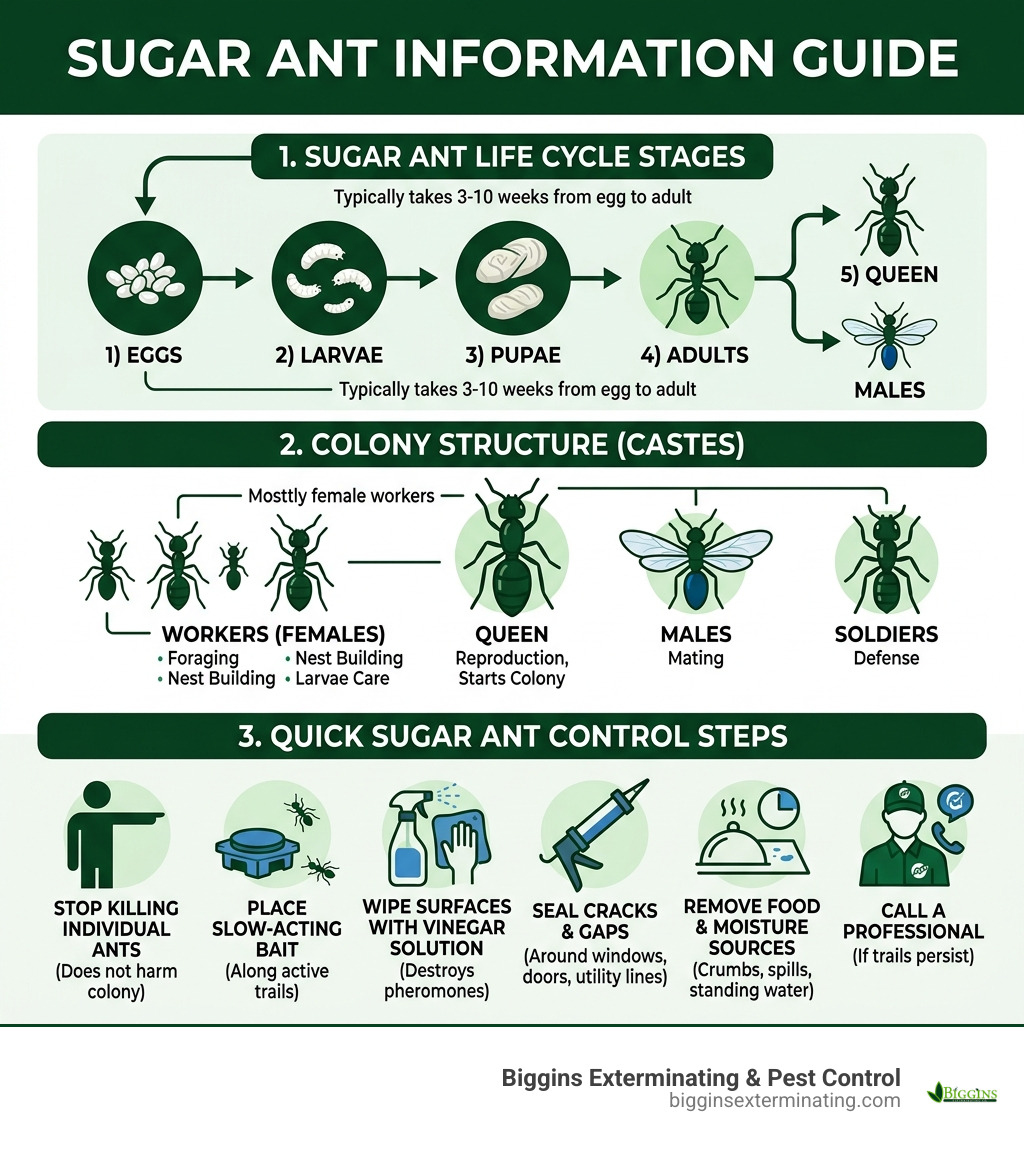
Here’s how to get rid of them fast:
- Stop killing individual ants — it does nothing for the colony
- Place slow-acting bait (like a Borax-based liquid bait) directly along active ant trails
- Wipe down surfaces with a 50/50 white vinegar and water solution to destroy pheromone trails
- Seal cracks and gaps around windows, doors, and utility lines with silicone caulk
- Remove food and moisture sources — crumbs, spills, leaky pipes, and standing water
- Call a professional if trails persist after 2 weeks or you suspect a hidden nest in your walls
Those steps will solve most infestations. But if you want to understand why they keep coming back — and how to stop them for good — keep reading.
Finding a line of tiny black insects marching across your kitchen counter is a near-universal homeowner experience. Leave the tiniest sweet crumb or drop of syrup on a countertop, and a short while later you may return to find a group of tiny ants already feasting on it. That’s not a coincidence — ants have four to five times more odor receptors than most other insects, allowing them to detect food from several hundred feet away. In Massachusetts, sugar ant activity peaks in spring and summer, making May and June some of the busiest months for infestations in towns like Wilmington, Burlington, and Woburn.
I’m Stephen Biggins, owner of Biggins Exterminating Co., a family-owned pest control company serving Massachusetts communities since 1982, with over 40 years of hands-on sugar ant control experience. In that time, I’ve seen every type of infestation — from a handful of scouts in a clean kitchen to massive colonies nesting deep inside wall voids — and I’ll walk you through exactly what works.
Identifying Common Sugar Ants in Massachusetts

When we talk about “sugar ants” in the United States, we aren’t actually talking about a single species. The “real” sugar ant (the banded sugar ant) is native to Australia. In towns like Andover, Bedford, and Lexington, “sugar ant” is a colloquial term we use for any small, dark ant attracted to sweets.
Proper identification is the most crucial first step. If you don’t know who you’re fighting, you won’t know where they’re hiding. According to experts at Marthastewart.com, understanding the biology of these pests is key to Indoor Ant Control.
The three most common culprits we see in Massachusetts are:
- Odorous House Ants: These are the most common. They are 2.5–3mm long, dark brown or black, and have 12 antennae segments with a distinct “elbow” joint. Their most famous trait? They release a pungent “rotten coconut” smell when crushed.
- Pavement Ants: Often found in Woburn and Billerica, these ants usually nest in sidewalk cracks or under foundations. They have two small nodes on their back, whereas the odorous house ant has only one.
- Pharaoh Ants: These are tiny, yellow or light brown, and are notoriously difficult to control because they are prone to “budding” (splitting into multiple colonies) if you use the wrong spray.
Signs of an Infestation
You don’t need to see a million ants to have a problem. In fact, seeing just two or three “scout ants” is a major warning sign. These scouts are looking for high-energy food to report back to the colony. Once they find it, they lay down a pheromone trail—a chemical GPS—that tells thousands of their sisters exactly where to go.
Other signs include:
- Active Trails: Long lines of ants moving between an entry point and a food source.
- Winged Swarmers: If you see winged ants inside, it often means a colony is mature and looking to expand.
- Wall Activity: Hearing faint rustling or seeing ants emerge from behind baseboards or electrical outlets.
- Moisture Seekers: Finding ants congregating near hot water pipes or damp sponges in the bathroom.
Why Sugar Ants Invade Your Home
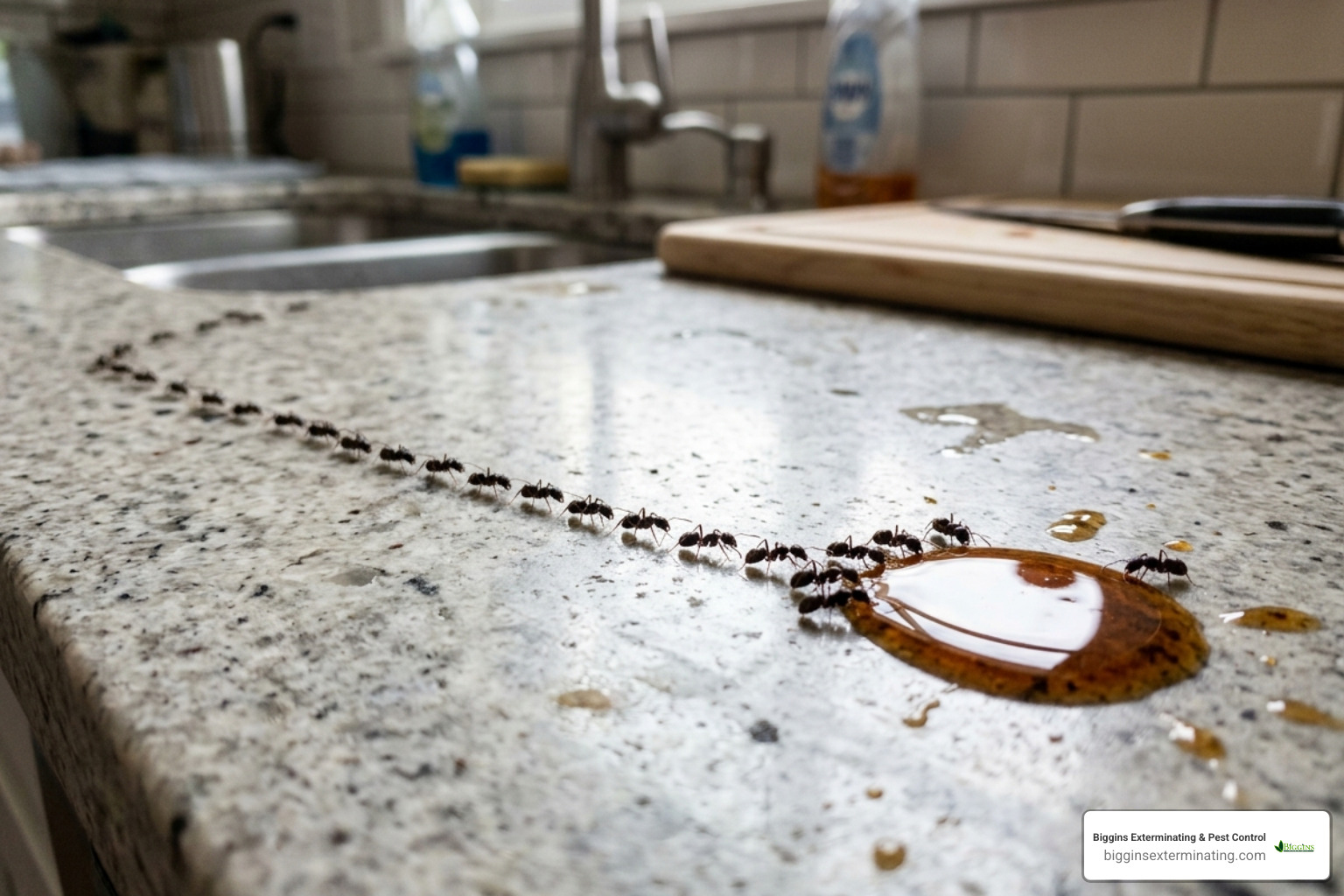
Your home is essentially a five-star resort for ants. They aren’t invading to be mean; they are simply following their biology. As we mentioned, their odor receptors are incredibly powerful. A single drop of spilled soda or a crumb behind the toaster is like a neon “Open” sign.
Common attractants include:
- Sugary Residues: Honey jars, syrup bottles, and fruit bowls.
- Honeydew: If you have houseplants with aphids, the ants will actually “farm” the aphids for a sweet liquid they secrete called honeydew.
- Moisture: In dry spells or mid-summer heat, ants enter homes in North Reading and Tewksbury specifically looking for water.
- Pet Food: Leaving dog or cat food out is one of the biggest invitations for a House Ants Pest Control issue.
Entry Points and Nesting Sites
Sugar ants are masters of “squeezing through.” They can fit through gaps as thin as a credit card. Common entry points we find during inspections include foundation cracks, gaps in window seals, and utility penetrations (where pipes or wires enter the house).
Outside, they love nesting in:
- Mulch Beds: Damp mulch is a perfect incubator for colonies.
- Wood Piles: Stacked firewood near the house provides a bridge.
- Overhanging Branches: Trees touching your siding act as a highway to your upper-floor windows.
For more on managing the exterior of your property, check out our guide on Natural Ant Control Outside.
Effective Strategies for Sugar Ant Control
The biggest mistake people make is reaching for a can of contact killer spray. While it’s satisfying to watch ants die instantly, you’re only killing the “delivery drivers.” The “warehouse” (the nest) and the “manager” (the queen) remain perfectly safe.
To truly achieve Effective Ant Control, you must use their biology against them. This is where Professional Ant Control Services differ from basic DIY.
| Method | How it Works | Pros | Cons |
|---|---|---|---|
| Baiting | Ants eat slow-acting poison and share it via trophallaxis. | Kills the queen and the entire colony. | Takes 3–7 days to see results. |
| Contact Sprays | Kills only the ants it touches on contact. | Immediate satisfaction. | Can cause “budding,” making the problem worse. |
| Pheromone Removal | Vinegar solution erases scent trails. | Stops new ants from following the path. | Doesn’t kill the nest. |
Professional Sugar Ant Control Methods
When we come to a home in Wilmington or Burlington, we use professional-grade tools that go beyond what you find at the hardware store. Ant Extermination involves:
- Non-Repellent Insecticides: These are “invisible” to ants. They walk through the treatment, pick it up on their bodies, and spread it throughout the nest without even knowing it.
- Structural Void Treatments: We can apply dusts or foams into wall voids where ants are nesting.
- Perimeter Barriers: Creating a seasonal shield around your foundation to prevent new scouts from entering.
Why DIY Methods Often Fail
Many homeowners try to handle the problem themselves, but sugar ants are resilient. One of the most common issues is “budding.” If a colony feels threatened by a repellent spray, the queens will split up and move to different parts of the house, turning one nest into three or four. This “fracturing” is why many people feel like they are playing a never-ending game of whack-a-mole. As noted by Today’s Homeowner, DIY methods can be effective for small issues, but hidden nests require a more strategic approach.
Preventing Future Infestations in New England
Once we’ve cleared the ants out, the goal is to keep them out. This requires a shift in how you manage your “Sanitation Hot Zones”—the kitchen, pantry, and bathrooms.
- Airtight Containers: Move cereals, sugars, and snacks into sealed plastic or glass containers.
- Moisture Control: Fix leaky faucets and wipe down sinks. Ants are often attracted to the residue in drains.
- Landscape Management: Maintain a 12-inch gap between your mulch and your foundation. Trim any branches that touch the house.
- Vinegar Wipes: Regularly cleaning with a 50/50 white vinegar and water solution is a great Sugar Ant Pest Control habit.
Seasonal Maintenance for Massachusetts Homeowners
In New England, pest control isn’t a “one and done” task. Our seasons dictate ant behavior:
- Spring: Ants emerge hungry and look for high-energy sugars.
- Summer: Foraging peaks; ants seek moisture during heatwaves.
- Fall: Ants look for warm places to overwinter.
- Winter: If you see ants in the winter, it’s a sign a nest is already inside your walls.
Following an Ant Control Services Complete Guide can help you stay ahead of these seasonal shifts.
Average Costs for Professional Extermination
We believe in transparency. While Biggins Exterminating provides custom quotes based on your specific home and infestation level, we want to provide you with an idea of what the industry looks like.
According to our Ant Exterminator Prices Complete Guide, the following factors affect your cost:
- The size of your home.
- The severity of the infestation.
- Whether the ants are nesting inside wall voids.
- The frequency of service (one-time vs. seasonal protection).
Based on publicly available internet data, professional ant treatment typically ranges from $150 to $950. These are average market costs and not Biggins Exterminating’s actual pricing. We always recommend an on-site inspection to give you an accurate, fair price for your specific situation.
Frequently Asked Questions about Sugar Ant Control
How long does it take to eliminate a sugar ant colony?
When Exterminating Ants, patience is required. If you use a quality baiting system, you should see a significant reduction in activity within 3 to 7 days. However, for full eradication of a large colony (which can range from 100 to 10,000 ants), it can take up to 2 weeks.
Are sugar ants dangerous to my health or home?
Generally, sugar ants are considered nuisance pests. They do not cause structural damage like carpenter ants. However, they are a hygiene concern. They can crawl over garbage or waste and then march across your food, leading to contamination. Pharaoh ants, in particular, have been known to spread pathogens in certain environments. Using Ant Control Exterminators ensures your food preparation areas stay clean and safe.
When should I call a professional for sugar ant control?
You should consider Professional Ant Control Services if:
- Ant trails persist for more than two weeks despite DIY efforts.
- You see ants in multiple rooms (a sign of “budding”).
- You see winged swarmers inside your home.
- The infestation returns every single spring.
Conclusion
At Biggins Exterminating & Pest Control, we understand how frustrating it is to feel like you’ve lost control of your kitchen. For over 40 years, our family has been helping neighbors in Wilmington, Andover, Bedford, and beyond reclaim their homes from pests. We don’t believe in locking you into long-term contracts; we believe in high-quality service, warranties, and a commitment to our community.
If you’re tired of the “long march” of ants across your counters, we’re here to help. Whether you’re in Woburn, Billerica, or Lexington, we can provide the Effective Ant Control you need to enjoy your home again. Give us a call today—let’s get those tiny invaders out for good!
