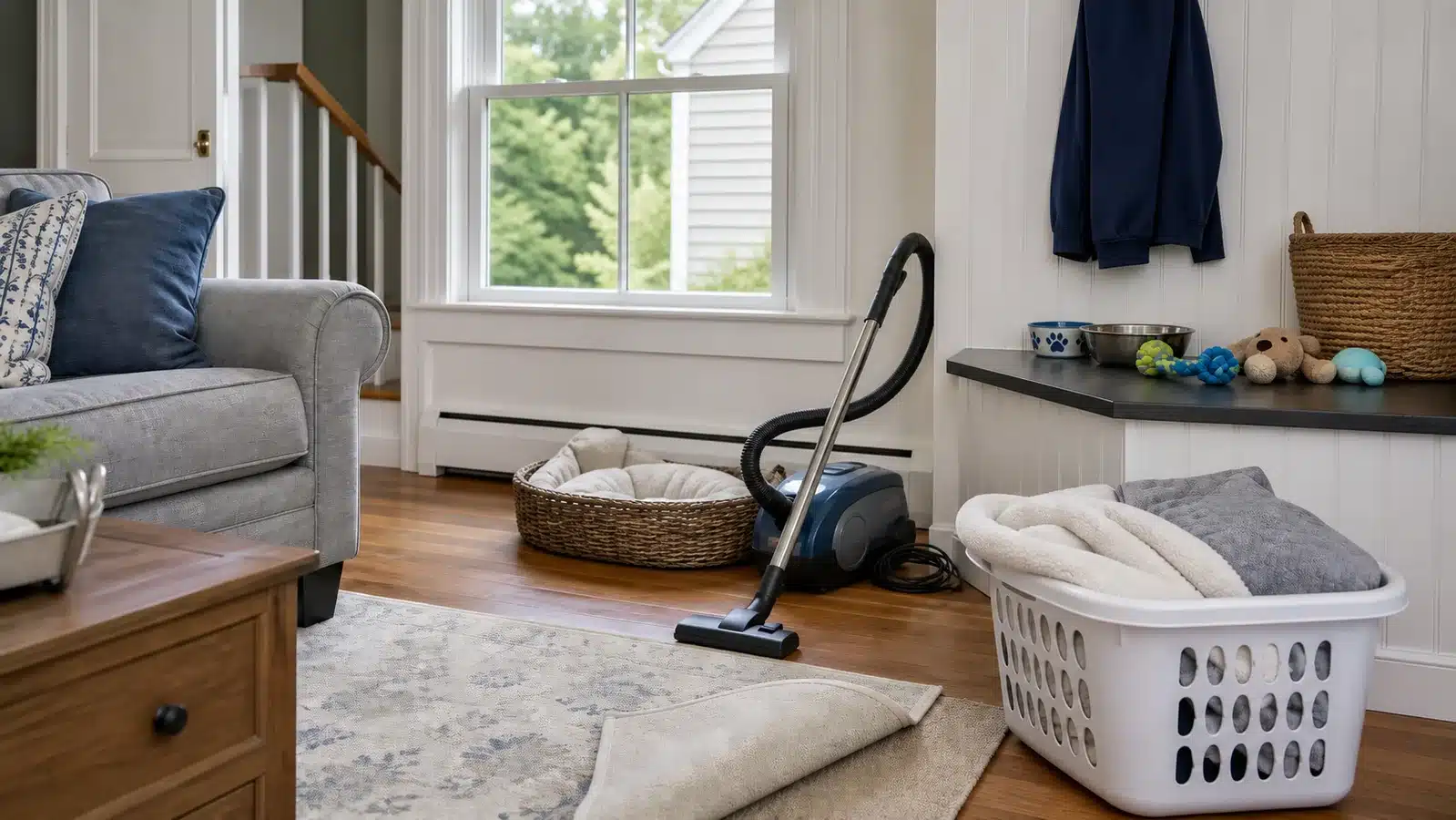
To prepare your house for a flea exterminator, begin with the provider’s written checklist. In most homes, the core jobs are to coordinate veterinary care for every pet, clean the fabrics and floors where fleas develop, clear access to treatment areas, remove food and pet items, and plan for everyone to leave and return at the instructed times.
Preparation is not about making the house look perfect. It is about helping the technician reach the places where pets rest and people notice flea activity without introducing products or cleaning steps that conflict with the treatment plan.
First, ask for the property-specific instructions
Before moving furniture or washing every fabric in sight, tell the provider about the household. Include every dog and cat, other animals such as birds or reptiles, young children, residents with health concerns, and rooms that may be difficult to enter. Ask:
- Which rooms, floors, porches, basements, or pet-resting areas need access?
- What should be vacuumed or laundered before service?
- Should any furniture be moved, and by whom?
- How should aquariums, terrariums, cages, food, and medications be handled?
- When must people and pets leave, and what exact conditions must be met before return?
- What cleaning and vacuuming schedule should follow treatment?
Biggins Exterminating’s professional flea-control service is the primary destination for service questions. Use the instructions supplied for your appointment if they differ from any general checklist.
A practical flea-treatment preparation timeline
| When | Household task | Why it matters |
|---|---|---|
| When service is booked | Share the pet list, affected rooms, access limits, and any resident concerns. Arrange veterinary guidance for pets. | Home treatment and pet treatment need to be coordinated rather than handled as separate problems. |
| One to two days before | Wash or contain washable pet bedding and other instructed fabrics. Plan where people and animals will stay during the required absence. | This prevents a last-minute rush and keeps cleaned items from returning to the floor too soon. |
| Before the technician arrives | Vacuum the instructed floors and upholstery, dispose of vacuum contents as directed, pick up floor clutter, and remove pet bowls, toys, and loose bedding. | Preparation opens the floor perimeter, furniture edges, and pet-resting zones that may need inspection or treatment. |
| At departure | Take every person and pet out, confirm doors and gates, and get the reentry and aftercare instructions in writing. | The household leaves with one clear plan instead of relying on memory or a generic waiting time. |
| After the instructed return | Follow the provider’s ventilation, vacuuming, cleaning, pet, and follow-up directions. | Post-service actions can affect treated areas, so they should match the actual product and plan. |
Prepare the areas fleas use—not just the room where you saw one
Make a quick map of where each pet sleeps, rests, travels, or waits at doors. In a Massachusetts home, that list might include a bedroom rug, sofa, mudroom mat, finished basement, enclosed porch, or a favorite spot near a radiator. Only include areas that are actually part of your home; the point is to avoid forgetting a regular pet-resting zone.
Floors and furniture
- Vacuum carpets, area rugs, floor edges, cracks, upholstered furniture, and beneath removable cushions if the provider asks.
- Use attachments instead of attempting to move heavy furniture without direction.
- Empty the vacuum canister or remove the bag according to the provider’s disposal instructions.
- Leave cleared access along baseboards and around pet-resting areas.
Laundry and pet items
- Gather washable pet bedding, throws, and instructed fabrics without carrying loose items through every room.
- Wash and dry items using their care labels and the provider’s timing instructions.
- Store cleaned items in a sealed bag or clean container until the provider says they can be returned.
- Remove food, water bowls, toys, medications, grooming tools, and litter accessories from treatment areas.
The CDC’s flea-control guidance recommends treating every pet at the same time as the home and cleaning bedding, rugs, and pet bedding while vacuuming thoroughly. Ask a veterinarian which flea product is appropriate for each animal; do not use a product meant for one species on another.
Food, fragile items, and animal enclosures
Put away exposed food and food-preparation items in any area the technician identifies. Do not guess how to cover or relocate aquariums, terrariums, cages, or sensitive equipment. Describe them when booking and follow the technician’s exact directions. The National Pesticide Information Center’s pet guidance also recommends removing pet toys, bowls, and bedding and following the label’s return instructions.
What not to do before flea service
- Do not add foggers, sprays, powders, or “natural” products unless the provider specifically approves them. An extra product can change the treatment area or create avoidable exposure.
- Do not move infested soft goods into an untreated room. Ask how to contain and launder them.
- Do not hide pet information. Every animal and regular resting area belongs in the plan.
- Do not assume a universal return time. Use the exact written interval and conditions for the products applied.
- Do not scrub treated edges immediately after returning unless the provider tells you to. Ask which normal cleaning can resume and when.
Before you leave, confirm the return plan
Get a written answer for the return time, ventilation, vacuuming, laundry, floor cleaning, pet access, and follow-up. If the service changes after inspection, ask whether the original instructions changed too. Keep the provider’s phone number available in case someone returns early, a pet enters a restricted room, or a treated surface is disturbed.
A complete plan connects the home, pets, and follow-up
The most useful preparation is coordinated preparation: the technician can reach the relevant areas, a veterinarian guides treatment for every pet, and the household follows one written reentry and aftercare plan. To discuss professional service and receive a property-specific checklist, contact Biggins Exterminating.