
Why Massachusetts Pest Control is Critical for Your Business Reputation
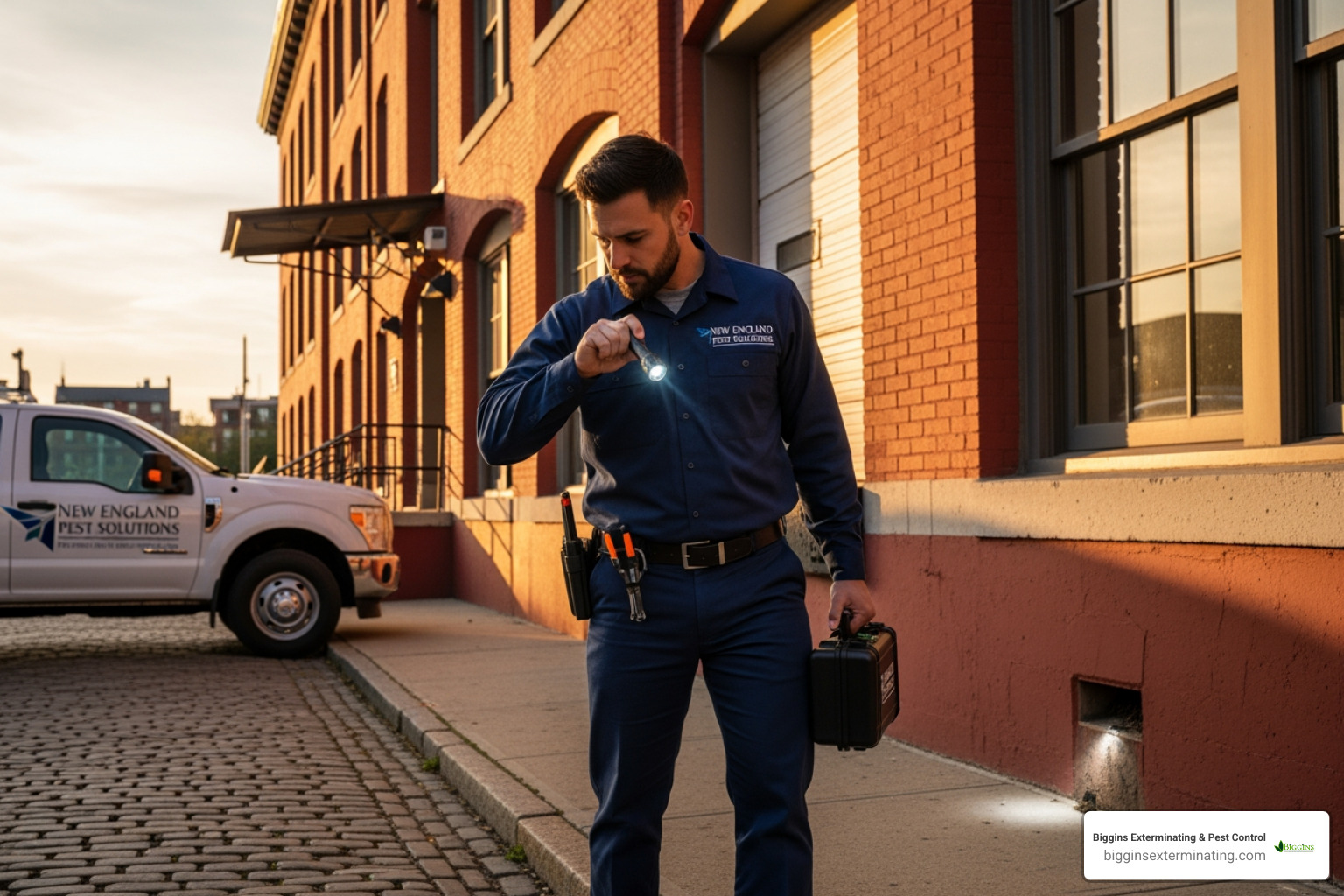
Massachusetts pest control is essential for protecting your commercial property from year-round pest threats that can damage your reputation, violate health codes, and hurt your bottom line. Whether you’re managing a restaurant in Wilmington, a warehouse in Woburn, or an office building in Burlington, professional pest management isn’t optional—it’s a business necessity.
Quick Answer: What You Need to Know About Commercial Pest Control in MA
- Common threats: Rodents (mice, rats), cockroaches, carpenter ants, and flies are active year-round
- Seasonal risks: Different pests emerge each season due to Massachusetts’ cold winters and warm summers
- Legal requirements: Landlords must keep multi-unit buildings pest-free under state law
- Service types: Residential, commercial, and year-round prevention plans available
- Cost factors: Property size, infestation severity, and service frequency determine pricing
- Key benefits: Prevents property damage, health code violations, and customer complaints
- Free inspections: Most Massachusetts pest control companies offer complimentary assessments
A single pest sighting can trigger a cascade of problems. According to industry data, pests can gnaw through electrical wires, contaminate food products, and destroy goods—any of which can shut down operations overnight. Massachusetts businesses face unique challenges because the state’s climate creates ideal breeding conditions for pests ranging from insects to rodents to wildlife throughout all four seasons.
The good news? With the right approach, you can keep your facility pest-free and your business reputation intact.
I’m Stephen Biggins, and I’ve been protecting Massachusetts businesses and homes from pest invasions for over four decades through my family-owned company, Biggins Exterminating Co. Since 1982, we’ve specialized in delivering reliable Massachusetts pest control solutions throughout Wilmington and surrounding communities, helping commercial property owners maintain safe, pest-free environments without the stress of long-term contracts.
Massachusetts pest control basics:
The High Cost of Unwanted Tenants: Pest-Related Risks for MA Businesses
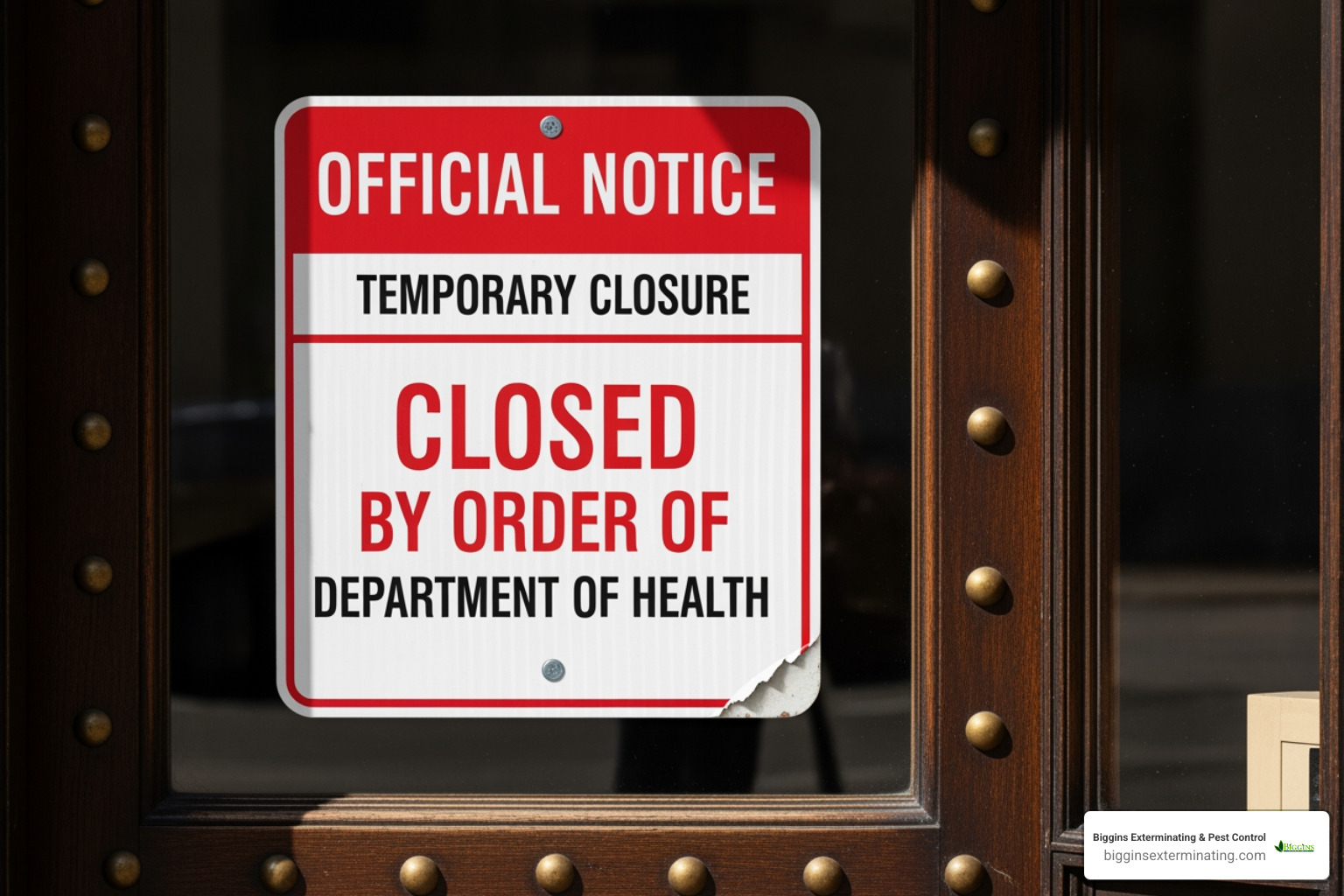
Imagine a customer spotting a mouse scurrying across your restaurant floor or an employee finding a cockroach in the breakroom. The immediate impact on your business’s reputation can be devastating. Negative customer reviews, health code violations, and even temporary closures are very real threats that come with pest infestations. We understand that for businesses in Andover, Bedford, and other Massachusetts towns, your reputation is everything.
Beyond the visible disgust, pests pose significant physical and financial risks:
- Property Damage: Rodents, especially, love to gnaw. They can chew through electrical wires, plumbing, and structural elements, leading to costly repairs and potential fire hazards. Carpenter ants, another destructive pest in New England, tunnel through damp wood, compromising the integrity of your building.
- Health Code Violations & Food Contamination: Many businesses, particularly those in food service or healthcare, are subject to strict health regulations. Pests like cockroaches and rodents are notorious carriers of bacteria and pathogens, easily contaminating food preparation areas, products, and surfaces. This can lead to fines, forced closures, and a complete loss of consumer trust.
- Disease Transmission: Mice and rats alone can carry over 30 diseases that affect humans. Ticks, common in Massachusetts, can transmit Lyme disease, Powassan, and anaplasmosis. Protecting your employees and customers from these health risks is paramount.
- Loss of Revenue: A pest problem can halt operations, damage inventory, and drive away customers, directly impacting your bottom line. The cost of dealing with an established infestation far outweighs the investment in proactive prevention.
For a deeper dive into the dangers rodents can pose to your business, we recommend reading our guide: Top 5 Dangers of Rodents in and Around Your Home or Business.
Identifying the Enemy: Common Commercial Pests in Massachusetts
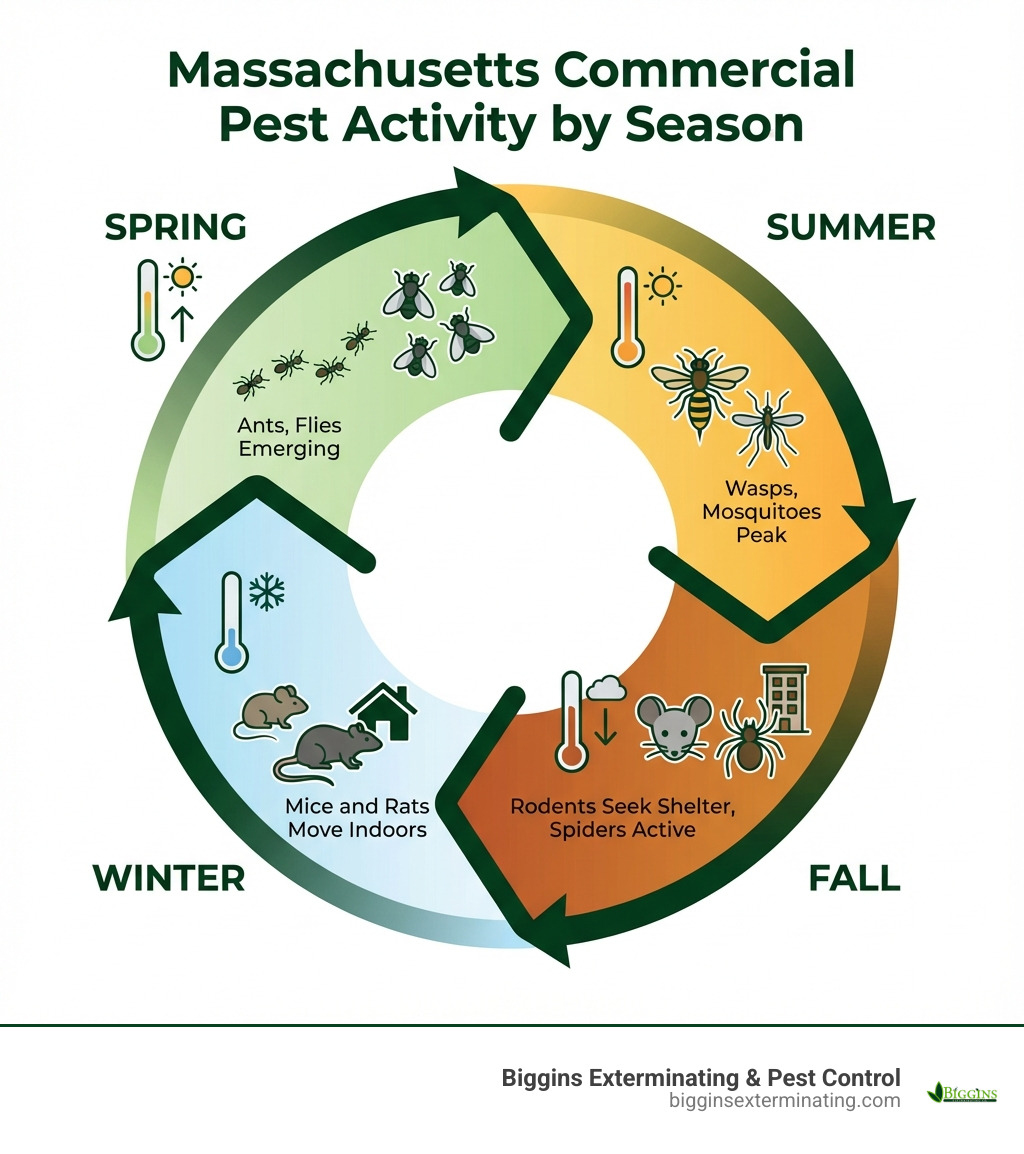
Massachusetts’ unique climate, with its cold winters and warm summers, creates a dynamic environment where pest populations change habits throughout the seasons. This means businesses in areas like Lexington, North Reading, and Tewksbury face a revolving door of potential invaders. Understanding these seasonal patterns is key to effective Massachusetts pest control.
We’ve observed that while some pests are active year-round, others emerge during specific seasons, seeking food, water, or shelter. For a comprehensive overview of local pests, check out: The Most Common Pests Found in Massachusetts and How to Prevent Them.
Rodents: The Year-Round Intruders
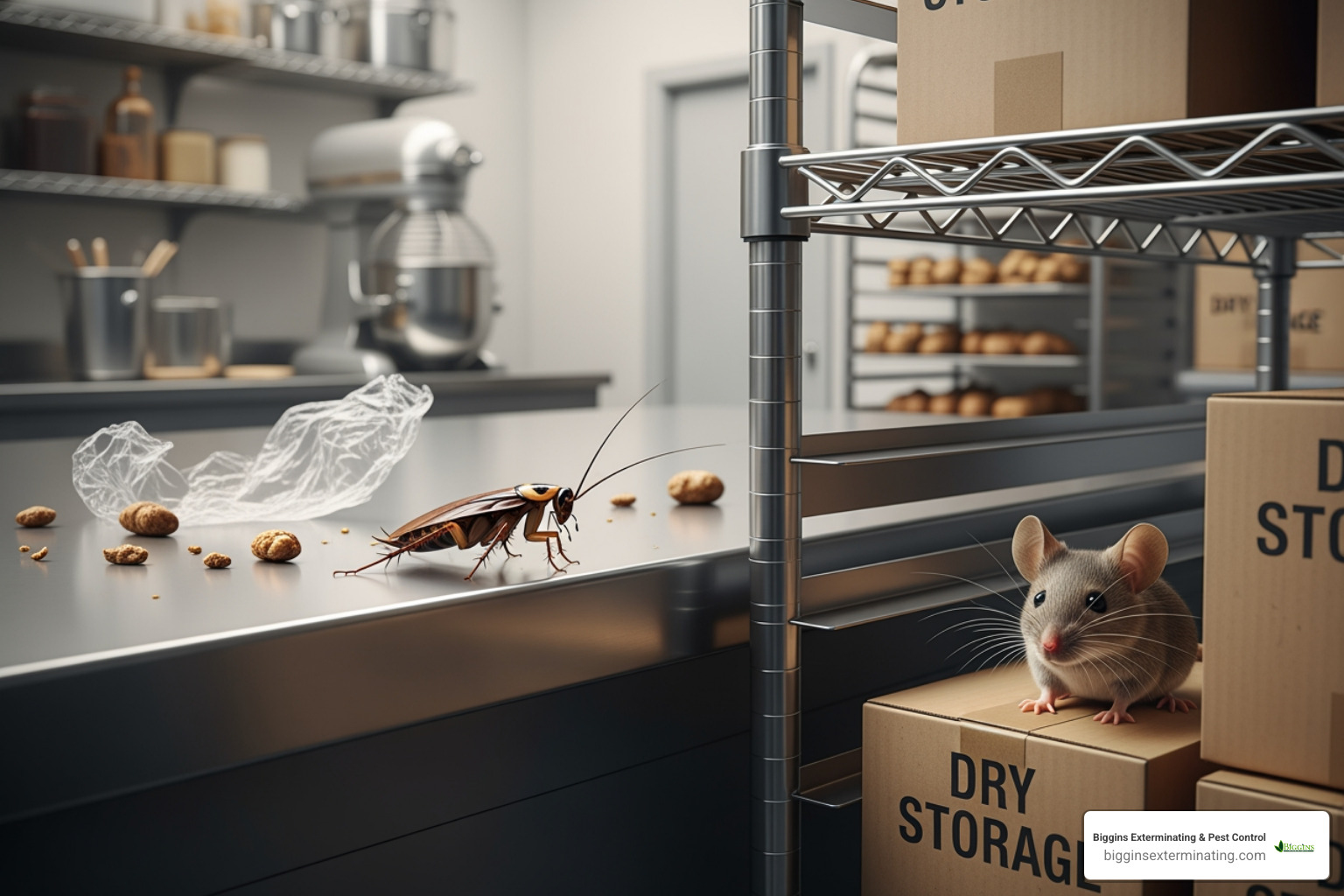
Mice and rats are arguably the most persistent and problematic pests for Massachusetts businesses, especially as the weather cools. They are masters of stealth, often entering commercial properties through tiny cracks and openings, seeking warmth, food, and shelter.
- Mice: Small and quick, mice can squeeze through openings as small as a dime. They reproduce rapidly, turning a small problem into a full-blown infestation in no time.
- Rats: Larger and more destructive, rats can cause significant damage to property and carry numerous diseases.
- Entry Points: We often find them entering through gaps around pipes, utility lines, damaged foundations, or even open doors.
- Nests & Contamination: They build nests in hidden, undisturbed areas like attics, wall voids, and storage rooms, leaving behind droppings and urine that contaminate surfaces and food.
Our team specializes in effective rodent control strategies to protect your business. Learn more here: Rodent Control Services.
Crawling Invaders
The thought of crawling insects can make any business owner cringe. In Massachusetts, we frequently encounter:
- Cockroaches: These resilient pests thrive in commercial environments, especially those with food. They hide in dark, moist places during the day and emerge at night to forage. Cockroaches are not only unsightly but can also trigger asthma and other health issues in sensitive individuals.
- Ants: From tiny pavement ants to larger carpenter ants, these insects are always on the hunt for food and water. They can invade in massive numbers, contaminating food products and making your business appear unsanitary.
- Carpenter Ants: The Black Carpenter Ant is one of the most destructive insect pests in New England. Unlike termites, they don’t eat wood but chew through it to create galleries for their nests. They often target damp or decaying wood, leaving behind sawdust-like frass. Finding these can indicate a serious structural issue.
We offer specialized services to tackle these crawling invaders: Cockroach Control Services and Carpenter Ant Pest Control.
Flying Pests and Stinging Threats
While perhaps less destructive than rodents or carpenter ants, flying and stinging insects can be a major nuisance and safety hazard for your employees and customers.
- Flies: Common house flies and fruit flies are not just annoying; they can transmit bacteria and diseases, especially in food service establishments.
- Wasps & Hornets: These stinging insects, particularly active in summer, can build nests around your property’s exterior, posing a painful threat to anyone who gets too close. Bald-faced hornets, for example, can be particularly aggressive.
Dealing with stinging insects should always be left to professionals. Read more about why: Why Professional Hornet and Wasp Nest Removal Is Essential.
Your Guide to Professional Massachusetts Pest Control Services
When it comes to commercial pest control, a quick fix is rarely a lasting solution. That’s why choosing a professional provider with local expertise, licensed technicians, and a commitment to customer satisfaction is paramount. As a family-owned company with over 40 years of experience in Massachusetts pest control, we pride ourselves on being that trusted partner for businesses in Woburn, Billerica, and beyond.
We understand the unique challenges businesses face in our region and are dedicated to providing high-quality, reliable service. If you’re looking for guidance on selecting the right partner, our article on choosing a pest control service can help: How to Choose the Right Pest Control Service for Your Needs in Massachusetts.
The Inspection Process: What to Expect
A thorough inspection is the cornerstone of effective commercial pest management. When you contact us, our process typically begins with:
- Thorough Site Assessment: Our licensed technicians will conduct a detailed walk-through of your business property, both inside and out. We’ll carefully examine potential entry points, harborage areas, and signs of pest activity.
- Identifying Pest Pressures: We’re looking not just for active pests, but also for conditions conducive to infestations. This includes moisture issues, sanitation concerns, and structural vulnerabilities.
- Locating Entry Points: Pests are experts at finding their way in. We’ll pinpoint cracks, gaps, and other openings that allow them access to your facility.
- Assessing Risk Factors: Based on your business type, location, and operational practices, we’ll identify specific risk factors that could attract or sustain pest populations.
- Customized Plan Development: No two businesses are alike, and neither are their pest problems. After our comprehensive inspection, we’ll create a completely customized removal, treatment, and prevention plan custom to your specific needs.
For a deeper understanding of what goes into a professional pest inspection, check out our Pest Control Inspection Complete Guide.
Understanding Customized Treatment Plans for Massachusetts Pest Control
At Biggins Exterminating, our approach to commercial pest control is rooted in Integrated Pest Management (IPM). IPM is an environmentally sensitive and effective approach that focuses on long-term prevention of pests through a combination of techniques, such as biological control, habitat manipulation, modification of cultural practices, and use of resistant varieties. Pesticides are used only after monitoring indicates they are needed according to established guidelines, and treatments are made with the goal of removing only the target organism.
Our customized plans for businesses in Wilmington, Burlington, and other service areas often include:
- Targeted Treatments: Applying precise treatments to areas where pests are active, minimizing the use of chemicals and maximizing effectiveness.
- Exclusion Methods: Sealing entry points and implementing physical barriers to prevent pests from entering your facility in the first place. This might involve repairing cracks, installing door sweeps, or reinforcing screens.
- Monitoring Stations: Strategically placing traps and monitoring devices to track pest activity and identify potential new infestations early.
- Sanitation Recommendations: Providing expert advice on improving sanitation practices to eliminate food and water sources that attract pests.
We believe that successful pest control relies on a collaborative effort. By working together, we can ensure your business remains pest-free. Learn more about IPM in Massachusetts: The Role of Integrated Pest Management in Massachusetts.
Evaluating Costs and Service Agreements
The cost of commercial pest control in Massachusetts can vary widely depending on several factors, as every business has unique needs. We understand that budget is an important consideration, and we strive to provide transparent and competitive pricing.
Key factors influencing the cost include:
- Property Size: Larger facilities naturally require more extensive inspections and treatments.
- Infestation Severity: A minor issue with a few ants will cost less to resolve than a widespread rodent infestation requiring multiple visits and specialized treatments.
- Service Frequency: One-time treatments address immediate problems, while ongoing maintenance plans provide year-round protection, often at a more economical rate in the long run.
- Type of Pest: Some pests, like termites or bed bugs, require specialized and often more intensive treatments.
While we can’t provide exact pricing here without an inspection, we can offer general guidance based on publicly available industry data. Please note that these figures are not Biggins Exterminating’s pricing but are broad averages intended for informational purposes. Many companies offer quarterly service plans, with average costs ranging from around $75 to $300+ per visit, depending on the factors mentioned above. For specific, customized pricing for your business, we offer free pest inspections.
For more information on general pest control costs, you can consult our guide: Pest Control Services Cost.
Proactive Protection: Building a Pest-Proof Business
The best offense is a good defense, especially when it comes to commercial pest control. Proactive measures and regular maintenance are far more effective and cost-efficient than reacting to an established infestation. We emphasize long-term prevention for businesses in our service areas, including Bedford, Billerica, and Burlington.
Regular pest control maintenance helps to:
- Prevent Major Infestations: Consistent treatments and monitoring catch problems early before they escalate.
- Maintain a Defensive Barrier: Year-round plans ensure your property is continuously protected against seasonal pest cycles.
- Protect Your Investment: Safeguarding your facility from structural damage and contamination.
- Preserve Your Reputation: Ensuring a consistently clean and safe environment for employees and customers.
Find more benefits of ongoing maintenance: The Benefits of Regular Pest Control Maintenance in Massachusetts.
Essential Prevention Strategies for Your Facility
Successful pest prevention is a team effort. Here are some essential strategies we recommend for any commercial facility:
- Sanitation Protocols: Implement rigorous cleaning schedules. Pests are constantly searching for food and water. Eliminating these attractants is crucial. This includes daily cleaning of food prep areas, dining spaces, and employee break rooms.
- Proper Waste Management: Use sturdy, lidded trash cans both indoors and outdoors. Ensure dumpsters are kept clean, closed, and located away from building entrances. Regular trash removal is key.
- Sealing Cracks and Crevices: Conduct regular inspections of your building’s exterior and interior. Seal any cracks in foundations, walls, and around utility pipes. Install door sweeps and repair damaged screens. Even small gaps can be entry points for rodents and insects.
- Exterior Maintenance: Keep outdoor areas tidy. Trim trees and shrubs away from the building, as they can provide bridges for pests. Remove standing water to eliminate mosquito breeding grounds.
- Landscaping Adjustments: Avoid dense landscaping directly against the building, which can harbor pests.
- Education: Train your employees on identifying common pests and reporting sightings promptly. Educate cleaning personnel on thorough housekeeping practices.
For more detailed strategies on keeping pests out, refer to our guide: How to Keep Pests Out of Your Massachusetts Business or Commercial Property.
Legal Obligations: Landlord and Tenant Responsibilities for Massachusetts Pest Control
In Massachusetts, specific regulations govern pest control, particularly concerning rental properties. The state mandates pest control measures as part of landlords’ obligation to provide habitable premises.
- Landlord Duties: For buildings with two or more apartments, it is the landlord’s responsibility to keep apartments and common areas free of infestations. This falls under the State Sanitary Code, which aims to ensure safe and healthy living conditions. While this primarily applies to residential units, the principle of maintaining a pest-free environment often extends to commercial leases, where landlords are typically responsible for structural integrity and common area maintenance.
- Tenant Cooperation: While landlords bear the primary responsibility, commercial tenants also have a role to play. This includes maintaining good sanitation within their leased space, reporting pest sightings promptly, and cooperating with pest control efforts. Many commercial leases will explicitly outline these responsibilities.
Understanding these legal frameworks is crucial for both landlords and tenants operating in Massachusetts. For more information on the regulations, see: Understanding the Regulations and Laws Related to Pest Control in Massachusetts.
Frequently Asked Questions about Commercial Pest Control in MA
Why is year-round pest control necessary for a business in Massachusetts?
Massachusetts’ climate means pests are a concern in every season. As we’ve seen, cold winters drive rodents indoors, while warm summers bring out stinging insects and mosquitoes. Year-round pest control is essential for your business because:
- Seasonal Pest Cycles: Different pests emerge and become active throughout the year. A year-round plan accounts for these cycles, treating pests when they are most vulnerable or before they become a problem.
- Consistent Protection: It maintains a continuous defensive barrier around your property, preventing new infestations from taking hold.
- Preventing Major Infestations: Regular service catches minor issues early, stopping them from escalating into costly and disruptive problems.
- Cost-Effectiveness: Investing in ongoing prevention is almost always more economical than emergency treatments for a severe infestation.
Year-round treatment ensures pests are targeted at all stages of their lifecycle, stopping infestations before they grow. For more on the importance of professional service, read: The Importance of Hiring a Professional Pest Control Service in Massachusetts.
Are professional pest control treatments safe for my employees and customers?
Yes, when performed by licensed and experienced professionals like us, commercial pest control treatments are safe for your employees and customers. We prioritize safety and use methods that minimize risk while maximizing effectiveness.
- Low-Impact Products: We use targeted, low-impact products and application techniques that are effective against pests but have minimal risk to humans and pets.
- Application Safety: Our technicians are highly trained and licensed. They follow strict safety protocols, applying treatments only where necessary and adhering to all regulatory guidelines.
- IPM Principles: Our Integrated Pest Management approach focuses on non-chemical methods first, reserving chemical treatments as a last resort and using them judiciously.
- Communication with Provider: We will always communicate with you about the treatments being performed, any necessary precautions, and re-entry times for treated areas.
We understand your concern for safety, and we’re happy to discuss our methods and products in detail. We even have information on considerations for pet owners, which highlights our commitment to safety: Safe Pest Control for Pets.
How quickly can I expect a response for a pest emergency?
Pest emergencies can disrupt your business and require immediate attention. We understand the urgency when you have an unexpected pest problem. Our goal is to provide prompt and efficient emergency services to minimize downtime and protect your business operations.
While specific response times can depend on the nature of the emergency and our current schedule, we prioritize urgent situations. We encourage you to call us directly as soon as you detect a problem. Many pest control services, including our own, offer flexible scheduling and rapid response for critical issues.
For more on how we handle urgent situations, visit: Emergency Pest Control Services.
Conclusion
Effective commercial Massachusetts pest control is more than just eliminating pests; it’s about proactive management that safeguards your business, protects your reputation, and ensures a healthy environment for everyone who walks through your doors. With Massachusetts’ diverse climate and year-round pest activity, a comprehensive and custom approach is essential.
As a family-owned business with over 40 years of experience, Biggins Exterminating Co. has been a trusted partner for businesses in Wilmington, Woburn, Burlington, and surrounding Massachusetts communities. We offer reliable, high-quality pest and rodent control services, backed by our commitment to customer satisfaction and without the burden of long-term contracts. Our licensed technicians are experts in identifying and treating pest issues, developing customized plans, and implementing effective prevention strategies.
Don’t let pests compromise your business’s success. Partner with us for peace of mind and a pest-free commercial space.
Ready to protect your business? Explore our commercial pest control solutions today: Commercial Pest Control.