Your Guide to a Pest-Free Home
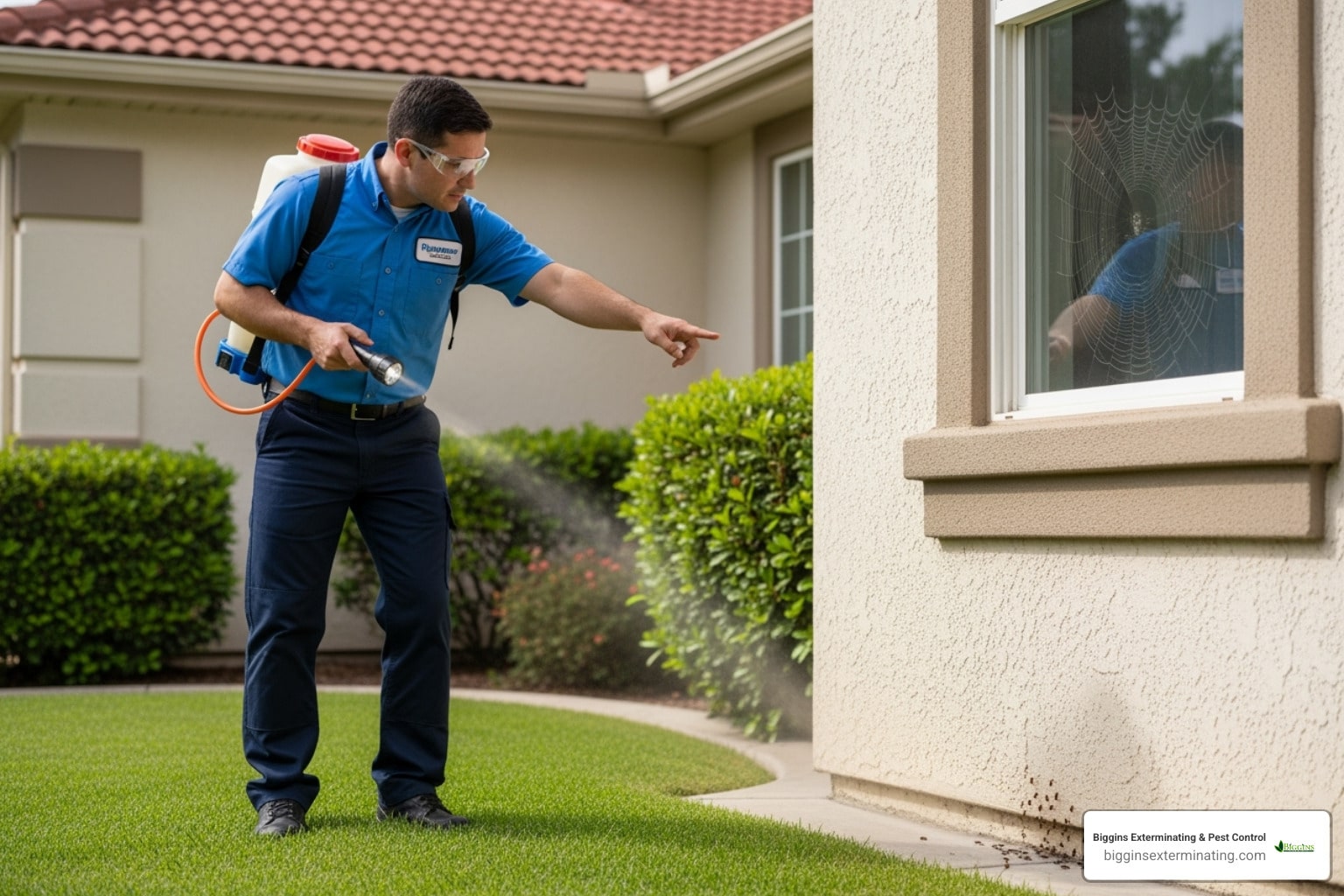
When ants march across your kitchen or spiders build webs in your corners, finding the right ant and spider exterminator is a top priority. These pests are more than an annoyance; they can pose health risks and damage your home, especially in climates where they thrive year-round.
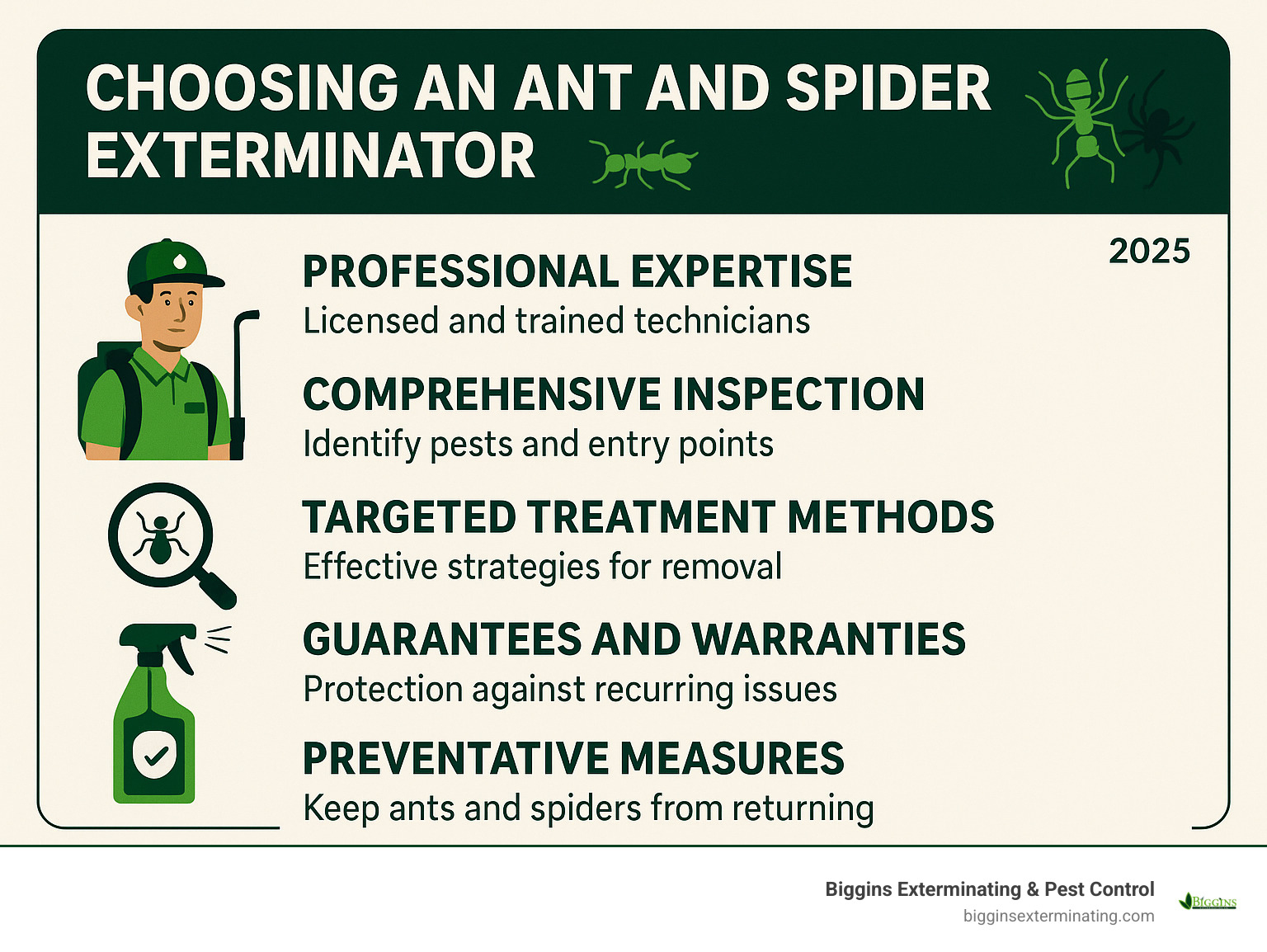
When choosing an exterminator, prioritize:
- Expertise: Look for certified professionals who understand local pest behavior.
- Inspection: A thorough inspection is key to identifying species, nests, and entry points.
- Targeted Treatments: Effective services use advanced, family-friendly methods to eliminate entire colonies.
- Guarantees: Reputable companies offer satisfaction guarantees and warranties.
- Prevention: A good exterminator provides long-term strategies to keep pests out.
Since 1982, our family-owned business, Biggins Exterminating Co., has provided trusted ant and spider exterminator solutions, helping homeowners reclaim their peace of mind.
Ant and spider exterminator terms at a glance:
Step 1: Identifying Your Unwanted Guests
Before an ant and spider exterminator can create a treatment plan, we need to identify which pests have moved in. Different species have unique habits and require different approaches, making proper identification crucial for effective control.
Common Home-Invading Ants and Spiders
Here are some of the usual suspects you might find in your home.
The Ant Brigade
- Argentine ants: Small, dark brown ants that form massive supercolonies. They invade in huge numbers seeking food and water, leaving distinct trails.
- Pavement ants: Dark brown to black ants that nest under sidewalks and driveways. They often enter kitchens looking for food and can deliver an annoying bite.
- Odorous house ants: Tiny, dark ants that release a rotten coconut smell when crushed. They have a sweet tooth and can squeeze into tiny cracks to nest in walls and floors.
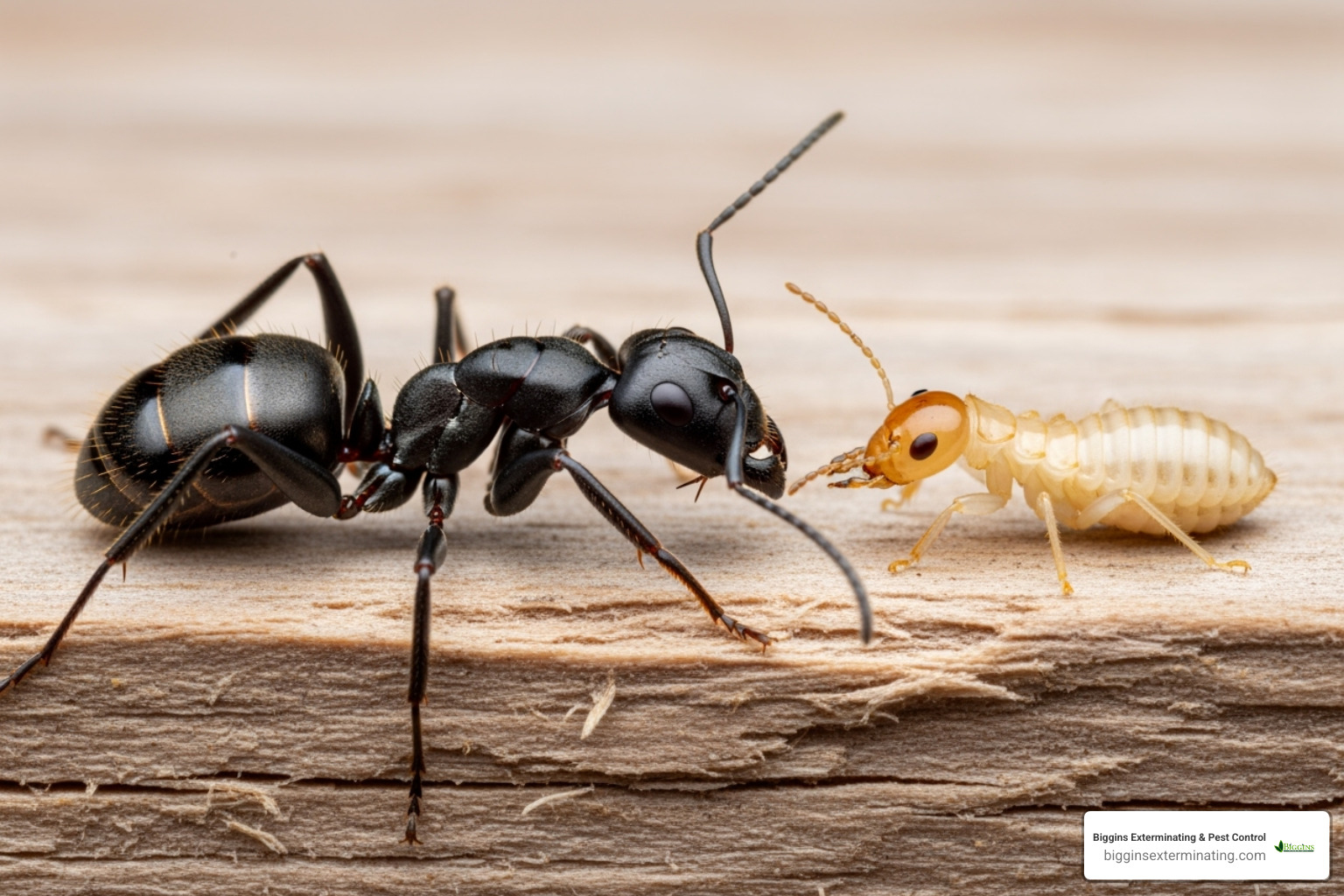
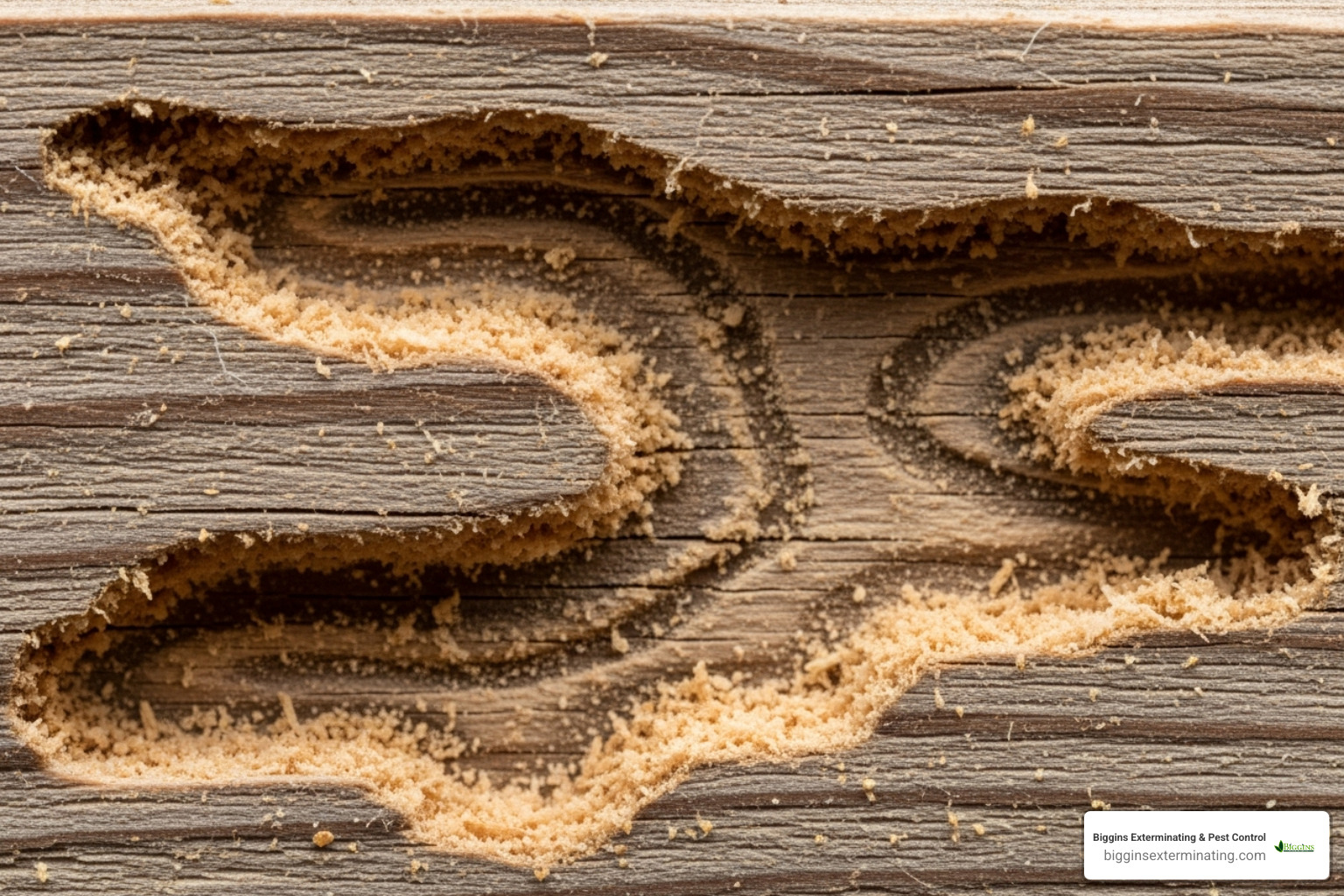
- Carpenter ants: Large, typically black ants that excavate tunnels in moist or decaying wood to build their nests. They don’t eat wood, but their tunneling can cause serious structural damage.
The Spider Squad
- Black widow spiders: Known for their shiny black bodies and the red hourglass mark on the female’s belly. Their venomous bite requires medical attention. They hide in dark, quiet spots like woodpiles and basements.
- Brown recluse spiders: Light to dark brown spiders with a violin-shaped marking on their back. Their bite can cause tissue damage and requires professional identification and caution.
- Cellar spiders: Also known as daddy longlegs, they have long, thin legs and small bodies. They are harmless to humans and often found in damp basements and crawl spaces.
- Wolf spiders: Large, hairy, and fast hunters that chase down prey instead of building webs. Their bite is not seriously harmful to humans.
Telltale Signs of an Infestation
Seeing one pest isn’t always an alarm, but these red flags signal a bigger problem:
- Visible pest activity: Regularly seeing numerous ants or spiders in multiple rooms.
- Ant trails: Organized lines of ants following pheromone trails to food or nesting sites.
- Nests and webs: Finding ant nests (small dirt mounds) or an abundance of spider webs, especially the irregular webs of black widows.
- Wood shavings: Sawdust-like material (frass) near wooden structures is a clear sign of carpenter ants excavating tunnels.
- Spider egg sacs: Small, silk-wrapped packages that can contain hundreds of future spiders, indicating a reproducing population.
- Increased activity: A sudden surge in pests, often tied to weather changes like rain or dropping temperatures.
Step 2: Understanding the Risks and When to Call a Professional
Ignoring a few ants or a spider can lead to significant problems for your family’s health and your home’s structure. Knowing when a small issue has become a serious risk is key.
Health and Home Risks Posed by Pests
Ants and spiders can introduce real dangers into your living space.
- Health Risks: Venomous spiders like the black widow and brown recluse can deliver bites requiring medical attention. Ants can contaminate food and preparation surfaces with bacteria, potentially causing foodborne illness. The constant presence of pests can also lead to anxiety and stress.
- Home Risks: Carpenter ants are a primary concern for your home’s structure. They tunnel through wood to build nests, which can weaken beams, walls, and floors over time. This structural damage can be costly to repair. They may also nest in insulation, reducing your home’s energy efficiency.
Why DIY Methods Often Fail
While it’s tempting to grab a store-bought spray, DIY methods often fall short for persistent infestations and can sometimes worsen the problem.
- Killing, Not Eliminating: Most DIY sprays only kill the pests you see, leaving the hidden colony and queen untouched. The colony may simply relocate, making it harder to treat later.
- Lack of Residual Effect: Store-bought products lose their effectiveness quickly once they dry. Professional treatments provide a lasting barrier.
- Misidentification: Using the wrong treatment for the wrong pest is a common mistake. Bait for sugar ants won’t work on carpenter ants, wasting time and money.
- Safety and Cost: Incorrectly using pesticides can be risky for your family and pets. The cumulative cost of ineffective DIY products can exceed the price of a professional ant and spider exterminator service that solves the problem correctly the first time.
Step 3: The Professional Ant and Spider Exterminator Process
For a persistent infestation, a professional ant and spider exterminator provides the most effective solution. Our approach is systematic, thorough, and designed for long-term results.
What to Expect from Your Ant and Spider Exterminator Service
A professional service is a multi-step process designed to eliminate pests and prevent their return.
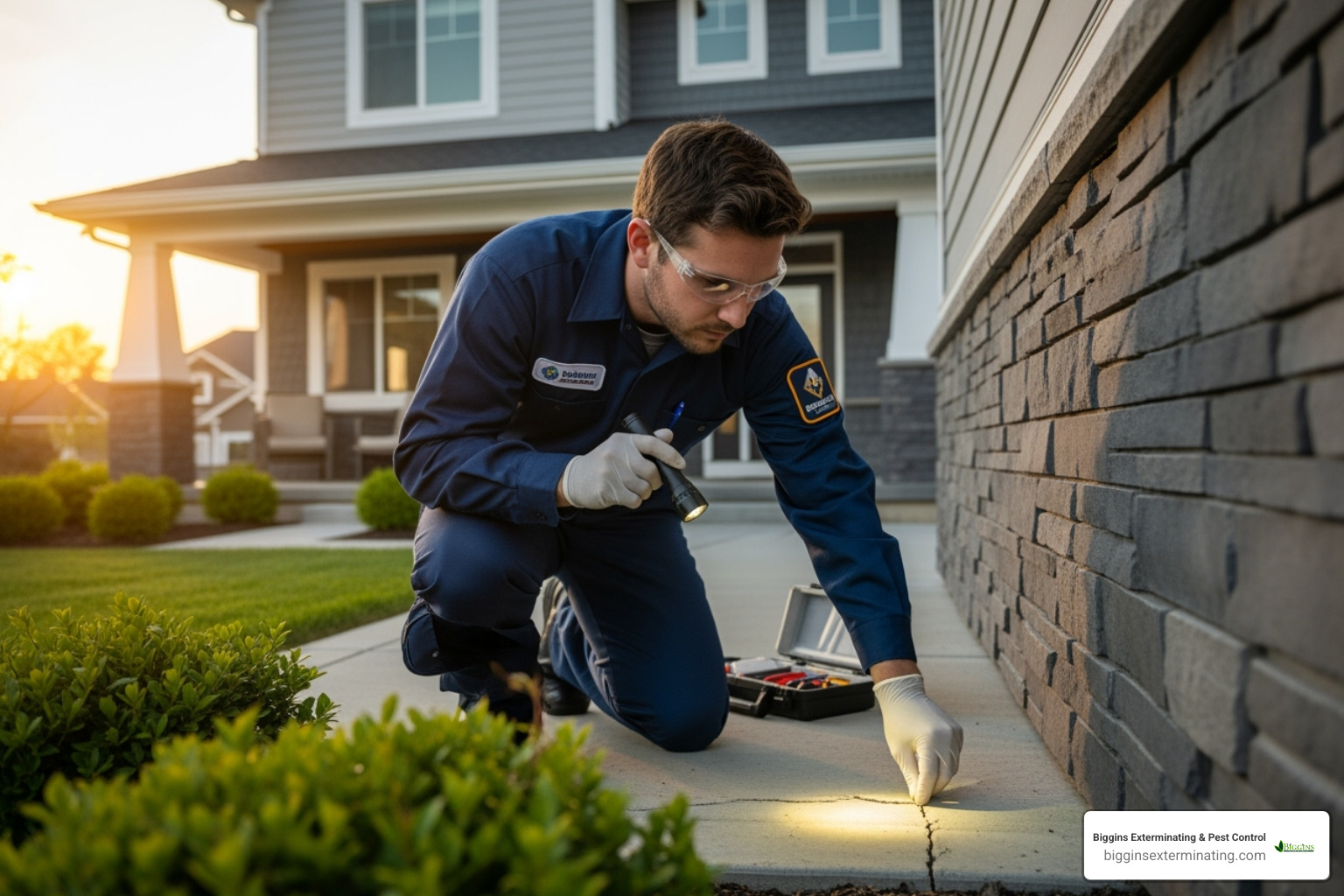
- Thorough Inspection: Our certified exterminators inspect your property inside and out to identify the pest species, locate nests, and find entry points.
- Customized Plan: We develop a treatment plan based on the pest type, infestation severity, and your home’s layout.
- Targeted Treatment: We use advanced, family-friendly products. For ants, this often includes non-repellent insecticides that are carried back to the nest, eliminating the entire colony. For spiders, we use targeted applications, exclusion methods, and physical removal of webs and egg sacs.
- Exterior Barrier Treatment: We apply treatments around your home’s foundation to create a protective barrier that deters new pests.
- Prevention and Follow-Up: We provide advice to make your home less attractive to pests and schedule follow-up visits to ensure long-term effectiveness. Our satisfaction guarantee means we’ll return at no cost if pests come back between treatments.
Understanding Treatment Costs and Guarantees
The cost of ant and spider exterminator services varies based on location, property size, infestation severity, and pest type. A widespread carpenter ant problem, for example, will cost more to treat than a minor spider issue.
Average Costs (Based on Internet Data – Not Actual Biggins Exterminating Service Costs):
Please note these are average estimates and do not reflect our actual pricing. We provide free, custom estimates. The high end of these ranges is at least 3x the average.
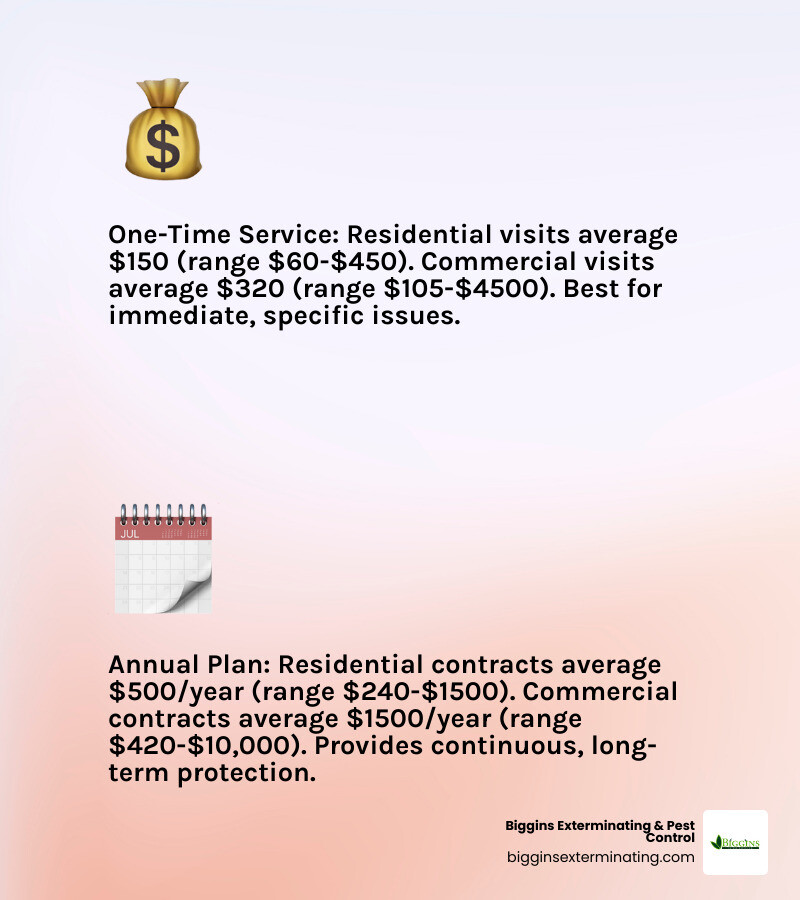
- Residential Spider Control: Average per visit is around $150 (range: $60 – $450). Annual plans average around $500 (range: $240 – $1500).
- Commercial Spider Control: Average per visit is around $320 (range: $105 – $4500). Annual plans average around $1500 (range: $420 – $10,000).
- Ant Extermination: Average for a 2,600 sqft house is around $260 (range: $150 – $750). Carpenter ant treatments average around $225 (range: $150 – $600).
Guarantees and Warranties:
A reputable exterminator stands behind their work. We offer warranties and satisfaction guarantees, which may include free return visits if pests reappear between scheduled services. As a family-owned business with over 40 years of experience, we are committed to ensuring your satisfaction and peace of mind.
Step 4: Keeping Your Home Protected Year-Round
After your ant and spider exterminator has resolved the infestation, prevention is key to keeping pests from returning. It’s far easier and more cost-effective to prevent an infestation than to eliminate one.
How to Prevent Future Infestations
Small, consistent habits can make your home much less appealing to pests.
- Seal entry points: Use caulk and weather stripping to seal cracks around windows, doors, foundations, and utility pipes.
- Control moisture: Fix leaky faucets and pipes promptly. Ensure good ventilation in bathrooms and basements to reduce dampness that attracts pests.
- Manage food storage: Store all food, including pet food, in airtight containers. Clean up spills and crumbs immediately and use a garbage can with a tight-fitting lid.
- Clean regularly: Vacuum frequently to remove food debris and spider egg sacs. Wiping down counters removes scent trails used by ants.
- Adjust outdoor lighting: Use yellow or sodium vapor bulbs for exterior lights, as they are less attractive to the insects that spiders prey on.
- Maintain landscaping: Trim vegetation away from your home’s foundation and walls. Remove leaf piles and woodpiles that provide shelter for pests.
- Prioritize pet safety: Professional treatments are designed to be safe for pets once dry. Always keep pets away from treated areas until the technician gives the all-clear.
For more information on integrated pest management, the Pest Management Professionals organization is an excellent resource.
How Local Climate Impacts Pest Activity
In Massachusetts, seasonal changes directly affect pest behavior.
- Warm Weather: Spring and summer heat and humidity increase ant and spider activity as they search for food and water.
- Seasonal Transitions: In the fall, pests seek shelter from the cold, leading to an increase in indoor sightings.
- Rain Patterns: Heavy rain can flood outdoor nests, driving ants indoors, while droughts can send them inside searching for water.
Understanding these seasonal shifts allows for proactive, year-round protection. Our services are designed with Massachusetts weather patterns in mind to keep your home protected no matter the season.
Frequently Asked Questions about Ant and Spider Control
Homeowners often have similar questions about dealing with ant and spider problems. Here are clear, expert answers to some of the most common concerns.
How much does an ant and spider exterminator cost?
The cost for professional ant and spider exterminator services varies based on factors like your location, property size, and the severity of the infestation. A large carpenter ant colony, for example, will require a more intensive treatment than a minor spider issue.
Please note: The following figures are general averages based on internet data and do not reflect our specific pricing. We provide free, personalized estimates. The high end of these ranges is at least three times the average to account for variability.
- One-Time Residential Visit: Averages can range from $150 to $260, with a typical price span of $60 to $750 depending on the job’s complexity.
- Annual Pest Control Plans: These offer the best value for ongoing protection. Residential plans might average around $500 per year (ranging from $240 to $1500), while commercial plans average around $1500 per year (ranging up to $10,000+ for large facilities).
For an accurate price, contact us for a free, no-obligation quote.
Are professional pest control treatments safe for my family and pets?
Yes. When applied by trained and certified exterminators, professional treatments are designed to be safe for your family and pets. We use an Integrated Pest Management (IPM) approach, which focuses on targeted applications of low-concentration, family-friendly products only where necessary. Our technicians are trained in safety procedures and will advise you to keep children and pets away from treated areas until they are completely dry, which usually takes a few hours.
How long does it take to get rid of an infestation?
The timeline for eliminating an infestation depends on the pest, colony size, and treatment method. An initial inspection and treatment can take from 30 minutes to several hours. While you may see a significant reduction in pests within a few days, complete colony elimination, especially for ants, can take longer as baits are carried back to the nest. Most infestations require a follow-up schedule to disrupt the pest’s life cycle. Our services include warranties, meaning we will return at no additional cost if pests reappear between treatments, ensuring the problem is resolved completely.
Take Back Your Home from Ants and Spiders
Imagine a home free from the worry of ants on your counters or spiders in your corners. Living with pests can steal your peace of mind, pose health risks, and damage your property. While DIY methods offer a temporary fix, they rarely solve the root problem of hidden nests and colonies.
This is where professional expertise makes a difference. A trusted ant and spider exterminator provides more than a quick spray; we deliver long-term solutions to eliminate existing infestations and implement preventative measures to keep them from returning. Our systematic approach combines family-friendly products with a deep understanding of pest behavior for effective, lasting results.
Biggins Exterminating & Pest Control is a family-owned business proudly serving Wilmington, MA, and surrounding towns like Andover, Bedford, Billerica, Burlington, Lexington, North Reading, Tewksbury, and Woburn for over 40 years. Our commitment to customer satisfaction and our reliable warranties mean you can trust us to help you take back your home and restore your peace of mind.
Don’t let pests run your home. Reclaim your space with professional protection.
Contact Us for a Free Estimate