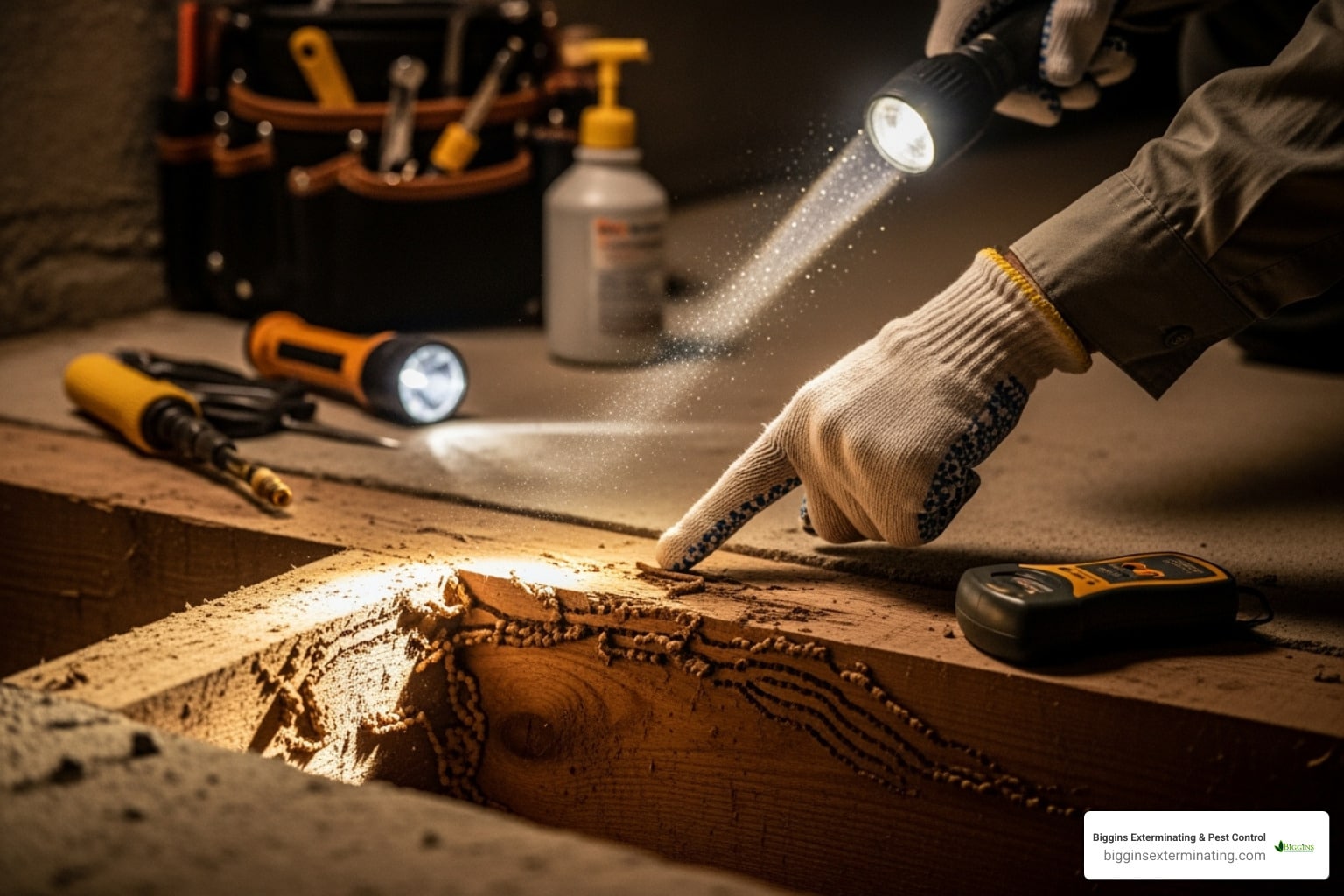
Understanding Your Termite Treatment Cost
The termite treatment cost is a primary concern for homeowners facing these pests, which cause an estimated $5 billion in damage annually in the U.S. Understanding the expenses and influencing factors is crucial for protecting your home.
Here’s a quick look at average national costs and key factors:
- Average Initial Termite Treatment: \$275 – \$2,000
- Severe Infestations/Larger Homes: Can reach over \$8,000
- Termite Inspection Cost: \$75 – \$325 (some companies offer free initial inspections)
- Key Factors Influencing Cost: Infestation severity, termite type, home size, treatment method, and geographic location.
These are average national costs based on internet data and not actual costs for Biggins Exterminating services.
I’m Stephen Biggins, owner of Biggins Exterminating Co. With over four decades in the field, our family-owned business helps homeowners manage their termite treatment cost effectively with transparent solutions and lasting results.
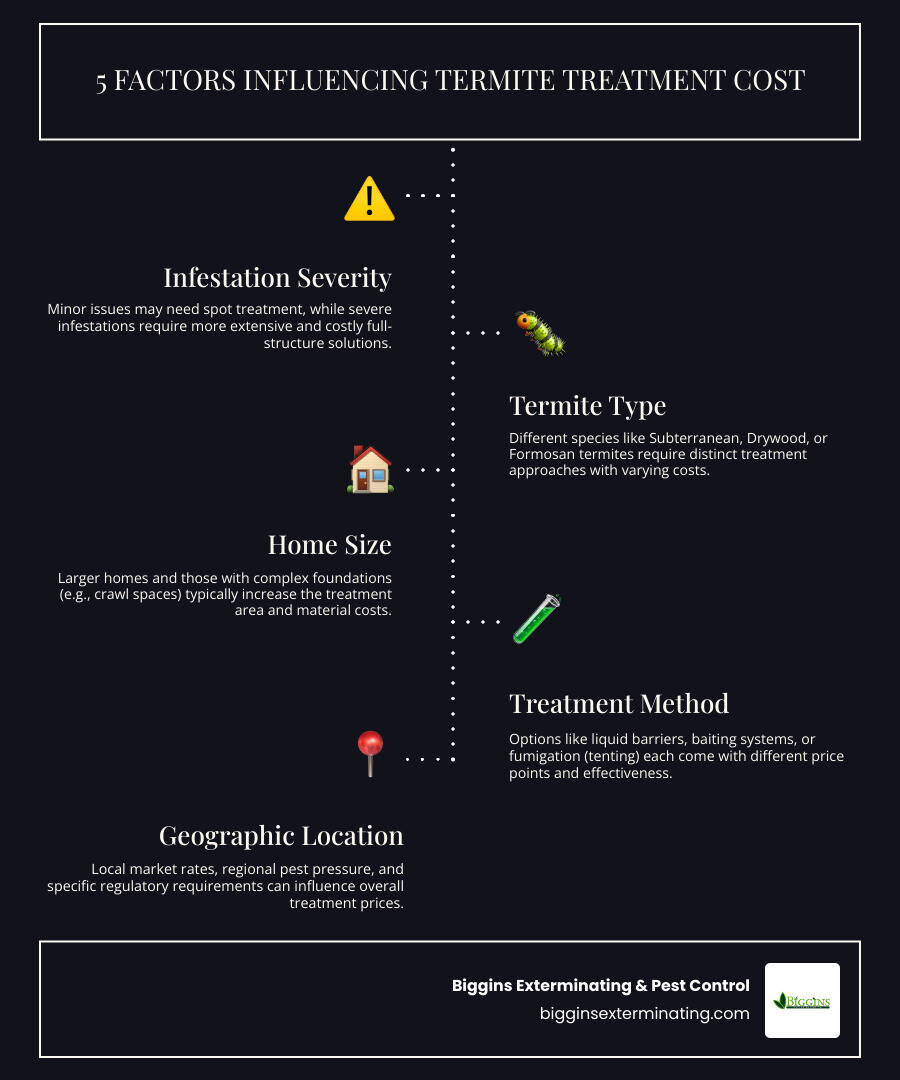
Essential termite treatment cost terms:
What Factors Influence the National Average Termite Treatment Cost?
The termite treatment cost depends on many variables. Understanding these factors helps you prepare financially and make informed decisions. The final cost isn’t arbitrary; it reflects the work and materials needed for your specific situation.
Key factors include:
- Home size: Larger homes require more materials and labor.
- Infestation severity: An early, small infestation is far less costly to treat than an established, widespread colony.
- Termite type: Different species require different, and sometimes more expensive, treatment methods.
- Geographic location: Labor rates and termite pressure vary by region.
- Home construction type: The foundation and building materials affect the complexity of the treatment.
- Cost of repairs: The treatment cost doesn’t include repairing existing termite damage, which can be substantial. Termites cause over $5 billion in damage annually, making early treatment a wise investment.
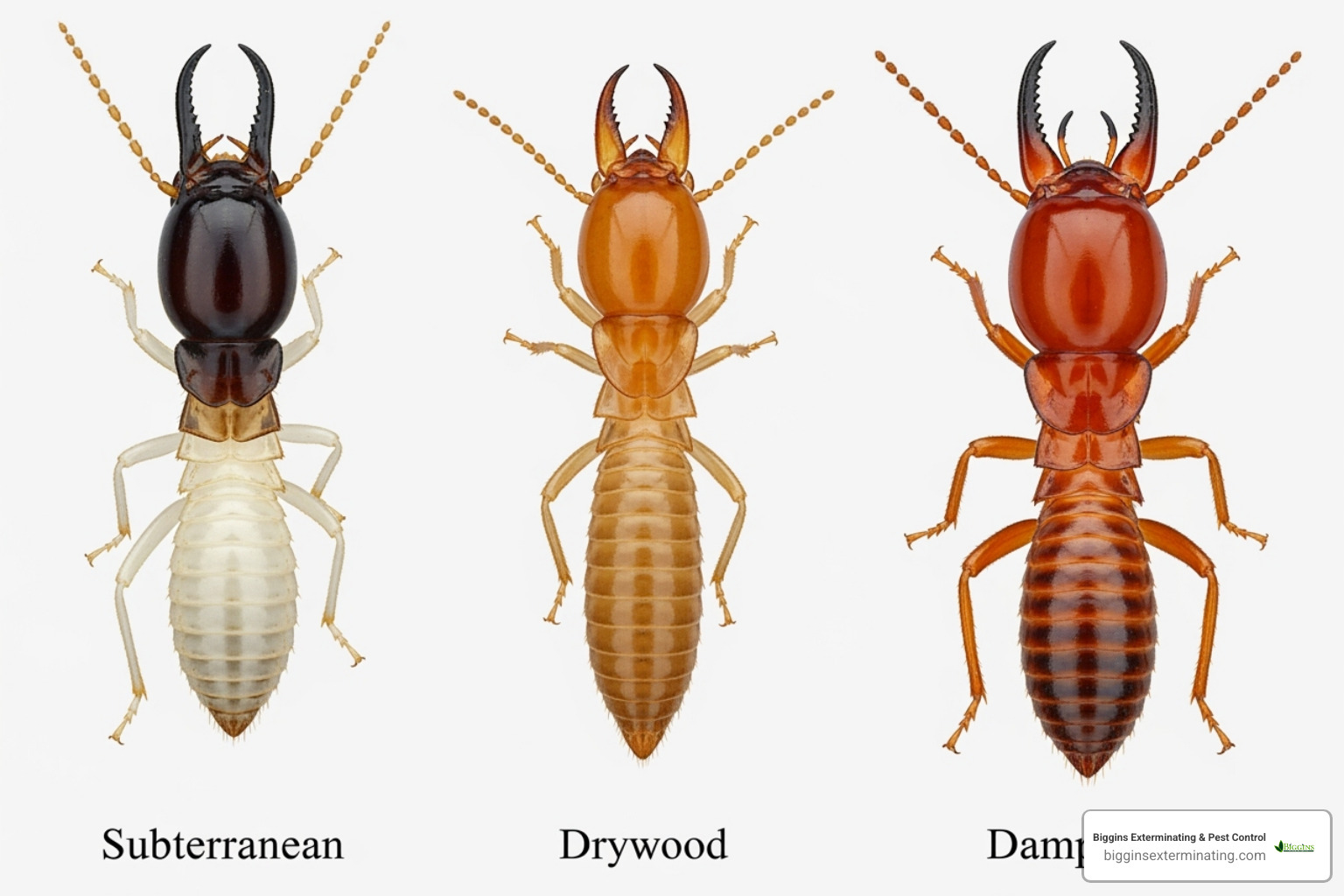
Understanding subterranean termites is particularly important, as they cause the majority of termite damage in North America.
How Does Home Size Affect Termite Treatment Cost?
Your home’s size directly impacts the termite treatment cost, which is typically calculated by the linear footage of the foundation perimeter. The foundation type also significantly affects cost and complexity. Crawl space foundations often require more work, as we must treat both the soil and wood structures. Basement foundations present similar challenges, sometimes requiring drilling through floors. Slab foundations can also require drilling through concrete to treat the soil underneath, which increases costs.
Here are national average cost ranges for comprehensive treatments based on home size. These are internet-based averages and not our actual Biggins Exterminating prices:
A 1,000 square foot home might see treatment costs between $3,000 and $20,000, while a 4,000 square foot home could range from $12,000 to $80,000. The wide ranges reflect different treatment methods, infestation severity, and regional variations. Most treatments fall toward the lower end of these ranges, with higher costs typically involving fumigation or extensive repairs.
Understanding Termite Treatment Cost by Infestation Level
The severity of the termite problem is the biggest factor in your termite treatment cost. Catching it early means simpler, less expensive solutions.
- Small, localized infestations found in one area may only need spot treatments, where chemicals are applied directly. National average costs for these minor issues typically range from $200 to $1,200.
- Medium infestations that have spread beyond one location often require barrier treatments. These create a chemical zone around the home’s perimeter to eliminate existing colonies and prevent new ones. These treatments typically fall into the national average range of $450 to $3,000.
- Severe infestations that are well-established may need full structure treatments like fumigation or comprehensive liquid applications. These intensive treatments carry national average prices from $1,200 up to $8,000 or more for larger homes.
The key takeaway is that time is money. The sooner you act, the less you’ll likely spend. If you see warning signs, check our guide on How to Tell if You Have Termites and get professional help.
Does the Type of Termite Impact the Price?
Yes, the termite treatment cost varies significantly depending on the species, as each requires a different approach.
- Subterranean termites are the most common, living in soil and building mud tubes to reach wood. Treatment involves soil-applied chemicals or baiting systems. National average costs range from $250 to $2,000. Learn more about subterranean termites.
- Drywood termites live entirely within wood. Treatment often requires whole-house fumigation or specialized heat treatments, which are more complex and expensive. National average costs range from $1,000 to $6,800.
- Dampwood termites prefer wood with high moisture content. Treatment involves fixing the moisture issue and removing infested wood, along with targeted chemical use. National average costs range from $85 to $2,500.
- Formosan termites are an aggressive subterranean species that form massive colonies. Their destructive power often requires more intensive treatment methods, with national average costs from $250 to $5,000 or more.
Proper identification is crucial before any treatment begins to ensure the right method is used.
A Breakdown of Termite Treatment Methods and Prices
Let’s explore the specific methods professionals use to eliminate termites. Understanding your options helps you make informed decisions.
These are average costs based on internet data and not actual costs for Biggins Exterminating services. Your specific situation may require different pricing.
The right choice depends on your termite species, infestation severity, and home construction. Let’s break down the main approaches.
Liquid Termite Treatments
Liquid treatments are a popular and effective method, especially for subterranean termites. The national average termite treatment cost for liquid applications ranges from $3 to $16 per linear foot of foundation, meaning an initial investment of $1,000 to $3,200 for a typical home.
The process involves creating a continuous chemical barrier in the soil around your home’s foundation by trenching and injecting liquid termiticide. Modern non-repellent termiticides are undetectable to termites. They walk through the treated area and carry the poison back, leading to colony elimination.
A properly applied liquid barrier can protect your home for 5 to 10 years, though some factors might reduce this timeframe. Regular annual inspections ensure the barrier remains effective. For more protection strategies, see How to Get Rid of Termites Permanently.
Termite Baiting Systems
Baiting systems are a less invasive, environmentally friendly approach. The initial installation typically costs between $1,500 to $3,000 nationally, or around $7 to $12 per linear foot. There are also ongoing annual monitoring fees of $300 to $500 to keep the system active.
We place bait stations around your home’s perimeter containing a slow-acting termiticide. Foraging termites find the bait and carry it back to the colony, which leads to its collapse. The process is slower than liquid treatments, often needing 3-6 visits over 6-12 months to work, but it involves minimal disruption to your property.
Fumigation and Termite Bonds
For severe drywood termite infestations deep within walls or structural timbers, fumigation is often the best solution. The process involves tenting your entire home and releasing a gas that penetrates all wood, eliminating termites wherever they hide.
The national average termite treatment cost for fumigation ranges from $1 to $4 per square foot, or roughly $2,000 to $8,000 for an average home. You’ll need to vacate your property for several days. A successful fumigation can guard against the treated infestation for up to 15 years, but it doesn’t prevent new colonies from establishing themselves later.
Many homeowners invest in a termite bond, which is a service agreement guaranteeing that if termites return within a specified period, the company will re-treat at no additional cost. Bonds typically cost $500 to $2,000 initially, with annual renewal fees between $100 and $400.
For comprehensive perimeter protection information, visit Termite Barrier Treatment.
Here’s how the main treatment methods compare nationally:
| Treatment Method | Initial Cost (National Average) | Speed of Results | Invasiveness | Longevity |
|---|---|---|---|---|
| Liquid Barrier | $3-$16 per linear foot | Fast | Moderate | 5-10 years |
| Baiting System | $7-$12 per linear foot | Slow (months) | Low | Annual monitoring |
| Fumigation | $1-$4 per square foot | Fast | High | Up to 15 years |
| Heat Treatment | $1-$4 per square foot | Fast | High | Short-term (spot) / Long-term (full) |
Each method has its place, and a professional assessment ensures you get the most effective treatment for your investment.
Protecting Your Home: Inspections, Prevention, and When to Call a Pro
While understanding the termite treatment cost is important, avoiding a large bill is better. Early detection is the best way to battle these pests. A small issue can quickly escalate into a costly problem, so acting fast on initial signs can save you thousands in repairs.
You might be tempted to try DIY solutions, but home remedies are ineffective against an entire colony. DIY attempts often delay professional care, allowing the infestation and damage to worsen. Termite control requires specialized tools, chemicals, and expertise that only a professional can provide.
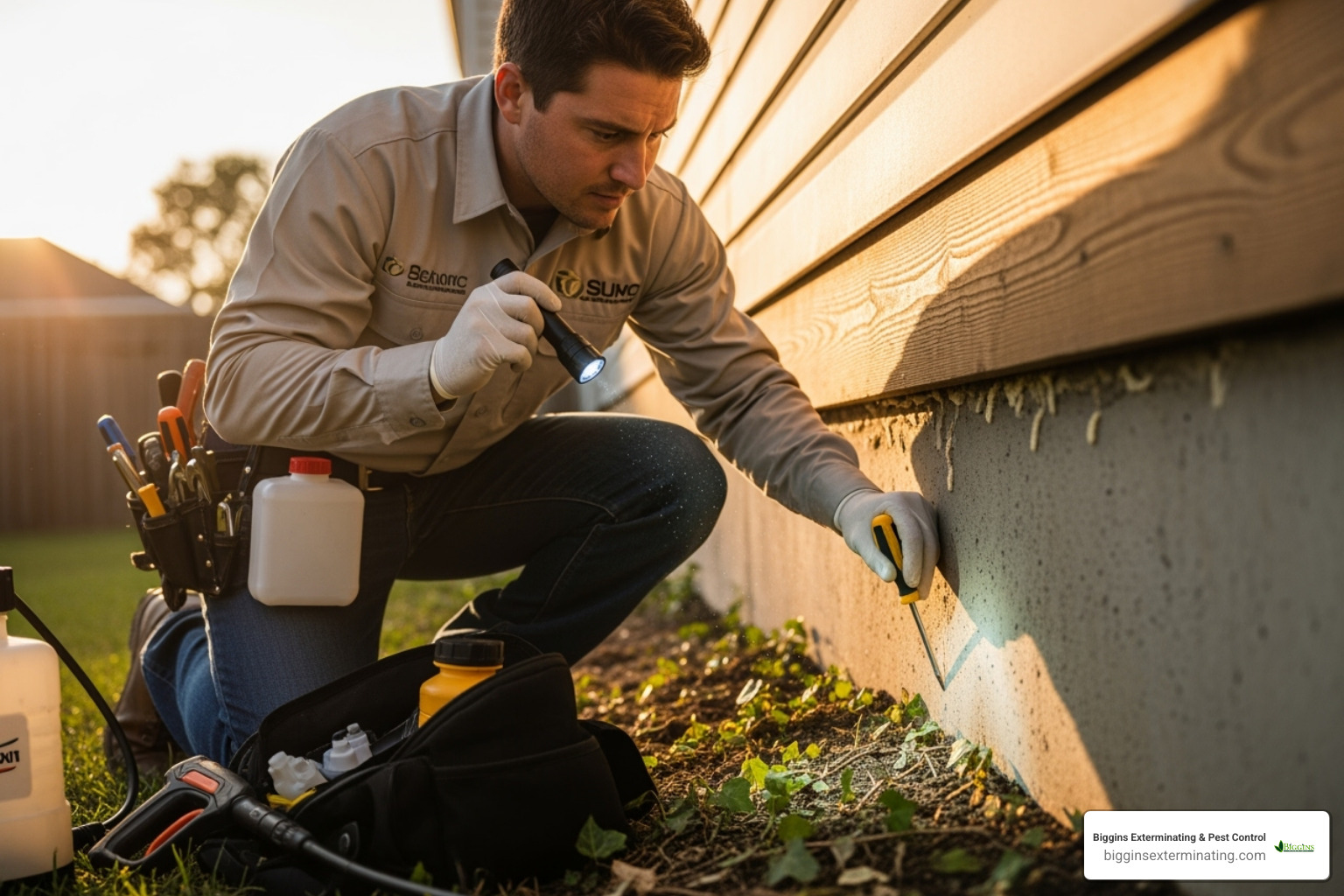
When in doubt, call a pro for an inspection. The national average termite inspection cost ranges from \$75 to \$325, but many reputable companies, including Biggins Exterminating, offer free initial inspections. This small investment can save you from a much larger termite treatment cost later. For more details, see our page on More info on Termite Inspection Services.
Common Signs of a Termite Infestation
Termites are sneaky but leave clues. Knowing these signs helps you catch an infestation early, reducing your potential termite treatment cost.
- Mud tubes: Pencil-sized tunnels subterranean termites build to travel from their colony to your home. Look for them along your foundation, walls, and floor joists.
- Discarded wings: Piles of small, translucent wings near windows or doors indicate a nearby colony.
- Hollow-sounding wood: Tapping on wood that sounds dull or hollow is a red flag that termites may be inside.
- Bubbling or peeling paint: This can resemble water damage but may be caused by termite activity near the surface.
- Frass: Tiny, wood-colored pellets are the droppings of drywood termites.
- Swarmers: Seeing winged termites indoors is a definitive sign of an active infestation.
If you spot any of these signs, don’t delay. For a deeper dive, visit More info on Signs of Termites.
How to Prevent Termites
Proactive measures can significantly reduce your home’s appeal to termites and lower your risk of infestation.
- Reduce moisture: Termites love dampness. Promptly fix leaky roofs, gutters, and faucets. Ensure storm drains direct water away from the foundation and keep crawl spaces dry.
- Eliminate wood-to-ground contact: Store firewood on racks at least 20 feet from your house. Remove decaying stumps or old lumber from your yard.
- Manage landscaping: Keep mulch and shrubbery at least a foot away from your home’s foundation to improve airflow and visibility for inspections.
- Seal access points: Regularly inspect and seal cracks or gaps in your foundation. Ensure screens on vents and windows are intact.
- Maintain your home’s exterior: Promptly repair water leaks, damaged siding, or loose roof tiles.
- Schedule regular inspections: Annual professional inspections are key to catching any activity before it becomes a major problem.
For more advice, explore More info on How to Prevent Termites and these Tips for proactive home protection.
Frequently Asked Questions about Termite Treatment

Here are answers to common inquiries about termite treatment cost and what to expect.
Is termite treatment covered by homeowner’s insurance?
Unfortunately, the answer is almost always no. Standard homeowner’s insurance policies typically do not cover the termite treatment cost or resulting damage. Insurers view termite infestations as a preventable maintenance issue, not a sudden, unexpected event like a fire. Because it’s considered a maintenance problem, it falls outside standard coverage. This is why a termite bond or warranty is so valuable for protection. For more details, Progressive offers a helpful explanation: Progressive explains insurance coverage.
How often should termite treatments be performed?
The lifespan of a termite treatment depends on the method used and your home’s specific risk factors.
- A professional liquid barrier treatment can protect your home for 5 to 10 years.
- Baiting systems require annual monitoring and refilling to remain effective.
- A successful fumigation can eliminate an existing drywood termite infestation for up to 15 years, but it won’t prevent a new colony from moving in later.
Regardless of the treatment, annual termite inspections are crucial for long-term protection and to ensure past treatments remain effective. Even though some treatments can last for years, regular check-ups are key.
What are the risks of DIY termite treatment?
While tempting to save money, DIY termite treatments are a gamble that can cost more in the long run. We strongly advise against it for several reasons:
- Ineffective Products: Over-the-counter products are weaker than professional-grade options and won’t eliminate a hidden colony.
- Failure to Eliminate the Colony: Without specialized knowledge, it’s nearly impossible to locate and destroy the queen and the entire colony, allowing the infestation to continue.
- Misapplication of Chemicals: Improperly handling pesticides is dangerous to your family and pets and can be ineffective.
- Worsening the Problem: An ineffective treatment can scatter termites to other parts of your home, making professional treatment more complex and expensive. Delaying proper care also gives termites more time to cause costly structural damage.
Hiring a professional is the most cost-effective and safest choice.
Secure Your Home and Your Peace of Mind
Understanding termite treatment cost is crucial. Treating termites isn’t just an expense—it’s a smart investment in your property’s future.
The cost of inaction is almost always steeper than the treatment cost. Termites cause $5 billion in damage annually in the U.S. Repair bills average $1,800 but can easily exceed $10,000 for severe structural damage. Compared to that, preventive treatment is a bargain.
Key takeaways: The termite treatment cost varies based on home size, infestation severity, termite type, and treatment method. Early, professional intervention is the best way to manage costs and protect your home.
At Biggins Exterminating & Pest Control, we’ve been helping families in Wilmington, MA, and surrounding communities like Andover, Bedford, Burlington, Lexington, North Reading, Tewksbury, and Woburn for over four decades. As a family-owned business, we understand your home is your most important investment.
Professional help matters because termites are experts at staying hidden while causing damage. Our experienced team has the tools and knowledge to eliminate current infestations and prevent future ones. We offer straightforward service without long-term contracts, backing our work with solid warranties because your peace of mind is our priority.
Don’t let termites turn your dream home into a nightmare. Whether you’ve seen suspicious signs or want to be proactive, we’re here to provide reliable solutions.
Contact us for professional termite control and let’s keep your home safe, sound, and termite-free.