Why Finding the Best Exterminator for Carpenter Ants is Critical
The best exterminator for carpenter ants can save your home from thousands of dollars in structural damage. These wood-destroying insects don’t eat wood like termites; they excavate it to create nests, weakening your home’s framework over time. A professional should be licensed, insured, and have specific experience with carpenter ants, backed by positive reviews and a service guarantee.
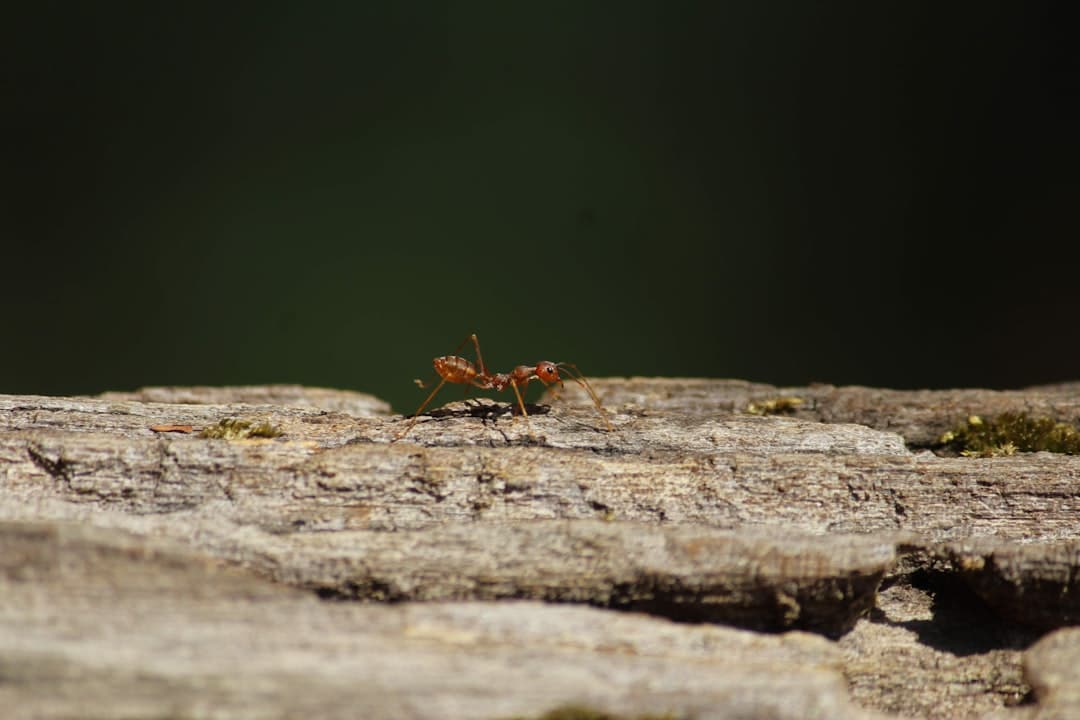
Carpenter ants are among the largest ants in North America, ranging from 1/4 to 5/8 inch long, with narrow waists and bent antennae. A mature colony can contain tens of thousands of workers, and the damage they cause by tunneling through wood can compromise your home’s structural integrity.
Professional extermination typically costs between $300 and $1,500+ depending on the infestation’s severity and your home’s size. Please note: These are average costs based on internet data and do not reflect the specific pricing of Biggins Exterminating services.
The key challenge is that carpenter ants often establish multiple satellite colonies. Missing even one nest can lead to re-infestation, which is why professional expertise is crucial for complete elimination.
As Stephen Biggins, owner of Biggins Exterminating Co., I’ve helped Massachusetts homeowners eliminate carpenter ant infestations for over four decades. Our family-owned business is one of the most trusted names when searching for the best exterminator for carpenter ants, and our warranty-backed approach ensures these pests don’t return.
Identifying the Enemy: Carpenter Ant Infestations and Damage
Before you can get rid of carpenter ants, you need to understand who they are and what clues they leave behind. Identifying an infestation early is your first line of defense in protecting your home.
Carpenter Ants vs. Termites: Know the Difference
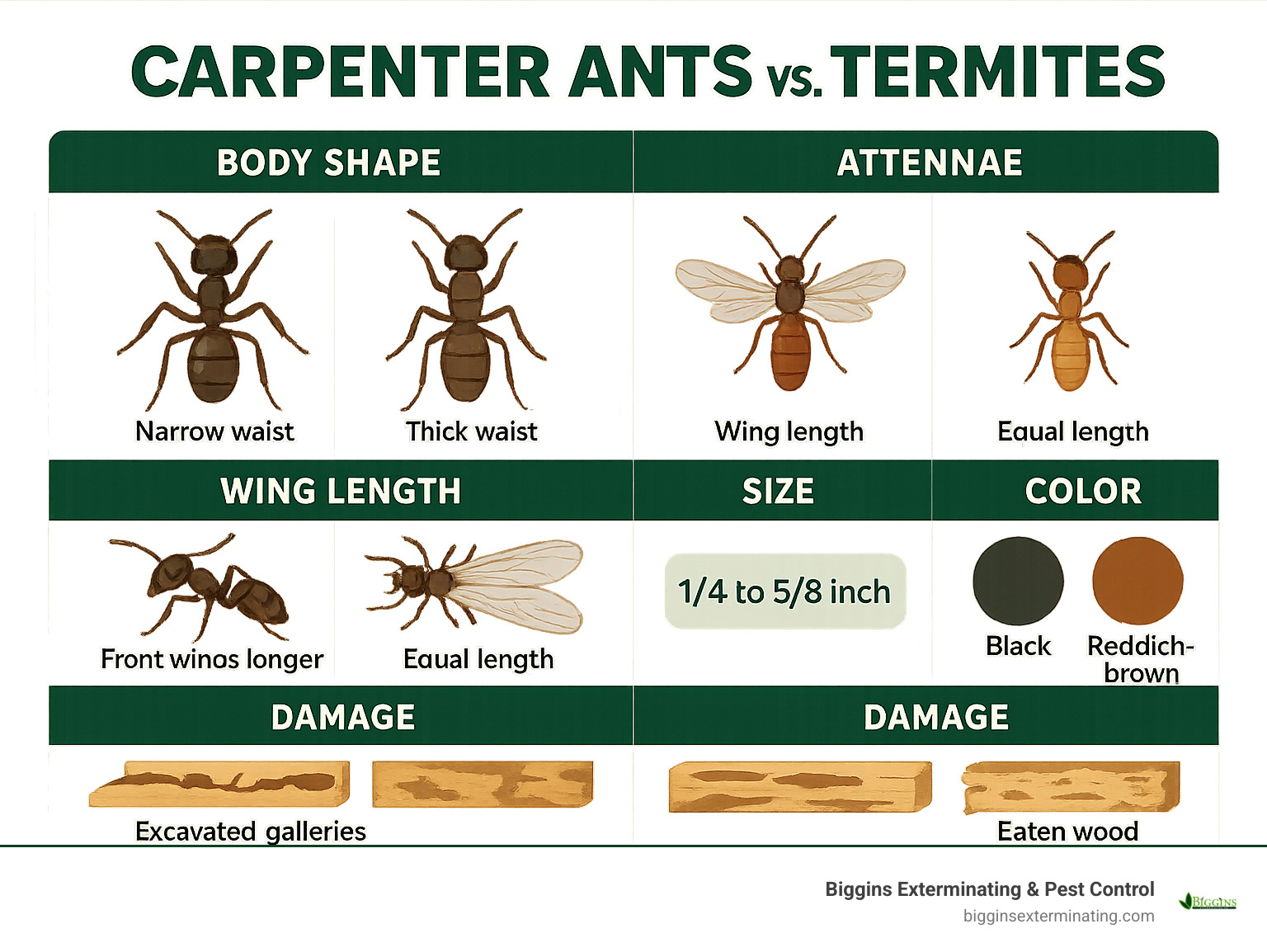
It’s a common mix-up, but knowing the key differences between carpenter ants and termites is crucial for getting the right treatment.
- Carpenter Ants: These are large ants (1/4 to 5/8 inch) that are typically black or reddish-black. They have a narrow, pinched waist, bent (“elbowed”) antennae, and their front wings are longer than their back wings. They excavate wood to build nests, leaving behind smooth, clean galleries.
- Termites: Termites have a broad, thick waist, straight antennae, and four wings of equal length. They eat wood, leaving behind rough, mud-lined tunnels.
Understanding these distinctions is vital for proper identification. For a more detailed look, read our guide on How to Distinguish Carpenter Ants from Termites.
Telltale Signs of a Carpenter Ant Problem
Carpenter ants leave behind several clues that can tip you off to an infestation. Keep an eye out for these signs:
- Foraging Worker Ants: Seeing large, black ants, especially at night, marching across your kitchen or bathroom is a common first sign.
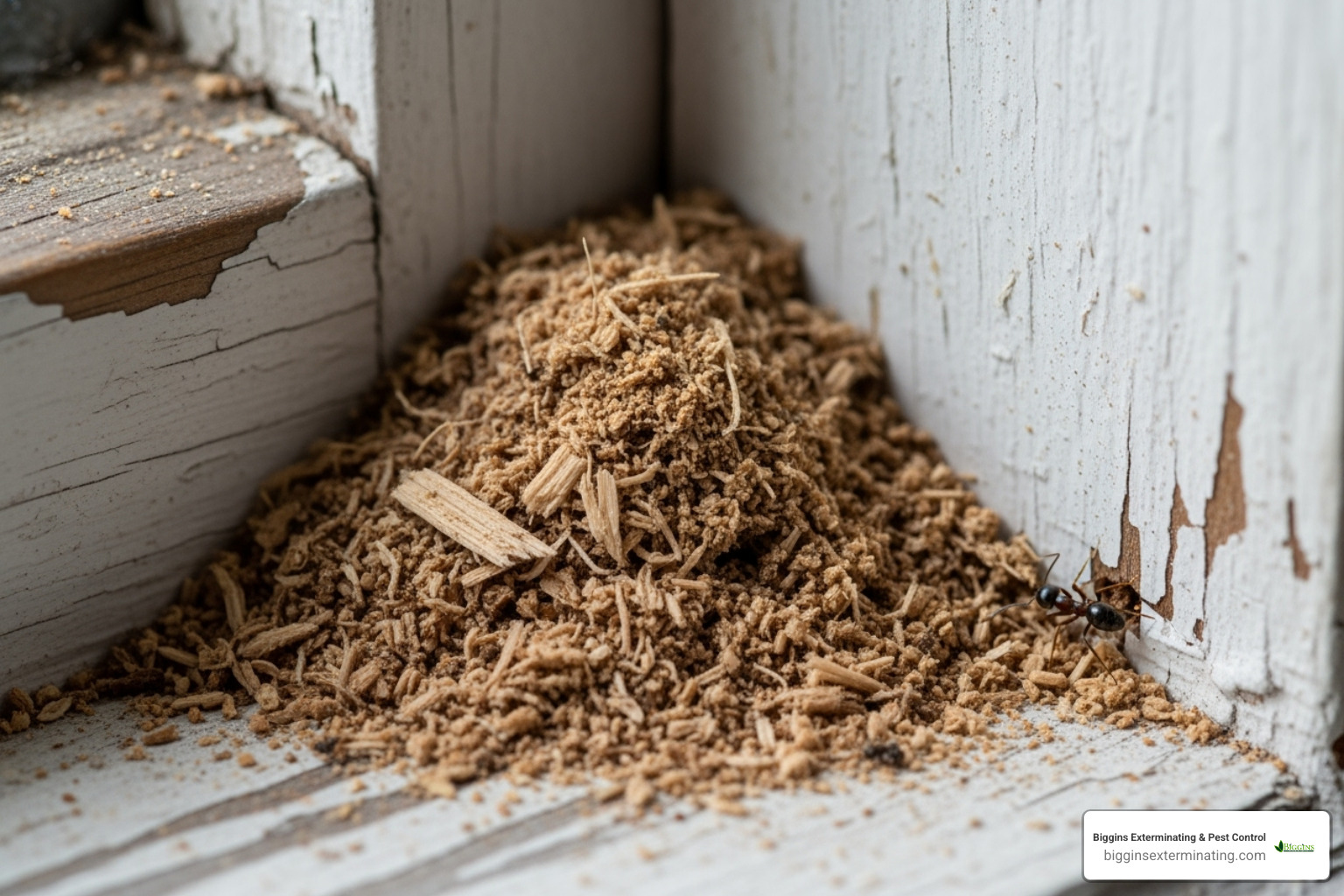
- Frass: Piles of what looks like sawdust are a clear indicator. This is a mix of wood shavings, insulation, and insect parts that ants push out of their tunnels. You’ll often find it near baseboards or window sills.
- Faint Rustling Sounds: In quiet moments, you might hear faint rustling or crinkling sounds from within your walls as the ants work.
- Swarmers or Discarded Wings: Finding winged ants or their delicate, discarded wings on sills or near lights is a strong sign of a mature colony. This is common in late winter or early spring in Massachusetts. Learn more in our article, Do Carpenter Ants Have Wings?.
- Damaged Wood: Look for small, slit-like openings on wood surfaces. The tunnels inside are smooth and clean, almost as if they’ve been sandpapered.
The Damage They Cause
The real concern with carpenter ants is the hidden damage they inflict. They don’t eat wood, but they excavate it to create nests and tunnel systems (galleries). They often start in wood softened by moisture, like around leaky pipes or roofs, but can expand into sound, dry wood, compromising your home’s structural integrity.
Over time, this tunneling can weaken crucial wooden components like beams, floor joists, and wall studs. While they work slower than termites, a long-term, unchecked infestation can lead to significant and costly damage. Signs of severe damage can include hollow-sounding wood, buckling floors, or visible warping of wooden structures. Protecting your home from this threat is why finding the best exterminator for carpenter ants is so crucial. For more insights, explore our page on Pest Control for Carpenter Ants.
The Professional Solution: Why and How Exterminators Eliminate Carpenter Ants
Once you’ve identified the enemy, the next step is elimination. While DIY solutions are tempting, carpenter ants present unique challenges that often require a professional touch, especially since they establish multiple “satellite colonies” that are hard to find. Missing even one nest means the problem will return. For homeowners in Massachusetts, understanding The Importance of Hiring a Professional Pest Control Service in Massachusetts is key.
When to Call a Professional vs. DIY
For a few random ants, cleaning and sealing might work. But for carpenter ants, DIY methods often fall short and can even make the problem worse by causing the colony to scatter. We strongly recommend calling a pro if you see:
- Persistent Ant Sightings: Seeing ants regularly, especially at night, signals an established colony.
- Visible Wood Damage: Any frass, hollow-sounding wood, or tunnels are red flags that DIY methods can’t fix.
- Hidden Nests: Professionals have the tools and experience to locate all nests, including the main colony and any satellite nests hidden in walls or ceilings.
- Large-Scale Infestations: Seeing winged “swarmers” means you have a mature colony that requires expert handling.
For true peace of mind and effective, lasting results, professional help is the best choice. To learn more, check out Can Pest Control Get Rid of Carpenter Ants?.
Professional Extermination Methods Explained
A professional exterminator provides a science-backed plan to eliminate the entire colony. The process typically includes:
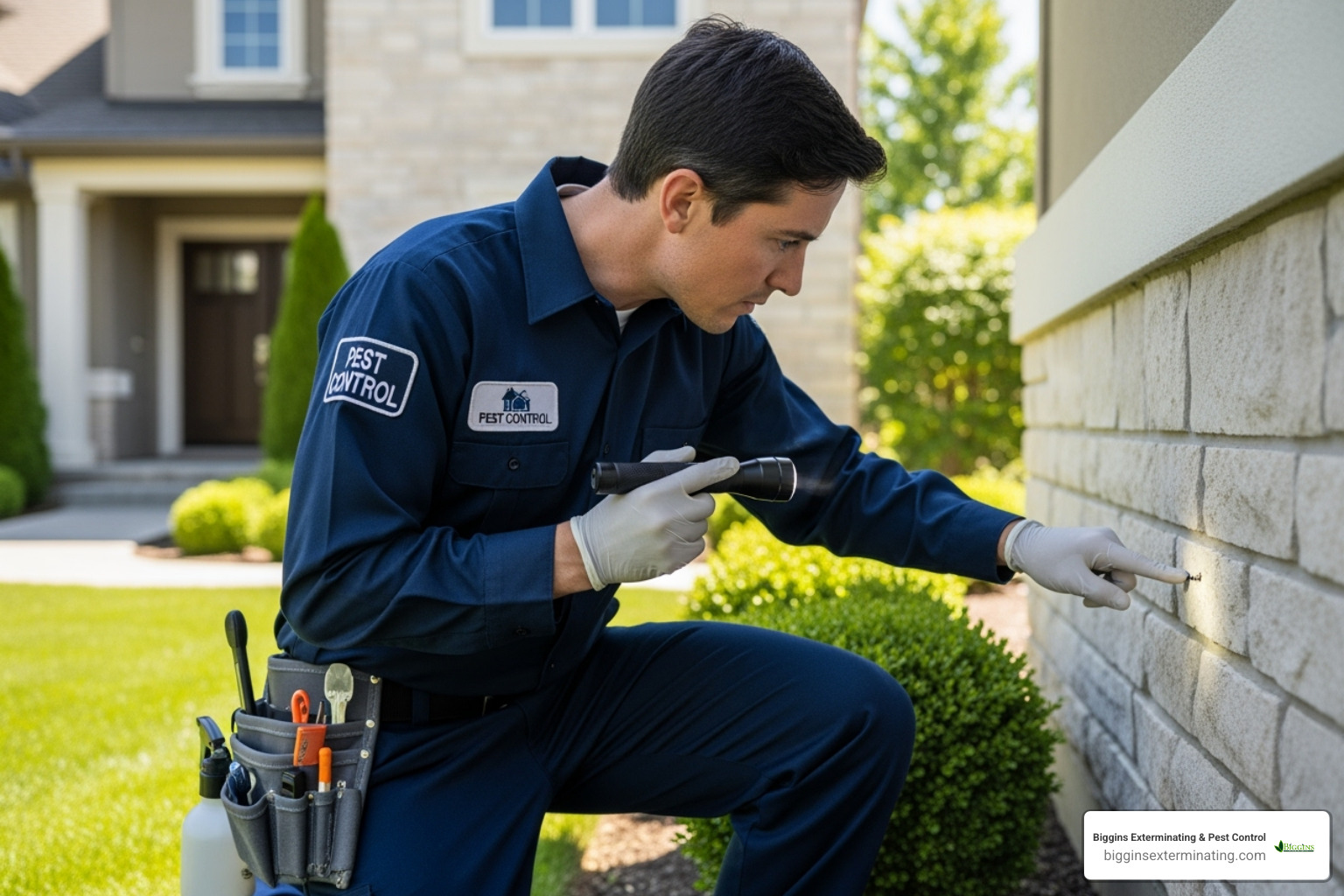
- Thorough Inspection: The foundation of any successful treatment is a detailed inspection of your property, inside and out, to find signs of activity, moisture issues, and entry points.
- Nest Location: Using specialized tools and techniques, experts locate the main parent colony and all satellite nests, which may be hidden in walls, attics, or outdoors.
- Targeted Treatment Options: A combination of methods is custom to your situation. This often includes dusts (like boric acid) applied into wall voids and crevices, which ants carry back to the colony. Specialized baits are also used, which foraging ants take back to share, eliminating the colony from within, including the queen.
- Liquid Insecticides: These are often used for perimeter treatments around your home’s foundation to create a protective barrier. For nests deep inside walls, we may perform a wall void application, injecting treatments directly into the colony’s heart.
- Follow-Up Visits: Especially for large infestations, follow-up visits are crucial to monitor progress and ensure the colony is completely eradicated. This dedication is what sets the best exterminator for carpenter ants apart.
For more details on these methods, read our guide on How to Kill Carpenter Ants.
Finding the Best Exterminator for Carpenter Ants: A Homeowner’s Checklist
Now that you know why professional help is essential, the next step is finding the right team. Choosing the best exterminator for carpenter ants means doing a little homework to find a reliable, effective, and trustworthy partner.

Key Qualities of the best exterminator for carpenter ants
When researching a pest control company, look for these essential qualities:
- Licensed and Insured: This is non-negotiable. It ensures the company meets industry standards and protects you from liability. Biggins Exterminating is fully licensed and insured for our customers’ peace of mind.
- Years of Experience: Look for a company with a long history of dealing with carpenter ants. Our family-owned business has over 40 years of experience tackling pests in the Massachusetts climate.
- Positive Customer Reviews: Check online reviews to gauge a company’s reliability, professionalism, and effectiveness.
- Warranties or Guarantees: A reputable exterminator will stand by their work. We offer warranties without tying you into long-term contracts.
- Professional Affiliations: Membership in organizations like the National Pest Management Association (NPMA) shows a commitment to best practices and ongoing training.
Understanding the Cost of Extermination
The cost of professional carpenter ant extermination varies based on the severity of the infestation, your home’s size, the number of nests, and the treatment methods required.
Please note: The following are average costs based on internet data and do not reflect the specific pricing of Biggins Exterminating services;
Based on online sources, prices for carpenter ant extermination can range from $300 to over $1,500. A simple treatment will be on the lower end, while extensive infestations requiring multiple visits will cost more. Always get a detailed quote after a thorough inspection. For more information on finding reliable services, see our guide on the Best Rated Exterminator Near Me.
Questions to Ask a potential best exterminator for carpenter ants
Before making a decision, ask any potential exterminator these questions to gauge their professionalism and expertise:
- What is your treatment process for carpenter ants?
- Are your technicians licensed and certified?
- Do you offer a warranty or guarantee on your services?
- What prevention advice can you offer to stop future infestations?
- What safety precautions do you take to protect my family and pets?
- How long will the treatment take, and what should I expect?
- What is your estimated cost, and what might change that estimate?
Asking these questions will help you choose the best exterminator for carpenter ants. For more local advice, visit our page on Local Ant Exterminators.
Fortifying Your Home: Long-Term Prevention Strategies
Once the carpenter ants are gone, the next step is to ensure they don’t return. Proactive prevention creates an environment that is inhospitable to these pests, fortifying your home for the long haul.
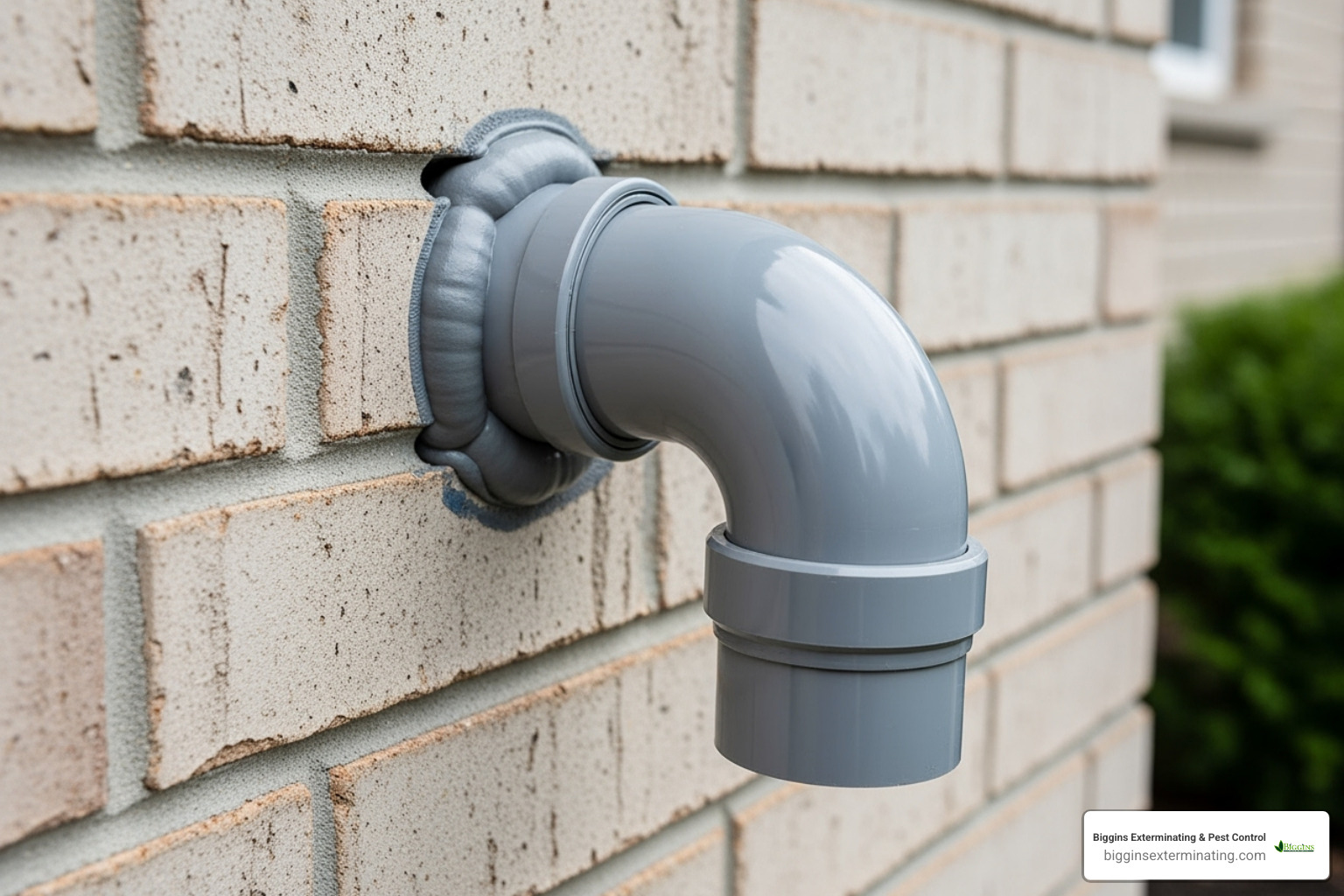
For more ways to keep pests out, our guide on Effective Ant Control is packed with helpful tips!
Eliminating Ant Attractants
Carpenter ants are always looking for moisture, food, and shelter. Removing these attractants makes your home far less appealing.
- Control Moisture: This is the most important step. Carpenter ants love damp wood. Promptly fix leaky pipes, faucets, and roofs. Ensure gutters direct water away from the foundation and improve ventilation in basements, crawl spaces, and attics. Replace any water-damaged or rotting wood.
- Remove Food Sources: Store all food, including pet food, in airtight containers. Clean up crumbs and spills immediately, especially in the kitchen. Use garbage cans with tight-fitting lids and empty them frequently. Keep compost bins located well away from your house.
Blocking Entry Points
Even a clean, dry home can be vulnerable if ants can find a way in. Seal up any potential entry points to create a physical barrier.
- Seal Cracks and Gaps: Inspect your foundation, windows, and doors, and use caulk to seal any cracks or openings. Pay close attention to where utility pipes and wires enter the home.
- Repair Screens: Ensure all window and door screens are in good repair, with no rips or tears.
- Trim Vegetation: Keep tree branches and shrubs trimmed back a few feet from your home’s exterior to eliminate “ant bridges” to your siding and roof.
- Store Firewood Properly: Keep firewood stacks at least 20 feet from your home and liftd off the ground. Always inspect wood for ants before bringing it inside.
By partnering with a professional for the initial extermination and then applying these prevention strategies, you create a powerful defense to keep your home ant-free.
Frequently Asked Questions about Carpenter Ant Control
It’s natural to have questions when facing a carpenter ant problem. Here are clear answers to some of the most common concerns we hear from homeowners.
What do carpenter ants eat?
This is a common misunderstanding: carpenter ants do not eat wood. They excavate it to build their nests and tunnels. Their actual diet consists of proteins and sugars. Outside, they eat other insects and the sweet honeydew left by aphids. Inside your home, they forage for sweets, crumbs, pet food, and other insects. They are constantly searching for food and water to bring back to the colony.
How long does it take to get rid of carpenter ants?
The timeline depends on the size of the infestation, the number of satellite nests, and the treatment methods used. While you may see a reduction in ant activity within a few days of professional treatment, it can take a few weeks for the entire colony to be eradicated. This is because the treatment needs to reach the hidden nests and eliminate the queen. Follow-up visits are often necessary to ensure complete elimination and provide lasting relief.
Are carpenter ant bites dangerous?
Carpenter ant bites are generally not considered dangerous, as they are not venomous. However, they can be painful. If a carpenter ant feels threatened, it will bite with its strong jaws and may spray formic acid into the wound, causing a temporary burning sensation. While a nuisance, the bite is not a major health threat to people or pets.
Your Local Experts in Carpenter Ant Defense
Protecting your home from carpenter ants is about safeguarding your most valuable investment and ensuring your family’s peace of mind. These insects can silently undermine your home’s structure, which is why swift, effective action is crucial.
When choosing the best exterminator for carpenter ants in Massachusetts, trust matters. Biggins Exterminating & Pest Control is a family-owned business, deeply rooted in the communities we serve, including Wilmington, Andover, Bedford, Billerica, Burlington, Lexington, North Reading, Tewksbury, and Woburn, MA.
With over 40 years of experience, we have the expertise to tackle even the most challenging carpenter ant infestations. We provide reliable pest control services with clear warranties and without requiring long-term contracts—your satisfaction is our priority. Our approach combines decades of hands-on knowledge with the latest treatment methods to ensure these wood-destroying pests don’t return.
For a comprehensive and effective solution to your carpenter ant problem, don’t hesitate to contact our team for expert Carpenter Ant Pest Control. Let us help you protect your home.