Why Effective Cicada Killer Wasp Treatment Matters for Homeowners
Treatment for cicada killer wasps becomes essential when these intimidating two-inch wasps start turning your lawn into Swiss cheese. Here are the most effective treatment options:
Quick Treatment Solutions:
– Insecticidal dust applied directly into burrows at night (most effective)
– Boiling water poured into nest entrances followed by soil compaction
– Pyrethroid sprays injected into tunnels during evening hours
– Professional treatment with EPA-regulated products and warranties
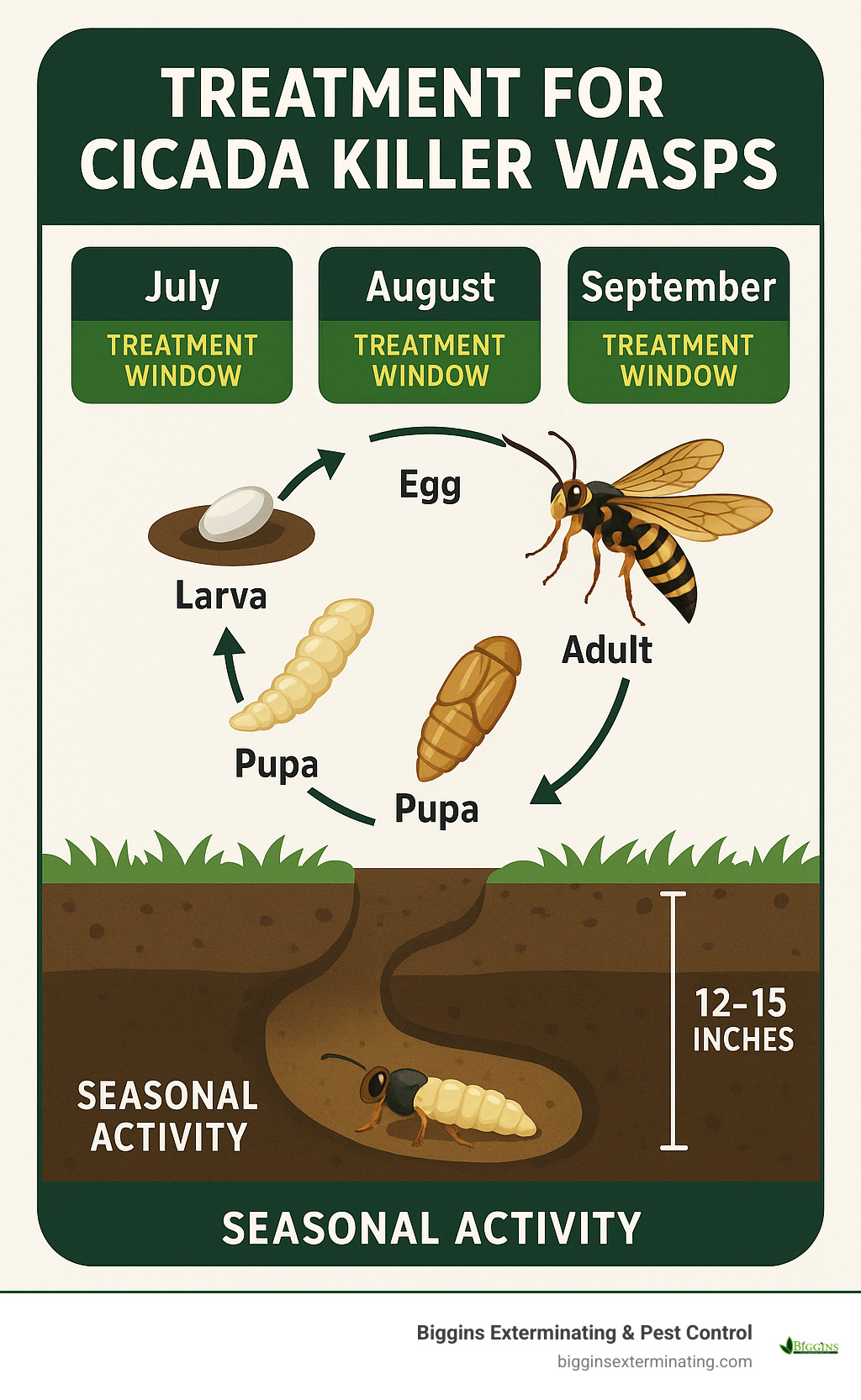
These solitary wasps create U-shaped soil mounds across lawns from July through September, with each burrow displacing up to 100 cubic inches of soil. While cicada killers rarely sting humans, their extensive tunneling can smother grass, destabilize patios, and create unsightly dirt piles.
Unlike social wasps that defend colonies, cicada killers are non-aggressive ground-diggers focused on hunting cicadas. Each tunnel can extend 30 to 70 inches long and reach 12 to 15 inches deep, making targeted treatment crucial for effective control.
The key to successful treatment lies in timing and precision – applying treatments after sunset when all adults are inside their burrows maximizes effectiveness while minimizing sting risk.
I’m Stephen Biggins, and over four decades of pest control experience has taught me that treatment for cicada killer wasps requires understanding their solitary nature and precise timing. At Biggins Exterminating, we’ve helped countless Massachusetts homeowners reclaim their lawns from these impressive but troublesome insects.
Treatment for cicada killer wasps vocabulary:
– cicada wasp nest
– prevent cicada killer wasps
– kill cicada killer wasps naturally
How to Identify Cicada Killer Wasps
Before you start any treatment for cicada killer wasps, you need to make sure you’re actually dealing with these gentle giants. After four decades in pest control, I’ve seen plenty of homeowners panic over what they thought were “murder hornets” when they were actually looking at these relatively harmless soil-diggers.
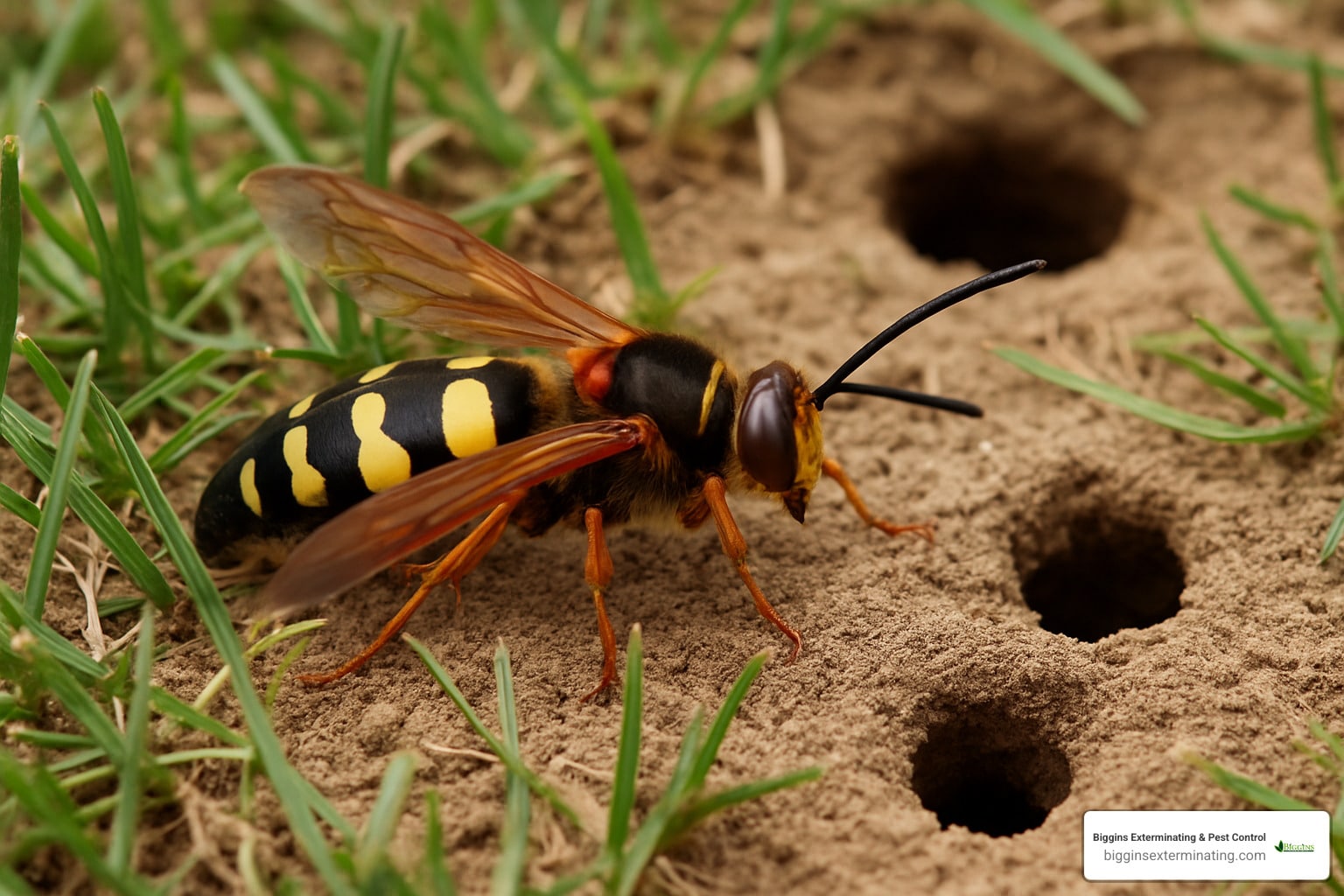
Cicada killers are absolutely massive at 1.5 to 2 inches long. Their bodies are primarily black with bold yellow markings across the thorax and abdomen. What really sets them apart are their rust-brown to reddish legs and those beautiful translucent brown-orange wings.
Males and females behave completely differently. The males are slightly smaller and put on quite a show with their territorial dive-bombing, but they cannot sting. The females are larger and focused on digging burrows. They do have stingers, but they save them for paralyzing cicadas, not bothering humans.
The real giveaway is their behavior. You’ll know you have cicada killers when you spot those telltale U-shaped soil mounds scattered across your lawn, each with a quarter-sized entrance hole. Unlike social wasps that work together, these are solitary operators.

During peak season, you might witness females carrying paralyzed cicadas back to their burrows, while males hover territorially over nesting areas.
Look-alikes to Rule Out
Getting the identification wrong can lead to using the wrong treatment approach entirely.
Yellowjackets are much smaller at only 0.5 to 0.75 inches, with bright yellow and black coloring. These aggressive wasps build paper nests and will definitely let you know if you’ve disturbed them.
European hornets are closer in size at 1 to 1.5 inches, but they’re predominantly brown and yellow rather than black. They prefer nesting in tree hollows or wall voids.
Carpenter bees are smaller at 0.75 to 1 inch with black bodies and yellow patches. They tunnel into wood rather than soil and hover around deck railings and eaves.
Mud daubers build mud structures rather than digging burrows. They’re typically black or metallic blue and measure 0.75 to 1 inch.
The key difference is that cicada killers are ground-nesters with those distinctive U-shaped soil mounds, while most look-alikes prefer above-ground locations.
Activity, Risks & Typical Damage
If your lawn suddenly looks like a construction zone in late summer, you’re probably dealing with cicada killer season. These wasps follow a predictable schedule that makes treatment for cicada killer wasps much more manageable once you understand their habits.
Peak activity runs from July through September, with real action happening in late July and early August. They only have one generation per year, so once they’re gone by mid-September, you get a break until next summer.
These wasps prefer well-drained, light-textured soils in sunny spots. You’ll typically find their U-shaped soil mounds along driveways and sidewalks, near patios and walkways, and in sparse lawn areas.
Each burrow displaces up to 100 cubic inches of soil – imagine dumping a large coffee can of dirt on your lawn for every nest. This excavated soil smothers surrounding grass, creating brown patches that make your yard look damaged.
Research shows that 40% of developing larvae emerge as adults the following year. That means a dozen nests this season could become 40-50 nests next summer if left untreated.
The good news about safety risks? Cicada killers are remarkably non-aggressive. Females can sting if you grab them, but their venom is milder than yellowjackets. Males put on quite a show with territorial dive-bombing, but they have no stingers.
Pet owners should use some caution. Dogs and cats that try to catch female cicada killers might get a painful lesson, and pets stung in the mouth need veterinary attention due to potential swelling.
Before you declare war on these wasps, consider that they’re actually beneficial insects that control cicada populations and pollinate flowers. They’re also food for skunks – if you find torn-up burrows with claw marks, that’s likely nighttime skunk activity.
According to research from the University of Kentucky IPM program, cicada killers show strong preferences for specific soil types and moisture levels.
When Treatment Is Truly Necessary
Treatment for cicada killer wasps works best when it’s targeted and necessary rather than reactive.
High-traffic areas are where these wasps become genuinely problematic. Burrows near front doors, walkways, or outdoor seating areas create awkward encounters. Children’s play areas and sports fields definitely warrant treatment.
Rapid population growth signals intervention needs. When you’re counting more than 10-15 active burrows in a concentrated area, or notice year-over-year population increases, the situation will likely worsen without treatment.
Structural concerns include burrows that undermine patio edges or retaining walls. Extensive tunneling in ornamental garden beds affects both plant health and aesthetics.
Health considerations make treatment essential for households with wasp allergies, elderly family members who might fall if startled, or curious pets that haven’t learned to avoid these wasps.
Best Treatment for Cicada Killer Wasps
When it comes to treatment for cicada killer wasps, success depends on understanding that these aren’t typical social wasps. Each female creates her own individual burrow, which means you’ll need to target every single tunnel for lasting results.
After four decades of dealing with these insects across Massachusetts, I’ve found that the most effective approach combines the right products with precise timing and thorough application techniques.
Insecticidal dust remains the gold standard for cicada killer control. Unlike liquid sprays that might run off, dust formulations penetrate deep into tunnel systems – some reaching 70 inches long. The dust clings to tunnel walls, providing residual control that eliminates both adult wasps and developing larvae.
Pyrethroid injection treatments offer another highly effective option, particularly products containing cyfluthrin or cyhalothrin. When injected directly into burrow entrances, these liquids provide excellent knockdown power and lasting residual control.
Carbaryl dust at 5% concentration continues to deliver reliable results. Research consistently shows this treatment eliminates wasp activity within 2-3 days when applied properly to all active burrows.
Timing is absolutely critical. All applications must happen after sunset or before dawn, when temperatures drop below 60°F. This ensures every adult wasp is inside their burrows, maximizes contact with your treatment, and dramatically reduces sting risk.
Use a hand duster for precise placement, applying 2-3 heavy puffs directly into each burrow entrance. Treat every identified burrow in a single session – missing even one can lead to continued activity.

DIY Treatment for Cicada Killer Wasps
Many homeowners can successfully tackle small cicada killer populations with the right approach and readily available products.
Start with a thorough daytime inspection to locate every single burrow. Mark each location with small flags – you’ll be grateful for these markers when working by flashlight later.
Gather your equipment: insecticidal dust, a hand duster, and proper protective gear. Long sleeves, pants, closed shoes, and safety glasses are non-negotiable.
Wait until after sunset before beginning treatment. Approach each marked burrow quietly and apply 2-3 heavy puffs of dust directly into the entrance. Move efficiently from burrow to burrow, then retreat to a safe distance.
Boiling water offers a chemical-free alternative. Pour 1-2 gallons of boiling water directly into each burrow entrance, then immediately cover with a glass bowl. The combination of scalding water and suffocation can be effective, though success rates vary.
DIY treatment costs typically range from $15-60 per treated area, depending on the number of burrows and products selected. While this approach saves money, large infestations can be time-intensive, and incomplete treatment often leads to reinfestation.
Professional Treatment for Cicada Killer Wasps
Professional treatment becomes the smart choice when dealing with extensive infestations, safety concerns, or when you want expert application. Our Cicada Killer Treatment approach has been refined through decades of experience.
Licensed applicators bring expertise beyond product application. We start with proper species identification, understand local regulations, have access to professional-grade products, and know the timing differences that make or break treatment success.
Our assessment process maps every active burrow, evaluates population density, and identifies conditions attracting wasps to your property. This shapes a customized treatment plan addressing both immediate control and long-term prevention.
Professional-grade products often provide superior results compared to consumer options. Service guarantees provide additional value – we stand behind our work with follow-up service if cicada killers return within the warranty period.
Professional cicada killer treatment typically ranges from $200-600+ depending on property size and infestation severity. These are average costs based on internet data and not actual costs for Biggins Exterminating services.
Choose professional treatment when facing infestations with 20+ active burrows, recurring annual problems, or when previous DIY attempts have failed.
Eco-Friendly Options
For homeowners preferring gentler approaches, several eco-friendly methods can effectively manage cicada killer populations over time.
Creating dense, healthy turf remains the most effective long-term strategy. Cicada killers strongly prefer sparse, well-drained areas for nesting. Maintain thick grass through proper fertilization, water deeply with 1-1.5 inches per week, and overseed thin areas.
Soil modification can dramatically reduce nesting success. Add 3 inches of mulch to flower beds and sparse lawn areas. Install landscape fabric in persistent problem spots.
Daily burrow disruption requires commitment but can be effective. Plug active burrows with soil every morning, remove soil mounds, and compact entrance areas. Repeat throughout the active season.
Water management offers another approach. Flood nesting areas with your garden hose daily, keeping soil consistently moist during peak activity periods.
Our Kill Cicada Killer Wasps Naturally guide provides additional strategies that many Massachusetts homeowners have implemented successfully.
Non-chemical methods require patience but research shows cultural controls can eliminate cicada killer populations within 1-2 seasons when applied consistently.
Safety Precautions During Application
Safety should always be your top priority during treatment. While cicada killers are non-aggressive, proper precautions prevent accidents and ensure effective results.
Personal protection starts with the right clothing. Wear long-sleeved shirts, long pants, closed-toe shoes, safety glasses, and gloves. Consider a bee veil for large infestations.
Read and follow all product label instructions completely. Check weather conditions, inform family members about treatment timing, and keep children and pets indoors during application.
Chemical handling requires attention to detail. Store insecticides in original containers, keep products away from children and pets, and dispose of empty containers according to label directions.
Consider environmental impacts during application. Avoid treating during bee foraging hours, protect water sources, and check local ordinances regarding pesticide use.
After treatment, mark treated areas and keep pets and children away for 24 hours. Monitor for unusual wasp activity over the following days.
Prevention & Long-Term Control
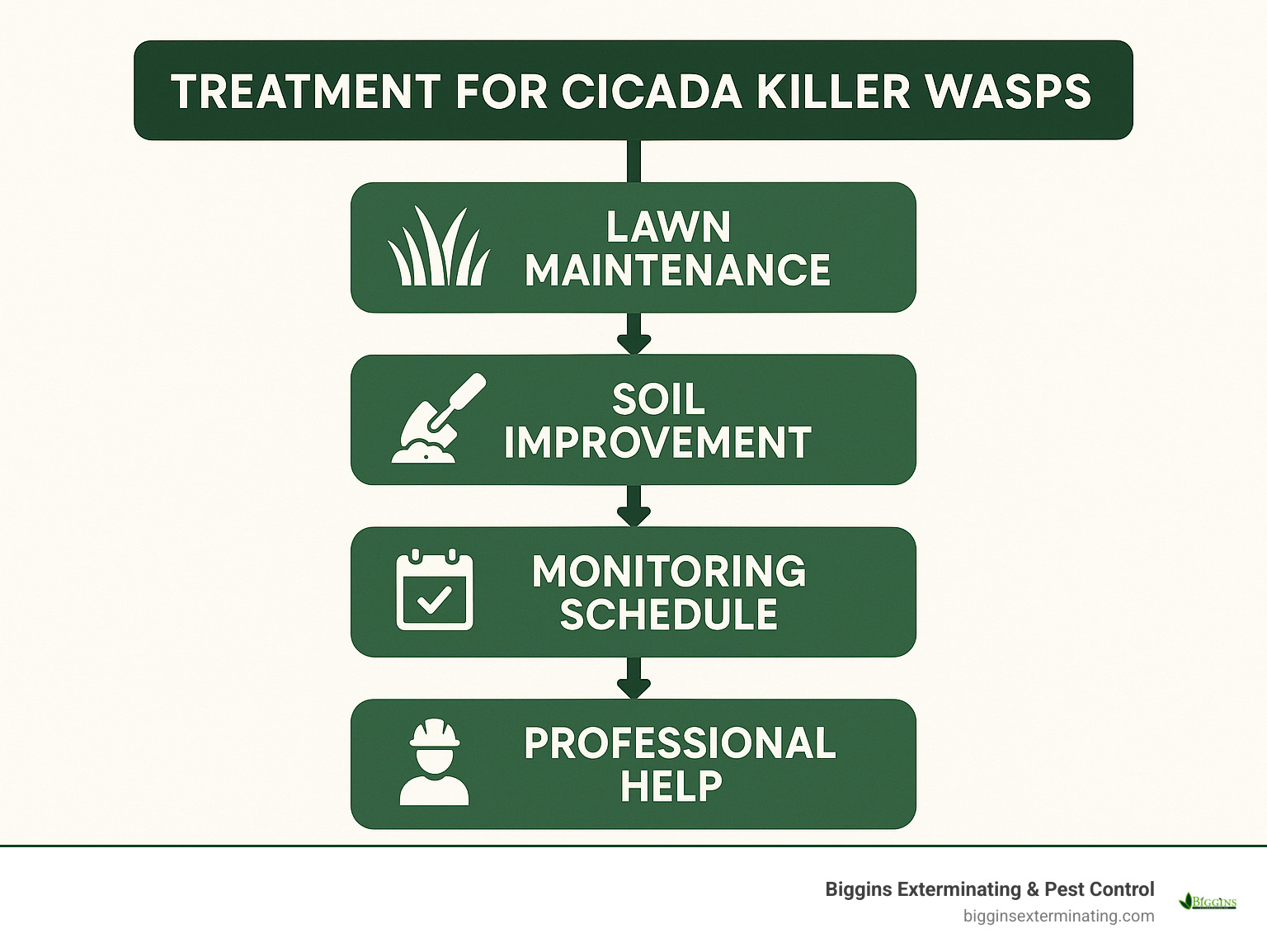
The secret to winning the battle against cicada killers isn’t just about treatment for cicada killer wasps – it’s about creating conditions where they don’t want to nest in the first place. After four decades of helping Massachusetts homeowners, I’ve learned that the best defense is a healthy, thick lawn.
Cicada killers are like picky house hunters. They want sunny spots with loose, well-drained soil that’s easy to dig. Give them a dense carpet of grass instead, and they’ll move on to your neighbor’s sparse lawn areas.
The Foundation: Lawn Health as Your Best Defense
Your grass is your first line of defense. Maintain grass height at 3-4 inches – this creates the dense canopy that cicada killers avoid. When you mow, use sharp blades and leave clippings to decompose and feed your soil naturally.
Deep watering of 1-1.5 inches per week encourages grass roots to grow thick and strong. Water early in the morning to reduce evaporation, and avoid frequent light sprinklings that weaken your grass.
Apply lime to maintain proper pH between 6.0 and 7.0. Use slow-release fertilizers to promote steady growth. A simple soil test each year tells you exactly what your lawn needs.
Physical Changes That Make a Difference
Smart landscaping modifications create long-term barriers to cicada killer activity. Install 3-inch mulch layers in flower beds and around trees. Dense groundcover plants in sparse areas work like living mulch, covering potential nesting sites year-round.
Fill existing holes with topsoil and seed them immediately. These abandoned tunnels are like “For Rent” signs to new cicada killers, so eliminate them before the next season begins.
Creating shade through strategic tree or shrub placement reduces the sunny conditions these wasps prefer.

Your Year-Round Prevention Calendar
Prevention works best when it follows nature’s calendar. Spring preparation in April and May includes applying granular barrier treatments to previous nest sites, overseeding thin areas, and beginning your deep watering program.
Early summer monitoring from June through July keeps you ahead of the game. Watch for early cicada killer activity and mark any new burrow locations immediately.
Peak season management from July through September requires daily attention to known problem areas. Immediate treatment of new burrows prevents small problems from becoming large infestations.
Fall follow-up in October and November prepares your property for next year’s success. Fill any abandoned burrows with soil, apply winter fertilizer, and plan landscape modifications.
Our Prevent Cicada Killer Wasps program helps Massachusetts homeowners develop prevention strategies custom to their specific property conditions.
The Long Game Pays Off
Properties with thick, healthy turf rarely experience significant problems. The investment you make in proper lawn care typically pays dividends in reduced pest pressure and improved property value.
Consistency matters more than perfection. Annual property inspections and documentation help you track what works. Prompt treatment of any new activity prevents small issues from becoming major headaches.
Research consistently shows that cultural controls like these can eliminate cicada killer populations within one to two seasons when applied consistently. The key is patience and addressing the underlying conditions that make your property attractive to these wasps.
Frequently Asked Questions about Cicada Killer Wasp Control
Are cicada killer wasps dangerous to humans or pets?
The short answer is no – cicada killers are among the least dangerous wasps you’ll encounter. After four decades of helping Massachusetts homeowners, I can tell you that actual stings are remarkably rare.
Female cicada killers can sting, but they’re far more interested in hunting cicadas than bothering humans. Their venom is actually milder than yellowjackets or honeybees. You’d have to handle one roughly to get stung.
Males are all bark and no bite – literally. They put on quite a show with territorial dive-bombing, but they have no stinger at all.
Pet safety is rarely a concern. Dogs and cats that try to catch these wasps usually get stung once and quickly learn to leave them alone. The main risk is swelling that could affect breathing, which requires a vet visit.
If you have known wasp allergies, treat cicada killers with the same caution you’d use around any stinging insect.
How can I tell if I have a cicada killer infestation?
Cicada killers leave obvious calling cards. The most telltale sign is those distinctive U-shaped soil mounds with quarter-sized entrance holes scattered across your lawn.
Multiple soil mounds appearing overnight is your first clue. Each burrow displaces about 100 cubic inches of soil, creating unsightly dirt piles. You’ll typically find them in sunny, well-drained areas.
Giant wasps hovering over your lawn during July and August is another giveaway. At nearly two inches long, they’re hard to miss. Males patrol territories by hovering and diving at anything that moves through their area.
Paralyzed cicada carcasses scattered around your yard tell the real story. Females hunt cicadas to stock their underground nurseries.
A few scattered burrows can be handled with DIY methods, but 16 or more active burrows usually calls for professional intervention.
Don’t be surprised if you notice skunk damage in infested areas. These predators love digging up cicada killer burrows to feast on the paralyzed cicadas inside.
What time of year should I start treatment for cicada killer wasps?
Timing your treatment for cicada killer wasps correctly makes the difference between success and frustration.
Late June scouting gives you the jump on emerging populations. Adults start appearing around the summer solstice, with males emerging first.
Mid-July through early August represents the prime treatment window. Peak adult emergence coincides with nest construction, making this the most effective time for burrow treatments. We recommend nightly dusting applications starting in mid-July.
Repeat treatments are essential because not all adults emerge simultaneously. Most successful treatments require 2-4 applications over 2-3 weeks.
Evening timing is critical for both safety and effectiveness. Wait until after sunset when temperatures drop below 60°F. This ensures all wasps are inside their burrows.
September monitoring wraps up the season. Late-emerging adults occasionally appear through mid-September. Keep an eye on treated areas and hit any new activity immediately.
Prevention starts in spring with proper lawn care, but active treatment waits until the wasps actually show up.
Conclusion
Successfully managing treatment for cicada killer wasps comes down to understanding these fascinating insects and responding appropriately to their presence in your yard. While their impressive size can be intimidating, these solitary wasps are actually quite docile and play an important role in controlling cicada populations.
The most effective approach combines immediate targeted treatment with smart long-term prevention. Evening applications of insecticidal dust directly into burrows work far better than broadcast spraying, and timing these treatments when all adults are underground maximizes success while keeping you safe.
For smaller infestations with fewer than 10 burrows, DIY treatment using readily available insecticidal dust can be highly effective when applied properly. The key is treating every single burrow and repeating applications as new activity appears.
Larger infestations or recurring annual problems often benefit from professional intervention. At Biggins Exterminating & Pest Control, we’ve spent over 40 years helping Massachusetts homeowners reclaim their lawns from cicada killers. Our targeted approach focuses on eliminating current populations while providing guidance on preventing future problems.
The real secret to long-term success lies in maintaining healthy, dense turf. Cicada killers strongly prefer sparse, sandy areas for nesting, so a thick lawn watered deeply and regularly becomes your best defense.
Safety should always come first, whether you choose DIY or professional treatment. These wasps may be non-aggressive, but proper protective equipment and evening application timing prevent unnecessary risks and ensure effective results.
If you’re dealing with persistent cicada killer problems in Wilmington, Andover, Bedford, Billerica, Burlington, Lexington, North Reading, Tewksbury, or Woburn, our experienced team provides reliable service without requiring contracts. We stand behind our work with satisfaction guarantees because we understand how important your outdoor spaces are to your family’s enjoyment.
For additional guidance on managing these impressive wasps naturally, check out our Cicada Killer Repellent resource for homeowners seeking alternative approaches.
Treatment for cicada killer wasps should focus on protecting high-traffic areas where their presence creates genuine concerns. In less sensitive parts of your property, these remarkable insects can continue their beneficial work controlling cicadas while you enjoy a beautiful, functional outdoor space.
With the right knowledge and approach, you can successfully balance effective pest management with respect for these fascinating members of our local ecosystem.