Why Understanding Winged Carpenter Ants Matters for Your Home
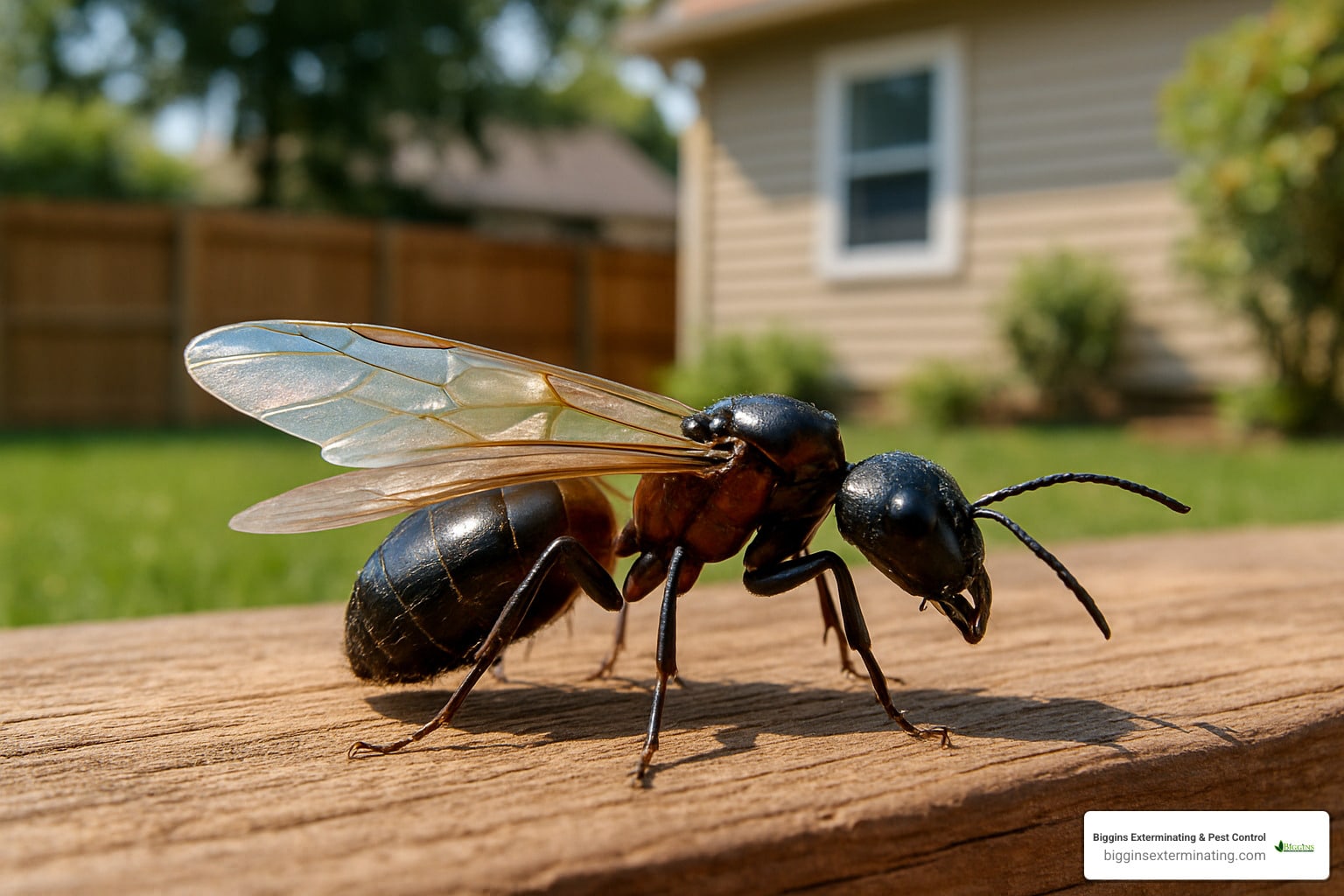
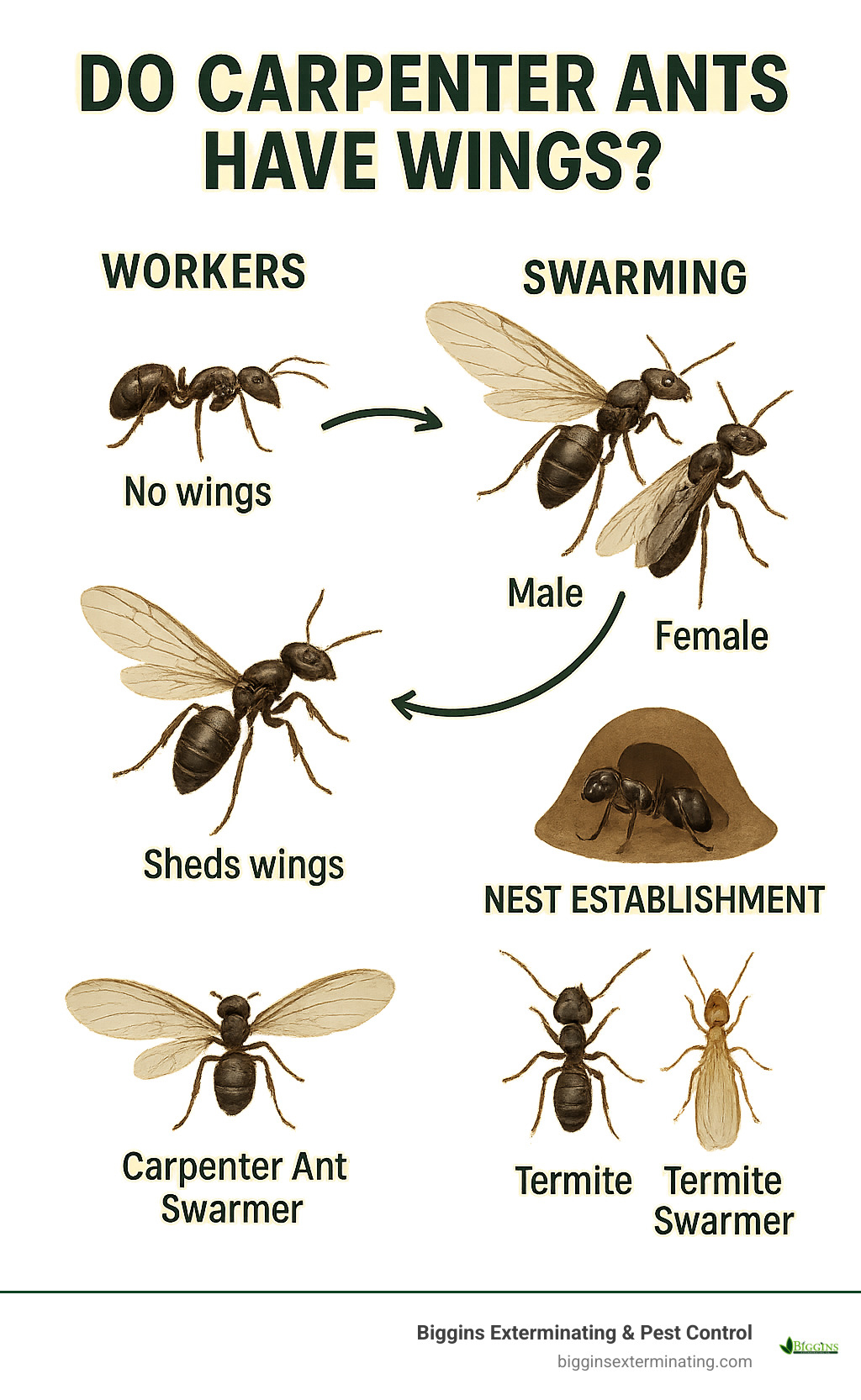
Do carpenter ants have wings? Yes, but only the reproductive members of a carpenter ant colony develop wings. These winged carpenter ants, called swarmers or alates, emerge from mature colonies to mate and establish new nests.
Quick Answer:
– Workers: No wings – these are the ants you typically see foraging
– Queens: Have wings only during mating flight, then shed them
– Males: Have wings during mating flight, die after mating
– Wing purpose: Allows reproductive ants to spread and start new colonies
If you’ve spotted large, dark ants with wings around your Massachusetts home, you’re likely dealing with carpenter ant swarmers. The presence of winged carpenter ants often signals a mature colony nearby – possibly inside your home’s structure. Colonies typically need 2-3 years to mature before producing these winged reproductives. When you see them indoors during late fall, winter, or early spring, it usually indicates an established nest within your home.
I’m Stephen Biggins from Biggins Exterminating, and over my 40+ years in pest control, I’ve helped countless Massachusetts homeowners tackle the question do carpenter ants have wings and address the structural threats these insects pose. Early identification of winged carpenter ants can save homeowners thousands in potential damage repairs.
Terms related to do carpenter ants have wings:
– do carpenter ants bite
– carpenter ant infestation in house
– carpenter ant pest control products
Do Carpenter Ants Have Wings? Understanding the Castes
If you’ve ever wondered “do carpenter ants have wings,” the answer depends on understanding how carpenter ant colonies work. Carpenter ant colonies operate like tiny kingdoms with a strict social structure where each ant has a specific job, and whether they get wings depends entirely on their role.
In a typical mature colony of 3,000 or more ants, you’ll find three distinct groups. The worker ants make up the vast majority and never develop wings throughout their entire lives. These wingless ants, between 1/4 to 1/2 inch long, handle all the day-to-day operations like foraging, building, and colony maintenance.
The queen can grow up to 3/4 inch long and only has wings temporarily during her mating phase. Once she mates and finds a spot to start her colony, those wings come right off. After that, she settles into a wingless life of egg-laying that can last up to 25 years.
The male reproductive ants also get wings but exist for one purpose – mating – and die shortly after their flight. They’re similar in size to larger workers but only appear during swarming season.
When carpenter ants do have wings, they’re quite distinctive. Each ant sports two pairs of wings, with the front wings significantly longer than the back wings. This unequal wing setup becomes your key identification feature.
Which Carpenter Ants Have Wings?
Only the reproductive alates ever develop wings, but the colony must earn this right. A carpenter ant colony needs to be around two to three years old before it can produce winged ants. The colony must build up adequate food reserves, reach a certain population size, and have resources to invest in these energy-intensive reproductive forms.
Several factors trigger wing development: colony maturity, sufficient food storage, proper environmental conditions, and seasonal timing – usually spring or early summer. Once a colony reaches maturity, it can produce hundreds of winged reproductive ants each year.
Primary Keyword Breakdown: do carpenter ants have wings
When someone asks “do carpenter ants have wings,” the complete answer depends on timing and biology. Wings serve a crucial purpose in the carpenter ant life cycle. During nuptial flight, winged males and females from different colonies mate, preventing inbreeding.
Once mating happens, fertilized females shed their wings immediately. Wings are metabolically expensive to maintain, and once the queen finds her nesting spot, being wingless helps her steer tight spaces while excavating wood galleries. All that energy gets redirected to egg production.
This wing-shedding behavior explains why you might find small piles of discarded wings near windowsills or entry points – often the first clue that new colonies are being established nearby.
Spotting Winged Carpenter Ants vs. Termites
Picture this: you notice several large, dark insects with wings crawling near your kitchen window. Your heart sinks as you wonder – are these carpenter ants or termites?
Don’t panic. While both pests can cause serious damage, knowing how to tell them apart can save you from unnecessary worry and potentially thousands in wrong treatment costs.
Do carpenter ants have wings? Yes, the reproductive ones do – and their wings actually help you identify them correctly.
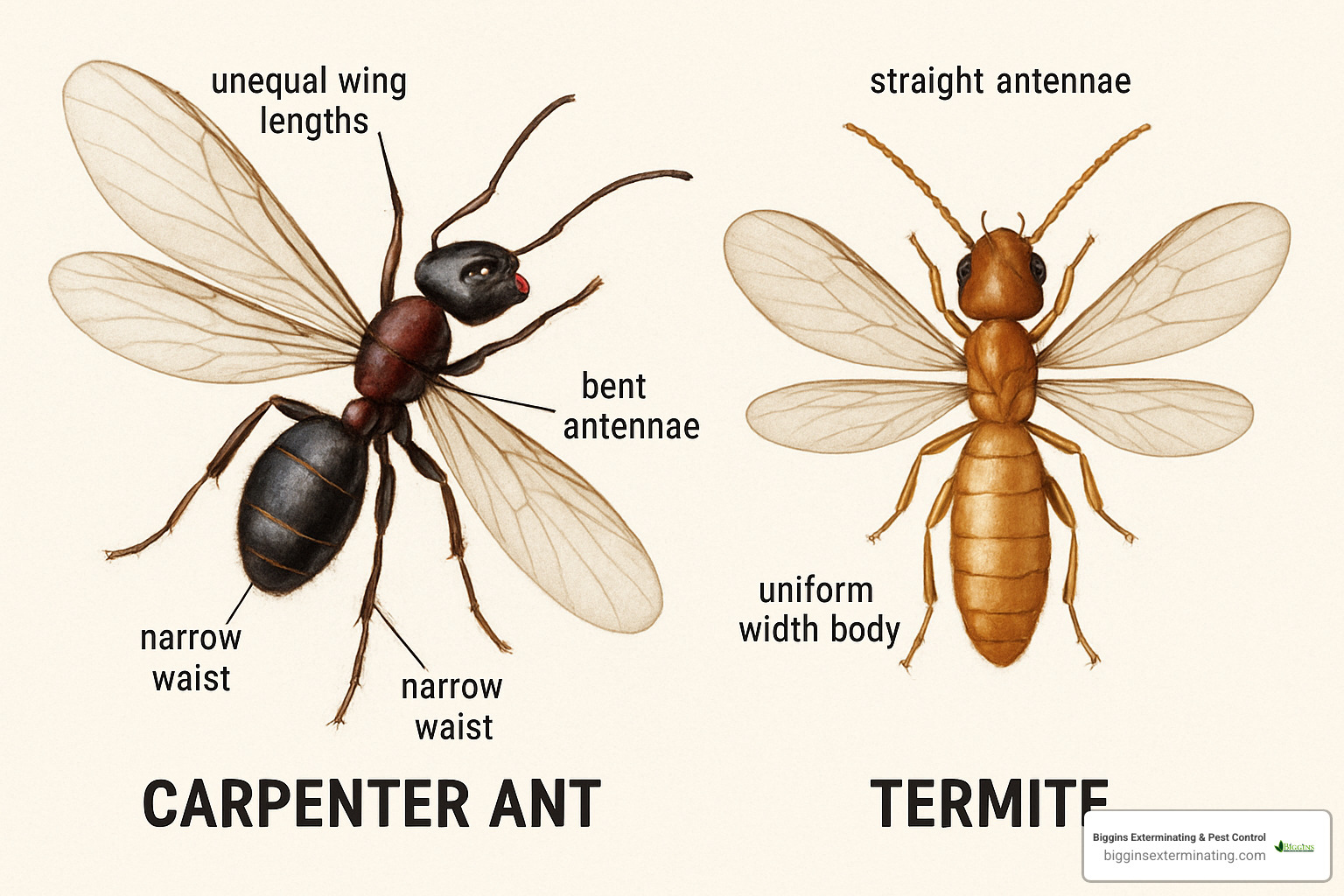
| Feature | Winged Carpenter Ants | Winged Termites |
|---|---|---|
| Waist | Narrow, pinched | Broad, uniform |
| Antennae | Elbowed (bent) | Straight |
| Wings | Front longer than rear | All four wings equal length |
| Color | Black, dark brown, or reddish | Pale, translucent |
| Body Size | 1/4 to 3/4 inch | 1/4 to 1/2 inch |
| Wing Membrane | Clear with visible veins | Milky white |
The timing of swarms can offer additional clues. Carpenter ants typically swarm during late spring and early summer, while termites often prefer earlier spring or warm fall days. However, both can appear year-round in heated buildings.
How to Distinguish Winged Ants from Termites
After four decades in pest control, I’ve learned that homeowners can become reliable pest detectives with three simple identification tricks.
The wing test is your most reliable tool. When carpenter ants have wings, the front pair extends significantly beyond the rear pair. Termites maintain four wings of identical length that fold neatly over their bodies.
The antenna check comes next. Carpenter ant antennae bend at a distinct angle, creating a tiny elbow. Termite antennae stay perfectly straight.
The waist measurement seals the deal. Carpenter ants sport a dramatically narrow waist creating an hourglass figure. Termites maintain the same width from head to tail.
For detailed identification techniques, visit our guide: How to Distinguish Carpenter Ants from Termites: Identifying the Menace in Your Home.
Visual Guide Using the Keyword: do carpenter ants have wings
When asking “do carpenter ants have wings” while staring at insects in your home, color and size variations can confuse identification.
Black carpenter ants dominate Massachusetts homes, appearing as solid black insects. Red and black carpenter ants create a striking two-tone appearance. Brown carpenter ants display various shades from light brown to deep chocolate.
Size differences add complexity. Worker ants measure 1/4 to 1/2 inch, while reproductive females can reach 3/4 inch – nearly three times larger.
The wing structure provides the most reliable identification feature. Carpenter ant wings appear clear with visible veining, while termite wings look milky or translucent.
Why and When Carpenter Ants Grow Wings
Picture this: it’s a warm May evening in Massachusetts, and suddenly your porch light is surrounded by large, dark flying insects. If you’re wondering “do carpenter ants have wings” at this moment, you’re witnessing the nuptial flight.
Carpenter ants don’t just decide to grow wings randomly. This change happens only when specific conditions align perfectly.
The timing is surprisingly predictable. In New England, primary swarming season runs from late spring through early summer, typically May through July. However, secondary swarms occur during unseasonably warm fall days. Indoor swarms can happen year-round in heated buildings, which often signals trouble.
Environmental conditions act as nature’s starter pistol. Warm temperatures above 70°F combined with high humidity trigger swarming. Recent rainfall and atmospheric pressure changes also play crucial roles. According to scientific research on swarming behavior, multiple colonies often coordinate their flights simultaneously.
The colony must be ready for this undertaking. We’re talking about a minimum two-year-old colony with at least 2,000 workers and a healthy queen producing reproductives. Creating winged ants requires enormous energy reserves.
The synchronized nature prevents inbreeding and keeps the gene pool diverse.
What Seeing Winged Carpenter Ants Means
The location and timing of your encounter tells an important story.
Spotting them outdoors during spring or summer? This indicates normal reproductive behavior from mature colonies somewhere in your neighborhood. While not cause for immediate panic, keep an eye out for suitable nesting sites around your property.
Finding them indoors is different entirely. When winged carpenter ants show up inside your home during fall, winter, or early spring, there’s likely an established nest within your structure. These off-season indoor sightings indicate nearby colonies about 90% of the time.
Multiple indoor sightings amplify concern, especially near moisture sources like bathrooms, kitchens, or basements. Moisture-damaged wood increases indoor colony likelihood significantly.
Where Winged Carpenter Ants Nest After Swarming
After mating flight ends and wings are shed, newly fertilized queens face a critical decision: where to establish their empire. They’re incredibly picky about real estate.
Indoors, queens gravitate toward moisture-damaged wood. I’ve found new nests behind dishwashers with small leaks, inside hollow-core doors that absorbed humidity, and in wall voids with minor plumbing leaks. Attic areas with roof leaks and poorly ventilated basements also make their list.
Water-damaged wood becomes first choice because it’s soft enough for a lone queen to excavate her initial gallery.
Outdoor nesting sites follow the same moisture-first principle. Rotting tree stumps, decaying fence posts, firewood piles against foundations, and mulch beds create perfect conditions.
The queen starts small in soft, moist wood where excavation is manageable. As her colony grows, they expand into drier wood or establish satellite nests throughout your property.
Understanding these preferences explains why moisture control becomes your first line of defense against establishment.
Risks, Damage & Professional Control
When wondering “do carpenter ants have wings,” you’re likely concerned about what these insects might be doing to your home. Unlike termites that eat wood, carpenter ants excavate galleries for living spaces – causing serious problems over time.
Damage starts small but grows steadily. Carpenter ants prefer moist, soft wood for initial excavation, creating smooth-walled tunnels. As colonies mature, these galleries can compromise structural integrity.
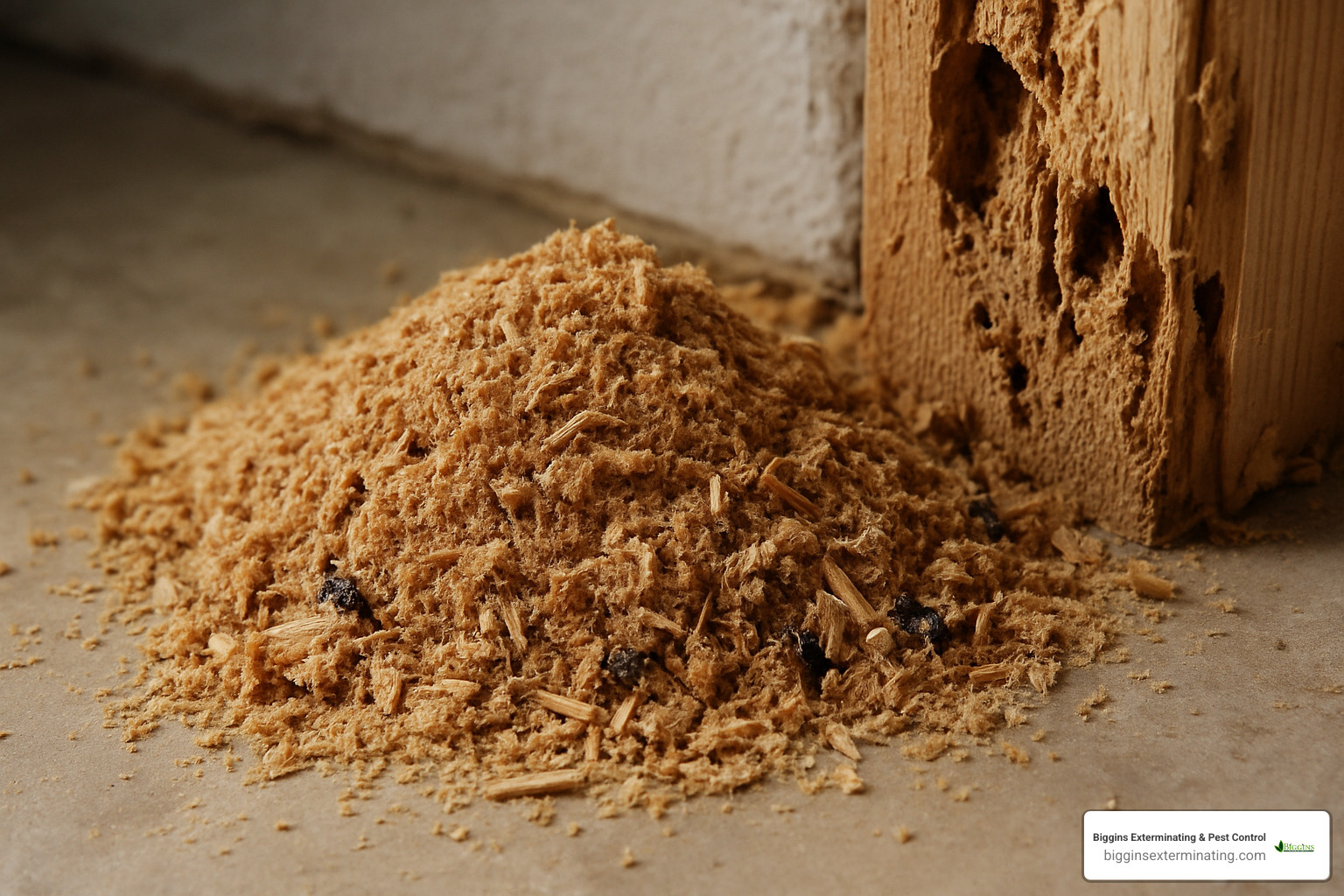
What you’ll notice first is frass – coarse sawdust-like debris beneath work areas. You might hear faint rustling in walls during quiet evening hours when colonies are most active.
Structural concerns become serious when galleries intersect load-bearing elements. While carpenter ants won’t bring your house down overnight, years of unchecked activity can weaken joists, studs, and critical components.
Beyond structural issues, galleries create pathways for moisture intrusion and provide highways for other pests. Nests in wall voids can contact electrical wiring, creating potential fire hazards.
Financial impact varies dramatically. According to internet data averages, professional treatment costs typically range from $300 to $1,500, though severe cases can cost significantly more – sometimes $5,000 or higher when extensive structural repairs become necessary. These are average costs based on internet data and not actual costs for Biggins Exterminating services, which we determine after thorough inspection.
Successful control requires finding and treating all colony sites – not just obvious ones. Many companies miss satellite nests, leading to recurring problems.
For comprehensive information about our treatment approach, visit Pest Control for Carpenter Ants.
Best Practices for DIY Prevention
Prevention beats treatment every time. Homeowners who focus on prevention rarely face major carpenter ant problems.
Moisture remains your biggest enemy. Fix leaky pipes immediately, improve basement ventilation, and ensure gutters drain properly. A dehumidifier in damp areas works wonders.
Your home’s exterior needs attention. Seal foundation cracks, install door sweeps, and repair damaged screens. Replace water-damaged wood before it becomes an invitation.
Landscape management makes a huge difference. Store firewood 20 feet from your house and keep it liftd. Trim tree branches away from roof and siding. Remove dead trees, stumps, and decaying wood.
Simple housekeeping helps tremendously. Clean up food crumbs promptly, store pantry items in airtight containers, and keep pet food sealed.
Proven Methods to Eliminate Winged Carpenter Ants
When prevention isn’t enough, effective treatment requires systematic approach addressing entire colony structure. Understanding “do carpenter ants have wings” becomes crucial – those winged reproductives indicate mature colonies needing comprehensive treatment.
Finding the nest comes first. We follow ant trails during peak activity hours, look for frass accumulations, and listen for rustling sounds. Water-damaged areas get special attention.
Treatment must be thorough and targeted. Direct nest treatment with professional-grade materials gives best results, but perimeter barriers and strategic baiting provide additional protection. The key is treating all colony sites.
Follow-up monitoring ensures success. Carpenter ant colonies are resilient, and incomplete treatment often leads to rebound populations.
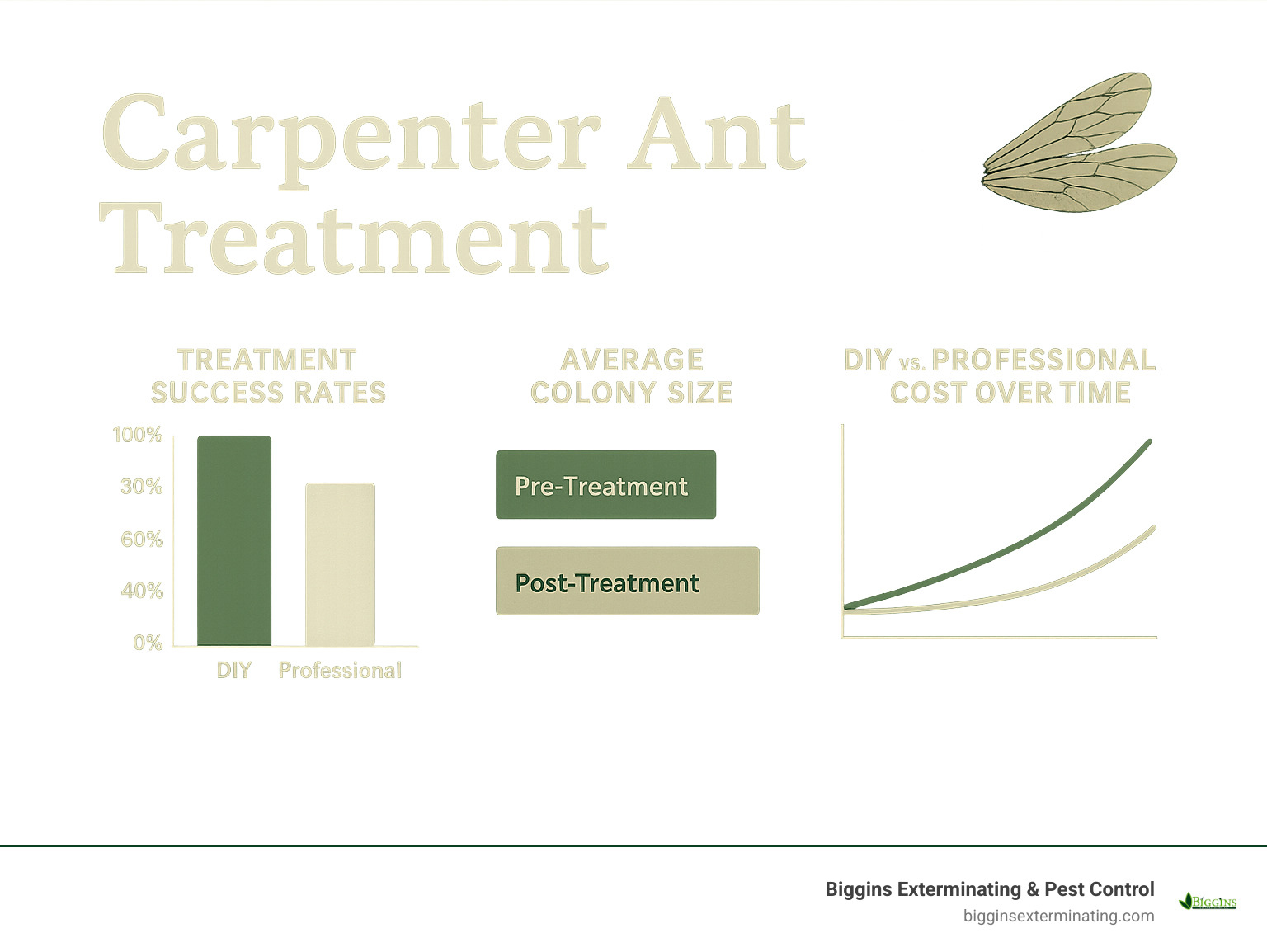
At Biggins Exterminating, we stand behind our treatments with warranties – no long-term contracts required. Our experience combining effective treatment with customer education creates lasting results.
Frequently Asked Questions about Winged Carpenter Ants
Do winged carpenter ants bite people or pets?
Do carpenter ants have wings isn’t the only question homeowners ask when encountering these insects up close. Many wonder if they’re dangerous to family and pets.
Carpenter ants can bite, but they’re not aggressive. They’ll bite when threatened or accidentally grabbed, but won’t seek you out. The bite feels like a firm pinch – uncomfortable but not excruciating. You might notice temporary redness or mild swelling that typically fades within hours.
Carpenter ants don’t have stingers but can spray formic acid from their abdomens as defense. This spray can cause mild burning on skin or temporary eye irritation.
Most people experience only minor discomfort, though sensitive individuals might notice more pronounced reactions. Pets face minimal risk from encounters.
The real concern isn’t whether these ants will hurt you – it’s the structural damage they’re causing while you’re not looking.
Can carpenter ants with wings eat my house like termites?
This question comes up constantly, and I understand the worry. When you see large, winged insects emerging from walls, termite alarm bells start ringing.
Here’s the good news: carpenter ants don’t actually eat wood. Unlike termites, carpenter ants are like tiny construction workers with excavation equipment. They carve smooth, clean galleries in wood for living spaces but don’t consume the wood itself.
Carpenter ants remove wood particles and dump them outside nests, creating sawdust-like frass piles. Their galleries remain empty except for ant traffic.
Termites actually consume wood cellulose for nutrition, filling tunnels with mud-like material and causing rapid, devastating damage. They’re less picky about wood condition.
The damage timeline differs significantly. Carpenter ants work over months to years, primarily targeting moist wood first. Termites can cause serious problems much more quickly.
Don’t let this fool you into thinking carpenter ant damage isn’t serious. Those galleries still weaken structural integrity and create moisture pathways.
What’s the average cost to remove carpenter ants?
Based on internet data averages, professional carpenter ant removal typically ranges from $300 to $1,500, though severe infestations can push costs up to $3,000 or more. These are average costs based on internet data and not actual costs for Biggins Exterminating services.
Infestation severity plays the biggest role – treating a single, accessible nest costs far less than tackling multiple colonies. Location accessibility significantly impacts pricing too. Property size and complexity matter as well.
At Biggins Exterminating, we provide free inspections to accurately assess your specific situation before recommending treatment options. Our no-contract approach means you pay for results.
The key is getting professional assessment early. When homeowners ask “do carpenter ants have wings” and find they’re dealing with reproductive swarmers, quick action often prevents minor problems from becoming major expenses.
Conclusion
After four decades of helping Massachusetts homeowners tackle pest problems, I can tell you that understanding “do carpenter ants have wings” is about protecting your most valuable investment.
The answer isn’t simply yes or no. Only the reproductive carpenter ants develop wings, and they keep them just long enough to mate and find new nesting sites. When you spot these winged invaders, especially indoors during fall or winter months, you’re looking at evidence that mature colonies are thriving nearby – quite possibly within your home’s walls.
Winged carpenter ants don’t appear by accident. They signal that established colonies have reached maturity and are expanding territory. Without proper intervention, occasional sightings can evolve into serious structural damage costing thousands to repair.
Early identification gives you significant advantage. When homeowners call us after spotting their first winged carpenter ants, we can often prevent major damage with targeted treatment. Wait too long, and we’re dealing with multiple colonies, extensive galleries, and compromised structural integrity.
Prevention remains your strongest defense. Keep moisture levels low, seal entry points, and maintain your property – these steps eliminate most conditions that attract carpenter ants. But when prevention isn’t enough, professional treatment becomes essential.
Every carpenter ant situation tells a different story. That’s why we never rely on one-size-fits-all solutions. Our free inspections help us understand your specific situation before recommending the most effective approach.
Don’t let carpenter ants turn your home into their permanent residence. Whether you’re dealing with occasional winged swarmers or suspect an established indoor colony, prompt action protects both your property and your peace of mind.
Contact Biggins Exterminating & Pest Control today for your free inspection. Our warranty-backed, no-contract services have earned the trust of Massachusetts families for over 40 years. Let us help you determine whether those winged ants represent a minor inconvenience or a serious threat requiring immediate attention.
For comprehensive information about our proven treatment methods and prevention strategies, visit our carpenter ant pest control services page. Your home deserves protection from experienced professionals who understand exactly how to handle these persistent pests.