The Truth About Carpenter Ants and Professional Pest Control
Can pest control get rid of carpenter ants? Yes, professional pest control is highly effective at eliminating carpenter ant infestations through targeted treatments that reach the queen and satellite nests, with success rates over 90% when using integrated pest management approaches.
| Professional Pest Control vs. Carpenter Ants | Effectiveness |
|---|---|
| Locating hidden nests (including satellites) | Very effective – uses specialized tools |
| Eliminating the queen | Essential for colony elimination |
| Treatment types | Non-repellent sprays, dusts, baits, foam |
| Complete elimination timeline | 2-3 weeks for most infestations |
| Prevention of return | Includes moisture control and exclusion |
| Success rate | 90%+ with proper treatment protocol |
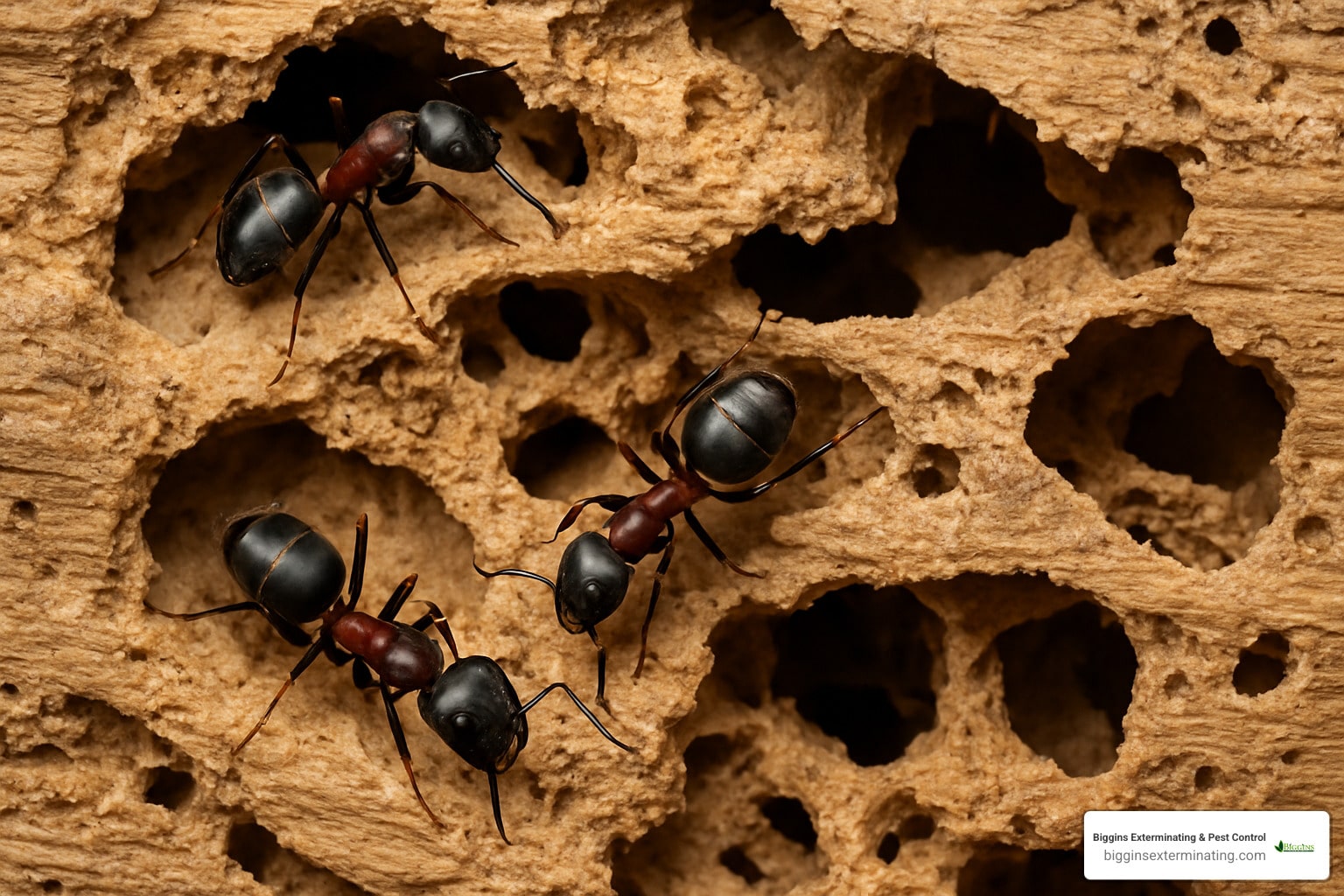
When you find sawdust-like debris (frass) or hear faint rustling in your walls, you’re likely facing a carpenter ant infestation. These wood-excavating insects can cause significant structural damage to your home as they create extensive gallery networks. Unlike termites, carpenter ants don’t eat wood—they remove it to build their nests, leaving behind a trail of destruction that weakens wooden structures over time.
What makes these pests particularly challenging is their colony structure. A mature carpenter ant colony can house between 10,000-50,000 individuals, with satellite nests extending throughout your property. The queen can live up to 25 years, continuously producing new workers to expand the colony’s reach. Without professional intervention, these industrious insects will continue damaging your home’s framework year after year.
More than 90% of indoor carpenter ant problems are linked to moisture issues. These ants prefer damp, decaying wood for their nests, making areas with leaks or poor ventilation prime real estate for their colonies. Addressing these moisture concerns is a critical part of any effective treatment plan.
I’m Stephen Biggins, owner of Biggins Exterminating Co. since 1982, and can pest control get rid of carpenter ants is one of the most common questions I receive from homeowners concerned about protecting their property investments. With four decades of hands-on experience eliminating carpenter ant infestations throughout Massachusetts, I’ve developed proven strategies that target these persistent pests at their source.
Easy can pest control get rid of carpenter ants word list:
– do carpenter ants bite
– carpenter ant pest control products
– carpenter ant service
Can Pest Control Get Rid of Carpenter Ants?
If you’re dealing with carpenter ants, you’re probably wondering: can pest control get rid of carpenter ants effectively? The answer is a resounding yes! Professional pest control services are your best bet for eliminating these destructive little architects from your home.
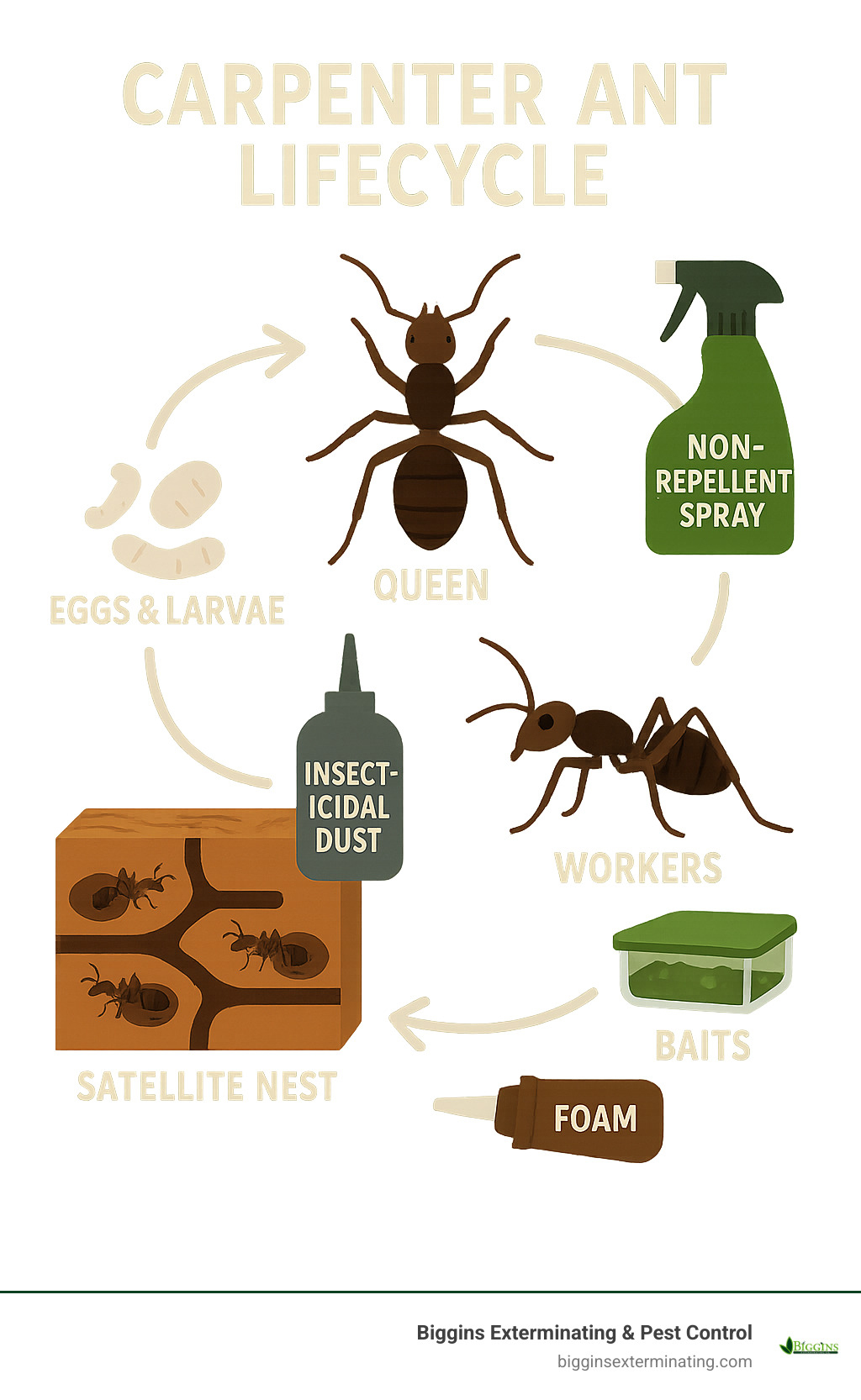
The secret to success lies in finding and eliminating the queen and all her satellite colonies. Think of it like taking down a criminal organization – you can arrest all the street-level operators you want, but if the boss is still running things from her hideout, the operation continues. That’s exactly how carpenter ant colonies work!
At Biggins Exterminating, we use integrated pest management approaches that combine thorough inspection, targeted treatments, and preventive measures. These comprehensive strategies achieve success rates exceeding 90% for complete carpenter ant elimination. We’re so confident in our methods that we offer 30-day guarantees on our treatments – something we wouldn’t do if we weren’t sure we could solve your problem.
What makes these pests so challenging is their sheer numbers. A mature colony can house between 10,000 to 50,000 individual ants! And with eggs developing into adults in just 6-12 weeks, infestations grow rapidly when left untreated. Even more concerning, carpenter ant queens can live up to 25 years, continuously producing new workers if not eliminated.
“The biggest mistake homeowners make is treating only the ants they see,” explains our lead technician. “Those visible ants represent just a tiny fraction of the colony. Can pest control get rid of carpenter ants? Absolutely—but only when we target the entire colony structure, especially the queen.”
Scientific research on carpenter ants confirms these insects establish complex networks, with parent colonies housing the queen and satellite colonies containing workers and developing young. This distributed structure is precisely why professional treatment is often necessary for complete elimination.
More info about Pest Control for Carpenter Ants
Signs You Need Professional Help
Not sure if your ant problem requires the pros? Here are the telltale signs it’s time to call us:
Frass piles are a dead giveaway. These sawdust-like deposits aren’t actually sawdust – they’re the wood debris carpenter ants push out as they excavate their tunnels. Unlike termite frass, carpenter ant debris contains insect parts and has a coarser texture. Finding these piles near baseboards, window sills, or door frames means active excavation is happening nearby.
Ever heard mysterious rustling sounds in your walls at night? That faint crinkling noise (similar to cellophane being crumpled) is the sound of carpenter ants chewing through your home’s wooden structures. Many homeowners notice this especially in the quiet nighttime hours when the ants are most active.
The appearance of winged swarmers indoors is a serious red flag. These larger reproductive ants (1/2 to 5/8 inches long) only emerge when a colony is mature – typically after 2-3 years of establishment. Their presence indoors indicates you’ve had an infestation for quite some time.
Other warning signs include hollow-sounding wood when tapped, visible structural damage like sagging floors or doors that no longer close properly, and multiple ant sightings indoors, especially during winter months.
“When homeowners notice these signs, especially multiple indicators simultaneously, it’s time to call a professional,” our senior technician advises. “Early intervention prevents extensive structural damage and makes elimination more straightforward.”
Can pest control get rid of carpenter ants in one visit?
I wish I could tell you we can solve your carpenter ant problem with a single visit, but I’d be stretching the truth. While our initial treatments significantly reduce ant populations, complete elimination typically requires follow-up visits.
Most carpenter ant infestations need 2-3 weeks for complete colony collapse after professional treatment. This timeline allows the slow-acting insecticides to be transferred throughout the colony, reaching the queen and all satellite nests. For larger or more complex infestations, this process may take longer.
At Biggins Exterminating, our standard carpenter ant treatment protocol includes an initial comprehensive treatment targeting all identified nests and creating protective barriers. We’ll then conduct a follow-up inspection and treatment 2-3 weeks later, with additional targeted treatments as needed until your infestation is completely resolved.
Our warranty terms reflect this reality—we provide a 30-day guarantee on our carpenter ant services, with free return visits if activity persists during this period. This approach ensures we can monitor the effectiveness of treatments and make adjustments as needed.
“Complete carpenter ant elimination is a process, not a one-time event,” explains our operations manager. “The colony structure, with its satellite nests and protected queen, requires a strategic approach over time. Patience and thoroughness are essential for success.”
How Exterminators Locate and Eliminate Carpenter Ant Nests
When it comes to tackling those stubborn carpenter ant colonies, professional exterminators don’t just randomly spray and pray. We use a methodical, science-based approach that makes all the difference between temporary relief and permanent elimination.
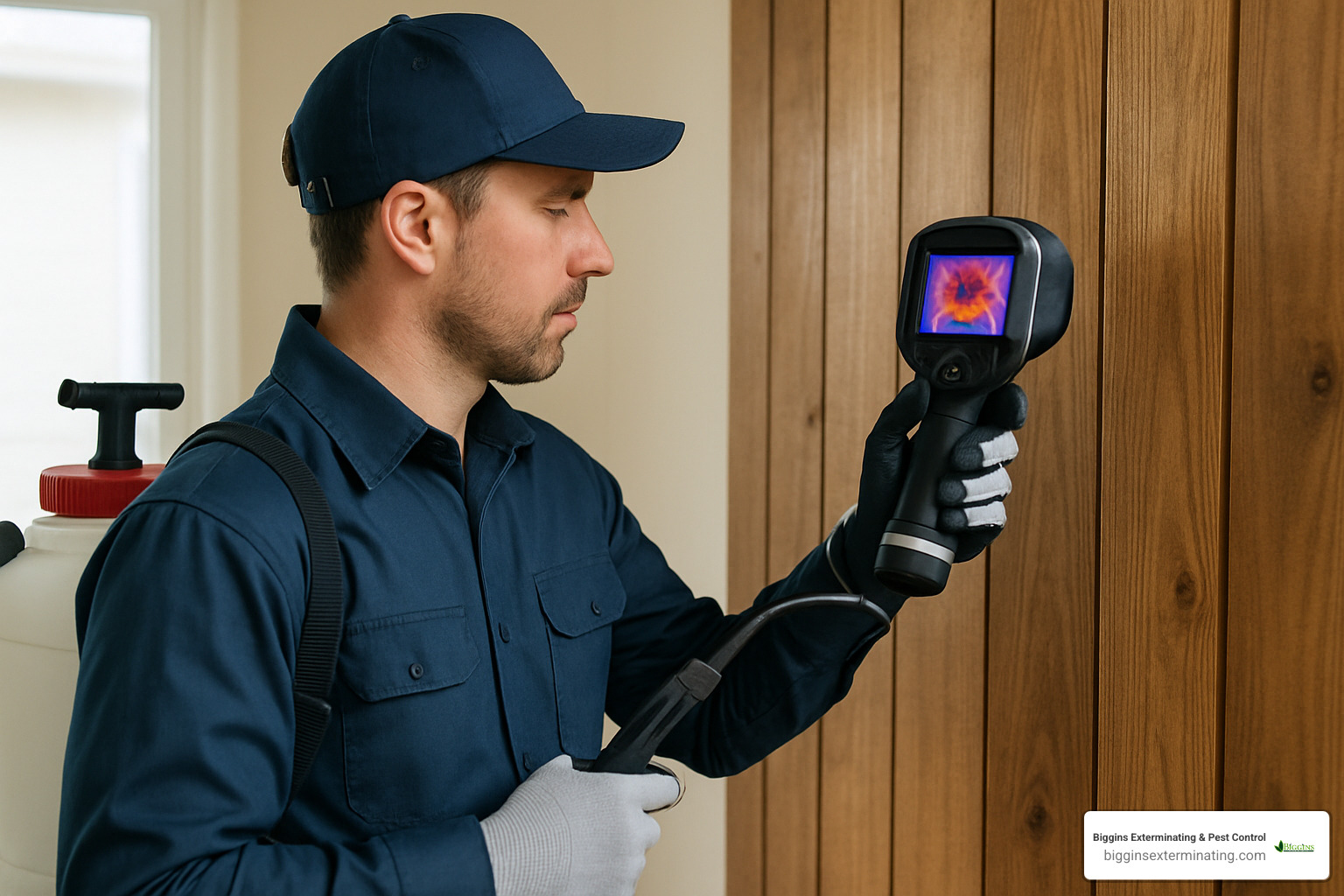
At Biggins Exterminating, our first step is always a thorough inspection. We’re like detectives, searching for clues that homeowners often miss. Our technicians use specialized tools including moisture meters to identify damp areas (a carpenter ant favorite) and sometimes even thermal imaging cameras that can detect hidden ant activity inside walls. Did you know more than 90% of indoor carpenter ant problems are connected to moisture issues? It’s why finding those damp spots is so crucial to our success.
We’re also looking for something most homeowners don’t even realize exists – the difference between parent and satellite colonies. The parent colony, where the queen lives (often outdoors in stumps or landscape timbers), is the heart of the infestation. Meanwhile, satellite colonies might be scattered throughout your home, housing workers and developing young. Both need to be addressed, or you’ll never truly solve the problem.
“Most DIY treatments fail because they only target the ants you can see,” explains our senior technician Tom. “That’s like trimming the branches while ignoring the roots – the problem always grows back.”
Once we’ve mapped out the infestation, we deploy a strategic combination of professional treatments. Our non-repellent sprays are particularly clever – they’re undetectable to ants, who walk through them and unwittingly carry the treatment back to their nestmates. We also use professional-grade dust treatments that we inject directly into wall voids and wood galleries, providing protection that lasts 6-12 months.
For particularly stubborn infestations, we might employ bait systems that worker ants carry back to feed the queen and larvae, or in some cases, physically extract accessible nests from structural elements.
Can pest control get rid of carpenter ants more effectively than DIY methods? Absolutely – because we target the entire colony system, not just the visible symptoms.
More info about Carpenter Ants Pest Control
Tracking Hidden Colonies
Finding hidden carpenter ant nests is a bit like being a nature detective. Our technicians have developed some fascinating techniques over the years.
We often follow pheromone trails – those invisible chemical highways that ants use to guide each other to food sources. By carefully observing ant movement patterns, we can track these trails back to their source. Sometimes we’ll even conduct night inspections, typically between 10 PM and 2 AM, when carpenter ants are most active. What looks like a minor problem during the day can reveal itself as a major infestation after dark.
In some cases, we need to get a bit more hands-on. We might drill small inspection holes in suspect areas or use specialized probes to check for nest activity. And in a quiet environment, our experienced technicians can sometimes actually hear the faint rustling sounds of carpenter ants working inside your walls – it sounds a bit like cellophane being crinkled.
“I remember one home where the family thought they had mice in the walls,” recalls our technician Sarah. “When we listened carefully at night, we could tell it was actually thousands of carpenter ants excavating the structure. We found the parent colony in a rotting tree stump just 15 feet from their foundation.”
Treatment Toolbox
Professional exterminators have access to a specialized arsenal that goes well beyond what you’ll find on store shelves. Our professional-grade treatments are both more effective and more precisely targeted than consumer products.
Drione dust is one of our secret weapons – a professional-grade insecticidal dust containing pyrethrum that remains active for 6-12 months inside wall voids. For hard-to-reach spaces, we use expanding foam injections that can penetrate deep into wall voids and wood galleries, reaching ants in otherwise inaccessible areas.
Our professional gel baits contain slow-acting ingredients specifically designed to allow worker ants time to carry the treatment back to the colony before dying. This ensures the poison reaches the queen and developing larvae – the heart of the infestation.
We also create perimeter barriers using non-repellent liquid applications around your home’s foundation. These invisible barriers target ants as they move between outdoor and indoor nests. For confirmed nest locations, we perform targeted void treatments, injecting treatments directly into the wooden structures where ants have made their home.
“The difference between professional treatment and DIY isn’t just about access to better products,” explains our treatment specialist Mike. “It’s about knowing exactly where, when, and how to apply them for maximum effectiveness. We’re not just treating symptoms – we’re solving the underlying problem.”
At Biggins Exterminating, we’ve refined these techniques over 40 years of battling carpenter ants in Massachusetts homes. When you ask “can pest control get rid of carpenter ants?” – the answer is a resounding yes, but only when you have the right tools, training, and experience to do the job right.
DIY vs Professional: Who Wins the Battle?
Let’s be honest – when those carpenter ants first appear, most of us head straight to the hardware store hoping to save a few bucks with a DIY solution. I totally get it! But after 40 years in this business, I’ve seen the same story play out countless times.
The biggest challenge with DIY approaches isn’t motivation or effort – it’s the hidden complexity of carpenter ant colonies. These clever insects establish elaborate networks with multiple satellite nests throughout your property. While you might successfully treat the ants you can see, those hidden colonies remain untouched, ready to repopulate treated areas within weeks.
“I spent three months and four different ant products before calling a professional,” shared one of our recent customers. “I’d see improvement for a week or two, then they’d come marching back – literally!”
Consumer-grade products simply don’t match the formulations professionals use. While the active ingredients might sound similar, professional products offer greater potency, longer residual activity, and specialized delivery systems designed to reach deep into nests. Plus, proper application often requires specialized equipment most homeowners don’t have hanging in their garage.
Let’s talk time investment. Effective DIY carpenter ant control isn’t a quick weekend project – it requires thorough inspection of your entire home, multiple treatment applications, and ongoing monitoring. That’s a significant commitment most busy families struggle to maintain.
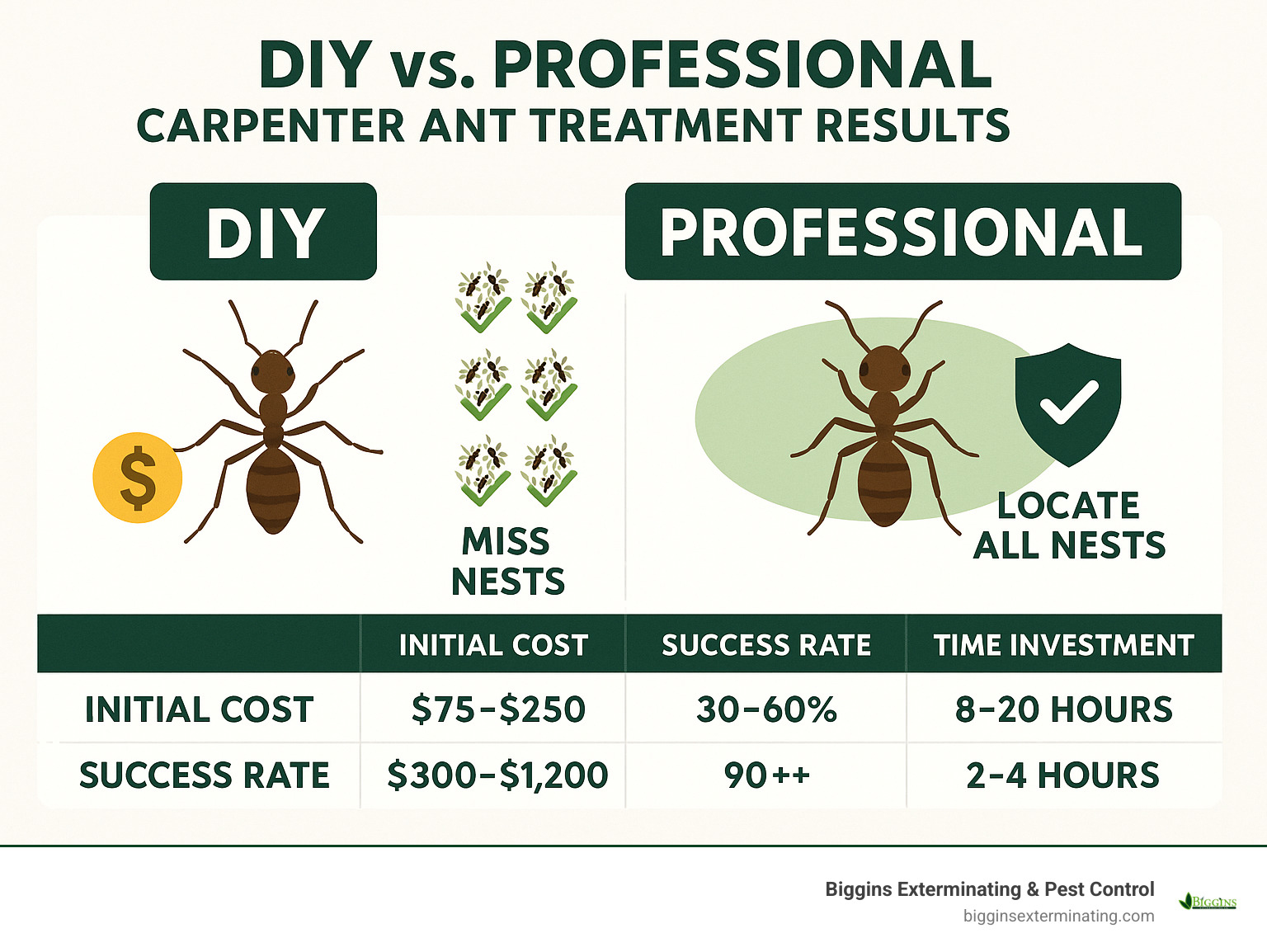
| Treatment Aspect | DIY Approach | Professional Service |
|---|---|---|
| Initial cost | $75-$250 for products | $300-$1,200 for complete service |
| Success rate | 30-60% | 90%+ |
| Time investment | 8-20 hours | 2-4 hours of your time |
| Product effectiveness | Limited consumer-grade options | Commercial-grade solutions |
| Colony elimination | Often misses satellite nests | Targets entire colony system |
| Warranty | None or limited product guarantees | Service guarantees (typically 30+ days) |
| Structural knowledge | Limited | Expert understanding of building construction |
Note: Cost ranges are based on internet research and industry averages, not Biggins Exterminating’s specific pricing.
“While DIY treatments might save money initially, they often cost more in the long run,” explains our customer service team. “We regularly hear from folks who spent hundreds on retail products before calling us, only to find themselves still battling the same infestation months later.”
Can pest control get rid of carpenter ants better than DIY?
Can pest control get rid of carpenter ants more effectively than DIY methods? The evidence strongly suggests yes, and here’s why:
Professional exterminators bring trained eyes that can spot subtle signs of carpenter ant activity you might miss. We know exactly where these insects prefer to nest and can pinpoint hidden colonies using techniques developed over decades of experience.
The treatments we apply provide significantly longer protection – some professional products remain effective for 6-12 months, creating lasting barriers against reinfestation. We don’t just treat symptoms; we address the entire problem ecosystem, including moisture issues that attract carpenter ants in the first place.
Perhaps most importantly, reputable pest control companies stand behind their work. At Biggins Exterminating, we provide service guarantees that offer peace of mind and follow-up treatments if needed – something no DIY product can match.
“The real difference is expertise,” explains our technical director. “Our technicians understand carpenter ant biology and behavior intimately. We know how they think, where they hide, and what attracts them – allowing us to target treatments precisely where they’ll be most effective.”
DIY Methods That Help—Within Limits
While professional treatment offers the highest success rate, certain DIY approaches can help manage minor carpenter ant problems or supplement professional treatments between visits.
Boric acid bait recipes can be moderately effective for small infestations. Mixing one tablespoon of boric acid with half a cup of sugar and one cup of water creates a solution that worker ants carry back to the nest. This slow-acting poison gradually reduces colony populations, though rarely eliminates them completely.
Diatomaceous earth works by damaging the exoskeletons of ants that walk through it, causing dehydration and death. It’s most effective in dry conditions and must be reapplied after getting wet – making it best suited for interior spaces rather than damp areas where carpenter ants typically nest.
Some homeowners find essential oils like peppermint, tea tree, and citrus helpful as temporary repellents, though they won’t eliminate existing colonies. These natural solutions are best used as part of an ongoing prevention plan rather than a primary treatment.
Moisture control remains one of the most effective DIY strategies. Fixing leaks, improving ventilation, and reducing indoor humidity below 50% makes your home significantly less attractive to carpenter ants. Since over 90% of indoor carpenter ant problems are linked to moisture issues, this approach addresses a root cause rather than just symptoms.
“These DIY approaches work best as part of a maintenance plan after professional treatment,” advises our prevention specialist. “They’re valuable tools in your arsenal but rarely resolve established infestations on their own.”
When to Call the Pros Immediately
Some situations simply shouldn’t wait for DIY experimentation. If you notice any of these warning signs, it’s time for immediate professional help:
Structural damage should never be ignored. Sagging floors, damaged support beams, or other signs of structural compromise require professional assessment before the problem worsens. What looks like minor damage on the surface might indicate extensive hidden destruction.
Multiple activity areas throughout your home suggest a complex infestation with numerous satellite nests. This pattern typically indicates a mature colony that has established an extensive network – something DIY treatments rarely address effectively.
Families with young children, pets, or respiratory sensitivities benefit from professional treatment’s controlled application methods that minimize exposure risks. We carefully select and apply products with your family’s safety as our priority.
Recurring infestations despite DIY treatments signal that hidden nests remain active. This persistence often indicates the queen remains untouched, continuing to produce new workers that will rebuild the colony regardless of how many visible ants you eliminate.
“When structural integrity is at stake, there’s no time for experimentation,” emphasizes our senior inspector. “Professional intervention can prevent thousands in potential repair costs down the road.”
The bottom line? DIY methods have their place for minor problems and maintenance, but when it comes to established carpenter ant colonies, professional pest control offers the most reliable path to a truly ant-free home.
Prevention, Safety, and Long-Term Monitoring
Winning the battle against carpenter ants doesn’t end when the last ant disappears. True success comes from preventing their return, ensuring treatments are safe for your family, and keeping a watchful eye for any signs of reinfestation.
Did you know that more than 90% of carpenter ant infestations are directly linked to moisture issues? It’s true! These wood-excavating insects are drawn to damp, decaying wood like moths to a flame. That’s why moisture control forms the cornerstone of any effective prevention strategy.
“I always tell my customers—fix the moisture, and you’ve solved half the battle,” says our prevention specialist at Biggins. “A dry home is simply less attractive to carpenter ants.”
Start by addressing those pesky leaks—whether they’re dripping pipes, roof issues, or poor drainage around your foundation. Ensure your bathrooms, kitchen, and basement have proper ventilation. In particularly damp areas like basements, consider using dehumidifiers to maintain indoor humidity below 50%—creating an environment carpenter ants find far less inviting.
Don’t forget about your home’s wooden elements. Replace any water-damaged or decaying wood promptly, and when working on exterior applications, opt for pressure-treated lumber that resists both moisture and insect damage.
Your landscaping practices matter too. Those beautiful tree branches that brush against your roof? They’re basically highways for carpenter ants to access your home. Maintain at least 18 inches of clearance between vegetation and your exterior walls. And that firewood stack leaning against your garage? Move it at least 20 feet from your home and lift it off the ground to prevent it from becoming Carpenter Ant Central.
When we develop treatment plans at Biggins Exterminating, we always incorporate these preventive measures. After all, addressing just the ants without fixing what attracted them is like bailing water from a boat without plugging the leak!
More info about Carpenter Ant Pest Control Products
Keeping Carpenter Ants From Coming Back
“The most successful carpenter ant treatments are the ones where we never have to come back,” jokes our maintenance specialist. “And that happens when homeowners partner with us in ongoing prevention.”
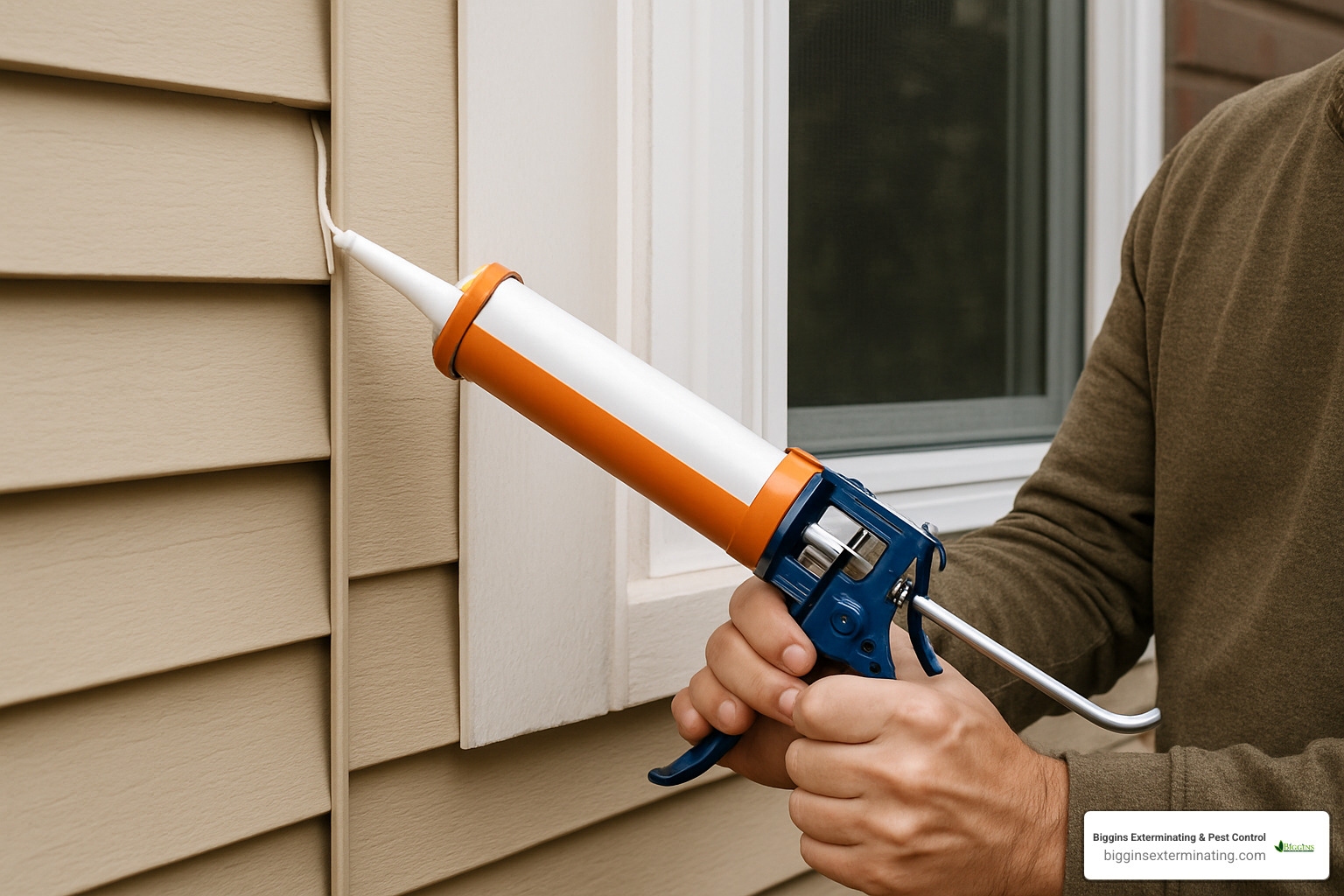
Think of carpenter ant prevention as a year-round commitment rather than a one-time event. Start with thorough exclusion work—regularly inspecting and sealing potential entry points around your home. Pay special attention to utility penetrations, gaps around windows and doors, and those tiny cracks in your foundation that seem insignificant but might as well be welcome mats for ants.
Routine maintenance becomes your second line of defense. Keep those gutters clean to prevent water overflow that can dampen exterior walls. Address roof damage and plumbing leaks immediately—remember, where there’s moisture, carpenter ants often follow.
Mark your calendar for seasonal checks each spring when carpenter ant activity naturally increases. Walk your property’s perimeter, checking wooden structures, especially those touching soil or exposed to weather. These simple inspections can catch early signs of trouble before they become major headaches.
Inside your home, food management plays a surprising role in prevention. Store pantry items in airtight containers, clean up spills promptly, and don’t leave pet food sitting out overnight. While carpenter ants don’t eat your home’s wood, they do forage for food inside your living spaces, and eliminating these attractions helps keep them at bay.
“Prevention isn’t glamorous,” our technician often reminds clients, “but it’s a whole lot easier—and cheaper—than dealing with a full-blown infestation.”
Are Treatments Safe for Kids & Pets?
“Is it safe for my family?” This question tops the list of concerns we hear from homeowners considering professional carpenter ant treatment. It’s a valid worry—and one we take extremely seriously at Biggins Exterminating.
The good news is that modern pest control has evolved tremendously. Today’s professional treatments offer effective control while prioritizing family safety through low-toxicity options specifically formulated for residential settings. These products, when applied correctly by licensed professionals, pose minimal risk to your loved ones.
The key difference lies in targeted application. While DIY treatments often involve broad, sometimes excessive application of consumer-grade products, our technicians apply treatments precisely where needed—typically in areas where your family has little or no contact, like wall voids, attics, or beneath appliances.
We also strictly adhere to label compliance. Those detailed instructions on professional product labels aren’t suggestions—they’re federal requirements that our licensed technicians follow carefully, ensuring treatments are applied at appropriate rates and locations.
When treatments do require temporary precautions, we provide clear guidance on re-entry times—exactly when it’s safe for children, pets, and other family members to return to treated areas. No guesswork, just straightforward safety information.
Perhaps most importantly, we accept integrated approaches that combine non-chemical methods with targeted treatments. By addressing moisture issues, sealing entry points, and modifying the environment that attracts ants, we often reduce the overall amount of product needed for effective control.
“We’re parents and pet owners too,” our safety coordinator often says. “We understand your concerns because we share them. That’s why we treat every home as if our own children and pets lived there.”
At Biggins Exterminating, can pest control get rid of carpenter ants safely isn’t just a technical question—it’s our professional commitment to protecting both your home and the people who live in it.
Costs, FAQs, and Choosing a Pest Control Partner & Conclusion
Finding the right pest control partner for your carpenter ant problem involves more than just comparing price quotes. Based on internet research, professional carpenter ant treatment in the United States typically costs between $300 and $1,200. This wide range reflects differences in infestation severity, property size, and the specific treatment methods required to solve your unique situation.

When you’re inviting someone into your home to handle such an important job, you want to feel confident in your choice. What makes a pest control company truly worth trusting? Look for a partner with deep experience specifically with carpenter ants in your local area. At Biggins Exterminating, we’ve been tackling these wood-destroying pests throughout Massachusetts for over four decades, so we’ve seen and solved just about every carpenter ant scenario imaginable.
Proper licensing and certification should be non-negotiable in your selection process. Ask potential providers about their technicians’ training and credentials—this isn’t just about legal compliance, it’s about ensuring the people treating your home know exactly what they’re doing.
The treatment approach matters tremendously. The best companies employ integrated pest management strategies rather than simply spraying chemicals and hoping for the best. This comprehensive approach addresses not just the symptoms but the root causes of your infestation.
“We don’t just want to solve your current ant problem,” says our customer service manager. “We want to be your partner in keeping these destructive pests away for good. That means education, prevention, and creating a relationship built on trust.”
Look for companies that stand confidently behind their work with clear guarantees. At Biggins, we’re proud to offer warranty coverage without requiring you to sign up for ongoing service contracts. We believe our results should speak for themselves.
Before making your final decision, take time to check online reviews specifically mentioning carpenter ant treatments. Don’t hesitate to ask for references from past customers who’ve dealt with similar issues. And always choose companies that provide transparent, detailed estimates without surprise fees or pushy upselling tactics.
More info about Carpenter Ant Exterminators Andover MA
Frequently Asked Questions about Carpenter Ant Pest Control
How long does it take to eliminate carpenter ants?
Most carpenter ant infestations require 2-3 weeks for complete elimination following professional treatment. This timeline isn’t about the treatment’s effectiveness—it’s about the biology of the ants themselves. Slow-acting baits and non-repellent insecticides need time to work their way through the entire colony structure, reaching the queen and all satellite nests.
For particularly severe or complex infestations—especially those involving multiple satellite colonies—complete elimination might take 4-6 weeks and multiple treatment visits. What you’ll typically notice is an immediate reduction in visible ant activity after treatment, followed by a gradual decline as the colony collapses from within.
“If you see a few stragglers after your initial treatment, don’t panic,” our lead technician explains. “That doesn’t mean the treatment failed. We’re targeting the entire colony system, not just the scouts you see foraging. Patience during this process leads to better long-term results.”
Are follow-up visits necessary?
Yes, follow-up visits are an essential part of effective carpenter ant control. At Biggins Exterminating, we include at least one follow-up inspection and treatment (typically 2-3 weeks after initial service) as part of our standard carpenter ant package.
These follow-ups aren’t an upsell—they’re a critical component of successful elimination. During these visits, our technicians evaluate how the treatment is progressing, address any remaining activity, treat satellite nests that might have been missed initially, reinforce preventive barriers, and provide additional recommendations for long-term prevention.
“Think of carpenter ant treatment as a process rather than a one-time event,” our service coordinator explains. “The follow-up visit often makes the difference between temporary improvement and lasting resolution.”
Can carpenter ants return after treatment?
Even after successful elimination, carpenter ants can return under certain circumstances. If the conditions that originally attracted them remain unaddressed—moisture issues, easy access points, food sources—new colonies may establish themselves in your home.
Similarly, if some satellite nests escaped detection during treatment or new colonies migrate from nearby properties, reinfestation is possible. That’s why comprehensive treatment approaches that include moisture remediation, exclusion work, and preventive measures are so important for lasting results.
“The most successful carpenter ant control happens when we work as partners,” says our prevention specialist. “We provide the expertise and effective treatments, while homeowners maintain the conditions that discourage future infestations. It’s a team effort that pays off with a structurally sound, ant-free home.”
Biggins Exterminating & Pest Control offers contract-free, warrantied carpenter ant solutions throughout Andover, Bedford, Billerica, Burlington, Lexington, North Reading, Tewksbury, Wilmington, and Woburn, MA. As a family-owned business serving Massachusetts homeowners for over 40 years, we take pride in providing reliable, effective pest control services that protect your home and family.
Can pest control get rid of carpenter ants? Absolutely—when you choose an experienced, thorough provider who understands the complex biology and behavior of these persistent pests. Our integrated approach targets not just the ants you see, but the entire colony system, including the all-important queen and satellite nests.
Don’t let carpenter ants compromise your home’s structural integrity. Contact Biggins Exterminating today for a comprehensive inspection and customized treatment plan. We’re proud to offer our services without requiring long-term contracts, providing warranties that ensure your satisfaction and peace of mind.