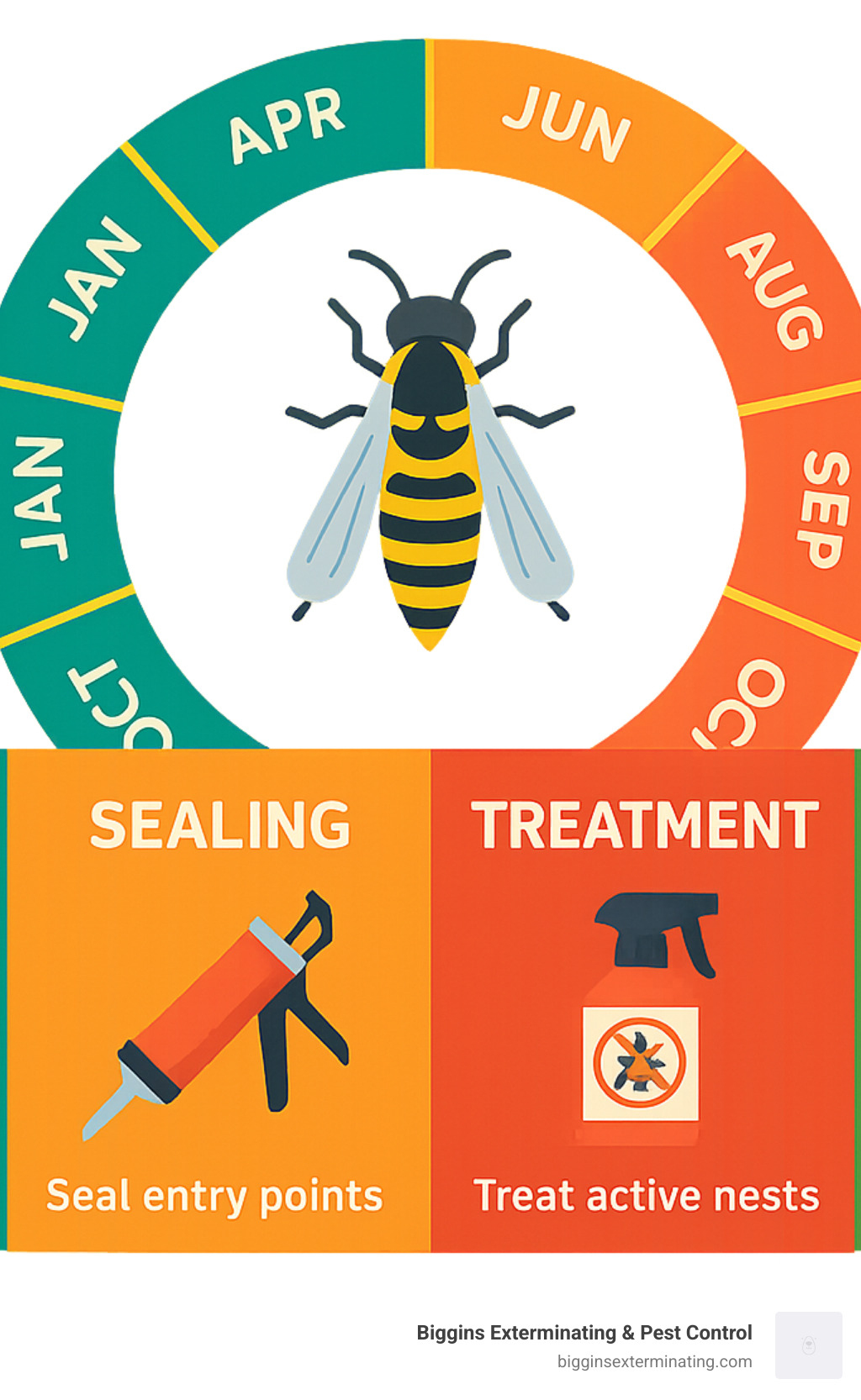
Why Immediate Action is Critical for Wasp Nest Problems
Pest control wasp nest removal becomes urgent when you find thousands of aggressive insects have built their papery fortress near your home. Whether it’s the telltale buzzing around your eaves or the sight of wasps streaming in and out of a hole in your wall, a single nest can house 3,000-8,000 wasps by summer’s peak.
Quick Action Guide for Wasp Nest Removal:
• Immediate safety: Keep 15-20 feet away from any visible nest
• Professional removal: $75-$250 average cost (internet data, not Biggins pricing)
• DIY option: Evening treatment with long-range aerosol spray
• Emergency signs: Multiple stings, nest near children’s areas, or household allergies
• Best timing: Early season (smaller colonies) or after first frost
The stakes are real. As one homeowner finded when children kicked a ball into bushes, “dozens of stings” can happen in seconds when you unknowingly disturb a hidden nest. Unlike bees that die after stinging once, wasps can sting repeatedly and release alarm pheromones that trigger aggressive swarm behavior.
Receiving more than 30-40 stings can be fatal, making wasp nests a serious threat that demands respect and proper handling. The good news? 99% of nests can be treated safely from outside your property with the right approach.
I’m Stephen Biggins, and in over four decades of pest control wasp nest experience at Biggins Exterminating, I’ve seen everything from basketball-sized aerial nests to ground colonies that send homeowners running. My team and I have developed proven strategies that protect families while effectively eliminating these dangerous pests.
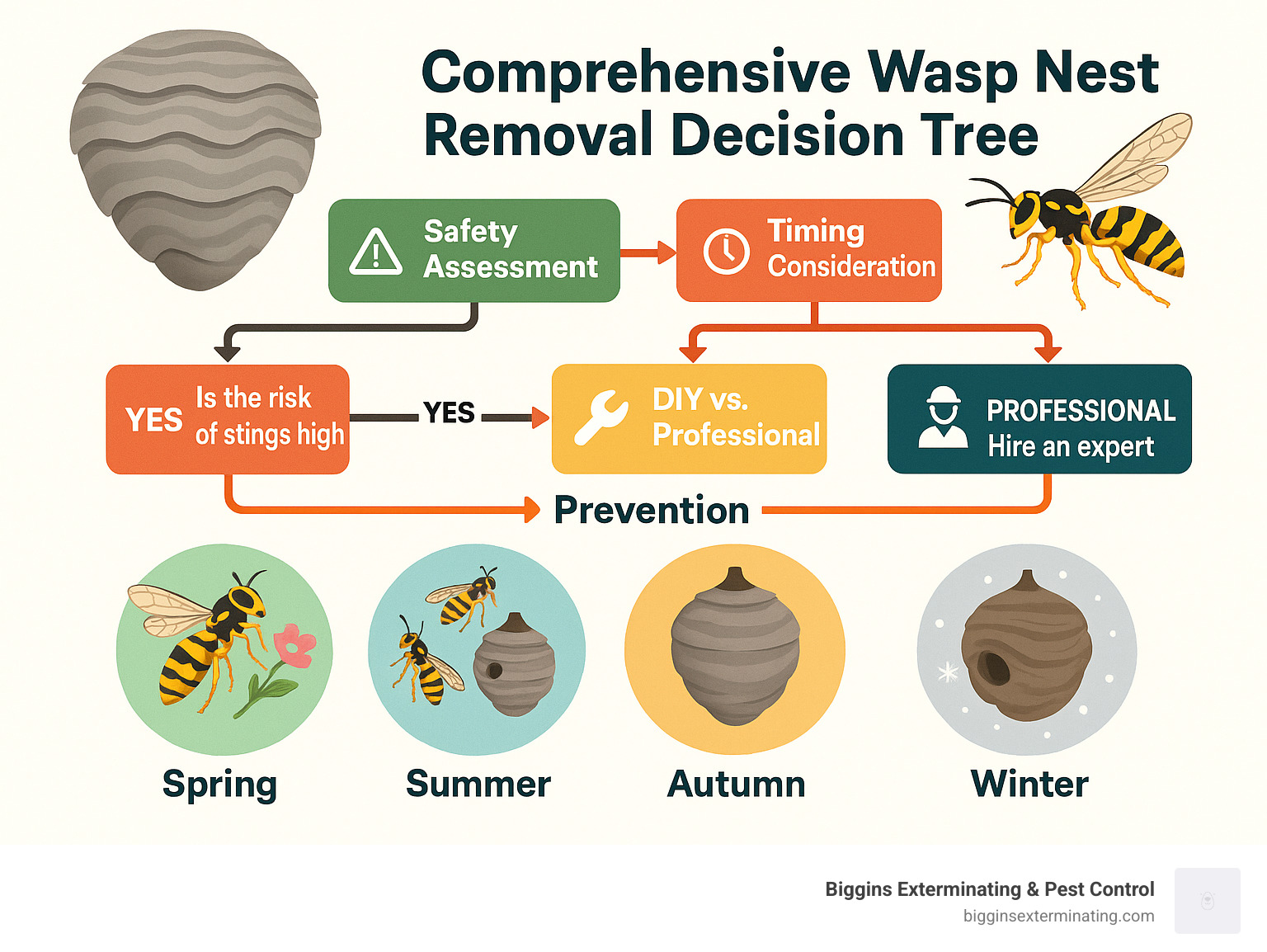
Pest control wasp nest vocab to learn:
– bee and wasp exterminator near me
– emergency wasp removal near me
– professional wasp removal
Understanding Wasps: Biology, Species, Nest Types
Before you attempt any pest control wasp nest removal, you absolutely need to know what you’re up against. Trust me—after four decades in this business, I’ve seen too many homeowners rush in blind and end up in the emergency room.
Wasps belong to the Vespidae family, and around Massachusetts homes, we typically deal with three main troublemakers: paper wasps, yellow jackets, and bald-faced hornets. Each species brings its own level of aggression and colony size that directly impacts your removal strategy.
Paper wasp colonies stay relatively manageable with only a few dozen workers—these are your “beginner level” wasp problems. Yellow jackets? That’s a whole different story. Their colonies can explode to 1,000-2,000 workers by August, and every single one of them is ready to defend their home with multiple stings.
The nests themselves are fascinating pieces of natural engineering, even if they’re unwelcome on your property. Wasps create their papery fortress by chewing wood fibers and mixing them with saliva, creating a material that hardens into protective layers. It’s like nature’s version of papier-mâché, but with a lot more attitude.
You’ll encounter two main nest types that require different approaches. Aerial nests hang from eaves, trees, or structures like gray paper lanterns, while ground nests hide in old rodent burrows, wall voids, or under your deck where you can’t see them coming.
The Scientific research on wasp life cycle confirms what we’ve observed in the field: timing is everything. Spring queens start with just a few cells, but by mid-summer, you’re facing a fortress housing thousands of defenders.
Wasp vs. Bee vs. Hornet—Spot the Difference
Here’s where many homeowners make costly mistakes. Not every buzzing insect deserves the same response, and proper identification can save you from unnecessary panic—or dangerous assumptions.
Wasps have smooth, hairless bodies with that classic pinched waist, while bees are fuzzy and often have pollen baskets on their legs. This matters because bees are beneficial pollinators that we try to relocate rather than eliminate. You’ll feel pretty silly calling for emergency removal of helpful honey bees.
Hornets are actually large wasps—typically black and white rather than the familiar yellow and black stripes. What makes all wasps particularly dangerous is their smooth stinger that allows repeated stings without the wasp dying. Unlike honey bees that lose their stinger and die after one defensive sting, wasps can nail you multiple times.
Wasps are natural-born hunters with carnivorous appetites, feeding on other insects and making them inherently more aggressive than their plant-loving bee cousins. While they do visit flowers for nectar and provide some pollination services, their smooth bodies don’t collect pollen efficiently like the fuzzy bees we want to protect.
The defensive behavior difference is night and day. Bees generally mind their own business unless directly threatened, while wasps can become aggressive simply because you walked too close to their territory.
How the Wasp Colony Grows Through the Season
Understanding the wasp lifecycle gives you a huge advantage in pest control wasp nest timing. Miss the window, and a simple problem becomes a dangerous situation requiring professional intervention.
Spring queens emerge from winter hibernation around April and May, scouting for the perfect nesting site. This is your golden opportunity—dealing with one sleepy queen beats facing thousands of angry workers later.
By early summer, that queen has laid her first batch of eggs and the worker generation emerges to take over construction duties. These sterile females become the nest’s security force while the queen focuses solely on egg production. The colony size grows exponentially through summer, reaching terrifying peak populations in August and September.
Here’s something that surprises most homeowners: adult worker wasps typically live only 12-24 days, but the queen can survive several months to over a year. This constant turnover means fresh, aggressive defenders are always present during active season.
Come fall, the colony shifts gears to produce new queens and drones for mating. After the first hard frost, all workers die and the nest is permanently abandoned. New queens find hiding spots to hibernate through winter, and the cycle begins again—but never in the same nest location.
This timing impact is crucial for your removal strategy. Early season means smaller numbers but active queens. Late season means massive colonies but natural die-off coming soon.
Assessing a Wasp Infestation: Signs, Risks, Decision to Remove
You’ve spotted a few wasps around your property, but does that mean you need immediate pest control wasp nest action? Not necessarily. The truth is, wasps are actually beneficial predators that help control flies, mosquitoes, and other annoying insects. The real question is whether their nest location creates a genuine safety risk for your family.
The key to making this decision lies in understanding wasp behavior. These insects are creatures of habit—worker wasps follow the same flight paths between their nest and food sources day after day. Spend 10-15 minutes quietly observing their movements, and you’ll find exactly where they’re coming and going. This detective work reveals the nest location even when it’s hidden inside a wall void or buried underground.

Watch for increased wasp traffic around specific areas of your home. You might notice them streaming in and out of holes in your eaves, siding, or even ground-level openings. Visible paper nest structures hanging from overhangs or tree branches are obvious giveaways, but many nests remain hidden until you follow the flight patterns.
Buzzing sounds from wall voids or attic spaces often indicate indoor nests—a serious concern that usually requires professional intervention. You might also notice aggressive behavior when you unknowingly get too close to their territory, or chewed wood damage around deck railings and fencing where wasps harvest material for nest construction.
The decision to remove versus tolerate really comes down to location and timing. A nest tucked away in a rarely-used corner of your property might be perfectly fine to leave alone until winter naturally eliminates the colony. However, nests near doorways, outdoor dining areas, or anywhere children play become immediate safety priorities.
Red Flags That Demand Immediate Action
Some pest control wasp nest situations simply cannot wait for nature to take its course. After four decades in this business, I’ve learned to recognize the scenarios that demand immediate professional attention—and the ones that can turn dangerous quickly.
High-traffic locations top the emergency list. When wasps build near your front door, patio, or pool area, every family activity becomes a potential confrontation. Children and elderly family members face the highest risk because they may not recognize warning signs or react quickly enough when wasps become defensive.
Indoor nests inside wall voids or attic spaces create the most dangerous scenarios we encounter. These wasps often find their way into living spaces through electrical outlets, light fixtures, or gaps around pipes. I’ve responded to calls where families couldn’t use entire rooms because wasps kept appearing inside their home.
Any household with known allergies to wasp stings needs immediate intervention. Anaphylactic shock can be fatal within minutes, making any delay potentially life-threatening. Even if previous stings caused only mild reactions, sensitivity can increase with repeated exposure—it’s not worth the gamble.
Ground nests present special hazards because they’re usually finded by accident. Lawn mowing, gardening, or children playing can trigger massive defensive responses from thousands of underground wasps with absolutely no warning.
Potential Hazards of Ignoring a Nest
The “wait and see” approach might seem reasonable, but it can backfire spectacularly with wasp problems. Late summer wasps become increasingly aggressive as natural food sources become scarce. They’re also more likely to investigate your sweet drinks, barbecue food, and garbage cans, bringing them into direct contact with your family.
Multiple stings are the most immediate concern. Unlike single bee stings, wasp attacks often involve dozens of insects responding to alarm pheromones. Swarm attacks can deliver 30-40 stings in seconds—a potentially fatal dose even for people without known allergies.
Don’t overlook the structural damage potential either. Wasps chew wood fibers to build their nests, potentially weakening deck railings, siding, or outdoor furniture. While individual damage seems minor, large colonies can cause noticeable deterioration over a full season.
The medical costs from serious stinging incidents often exceed the cost of professional removal by a wide margin. Emergency room visits, prescription medications, and follow-up care add up quickly. Most pest control wasp nest services cost far less than a single ER visit for multiple stings.
Finally, consider your liability if guests or service workers get stung on your property due to a known wasp nest. You could face responsibility for their medical expenses and lost wages—another reason why addressing dangerous nests promptly makes financial sense.
Pest Control Wasp Nest Removal Methods: DIY vs Professional
When you’re facing a pest control wasp nest situation, the big question is whether to tackle it yourself or call in the professionals. After four decades in this business, I’ve seen both approaches work—and I’ve also seen DIY attempts that ended with frantic calls to our emergency line.
The honest truth? Your success depends on what you’re dealing with. A small paper wasp nest hanging from your deck railing is very different from a basketball-sized hornet nest tucked under your roof eaves, or worse, a yellow jacket colony that’s moved into your wall.
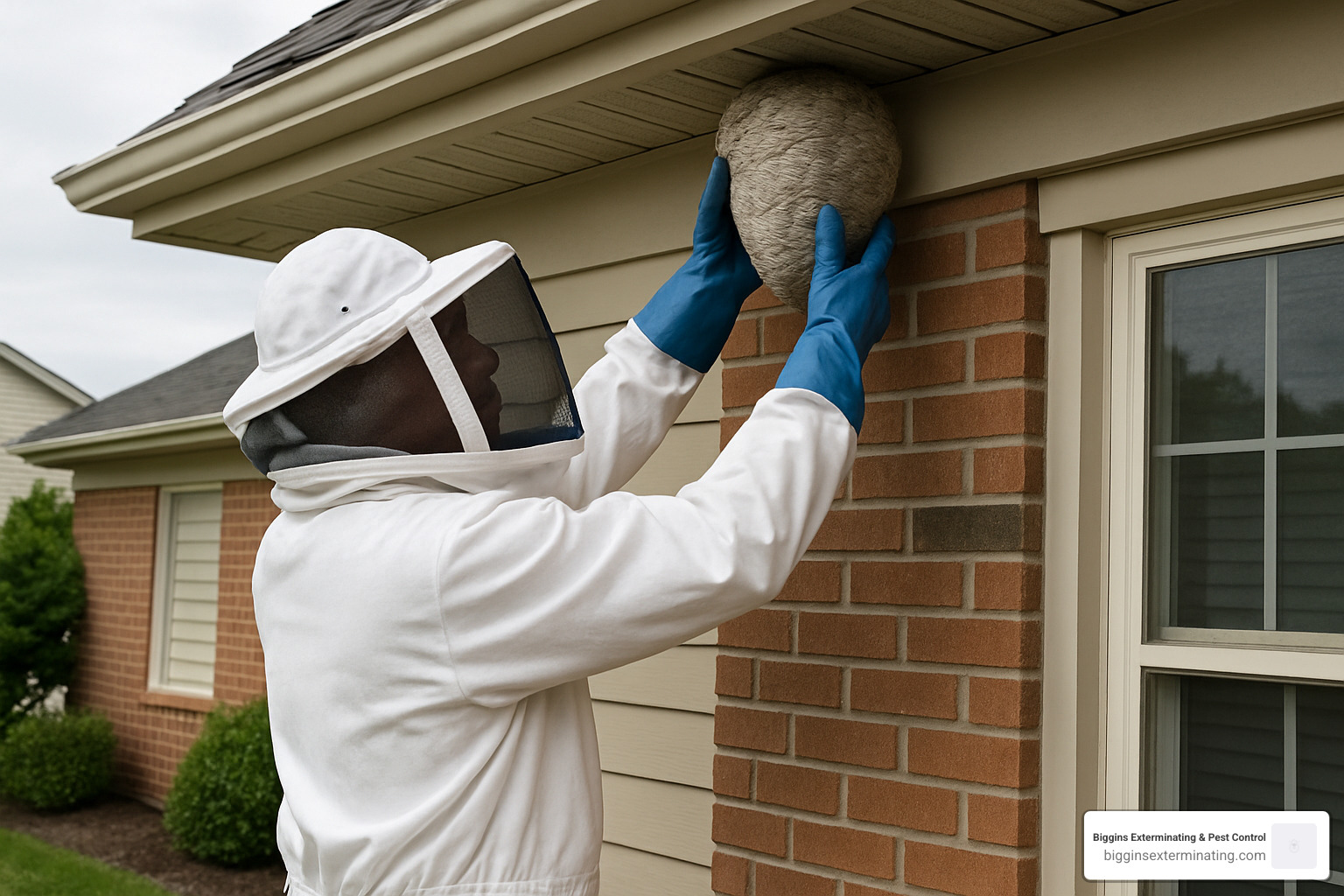
DIY removal makes sense when you’re dealing with small, exposed paper wasp nests that house fewer than 50 wasps. These are usually the umbrella-shaped nests you can see clearly, and they’re manageable for homeowners who don’t mind suiting up in protective gear. Ground nests in low-traffic areas are also good candidates for DIY treatment, especially if you’re comfortable working at dusk when wasps are less active.
Professional removal becomes essential when nests are large, hidden inside wall voids, or located in spots that require ladders or special equipment to reach safely. If anyone in your household has known allergies to wasp stings, don’t take chances—call us immediately.
| Aspect | DIY Removal | Professional Removal |
|---|---|---|
| Cost | $10-30 for supplies | $75-450 average (internet data) |
| Safety | Higher risk, limited equipment | Professional-grade protection |
| Success Rate | 70-85% for small nests | 95%+ guaranteed results |
| Time Investment | 2-4 hours including prep | 30-60 minutes on-site |
| Warranty | None | Typically included |
| Equipment | Basic sprays, limited reach | Specialized dusters, high-reach tools |
The cost difference might seem significant, but consider this: a failed DIY attempt often means you’ll end up paying for professional removal anyway, plus you’ve wasted time and supplies. More importantly, emergency room visits for multiple stings can cost thousands of dollars—far more than any professional pest control wasp nest service.
Safe DIY Pest Control Wasp Nest Steps
If you decide to go the DIY route, timing is absolutely critical. Never attempt wasp nest removal during daylight hours when workers are actively foraging and highly defensive. Wait until dusk when most wasps have returned to the nest but are sluggish from cooler temperatures.
Your protective gear needs to cover every inch of exposed skin. Long-sleeved shirts and long pants are non-negotiable, preferably in white or light colors since wasps are more aggressive toward dark clothing. Closed-toe shoes, socks, gloves, and eye protection complete your armor. One gap in coverage can turn a successful treatment into a painful lesson.
Long-range aerosol wasp spray is your best friend for DIY removal. Choose products that reach 15-20 feet, keeping you at a safe distance from angry defenders. Point the spray stream directly at the nest entrance and saturate the area thoroughly. Don’t just give it a quick spritz—these chemicals need time to penetrate the nest structure.
Here’s a trick we use in the professional world: wrap your flashlight in red tape if you need illumination for evening treatments. Wasps can’t see red wavelengths clearly, making red light much safer than white light that attracts and agitates them.
Ground nests respond better to insecticidal dust than liquid sprays. Apply dust directly to the entrance hole using a bulb duster, then retreat immediately. The wasps carry the dust throughout their underground tunnels, eliminating the entire colony within 24-48 hours.
Whatever you do, avoid these dangerous mistakes: never try burning nests (fire hazard and enrages survivors), flooding ground nests with water (ineffective and messy), knocking down nests with poles (triggers massive defensive response), or plugging entrance holes before treating (traps wasps inside your home’s structure).
Professional Pest Control Wasp Nest Services
Professional pest control wasp nest removal offers advantages that go far beyond just safety equipment. We have access to commercial-grade insecticides that aren’t available to homeowners, plus specialized tools designed specifically for wasp control.
At Biggins Exterminating, our approach starts with a thorough property inspection. We don’t just treat the obvious nest—we look for additional colonies and assess the safest, most effective treatment methods for your specific situation. Our high-reach dusting equipment can treat aerial nests up to 30 feet high without the dangers of ladders or scaffolding.
Concealed nests inside wall voids require special techniques that most homeowners can’t replicate. We inject dust through tiny holes that are later sealed, eliminating the colony without tearing into your home’s structure. This targeted approach solves the problem while preserving your property.
The warranty aspect provides peace of mind that DIY treatments can’t match. If wasps return to the same location within our guarantee period, we retreat at no additional charge. This protection ensures the problem is truly solved, not just temporarily suppressed.
We also handle the cleanup that many homeowners forget about. Dead wasps around nest sites attract other pests, and abandoned nests may harbor parasites. We remove accessible nests and recommend sealing entry points to prevent future infestations.
More info about Professional Wasp Removal explains our comprehensive treatment process and follow-up procedures.
Cost & Timing: What to Expect
Pest control wasp nest removal costs vary based on several factors, but understanding the range helps you budget appropriately. According to internet data (not Biggins Exterminating pricing), homeowners typically pay between $75-450 for professional removal, with most treatments falling in the $85-200 range.
Nest size and accessibility are the biggest cost factors. A small paper wasp nest hanging from your deck costs less to treat than a massive yellow jacket colony inside your wall void. Height requirements, special equipment needs, and the number of nests on your property all influence the final price.
Timing affects both cost and success rates. Early season treatments in May and June are often less expensive because colonies are smaller and easier to eliminate. Late season treatments may cost more due to larger populations and increased difficulty, but they’re sometimes necessary for safety reasons.
Some homeowners choose to wait until after the first hard frost when colonies naturally die off. This eliminates the immediate threat at no cost, but doesn’t prevent new queens from choosing the same nesting sites next spring. Emergency treatments typically cost more than scheduled services, but they’re essential when safety is at risk.
More info about Emergency Wasp Removal Near Me covers our rapid response service for situations that can’t wait for regular scheduling.
The bottom line? Professional removal often costs less than the medical bills from a serious stinging incident, and it comes with the peace of mind that the job is done right the first time.
Preventing Wasps from Returning
The smartest pest control wasp nest strategy doesn’t end with removing this year’s problem—it starts with making sure you don’t face the same battle next spring. Think of it as home maintenance that saves you from future panic calls to exterminators.
Here’s what most homeowners don’t realize: wasps are creatures of habit when it comes to real estate. While they never reuse old nests, queens absolutely love the same types of locations their predecessors chose. That cozy spot under your deck eave that housed this year’s nest? It’s prime property for next year’s house-hunting queen.
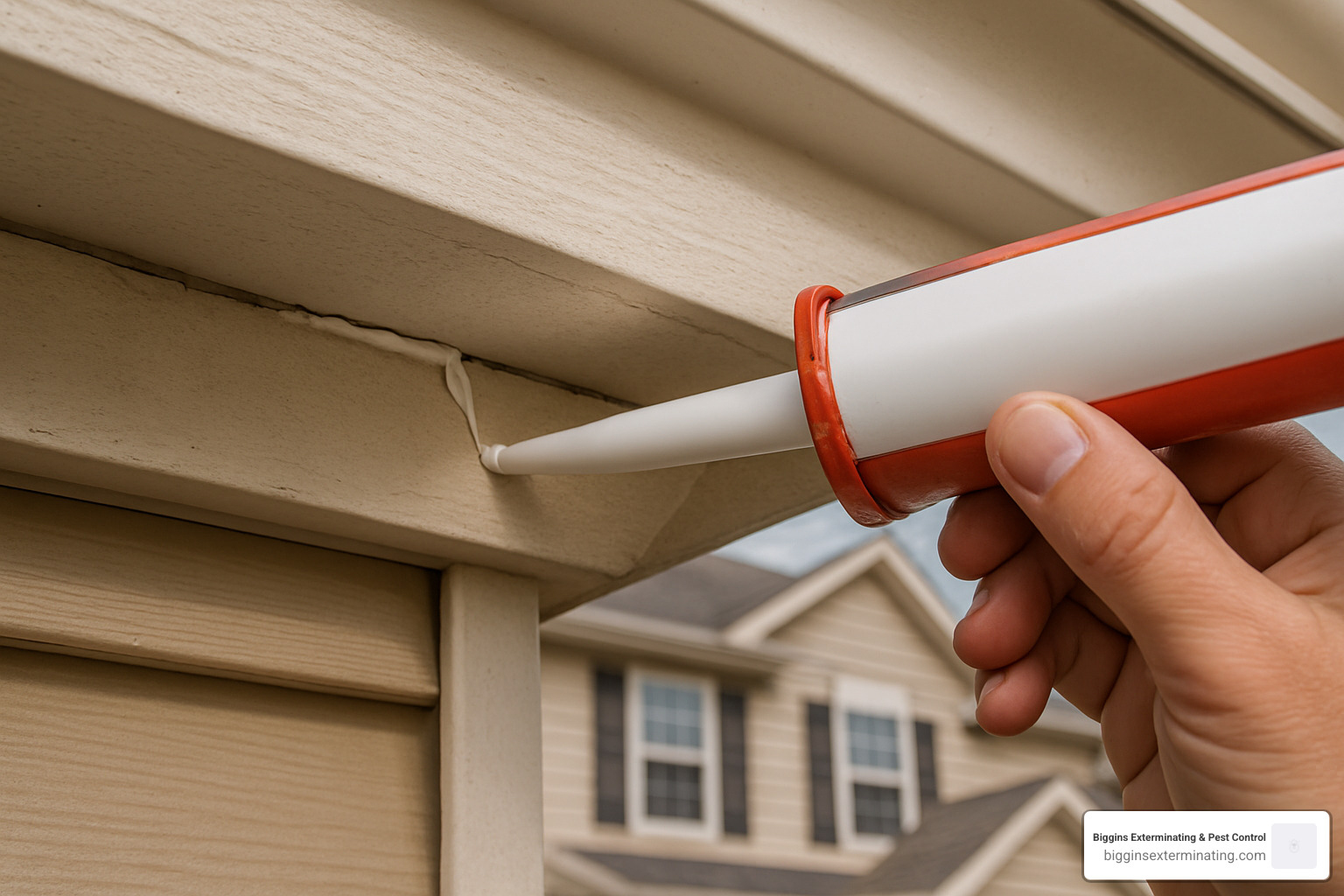
Spring prevention is your secret weapon. Overwintering queens emerge in March and April, groggy from hibernation and looking for the perfect spot to start their empire. This is when a simple walk around your property with a tube of caulk can prevent months of worry.
Seal every gap and crack you can find in eaves, siding, and foundations. Use mastic sealant for hairline cracks and expanding foam for larger openings. Pay special attention to areas where different building materials meet—these joints often develop gaps that look like luxury condos to scout queens.
Don’t forget about screens over vents and openings. Wasps love the protection of attic spaces and wall voids, but a simple mesh barrier keeps them out while maintaining proper ventilation for your home.
Garbage management becomes critical in late summer when wasps turn into aggressive scavengers. Keep outdoor bins tightly sealed and empty them regularly—especially if you’ve been tossing out sticky soda cans or fruit scraps. Clean up fallen fruit from trees promptly, and never leave pet food outdoors overnight.
Natural deterrents can supplement your physical barriers. Peppermint oil spray around potential nesting areas works surprisingly well—wasps hate the scent. Plant wasp-repelling herbs like mint, eucalyptus, and citronella in areas where you’ve had nest problems before.
Bright lighting in typically dark nesting spots also helps. Wasps prefer the shadows for their construction projects, so motion-activated lights under eaves or in sheds can encourage them to scout elsewhere.
More info about Top 5 Ways to Prevent Hornet and Wasp Nests on Your Property provides detailed prevention strategies we’ve developed specifically for Massachusetts properties over our 40+ years in business.
Eco-Friendly Deterrents & Relocation Tips
Some homeowners prefer gentler approaches to pest control wasp nest management, especially when dealing with smaller paper wasp colonies that aren’t posing immediate threats. These methods require patience and aren’t suitable for every situation, but they can work under the right circumstances.
Decoy nests tap into wasp territorial behavior. Since wasps typically won’t build within 200 feet of an existing colony, hanging brown paper bags or commercial decoy nests in early spring can convince scout queens to look elsewhere. It’s like putting up “No Vacancy” signs around your property.
The jar-and-cardboard relocation method works for small, accessible paper wasp nests with fewer than a dozen wasps. Wait until nighttime when the colony is inactive, carefully place a clear jar over the entire nest, slide cardboard underneath to trap it, and relocate the whole family to a wooded area at least a quarter-mile from your home.
Natural predators provide long-term population control without any effort on your part. Birds like woodpeckers and nuthatches feast on wasp larvae, while certain spider species prey on adult wasps. Encouraging these beneficial creatures through bird houses and diverse plantings creates a natural balance.
However, let’s be realistic about the limitations. These eco-friendly approaches aren’t suitable for large colonies, aggressive yellow jackets, or ground nests. If anyone in your household has wasp allergies, the safety risks of gentle methods far outweigh the environmental benefits.
Sometimes the kindest approach is swift, professional elimination—especially when dealing with species that can deliver dozens of stings in seconds. There’s nothing eco-friendly about a trip to the emergency room.
Frequently Asked Questions about Pest Control Wasp Nest
Do wasps reuse old nests?
Here’s some good news that surprises many homeowners: wasps never reuse old nests. Once winter’s first hard frost kills the colony, that papery fortress becomes a permanent ghost town. Even though the structure might look perfectly intact come spring, no wasp will ever move back in.
Think of it like this—would you move into a house where thousands of your relatives had died? Wasps feel the same way. New queens emerging from their winter hideouts will always build fresh nests, though they might fall in love with the same cozy spot that attracted last year’s queen.
This is exactly why smart pest control wasp nest prevention focuses on sealing up those attractive nesting spots rather than just knocking down visible nests. That perfect little gap under your eaves that housed one colony will likely catch another queen’s eye next spring unless you make it unavailable.
Those old nests can hang around for years looking spooky, but they’re completely harmless. You don’t need to remove them unless they’re bothering you or potentially giving other pests a place to hide.
What should I do if I’m stung?
Getting stung feels like getting stabbed with a tiny hot poker, but most wasp stings are more dramatic than dangerous. Start with the basics: wash the area with soap and water, slap some ice on it to calm the swelling, and pop an antihistamine to fight the itching and inflammation.
Unlike their bee cousins, wasps keep their stingers, so there’s nothing to dig out of your skin. They’re like tiny reusable needles—which is exactly why wasps can nail you multiple times if you stick around.
Here’s when you need to drop everything and get emergency help immediately: trouble breathing or swallowing, your heart racing like you just ran a marathon, hives spreading across your body, throwing up, or feeling like you might pass out. These aren’t “tough it out” symptoms—they’re your body’s way of screaming for help.
For regular stings that just hurt and swell, try mixing meat tenderizer with water to make a paste. It sounds weird, but those enzymes actually break down the venom proteins. Calamine lotion works great for the itching too. Most people feel back to normal within a day or two.
If you know you’re allergic to stings, carry an epinephrine auto-injector everywhere and make sure your family knows how to use it. Even if your last sting reaction was mild, the next one could be much worse.
Is it safe to block the nest entrance after treatment?
Never, ever block a nest entrance before treating the wasps inside—this is like trapping a bunch of angry ninjas in your walls. Desperate wasps will chew through drywall, find new exits, or force their way into your living spaces. Trust me, you don’t want thousands of panicked wasps loose inside your house.
After successful pest control wasp nest treatment, though, sealing up those entry points becomes your best friend for preventing future invasions. Wait until you haven’t seen any wasp activity for at least a week—some workers might have been out grocery shopping during the initial treatment and need time to encounter the treated area.
Once you’re confident the colony is completely eliminated, grab some expanding foam, mastic sealant, or hardware cloth depending on what size hole you’re dealing with. This step is crucial because new queens will absolutely scout out the same prime real estate next spring.
For ground nests, fill the holes with soil after confirming zero activity, then consider laying down landscape fabric to discourage future digging. It’s like putting up a “no vacancy” sign for next year’s house-hunting queens.
The timing matters because patience here prevents bigger problems later. Rush the sealing process, and you might create a horror movie scenario in your own home.
Conclusion
Managing pest control wasp nest situations successfully comes down to three key elements: knowing what you’re dealing with, acting at the right time, and choosing the safest approach for your family’s situation. Throughout this guide, we’ve walked through everything from identifying different wasp species to deciding between DIY treatment and professional removal.
The reality is that wasps aren’t always the villains we make them out to be. These insects actually help control other pests in your yard, munching on caterpillars, flies, and other unwanted bugs. The trick is learning when to coexist peacefully and when immediate action is necessary for your family’s safety.
Your seasonal vigilance pays off in multiple ways. Spring inspections catch problems while they’re still manageable—one queen is infinitely easier to handle than thousands of workers. Summer monitoring helps you spot new activity before colonies explode in size. Fall prevention work, like sealing gaps and removing nesting materials, sets you up for success next year.
At Biggins Exterminating & Pest Control, we’ve spent over four decades helping families in Wilmington, Andover, Bedford, Billerica, Burlington, Lexington, North Reading, Tewksbury, and Woburn steer these exact challenges. What we’ve learned is that every pest control wasp nest situation tells its own story. That ground nest under your deck requires a completely different strategy than the paper nest hanging from your garage eave.
Sometimes the best approach is rolling up your sleeves with proper protective gear and a long-range spray. Other times, especially when dealing with large colonies or dangerous locations, calling in professional backup is the smartest move you can make. There’s no shame in recognizing when a situation is beyond your comfort zone or skill level.
Professional help brings more than just safety equipment and experience. Our licensed technicians offer warranties that guarantee the job gets done right, plus we handle the cleanup and prevention work that keeps wasps from returning to the same spots next season.
Don’t let wasp nests turn your outdoor spaces into no-go zones. Whether you’re grilling with family, gardening, or just enjoying a quiet evening on your patio, you deserve to feel safe and comfortable on your own property. With the right knowledge and approach, those buzzing intruders become a manageable challenge rather than a summer-long nightmare.
More info about Wasps Pest Control for comprehensive wasp management solutions custom to Massachusetts properties.