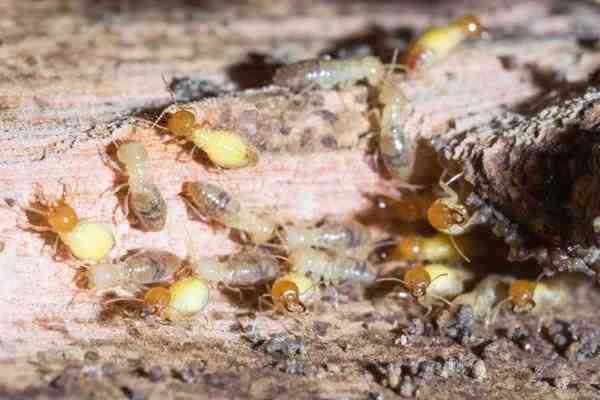
The Silent Destroyers in Your Home
How to tell if you have termites is crucial knowledge for every homeowner. These tiny invaders cause over $5 billion in property damage annually in the United States, often working undetected for years.
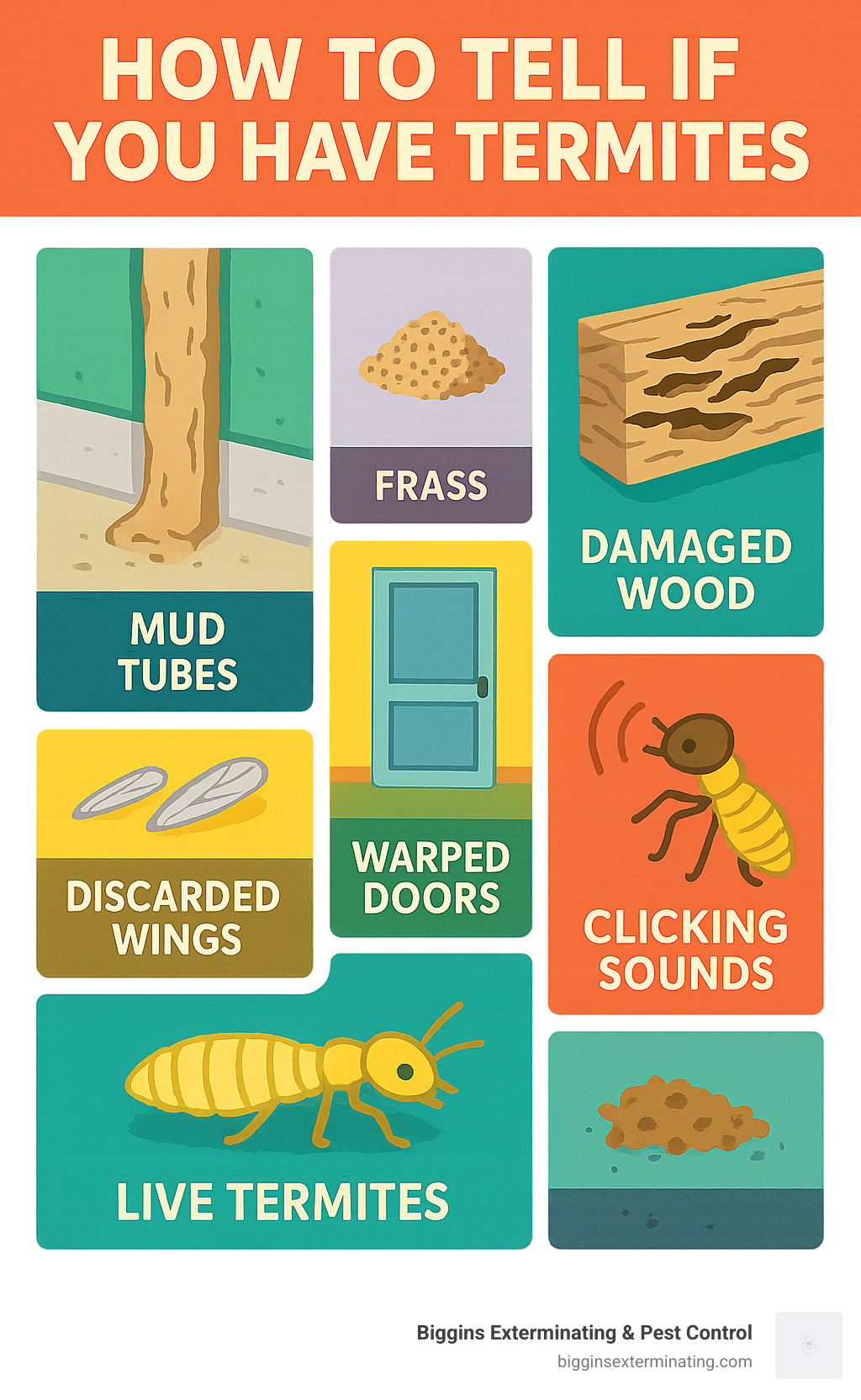
If you’re looking for quick signs of termite infestation, watch for these key indicators:
| Warning Sign | What to Look For |
|---|---|
| Discarded Wings | Small, translucent wings on windowsills or floors |
| Mud Tubes | Pencil-width tunnels along foundations or walls |
| Hollow Wood | Wood that sounds empty when tapped |
| Frass (Droppings) | Tiny pellets resembling sawdust or coffee grounds |
| Warped Doors/Windows | Suddenly tight-fitting doors or windows |
| Clicking Sounds | Faint tapping noises from inside walls |
| Live Termites | Pale, ant-like insects with straight waists |
Termites are often called “silent destroyers” because they can chew through wood, flooring, and even wallpaper undetected for years. Most homeowners don’t realize they have a problem until significant damage has already occurred. What makes termites particularly dangerous is that their damage is rarely covered by standard homeowner’s insurance policies.
I’m Stephen Biggins, owner of Biggins Exterminating Co., and I’ve been helping Massachusetts homeowners identify and eliminate termite problems since 1982, with experience in spotting the subtle signs of how to tell if you have termites before they cause catastrophic damage. As a second-generation pest control expert, I’ve seen how early detection can save homeowners thousands in repair costs.
How to tell if you have termites vocab explained:
– Termite Pest Control
– termite barrier treatment
How to Tell if You Have Termites: Quick Overview
Picture this: tiny invaders silently munching away at your home’s foundation while you sleep soundly, unaware of the thousands of dollars in damage accumulating beneath your feet. This isn’t the plot of a horror movie—it’s the reality of termite infestations.
As a family that’s been helping Massachusetts homeowners identify these sneaky pests for over four decades, we at Biggins have seen the devastation that comes from detecting termites too late. The good news? With the right knowledge, you can catch them early.
How to tell if you have termites comes down to recognizing their subtle calling cards. While they prefer to stay hidden, termites leave behind several types of evidence:
When walking through your home, keep your eyes peeled for visual clues like discarded wings near windowsills (especially in spring), pencil-width mud tubes climbing foundation walls, sawdust-like frass piles, or wood surfaces that appear blistered or damaged.
Your ears can help too—listen carefully for faint clicking or rustling sounds within your walls, particularly at night when termites are most active.
Pay attention to structural changes that seem to appear suddenly: doors that stick when they didn’t before, floors that feel spongy underfoot, or paint that bubbles mysteriously. These might indicate termites have compromised your home’s structural integrity.
Don’t overlook environmental factors around your property. Excess moisture near your foundation, wood touching soil directly, or improper drainage can create termite-friendly conditions that increase your risk.
The troubling reality is that most infestations remain undetected for years. Termites are strategic workers, consuming wood from the inside out and staying hidden within walls and foundations. By the time obvious signs appear, you might be facing repairs that impact both your home’s safety and your wallet.
Even more concerning, termite damage typically isn’t covered by standard homeowner’s insurance policies, leaving you financially vulnerable if an infestation takes hold. And with the average termite colony housing thousands of hungry insects, the damage timeline can accelerate quickly.
Massachusetts homeowners face particular risk due to our climate conditions, which are hospitable to subterranean termites. For more information about specific termite dangers in our region, visit our page on the dangers of termites and how to prevent them in Massachusetts.
Knowing how to tell if you have termites isn’t just about protecting your property—it’s about preserving your peace of mind and safeguarding what’s likely your biggest investment.
Why Termites Demand Your Attention
When it comes to home threats, termites might not look intimidating, but they deserve your immediate attention. These tiny invaders aren’t just an inconvenience – they’re a serious threat to both your property and your wallet.
Did you know termites cause more than $5 billion in property damage annually across the United States? That’s more than all natural disasters combined. What makes this particularly troubling is that most homeowner insurance policies specifically exclude termite damage, leaving you personally responsible for what can become extensive repairs.
A single mature termite colony is a force to be reckoned with. These colonies can house up to 2 million members, with the average colony containing around 350,000 hungry workers. The truly concerning part? These colonies develop silently over 3-5 years, allowing damage to accumulate gradually without detection.
How to tell if you have termites early can save you thousands. Once established, some species like Formosan termites can devour one foot of 2×4 lumber in just 25 days – imagine what they could do to your home’s structure over months or years!
Here in Massachusetts, we face particular challenges with termites. Our climate creates ideal conditions for subterranean termites, the most common species in our region. Our humid summers followed by cold winters create perfect breeding and feeding environments for these pests, which build their colonies underground and create mud tubes to access the wood in your home.
The Eastern subterranean termite is especially prevalent throughout our service areas including Wilmington, Burlington, Woburn, and surrounding communities. These resourceful pests can enter homes through foundation cracks as tiny as 1/32 of an inch – about the thickness of a credit card!
For homeowners, this means vigilance is essential. Regular inspections and knowing the warning signs can make all the difference between a minor problem and a major renovation.
Want to learn more about the specific threats termites pose to Massachusetts homes? Visit our comprehensive guide on the dangers of termites and how to prevent them in Massachusetts.
Sign #1 – Discarded Wings & Swarming Alates
If you’re wondering how to tell if you have termites, one of the most telltale signs is finding discarded wings around your home. These delicate, translucent wings are the calling cards of termite “alates” – the winged reproducers often called swarmers.
Every spring, typically after a good rain followed by warm weather, mature termite colonies send out these flying termites on a mission to start new colonies. It’s nature’s way of ensuring termites spread to new territories – unfortunately, that territory might be your home!
What to Look For:
These swarmers are drawn to light like moths to a flame. Check your windowsills, door frames, and light fixtures – that’s where you’ll often find piles of shed wings. These tiny wings (about 1/4 to 1/2 inch long) may look like fish scales or small translucent flakes.
Don’t blink or you might miss the actual swarm! These mating flights typically last only 30 minutes to a few hours. Many homeowners never witness the swarm itself, but find the evidence afterward – those discarded wings. Once termites find a mate and a suitable spot to start their colony, they break off their wings as they’ll never fly again.
How to Distinguish Termite Swarmers from Flying Ants:
Many people confuse termite swarmers with flying ants, but there are clear differences if you know what to look for:
| Feature | Termite Swarmers | Flying Ants |
|---|---|---|
| Wings | Two pairs of equal length | Two pairs with front wings larger than back wings |
| Body Shape | Straight waist, no pinched middle | Pinched “wasp” waist |
| Antennae | Straight | Bent/elbowed |
| Color | Light-colored, translucent | Often darker (black, brown, or reddish) |
The wings are particularly distinctive – termite wings are uniform in size, while ant wings have larger front wings than back wings. Termites also have straight antennae compared to the elbowed antennae of ants, and their bodies lack the distinctive narrow waist that ants have.
If you’re finding these wings around your home, especially near windows or light sources, it’s a strong indication that termites have established themselves nearby. This isn’t just a possibility of termites – it’s a warning sign that they’re actively reproducing and expanding their territory.
For help with properly identifying whether you’re dealing with termites or similar insects like carpenter ants, check out our detailed guide on how to distinguish carpenter ants from termites.
Seeing discarded wings means termites are already present and potentially causing damage. Don’t wait – this is one of the clearest signs that it’s time to call in the professionals.
Sign #2 – Mud Tubes on Foundation Walls
Mud tubes are perhaps the most telltale evidence when figuring out how to tell if you have termites. These pencil-width tunnels are the subterranean termite’s version of a protected highway system, connecting their underground colony to their favorite food source – the wooden structures of your home.
What to Look For:
When I’m inspecting homes in Wilmington or Burlington, I always check foundations carefully for these distinctive structures. Mud tubes typically appear as brown, cylindrical pathways about the width of a pencil (1/4 to 1 inch wide). They’re most commonly found along foundation walls, in basement corners, throughout crawl spaces, running up support piers, or alongside plumbing pipes – basically anywhere that creates a bridge between soil and wood.

These mud highways aren’t just random dirt formations – they’re carefully engineered structures made from soil, wood particles, and termite saliva or excrement. They serve multiple critical purposes for the colony: protecting termites from predators and sunlight, preventing dehydration, and maintaining the precise temperature and humidity levels these insects need to survive.
The Break Test:
If you spot what looks like a mud tube along your foundation, there’s a simple test you can perform to determine if it’s currently active:
- Carefully break off a small section of the tube (about 1 inch)
- Look inside for cream-colored termites – they may scurry away quickly when exposed
- Check back in a few days to see if the tube has been repaired
- If the tube gets fixed, you definitely have an active infestation on your hands
Even if you don’t spot live termites during your initial inspection, the repair of the broken section is clear confirmation that an active colony is present. In my 40+ years of termite work across Massachusetts, I’ve found that mud tubes are one of the most reliable indicators of a current subterranean termite problem.
For homeowners wanting to be thorough, don’t forget to inspect crawlspaces carefully – these dark, often damp areas are prime locations for mud tubes but are frequently overlooked during casual inspections. A good flashlight and a little patience can reveal mud tubes that might otherwise go unnoticed until significant damage occurs.
For a more detailed scientific explanation of termite mud tubes and their significance in termite behavior, check out this excellent scientific resource on termite mud tubes.
Sign #3 – Frass: The Tell-Tale Termite Droppings
Ever walked by a window sill and noticed what looks like tiny piles of pepper or coffee grounds? You might have just finded one of the most revealing clues when figuring out how to tell if you have termites.
Frass is the polite term for termite droppings, and it’s a dead giveaway—particularly for drywood termite infestations. Unlike their subterranean cousins who use their waste in construction projects, drywood termites are neat freaks who push their droppings out through tiny holes in the wood they’re happily munching on.
What to Look For:
These aren’t just random bits of dirt. Termite frass has some distinctive characteristics that make it unique. The pellets are remarkably uniform—about 1mm in length with a distinctive six-sided shape. Their color ranges from light beige to dark brown, depending on what kind of wood is on the menu.
When you spot small mounds that resemble sawdust or coffee grounds beneath wooden structures, take a closer look. If you’re brave enough to touch it (with gloves, please!), genuine termite frass won’t crumble between your fingers like sawdust would.
The location of these droppings is also telling. Drywood termites create “kick-out holes”—tiny openings they use as waste disposal chutes. Finding neat little piles beneath these holes is nature’s equivalent of a neon sign saying “termites at work.”
Drywood vs. Subterranean Termite Droppings:
There’s a meaningful difference in how termite species handle their waste. Drywood termites are the ones that leave the visible evidence—those distinctive pellet piles beneath kick-out holes. Their subterranean relatives are more discreet, recycling their droppings into the construction of mud tubes, leaving little visible frass for homeowners to find.
Health Considerations:
While termite frass isn’t toxic (thankfully!), it isn’t something you want to handle carelessly. Some people experience allergic reactions or respiratory irritation when exposed to these droppings. If you’re cleaning up suspected frass, we recommend basic precautions—wear gloves and a dust mask to prevent any unpleasant reactions.
Finding frass around your home isn’t just an interesting science lesson—it’s a warning that requires attention. At Biggins Exterminating, we’ve seen countless cases where these tiny pellets were the first indication of a significant infestation. We can confirm whether what you’ve found is indeed termite frass and determine just how extensive the problem might be.
These tiny dropping piles are one of nature’s ways of telling you that uninvited guests are making themselves at home in your wooden structures. Catching them early can save you thousands in potential damage.
Sign #4 – Hollow or Damaged Wood
Wood damage is perhaps the most direct evidence when determining how to tell if you have termites. Unlike other wood-destroying insects that create clean holes or tunnels, termites eat wood from the inside out, leaving a thin veneer of wood or paint on the surface while destroying everything beneath.
What to Look For:
When I tap on termite-damaged wood with a screwdriver handle, I hear a distinctive hollow sound – like knocking on an empty box rather than solid wood. It’s one of the most reliable ways to check for an infestation without specialized equipment.
The surface of termite-damaged wood often shows subtle changes too. You might notice blistering or bubbling in wooden surfaces, or floors and ceilings that seem to sag without explanation. These are telltale signs that termites have been feasting below the surface.

If you do manage to see inside termite-damaged wood, you’ll notice something remarkable – intricate maze-like patterns that follow the grain. Termites prefer to eat the softer spring growth rings while leaving the harder summer wood intact, creating a honeycomb or layered appearance that’s distinctive to termite damage.
One simple test I often show homeowners is the “screwdriver test.” Take a flathead screwdriver and gently probe suspicious wood areas – especially where wood meets the ground or in damp areas. Termite-damaged wood will offer surprisingly little resistance, and the screwdriver might sink in with barely any pressure at all.
Don’t forget to check wooden furniture, especially where it contacts the floor. Termites can move from structural elements to furnishings, leaving similar damage patterns. Window frames, door frames, baseboards, and trim are other common areas where termite damage first becomes noticeable.
Finding hollow or damaged wood isn’t just concerning – it’s a serious sign of termite activity that requires immediate professional attention. The longer you wait, the more extensive (and expensive) the damage becomes.
For more information about our comprehensive termite services and how we address wood damage, visit our termite pest control page. Our experienced team can assess the damage and recommend the most effective treatment to stop further destruction.
Sign #5 – Stuck Windows, Doors & Sagging Floors
When learning how to tell if you have termites, some of the most telling signs aren’t the insects themselves but the structural changes they cause to your home. As termites feast on the wooden components of your house, they create unexpected problems that many homeowners mistakenly attribute to normal aging or humidity.
What to Look For:
Those doors that suddenly seem to have a mind of their own? They might be telling you something important. When termites consume wood, they produce moisture as a byproduct of their feeding and nesting activities. This excess moisture causes wood to warp and swell, leading to doors that stick or won’t close properly.
Windows follow the same pattern. If you find yourself struggling with windows that once glided smoothly but now seem permanently stuck, termites could be the culprits working behind the scenes.
Your floors might be speaking to you as well. New squeaks, unexpected dips, or areas that feel spongy underfoot often indicate that termites have compromised the structural integrity below. I’ve seen cases where homeowners thought they just had “character” in their old floors, only to find extensive termite damage beneath.
Look up, too. Ceilings that show subtle dipping or sagging might reveal termite activity in the attic or roof supports. Similarly, floor or ceiling tiles that have mysteriously come loose could be victims of termite-induced moisture and structural weakening.
Even your walls aren’t immune. Subtle warping, bubbling, or curves in previously straight walls often indicate that termites are busy remodeling from within – and not in a good way!
The tricky part about these signs is how easily they’re dismissed. Most homeowners chalk them up to normal house settling, seasonal changes, or humidity issues. But when these problems appear suddenly or alongside other termite indicators, it’s time to have a professional take a look.
At Biggins Exterminating, we’ve seen countless homes where these structural symptoms were the first hint of a serious termite problem. When caught early, the damage can often be addressed before it requires major structural repairs – which is why knowing how to tell if you have termites through these indirect signs is so valuable for protecting your home and your wallet.
Sign #6 – Head-Banging & Other Termite Sounds
Believe it or not, termites aren’t completely silent invaders. One of the more unusual ways to determine how to tell if you have termites is actually by listening for them. These tiny creatures can make distinctive sounds that alert homeowners to their presence—if you know what to listen for.
What to Listen For:
When your home is quiet, especially at night, you might hear subtle sounds coming from your walls, floors, or ceilings. The most distinctive termite sound is a clicking or tapping noise produced by soldier termites. These dedicated defenders actually bang their heads against wood or rapidly shake their bodies when they sense danger—it’s their way of sounding the alarm to the rest of the colony.
“The first time a homeowner hears termite soldiers clicking in their walls, they often think it’s their house settling or even their imagination,” says Stephen Biggins. “But once you know what to listen for, these warning signals become unmistakable.”
You might also detect a faint rustling sound—similar to tissue paper being crumpled—which is the sound of thousands of worker termites moving through wood as they feed and build. These sounds are typically more noticeable in the stillness of night when background noise is minimal.
How to Listen for Termites:
To detect these subtle sounds, try pressing your ear directly against walls, particularly near baseboards or areas where you suspect termite activity. Complete silence is essential—turn off TVs, fans, and other appliances that might mask the faint noises.
For a more sensitive listening experience, try using a stethoscope or even an empty drinking glass pressed against the wall to amplify the sounds. Focus your listening efforts on areas near known moisture issues or where you’ve spotted other potential termite signs.
While not every termite infestation will produce audible evidence, detecting these noises can help pinpoint active colonies hidden within your home’s structure. When our technicians at Biggins Exterminating conduct inspections, we sometimes use specialized acoustic equipment to detect termite activity in hard-to-reach areas.
This fascinating aspect of termite behavior has been well-documented by researchers. For more scientific information about how termites use sound to communicate danger, check out this research on termite head-banging alarm sounds.
If you’re hearing suspicious sounds in your walls but aren’t sure if termites are the culprit, don’t hesitate to call us. With over 40 years of experience, we’ve trained our ears to distinguish between normal house sounds and the telltale signs of termite activity.
Sign #7 – Live Termites in Walls, Floors or Yard
The most definitive evidence when determining how to tell if you have termites is, naturally, finding the pests themselves. While termites typically remain hidden from view, actually seeing these creatures often signals that you’re dealing with a significant infestation.
What to Look For:
Finding live termites can be alarming, but it provides concrete proof of their presence. Worker termites appear cream-colored with soft bodies measuring about 1/4 to 1/2 inch long. Soldier termites look similar but feature larger heads and more prominent mandibles (jaws) for colony defense. Unlike ants, termites have straight bodies without the pinched waist that ants display—a key identification feature.
These secretive insects typically remain concealed inside wooden structures or underground, only becoming visible during home renovations or repairs when walls, floors, or ceilings are opened. You might also expose them when breaking open mud tubes or digging near your foundation.
“When homeowners actually see live termites, it’s usually during a remodeling project or spring swarm season,” explains Stephen Biggins. “Finding them in your living space often means they’ve been there longer than you’d like to think.”
Common Places to Find Live Termites:
You’re most likely to find these unwelcome guests inside damaged or hollowed-out wood, where they’ve been quietly feasting. Check within mud tubes along foundations or in the soil immediately surrounding your home’s foundation, especially in consistently moist areas.
Don’t overlook your yard! Rotting tree stumps, decaying logs, and firewood piles create perfect termite habitats. When these food sources are near your home, they can serve as launching points for an invasion. Mulch that directly contacts your foundation also creates an inviting bridge for termites to enter your home.
During warm spring days, particularly after rainfall, you might witness a termite swarm—when winged reproductive termites emerge en masse to establish new colonies. These dramatic swarms often occur near windows or light sources and provide undeniable evidence of nearby termite activity.
Finding live termites warrants immediate professional attention. The visible termites likely represent just a small fraction of a much larger colony hidden within your home’s structure. For comprehensive information about our termite elimination approaches, visit our termites pest control page.
How to Distinguish Termites From Flying Ants
One of the most common mistakes homeowners make when trying to determine how to tell if you have termites is confusing termite swarmers with flying ants. I’ve seen countless worried faces relax when I explain they’ve just got ants – not the wood-destroying termites they feared.
Key Differences:
The differences between these insects might seem subtle at first glance, but they’re actually quite distinct once you know what to look for.
| Feature | Termites | Flying Ants |
|---|---|---|
| Body Shape | Straight waist | Pinched “wasp” waist |
| Antennae | Straight, beaded | Elbowed/bent |
| Wings | Two pairs of equal size | Front wings larger than back wings |
| Wing Texture | Transparent, may appear milky or smoky | Slightly tinted, veined |
| Color | Usually pale (light brown to creamy white) | Often darker (black, brown, or reddish) |
| Behavior After Landing | Shed wings quickly | Keep wings until death |
| Swarming Season | Typically spring, after rain | Various times throughout year |
| Damage Potential | Consume wood, causing structural damage | Generally don’t damage structures |
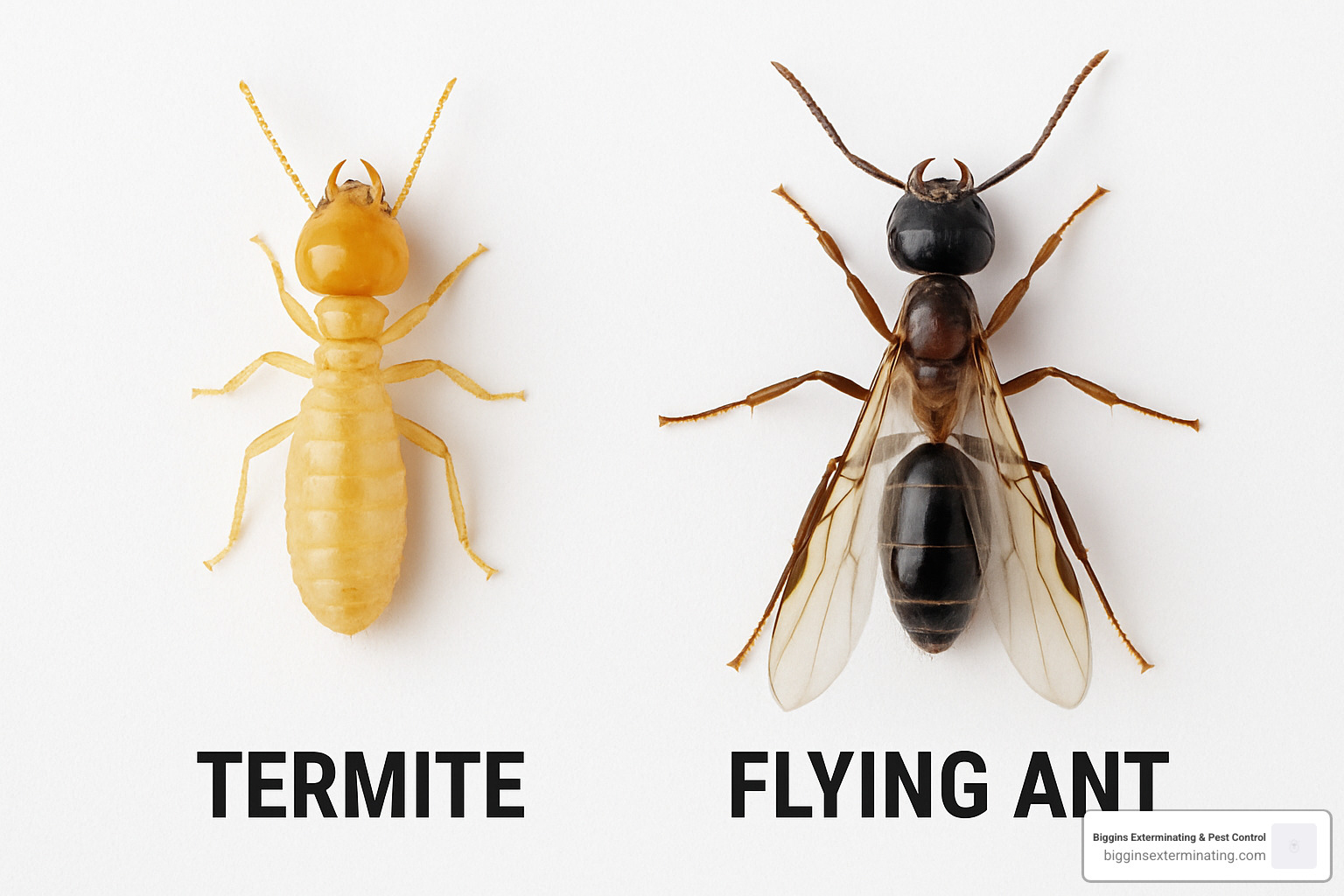
The waist is your quickest visual clue – termites have straight bodies while ants have that distinctive pinched middle, like they’re wearing a belt too tight. Take a closer look at their antennae too. Termite antennae are straight, almost like tiny beads on a string, while ant antennae have a noticeable bend or “elbow” in them.
Their wings tell another important story. When I’m examining specimens, I always check the wings first. Termite wings are equal in size, like two matching pairs. Flying ants, however, have larger front wings and smaller back wings. If you find discarded wings around your windowsills, equal-sized wings are a red flag for termites.
Behavior patterns differ significantly too. Termites are primarily night owls, attracted to light sources during their brief mating flights. They’ll swarm around your porch lights or windows, then quickly shed their wings once they’ve found a mate. Those piles of discarded wings are a classic termite calling card. Flying ants tend to keep their wings throughout their lives and may appear at various times throughout the year, not just during spring rains.
The stakes of misidentification are high – termites pose a serious structural threat to your home, while flying ants are generally just a nuisance. If you’re uncertain about what you’ve found, don’t guess. Collect a few specimens in a sealed container and give us a call. We’re happy to provide a professional identification and put your mind at ease – or help you address a genuine termite problem before it gets worse.
What To Do Next: Step-by-Step Action Plan
Finding signs of termites can feel overwhelming, but don’t panic! I’ve helped hundreds of Massachusetts homeowners through this exact situation. Here’s what you should do if you suspect these wood-munching insects have moved in:
1. Document the Evidence
Start by creating a record of what you’ve found. Take clear photos of suspicious areas—whether it’s discarded wings on your windowsill or mud tubes along your foundation. Note where and when you spotted each sign. This documentation helps tremendously when you consult with professionals (and can be valuable for insurance purposes).
If you find what appear to be termites or their droppings, carefully collect a few samples in a sealed container. This makes identification much easier and more accurate.
2. Conduct a Break Test on Mud Tubes
Those pencil-width mud tubes along your foundation are like termite highways. To check if they’re actively used, perform this simple test:
Break a small section (about an inch) of the tube and check inside for live termites. Then come back in 2-3 days to see if the tube has been repaired. If the termites have rebuilt their highway, you’ve got confirmation of an active colony working in your home.
3. Assess the Extent
Once you’ve confirmed termite activity, try to determine how widespread the problem might be. Gently tap wooden structures throughout your home, listening for that hollow sound that suggests termite damage. Use a screwdriver to probe suspicious areas—if the wood gives way easily or reveals maze-like tunnels, that’s a strong indicator of termite activity.
Don’t just check near the original signs—termites can be working in multiple locations simultaneously. Pay special attention to areas with moisture issues or where wood contacts soil.
4. Consider Safety Precautions
While investigating, be careful not to disturb major mud tubes before professional treatment, as this might cause the colony to relocate or split. If you’re handling potentially infested materials, wear gloves and a dust mask to protect yourself from dust and debris.
It’s also best to avoid applying over-the-counter termite products without proper knowledge. These often provide a false sense of security while the main colony continues to thrive unaffected.
5. Contact a Professional
While the DIY approach might be tempting, professional termite treatment offers significant advantages that store-bought solutions simply can’t match:
Expert identification ensures you’re treating the right pest with the right methods. Comprehensive inspection reveals hidden infestations you might miss. Commercial-grade treatments reach places consumer products can’t. Specialized knowledge of termite biology helps target the entire colony, not just visible workers. Many professionals also offer warranty protection for treated areas.
Treatment Costs and Options
Based on internet data, average termite treatment costs typically range from $500 to $3,000 or more*, with several factors affecting the final price:
The size of your property naturally impacts treatment scope and cost. The extent of infestation determines treatment intensity needed. Different treatment methods (baiting systems vs. liquid treatments) vary in price. And if structural repairs are needed for damaged areas, that adds to the overall investment.
Note: These are average costs based on public internet data and not actual costs for Biggins Exterminating services.
At Biggins Exterminating, we understand finding termites is stressful. That’s why we provide customized solutions based on your unique situation—not one-size-fits-all treatments. We’ll walk you through your options and help you make the best decision for your home and budget.
For more detailed information about our effective termite barrier treatments, visit our termite barrier treatment page.
Prevention & Long-Term Protection
The best defense against termite damage is a good offense. After helping thousands of Massachusetts homeowners over four decades, we’ve learned that prevention truly is more effective—and much less expensive—than treatment after an infestation takes hold.
1. Schedule Annual Professional Inspections
Nothing replaces the trained eye of a professional when it comes to spotting the early warning signs of termite activity. At Biggins Exterminating, we’ve developed a thorough inspection protocol that examines all the vulnerable areas of your home, including places most homeowners never think to check.
Annual inspections are particularly crucial in our Massachusetts service areas including Wilmington, Burlington, Andover, and Bedford, where the Eastern subterranean termite remains active and hungry. These regular check-ups can catch problems before they become expensive disasters.
2. Control Moisture Around Your Home
Termites love moisture, and eliminating excess water around your property makes it far less attractive to these pests. Fix leaking pipes promptly, ensure proper drainage away from your foundation, and maintain clean gutters to direct water away from your home’s structure.
In our New England climate, basements and crawl spaces often develop dampness that creates perfect termite conditions. Consider installing a dehumidifier in these areas and ensuring proper ventilation throughout your home. This not only deters termites but also prevents mold and other moisture-related problems.
3. Maintain Wood-to-Soil Barriers
Creating physical separation between soil and wooden structures is one of the most effective preventive measures you can take. Keep at least 6 inches between soil and any wooden parts of your home—this simple rule can dramatically reduce your termite risk.
Replace any ground-contact wood with concrete, metal, or termite-resistant materials. Store firewood at least 20 inches off the ground and keep mulch a minimum of 12 inches away from your foundation walls. These small changes make your property significantly less hospitable to termites.
4. Consider Preventive Treatments
For homes in high-risk areas or those that have had previous infestations, preventive treatments offer peace of mind. Options include termite baiting systems that monitor and eliminate colonies before they reach your home, soil treatments that create protective barriers, and wood treatments that make structural timber resistant to termite feeding.
Many of our clients find that the cost of preventive treatment is a worthwhile investment compared to potential repair costs. For more detailed information about regular pest inspections and their importance, visit our guide on the importance of regular pest inspections.
DIY Checklist: How to Tell if You Have Termites Early
While professional inspections are essential, you can supplement them with your own monthly checks. Here’s a simple routine that takes just 15-20 minutes but could save you thousands in damage:
For exterior checks, walk your home’s perimeter with a flashlight and screwdriver. Examine the foundation for mud tubes, especially in corners and crevices. Check wood siding, trim, and decking by gently probing suspicious areas. Pay special attention to spots where wood meets soil.
Inside your home, tap wooden structures while listening for hollow sounds. Focus on baseboards, window frames, and door jambs. Look for tiny piles of frass near wooden structures and watch for paint that appears warped or bubbling on walls.
Keep a simple log of your inspections, even if it’s just dated photos on your phone of areas you’re monitoring. This creates a visual timeline that helps identify changes that might indicate termite activity.
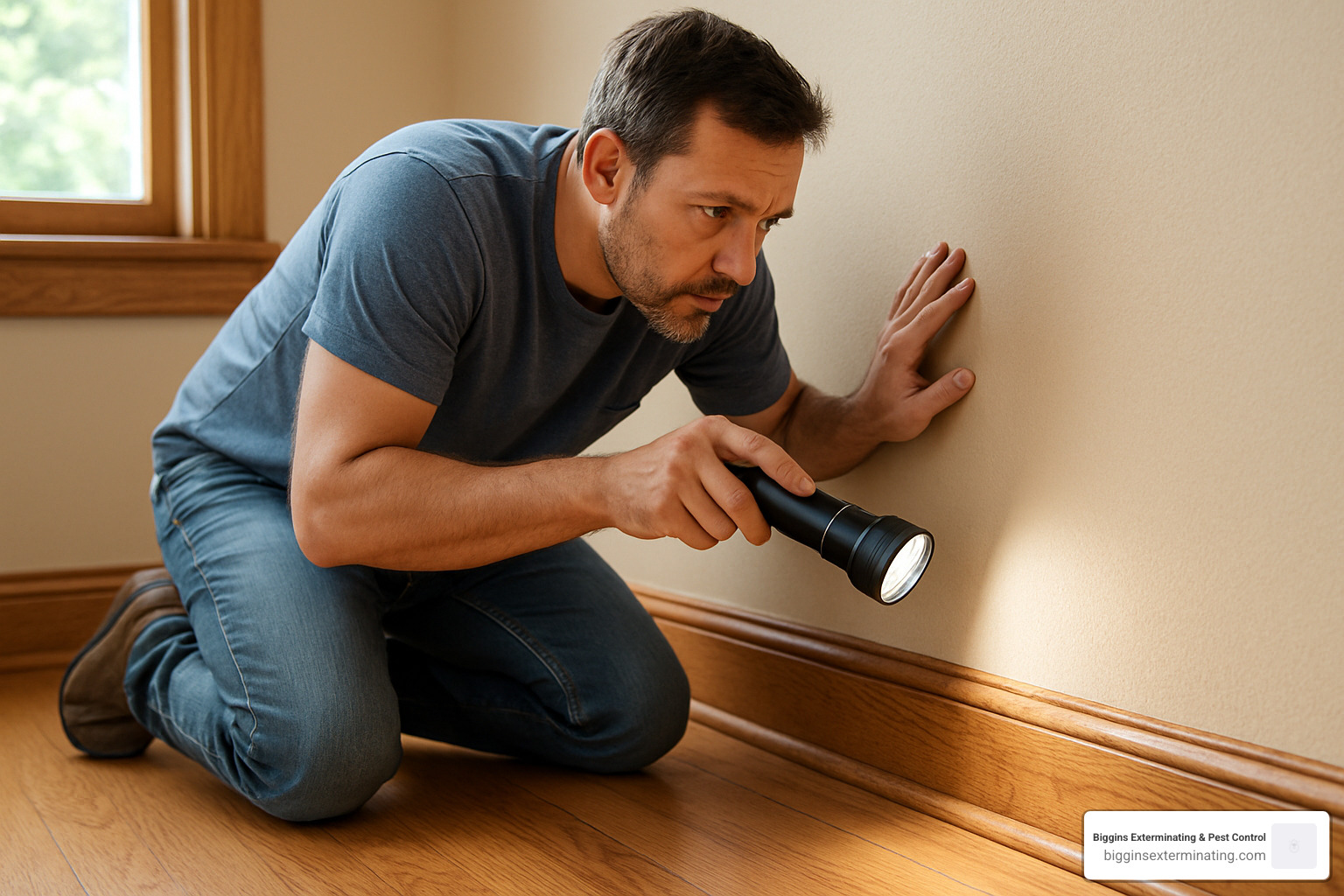
The combination of your regular self-checks and our professional annual inspections provides the most comprehensive protection against these silent destroyers. When it comes to termites, finding them early isn’t just convenient—it’s the difference between a simple treatment and potentially extensive structural repairs.
Frequently Asked Questions about Termite Detection
How to Tell if You Have Termites in Walls?
Your walls might be hiding a secret termite feast, and spotting these hidden invaders requires a bit of detective work. When I inspect homes in Massachusetts, I often find that walls are where termites do their most discreet damage.
Look closely at your drywall for tiny pinholes, which termites create as they tunnel through. You might also notice paint that’s bubbling, peeling, or appears water-damaged when no water source is present. These subtle visual clues often go overlooked until significant damage has occurred.
If you’re in a quiet room, try this: press your ear against the wall and listen carefully. The clicking sound of soldier termites communicating or the faint rustling of workers moving through their tunnels might just give them away. I’ve had homeowners tell me they thought they were imagining these sounds until we opened the wall to find an active colony!
You can also perform a simple tap test. Gently knock on your walls with a screwdriver handle and listen for variations in sound. Termite-damaged sections will often produce a distinctly hollow or different tone compared to undamaged areas.
One important tip: if you suspect termites in your walls, resist the urge to make holes or disturb the area. Termites are sensitive to disturbances and may relocate, making professional treatment more challenging. Instead, document your findings and call us for a proper inspection.
Can Termite Droppings Harm My Health?
While termite frass (droppings) isn’t directly toxic, it’s not something you want to breathe in or handle without precautions. In my decades of pest control experience, I’ve found that health concerns related to termite droppings are usually indirect but still worth addressing.
Some people may develop allergic reactions when exposed to termite frass – similar to how dust or pet dander affects sensitive individuals. The tiny particles can irritate airways if inhaled, potentially triggering respiratory symptoms in those with asthma or other breathing conditions.
What’s often overlooked is that termites introduce moisture into wood, which can promote mold growth. This secondary issue might actually cause more health problems than the frass itself.
When cleaning up termite droppings, I always recommend wearing a dust mask and gloves, using a vacuum with a HEPA filter if possible, and thoroughly washing your hands afterward. These simple precautions minimize any potential health risks.
For most healthy people, brief exposure to termite droppings poses minimal health concerns. However, if you have respiratory conditions, allergies, or a compromised immune system, it’s best to let professionals handle the cleanup.
How Quickly Can Termites Cause Serious Structural Damage?
“How fast can termites wreck my home?” is one of the most common questions I hear from worried homeowners. The answer isn’t straightforward because several factors influence the timeline.
Colony size plays a major role – a mature colony with hundreds of thousands of workers will naturally consume more wood than a young colony. Termite species also matters significantly. The Eastern subterranean termites common in Massachusetts are destructive, but Formosan termites (thankfully rare in our region) can cause severe damage in as little as six months.
The condition of your wood impacts consumption rates too. Termites prefer moist, softened wood and will eat through it much faster than dry, hard timber. This is why moisture problems and termite issues often go hand-in-hand.
To put things in perspective, a mature subterranean termite colony can consume about one foot of a 2×4 piece of lumber in 1-6 months. However, significant structural damage typically develops over 3-8 years as the colony grows and expands its feeding area.
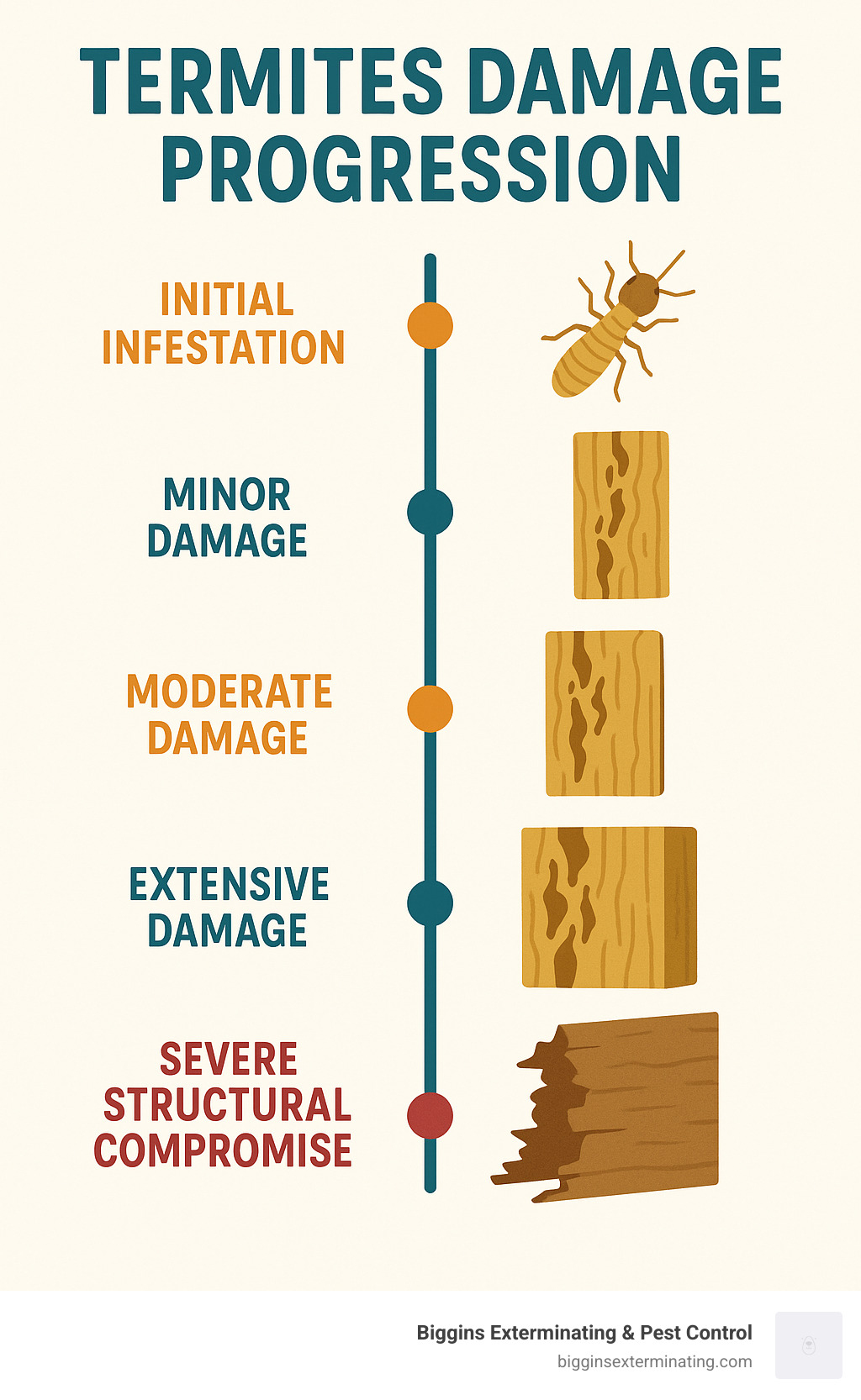
This gradual progression is precisely why knowing how to tell if you have termites early is so crucial. The difference between catching an infestation in year one versus year five could mean thousands of dollars in repair costs. Early detection truly is your best financial protection against these persistent pests.
At Biggins Exterminating, we’ve seen cases where homeowners didn’t realize they had termites until support beams were so damaged they needed immediate structural repairs. Don’t let that happen to your home – schedule an inspection at the first sign of suspicious activity.
Conclusion
Knowing how to tell if you have termites is truly a homeowner’s superpower, especially here in Massachusetts where Eastern subterranean termites silently threaten our homes. Throughout this guide, we’ve walked through the seven telltale signs that could save your home: those discarded wings after a spring swarm, pencil-width mud tubes climbing your foundation, suspicious frass piles, hollow-sounding wood, doors that suddenly stick, faint clicking sounds in your walls, and of course, finding the pale invaders themselves.
These aren’t just interesting facts—they’re your financial safeguard. With termites causing over $5 billion in property damage annually across America, and most homeowner’s insurance policies specifically excluding this damage, early detection becomes your wallet’s best friend.
I’ve seen how devastating unchecked termite damage can be. As a second-generation pest control professional at Biggins Exterminating, I’ve helped countless homeowners across Wilmington, Burlington, Woburn, Andover, Bedford, and surrounding communities identify termite problems before they became catastrophic. There’s nothing quite like the relief on a homeowner’s face when we catch an infestation early, before it turns into a five-figure repair bill.
Our family business has been protecting Massachusetts homes for over four decades, and we take pride in offering reliable termite solutions without locking you into long-term contracts. We stand firmly behind our work with solid warranties because we believe your peace of mind matters as much as termite elimination.
The difference between a minor termite treatment and major structural repairs often comes down to timing. If you’ve spotted any warning signs we’ve discussed—even if you’re not completely sure—it’s worth having a professional take a look. Our experienced technicians bring the knowledge, tools, and treatments needed to protect your most valuable investment from these tiny but determined destroyers.
For comprehensive information about our termite control approach, please visit our termites pest control page. We’re always happy to answer questions and provide guidance specific to your situation.
When it comes to termites, early detection doesn’t just save wood—it saves money, time, and countless sleepless nights wondering what’s happening inside your walls. Your home deserves that protection, and we’re here to help whenever you need us.