The Truth About Carpenter Ant Bites
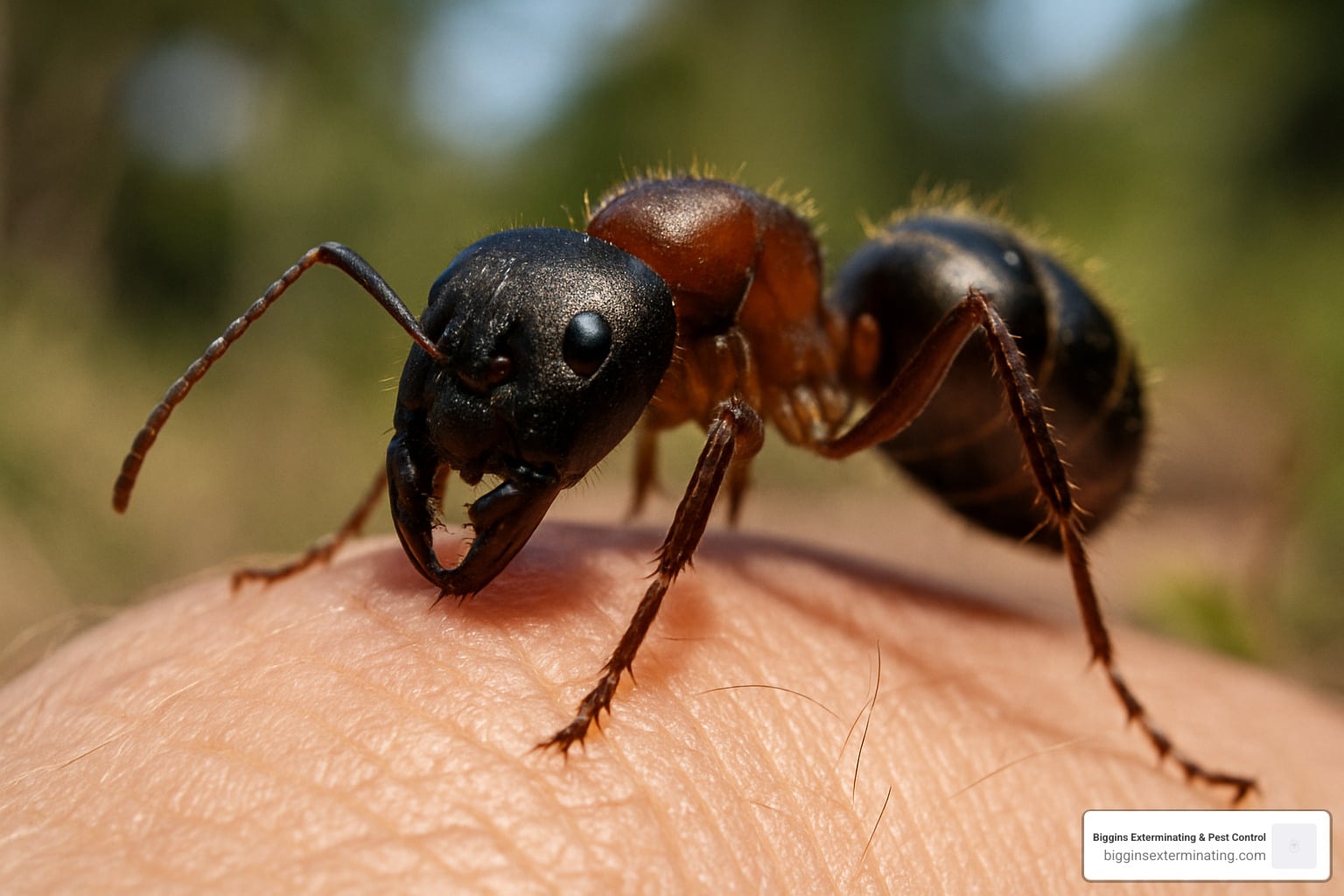
Do carpenter ants bite? Yes, carpenter ants can and do bite humans when they feel threatened. Unlike some other ant species, they don’t typically bite unprovoked, but will defend themselves when handled or when their nest is disturbed.
Quick Facts About Carpenter Ant Bites:
– They inject formic acid when biting, causing a burning sensation
– Bites appear as small red bumps that may be slightly raised
– Pain typically subsides within 24 hours
– Not dangerous to most people (unless allergic)
– No disease transmission concerns
Carpenter ants are more notorious for damaging wood in your home than for their bites. While their bites can be uncomfortable, they’re generally minor compared to the structural damage these pests can cause to your property. According to the University of Minnesota Extension, carpenter ants can cause significant damage to wooden structures over time.
I’m Stephen Biggins, owner of Biggins Exterminating Co., and I’ve been helping Massachusetts homeowners deal with carpenter ant problems for decades, including addressing concerns about whether carpenter ants bite and how to prevent infestations. With over 40 years of experience serving Wilmington and surrounding areas, our family-owned business has seen and resolved countless carpenter ant situations.
Do carpenter ants bite terms simplified:
– Carpenter Ant Pest Control
– carpenter ant infestation in house
– carpenter ant service
Do Carpenter Ants Bite?
Just last week, a worried homeowner in Lexington called us about carpenter ants marching across their kitchen counter. Their first question wasn’t about potential wood damage—it was “do carpenter ants bite?” This is something we hear almost daily at Biggins.
The simple answer is yes, carpenter ants can bite humans, but they’re not looking for trouble. These industrious insects use their powerful mandibles primarily for their construction work—chewing through wood to build their nests. They’re not aggressive biters like some other insects, but they will defend themselves when they feel threatened or when someone disturbs their colony.
When a carpenter ant does bite, it’s not just the pinch you’ll feel. These ants also spray formic acid into the wound, which creates that distinctive burning sensation that follows. Unlike bees that lose their stinger after one attack, carpenter ants keep their mandibles intact, meaning they can bite multiple times if they continue to feel threatened.

What Do Carpenter Ant Bites Look Like?
If you’ve been bitten by a carpenter ant, you’ll typically notice a small, red bump on your skin. These bites can look quite similar to other insect bites, which sometimes makes identification challenging.
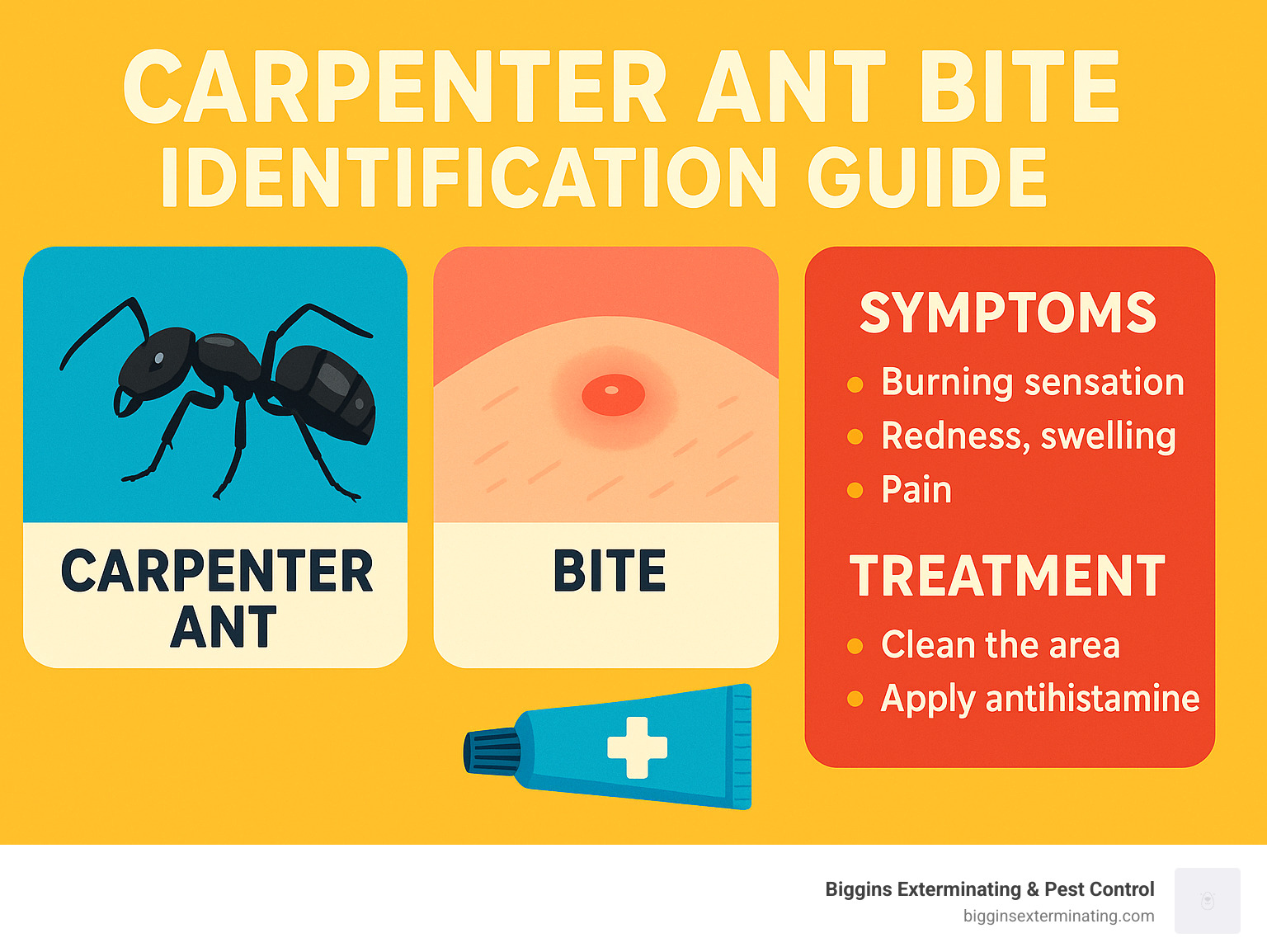
Most of our customers describe carpenter ant bites as small, red, slightly raised bumps accompanied by a burning or stinging sensation right at the bite site. There might be mild swelling around the area, and as the bite begins to heal, you may experience some itching.
One of our customers in Burlington described the feeling perfectly: “It was like a sharp pinch followed by a burning feeling that lasted about an hour.” This matches what we typically hear from folks who’ve had a close encounter with carpenter ant mandibles.
Are Carpenter Ant Bites Dangerous?
Here’s the good news—for most people, carpenter ant bites are just a temporary nuisance rather than a serious health concern. Unlike mosquitoes or ticks, carpenter ant bites don’t transmit diseases to humans.
The formic acid in their bites can certainly cause discomfort, but symptoms usually resolve within 24 hours without any need for medical treatment. Most people find that the pain subsides within an hour or two, followed by mild itching as the bite heals.
That said, as with any insect bite, some individuals may experience allergic reactions, though this is relatively uncommon with carpenter ants. If you notice severe swelling, spreading redness, or difficulty breathing after a bite, don’t wait—seek medical attention immediately. These could be signs of a more serious allergic reaction that needs proper treatment.
While their bites might sting temporarily, the real threat carpenter ants pose is to your home’s wooden structures, not to your health.
Comparing Carpenter Ants to Other Ants

When homeowners spot ants in their house, it’s important to know what you’re dealing with. Not all ants are created equal, especially when it comes to their impact on your home and comfort. Let me walk you through some key differences I’ve noticed during my years of pest control work in Massachusetts.
Fire Ants vs. Carpenter Ants
I remember helping a Wilmington family who had recently relocated from Texas. They were initially panicked about carpenter ants until they realized how different they were from their previous nemesis.
“After dealing with fire ants down south,” they told me with visible relief, “these carpenter ants seem almost polite in comparison!”
They weren’t wrong. Fire ants are the neighborhood bullies of the ant world, while carpenter ants are more like reluctant fighters. Do carpenter ants bite? Yes, but the experience is worlds apart from a fire ant encounter.
Fire ants don’t just bite – they actually sting, injecting venom that creates an intense burning sensation and often leaves behind painful pustules that can last for days. They’re incredibly aggressive, often swarming by the dozens when their nest is disturbed.
Carpenter ants, on the other hand, are much less confrontational. They’ll typically try to escape rather than attack, only biting when they feel cornered or when their colony is directly threatened. Their bite, while uncomfortable, causes milder discomfort that usually fades within hours.
Carpenter Ants vs. Termites
The other common confusion I see almost weekly in our service calls is between carpenter ants and termites. Both can damage wood in your home, but they do so in very different ways – and only one of them might take a bite out of you!
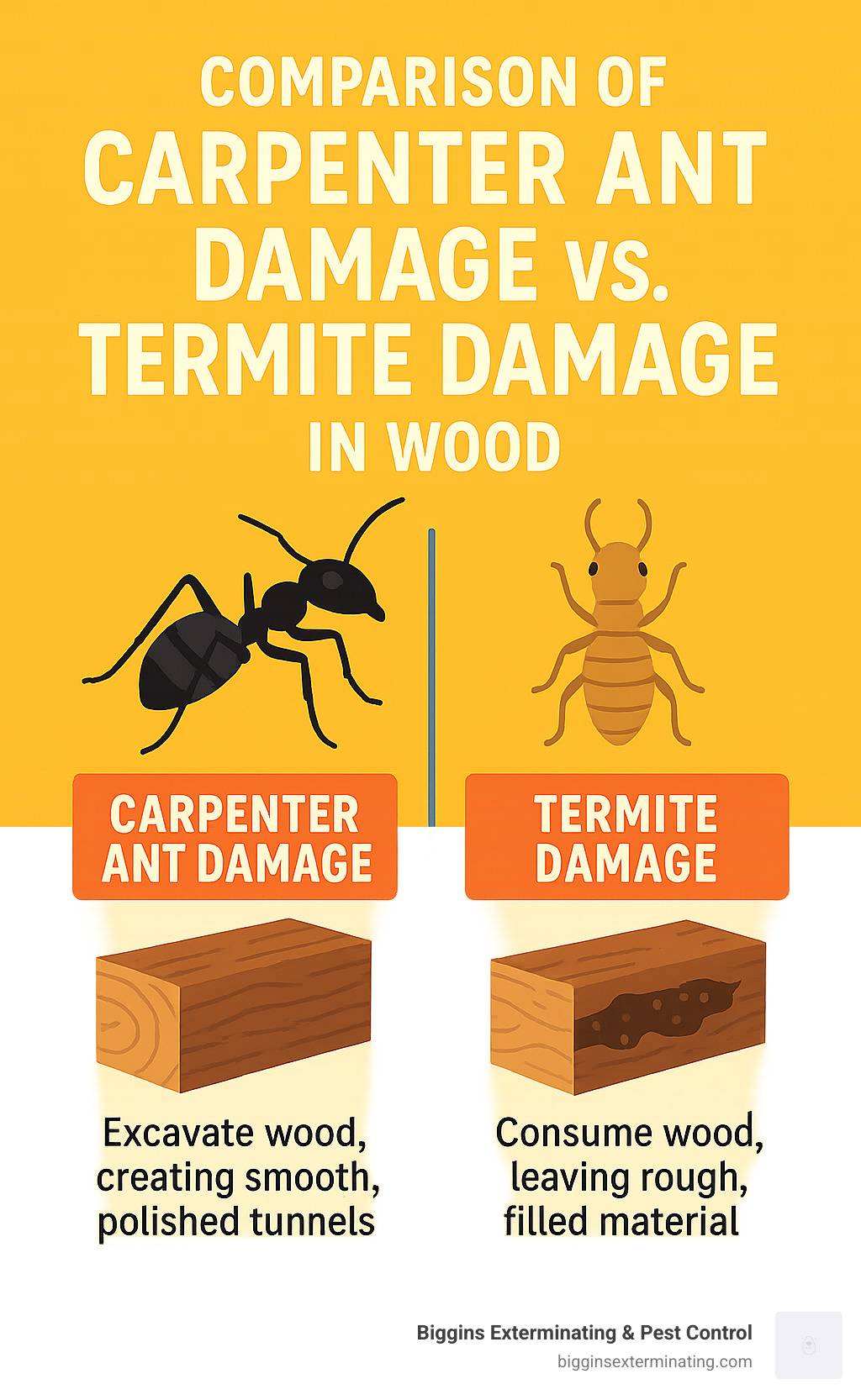
When we responded to a call in Reading last spring, the homeowner was convinced they had termites because of wood damage. But the clean, smooth tunnels and small piles of sawdust-like material (what we call “frass”) told a different story – classic carpenter ant behavior.
Carpenter ants don’t actually eat wood like termites do. Instead, they excavate it to create their nests, leaving behind that distinctive frass. Their tunnels look almost polished, while termite damage appears rough and often contains mud-like material.
As for human interaction, termites won’t bite you at all – they’re too busy eating your house! Carpenter ants, however, can and will bite if they feel threatened during your investigation of their handiwork.
The structural damage from both pests can be serious, but knowing which one you’re dealing with makes all the difference in proper treatment. While you might get a painful reminder if you disturb a carpenter ant nest, the silent work of termites often goes unnoticed until significant damage is done. Either way, professional identification is your best first step toward protecting your home.
How to Treat a Carpenter Ant Bite
Getting bitten by a carpenter ant is no fun, but thankfully, the discomfort is usually short-lived. If you’ve just experienced the sharp pinch and burning sensation of a carpenter ant bite, here’s what you can do to find relief:
First, wash the bite area thoroughly with soap and water. This simple step helps prevent any potential infection and was enough for many of our customers to start feeling better. Apply a cold compress or ice pack wrapped in a thin cloth to reduce swelling and numb the area – this provides almost immediate relief for most people.
“I was surprised how quickly the bite stopped hurting after I just washed it and put some ice on it,” shared one of our North Reading customers. “By the next morning, I could barely see where I’d been bitten.”
If itching develops as the bite heals, an over-the-counter antihistamine can help calm that irritation. For persistent discomfort, a thin layer of hydrocortisone cream can reduce inflammation and speed up healing. While serious reactions to carpenter ant bites are rare, it’s always wise to keep an eye out for signs of an allergic reaction like extensive swelling or difficulty breathing, which would require immediate medical attention.
Home Remedies for Carpenter Ant Bites
Your kitchen likely contains several natural remedies that can help soothe a carpenter ant bite:
Lemon juice works surprisingly well because its acidity helps neutralize the formic acid that carpenter ants inject when they bite. Simply dab a small amount directly on the bite. Similarly, apple cider vinegar can reduce both itching and inflammation – just apply a cotton ball soaked in diluted vinegar to the affected area.
Many of our Wilmington customers swear by a simple baking soda paste. Mix a small amount of baking soda with just enough water to form a paste, then apply it to the bite and let it dry. The alkaline nature of baking soda helps counteract the acidic bite venom.
For soothing relief, nothing beats aloe vera gel. Whether fresh from the plant or from a bottle, its cooling properties provide immediate comfort while promoting healing. And if you have tea tree oil in your medicine cabinet, its natural antiseptic properties can help prevent infection – just remember to dilute it with a carrier oil before applying to avoid skin irritation.
While these remedies can provide relief for typical carpenter ant bites, the best solution is preventing an infestation in the first place. If you’re regularly encountering carpenter ants in your home, it might be time to address the larger issue with professional help.
Preventing Carpenter Ant Infestations
After four decades of crawling through attics and inspecting foundations across Andover, Bedford, and Woburn, we’ve learned a thing or two about what makes carpenter ants tick. At Biggins Exterminating & Pest Control, we’ve found that keeping these wood-destroying pests at bay is far easier (and cheaper!) than dealing with an established colony.
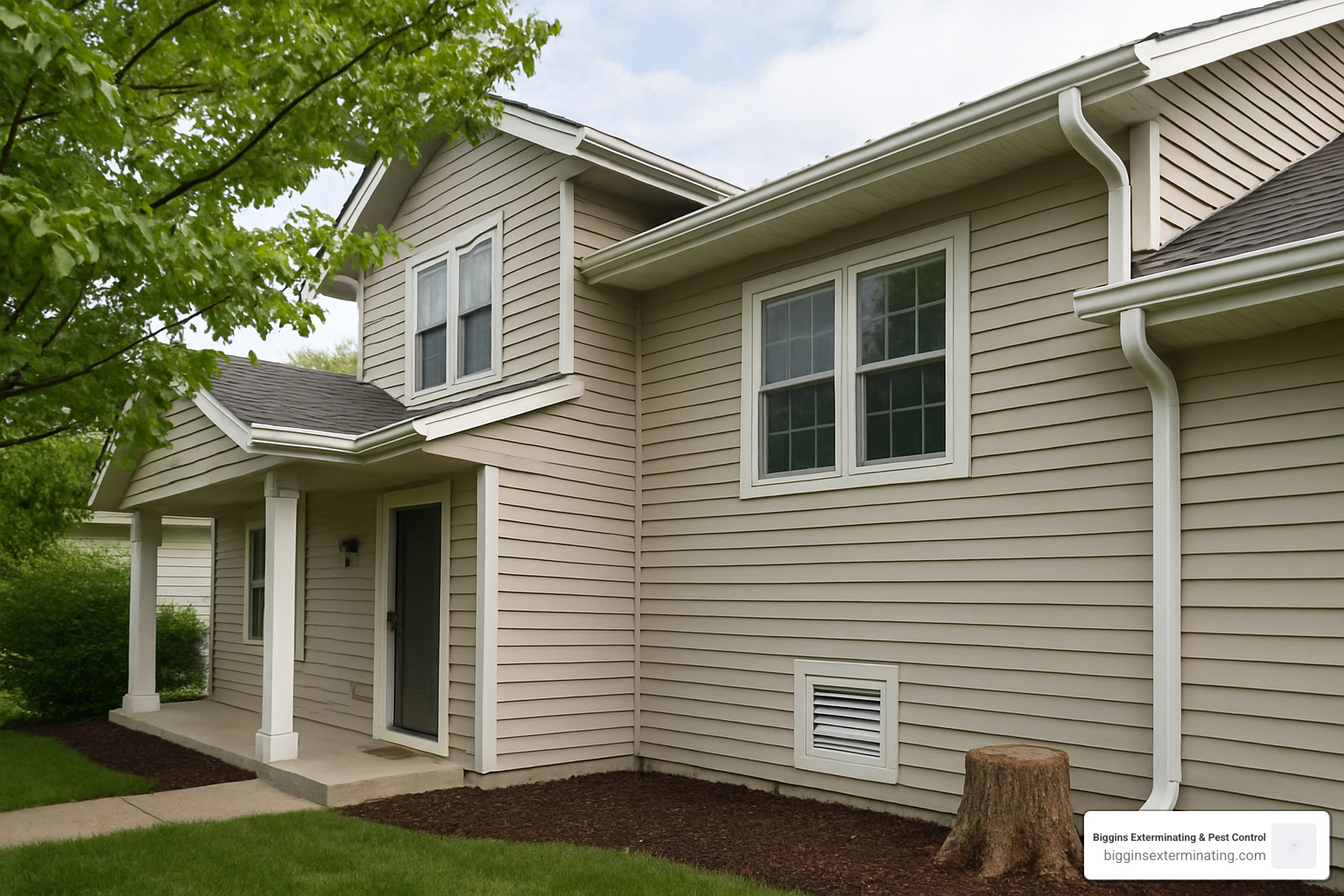
The secret to preventing carpenter ants starts with understanding what attracts them in the first place. These industrious insects aren’t randomly choosing your home—they’re looking for specific conditions that make for ideal nesting sites. Moisture-damaged wood is like a flashing “vacancy” sign to carpenter ants, while dead tree stumps near your foundation serve as stepping stones to your home’s structure. Even something as simple as tree branches touching your roof can create a natural highway directly into your attic. The United States Environmental Protection Agency recommends removing dead tree stumps and keeping branches trimmed away from your home as part of an integrated pest management approach.
“Last year, a Reading homeowner called us after finding carpenter ants in her kitchen,” shares Stephen Biggins. “When we inspected the property, we finded the culprit—a leaky gutter had created the perfect damp environment in her fascia boards, and the ants had moved right in. A simple gutter repair could have prevented thousands in damage.”
Signs of Carpenter Ant Infestation
Spotting a carpenter ant problem early can save you significant headaches and repair costs. Unlike some pests that hide all evidence of their presence, carpenter ants leave behind telltale clues if you know what to look for.
The most distinctive sign is frass—those small piles of what looks like sawdust or wood shavings that appear near windowsills, door frames, or baseboards. This material is the waste product of their excavation, and it’s a clear indicator that carpenter ants are tunneling nearby. Another common sign is hollow-sounding wood when tapped—the ants create smooth, gallery-like chambers that weaken the wood’s structural integrity.
Many Wilmington homeowners have shared stories of hearing faint rustling sounds in their walls at night. This isn’t your imagination—large carpenter ant colonies can actually be heard as they work! And if you spot winged ants indoors, especially in spring or early summer, it’s often a sign that a mature colony is nearby and sending out reproductive members to establish new nests.
“I ignored the small pile of sawdust near my bathroom window for months,” a Billerica customer told us. “By the time I called Biggins, the ants had hollowed out a significant portion of my window frame. What could have been a simple treatment ended up requiring carpentry repairs too.”
Professional Pest Control Solutions
While DIY ant baits from the hardware store might tempt you, carpenter ant colonies are notoriously tricky to eliminate completely without professional help. These clever insects often establish satellite colonies throughout a property, and missing just one can mean the infestation returns within weeks.
At Biggins Exterminating & Pest Control, we take a comprehensive approach to carpenter ant problems. We don’t just spray and pray—we conduct methodical inspections to locate all nests, including the hidden parent colony that might be lurking in a tree stump fifty feet from your house. Our targeted treatments reach deep into the galleries where these ants live, and we always address the underlying moisture issues that attracted them in the first place.
“What really sets us apart,” explains Stephen Biggins, “is our follow-through. We don’t consider the job done until we’re confident the entire colony is eliminated. And unlike some companies, we don’t lock customers into long-term contracts. Our family’s reputation in Tewksbury and surrounding communities is built on doing the job right the first time.”
Prevention is always your best defense against carpenter ants. Keeping wood dry, sealing entry points, maintaining a vegetation-free zone around your foundation, and scheduling periodic inspections can help ensure these wood-destroying pests don’t make themselves at home in your home.
Frequently Asked Questions about Carpenter Ants
Do Carpenter Ants Bite Humans Often?
When I’m out on service calls in Wilmington and surrounding towns, this is one of the first questions homeowners ask me. The simple answer is no – carpenter ants aren’t typically on the hunt for human blood or skin.
Unlike mosquitoes that seem to find you at every summer barbecue, carpenter ants are much more interested in finding wood to nest in and food to carry back to their colony. In my family’s 40+ years helping Massachusetts homeowners, we’ve found that carpenter ant bites are actually pretty rare compared to how common these pests are.
Most bites happen when someone accidentally puts their hand on an ant or disturbs a nest during a home project. One customer in Lexington told me she’d lived with carpenter ants in her garden shed for years without a single bite – it wasn’t until she started renovating that she finally had her first encounter!
How Can I Identify a Carpenter Ant Bite?
If you’re wondering “do carpenter ants bite?” and what it feels like, there are some telltale signs. The most distinctive feature is the burning sensation rather than itching. This happens because carpenter ants inject formic acid when they bite, which creates that characteristic burn.
You’ll typically notice a small red bump that might be slightly raised. Unlike mosquito bites that drive you crazy with itching, or bed bug bites that often appear in breakfast-lunch-dinner patterns (lines or clusters), carpenter ant bites usually stand alone and burn more than itch.
A homeowner in Burlington once described it perfectly: “It felt like someone touched me with the tip of a hot needle – sharp and burning for a minute, then it just faded to a dull ache.”
If you’re uncertain about what got you, snap a photo of the bite. Our technicians can often help identify the culprit during a home inspection, which helps us determine what pests we’re really dealing with.
What Should I Do If I Have a Carpenter Ant Infestation?
Finding carpenter ants in your Bedford, Woburn, or other Massachusetts home doesn’t need to cause panic, but it shouldn’t be ignored either. Here’s what I recommend to all our customers:
First, make note of where you’re seeing ants, especially if you notice those telltale wood shavings (frass) that look like someone spilled pencil sharpener contents. Try not to disturb areas where you suspect nests might be – this reduces your chance of getting bitten and helps us locate the colony more easily during inspection.
Next, give Biggins Exterminating & Pest Control a call. We’ll conduct a thorough inspection to determine the extent of the infestation and create a customized treatment plan. While waiting for your appointment, check for moisture issues like leaky pipes or poor ventilation, as damp wood is carpenter ant paradise.
Even if you’re not concerned about carpenter ant bites, these industrious insects can cause significant structural damage over time. I’ve seen support beams that looked perfectly fine from the outside but were completely hollowed out within. The sooner you address an infestation, the less expensive and extensive the repairs will be.
Conclusion
So, do carpenter ants bite? Yes, they certainly can—but their occasional nips are usually just a minor nuisance compared to the real threat they pose to your home’s structural integrity. While the burning sensation from their formic acid might grab your attention momentarily, it’s the silent damage they’re doing inside your walls that should really concern you.
Throughout my years at Biggins Exterminating & Pest Control, I’ve met countless homeowners across Wilmington who were surprised to learn that the small pile of sawdust-like frass they ignored for months had led to thousands in repair costs. That’s the true danger of carpenter ants—not their defensive bites, but their relentless excavation of your home’s wooden structures.
Our family business has been tackling carpenter ant problems for over four decades now. We’ve seen everything from minor infestations to colonies that had been expanding undetected for years. What I’ve learned is that early intervention makes all the difference, both for your peace of mind and your wallet.
If you’re noticing any signs of carpenter ants around your property—whether it’s actual ants, mysterious wood shavings, or hollow-sounding beams—don’t wait until you experience a bite firsthand. Our experienced team is ready to provide a thorough inspection and develop a targeted treatment plan specifically for your home’s unique situation.
We’re proud to serve families across Andover, Bedford, Billerica, Burlington, Lexington, North Reading, Tewksbury, Wilmington, and Woburn with honest, effective pest control solutions that don’t lock you into unnecessary contracts. Every treatment comes with our satisfaction guarantee because that’s how we’ve built our reputation over generations—by actually solving the problem, not just treating symptoms.
Your home deserves protection from these wood-destroying pests, and you deserve to live without worrying about carpenter ant bites or structural damage. That’s exactly what we’re here to provide.