Carpenter bees control is crucial for homeowners looking to protect their wooden structures from damage. These large, buzzing insects might seem harmless, but they can cause structural damage by boring into wood to create nests. While they are often confused with bumblebees, knowing how to address carpenter bees swiftly can save your home from potential repairs. To quickly manage carpenter bees and minimize damage:
- Identify the presence of carpenter bees by looking for perfectly round holes in wood.
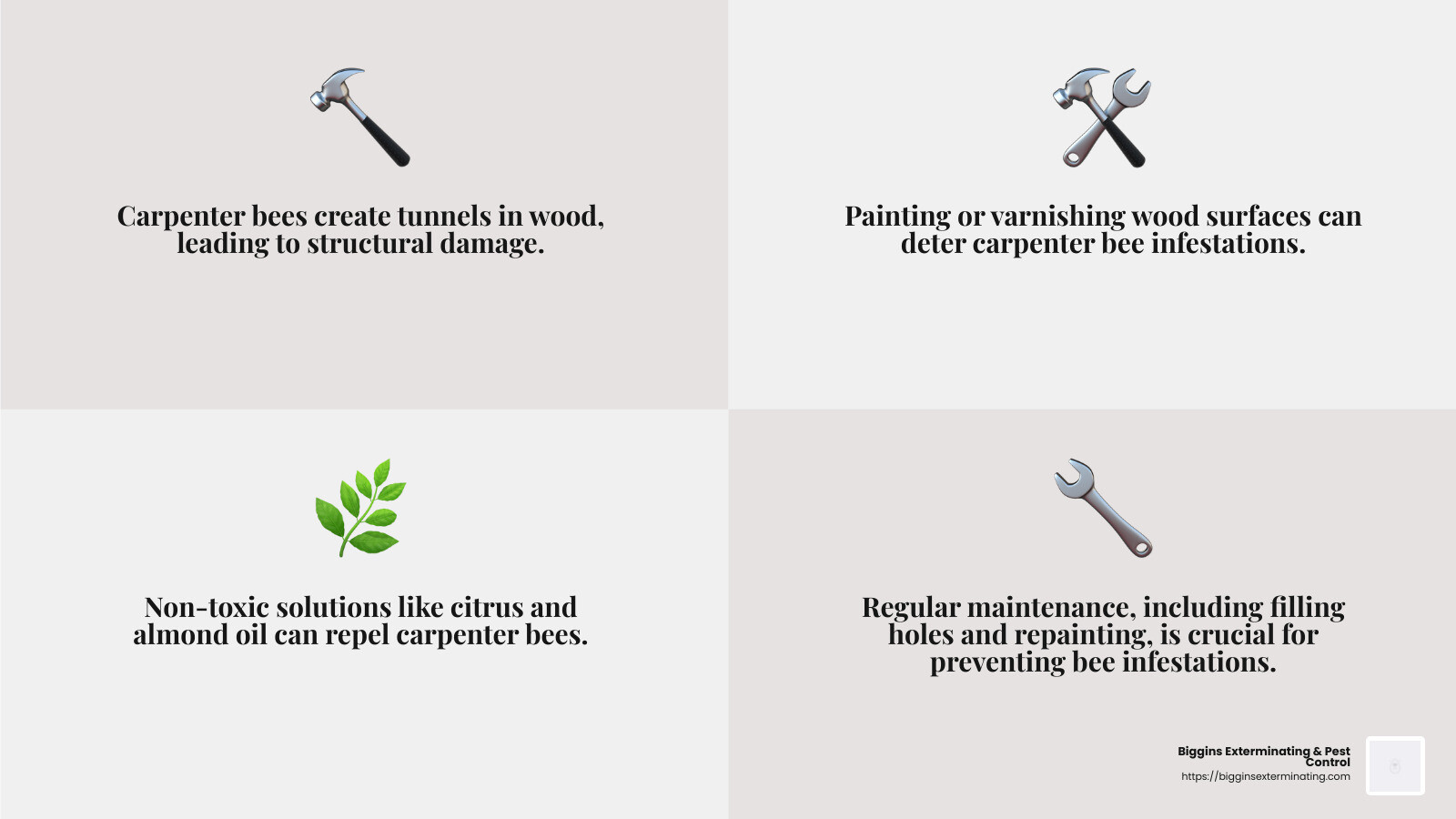
- Prevent infestations by painting or varnishing exposed wood.
- Apply non-toxic repellents like citrus or almond oil to deter bees naturally.
- Use insecticides responsibly if infestation is high.
- Repair damaged wood using steel wool and caulk before repainting.
Stephen Biggins here, proud owner of Biggins Exterminating Co. With over 40 years of experience in carpenter bees control, I aim to provide pest-free environments for Massachusetts homeowners. Whether you’re dealing with an existing problem or want to prevent one, our team is here to help.
Identify Carpenter Bees
Carpenter bees are often mistaken for bumblebees due to their similar size and appearance. However, identifying them correctly is key to effective carpenter bees control.
How to Spot Carpenter Bees
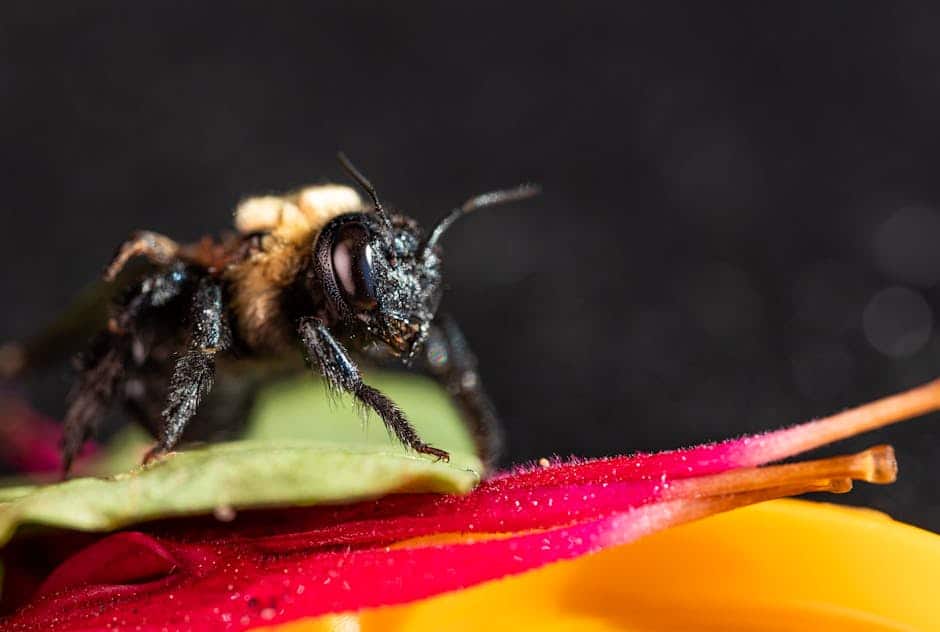
- Size and Appearance: Carpenter bees are generally larger, ranging from 3/4-inch to 1-inch long. They have shiny, hairless abdomens, unlike bumblebees, which have hairy abdomens with a yellow band near the end.
- Nesting Signs: Look for 1/2- to 3/4-inch circular openings in wood surfaces. These are entry points to their nesting galleries.
- Additional Indicators: You might find sawdust or wood shavings near the holes and notice male bees aggressively flying around to defend their territory.
Life Cycle of Carpenter Bees
Understanding the life cycle of carpenter bees can help in planning effective control measures:
- Spring: Female bees bore into wood to lay eggs. They construct tunnels, which can extend several feet.
- Summer: Eggs hatch, and larvae develop into adults by the end of summer.
- Fall and Winter: Adult bees hibernate in the tunnels, emerging again in spring.
Female vs. Male Carpenter Bees
- Female Carpenter Bees: These are the ones that bore into the wood. They can sting, but only when provoked. Their role is crucial in creating and expanding nests.
- Male Carpenter Bees: Males are more visible and aggressive, but they are harmless as they cannot sting. Their primary role is to guard the nesting area.
By correctly identifying carpenter bees and understanding their behavior, homeowners can take informed steps to protect their property. This knowledge is the first step in effective carpenter bees control.
Next, let’s explore how to prevent carpenter bee infestations by using simple and effective methods. Remember, any service prices mentioned in our articles are average costs based on internet data and not actual costs for Biggins Exterminating services. Always consider a wide range of prices, with the high end being at least 3x the average pricing.
Prevent Carpenter Bee Infestations
Preventing carpenter bee infestations is crucial to protect your home from potential damage. Here are some effective strategies to keep these wood-boring bees at bay:
1. Paint or Varnish
Carpenter bees prefer unpainted and weathered wood. Regularly painting or varnishing exterior wood surfaces can deter them from nesting. A thick layer of paint acts as a physical barrier and makes the wood less attractive to these bees.
2. Use Hardwoods
Whenever possible, construct outdoor structures with hardwoods like oak or maple. Carpenter bees prefer softwoods such as pine, cedar, and redwood. Hardwoods are less appealing for nesting and can significantly reduce the chances of infestation.
3. Fill Cracks and Holes
Carpenter bees often exploit existing cracks and crevices in wood surfaces. Regularly inspect and fill any cracks with caulk or wood filler. This not only prevents bees from using these spaces but also helps maintain the integrity of your wood structures.
4. Install Wire Screening
For areas that can’t be painted or are prone to bee activity, consider installing wire screening. Covering potential entry points with fine mesh screens can effectively block bees from accessing wood surfaces.
By implementing these preventive measures, you can create an environment that is less inviting to carpenter bees. This proactive approach is a key aspect of effective carpenter bees control. Next, we’ll discuss carpenter bees control methods using non-toxic repellents.
Carpenter Bees Control Methods
When it comes to carpenter bees control, using non-toxic repellents can be an effective and environmentally friendly approach. These methods not only help in repelling bees but also ensure the safety of beneficial insects and humans.
Non-Toxic Repellents
- Citrus Oil Spray
Carpenter bees dislike the scent of citrus. You can create a simple citrus oil spray by boiling citrus fruit peels (like lemon or orange) in water. Strain the liquid, let it cool, and transfer it to a spray bottle. Apply this solution around bee holes and entry points. Regular application will encourage bees to leave the area without harming them.
- Almond Oil
Almond oil is another natural repellent that can deter carpenter bees. Apply a small amount of almond oil directly into the bee holes. The smell and texture of the oil can drive the bees away. Reapply every few weeks to maintain its effectiveness.
- D-limonene Products
D-limonene, a compound found in citrus peels, is known for its insect-repelling properties. Many commercial pest control products contain D-limonene, and they can be used as a safe alternative to harsh chemicals. When using these products, follow the instructions carefully to ensure maximum effectiveness.
By integrating these non-toxic methods into your carpenter bees control strategy, you can effectively manage bee populations while preserving the ecological balance in your environment.
Next, we’ll explore the use of insecticides for more persistent carpenter bee infestations.
Using Insecticides for Carpenter Bees
Sometimes, non-toxic methods are not enough to manage a carpenter bee infestation. In such cases, insecticides can be an effective solution for carpenter bees control. Here’s a closer look at some common insecticides used to tackle these wood-boring pests.
Insecticide Dust
Insecticide dust is one of the most effective treatments for carpenter bees. It can reach deep into the bee tunnels, killing both adult bees and larvae. A bulb applicator is typically used to apply the dust directly into the nest holes. This method ensures that the insecticide penetrates the galleries where the bees reside.
Important Note: Always wear protective gear, such as gloves and a dust mask, to avoid inhaling the dust, which can cause serious lung irritation.
Pyrethrin
Pyrethrin-based insecticides are derived from chrysanthemum flowers and are commonly used against carpenter bees. They work by attacking the nervous system of the bees, leading to their death. Pyrethrin dust is a popular choice for treating bee holes. However, it is important to apply it when bees are less active, such as in the evening or early morning.
Borate
Borate, or disodium octaborate tetrahydrate, is another effective insecticide for carpenter bees. It acts as both a toxicant and a repellent. Borate dust can be applied to the tunnels and around wooden surfaces to prevent bees from returning. This treatment not only kills existing bees but also deters future infestations.
Pyrethroids
Pyrethroids, such as deltamethrin and cyfluthrin, are synthetic versions of pyrethrin and are widely used in pest control. Products like Bonide Termite and Carpenter Ant Dust contain these compounds and are specifically labeled for carpenter bee control. Pyrethroids are long-lasting and provide extended protection against bees.
Caution: Many of these insecticides are available only to licensed pest control professionals. For effective and safe application, consider hiring a professional service.
By using these insecticides strategically, you can effectively eliminate carpenter bees from your property. In the next section, we’ll discuss how to repair and maintain your structures to prevent future infestations.
Repair and Maintain Structures
Once you’ve addressed the immediate carpenter bees control with insecticides, it’s crucial to repair and maintain your structures to prevent future infestations. Carpenter bees love to return to old nesting sites, so sealing up these entry points is key.
Fill Holes
Start by inspecting your wooden surfaces for any holes left by carpenter bees. These tunnels can be surprisingly deep, so it’s important to fill them properly to prevent bees from reusing them. Use a combination of steel wool and caulking to fill each hole. The steel wool acts as a physical barrier, making it hard for bees to chew through, while caulking seals the entrance completely.
Caulking
When choosing a caulk, opt for a high-quality exterior-grade product that can withstand weather changes. Apply the caulk generously over the steel wool, ensuring a smooth finish that blends with the wood. This not only deters bees but also protects your wood from moisture and decay.
Repaint Surfaces
After filling the holes, repaint or varnish the affected surfaces. Bees are less likely to bore into painted or varnished wood. Choose a thick, durable paint or varnish that offers long-lasting protection. Regularly maintaining this finish will help keep your wood surfaces in top condition and less inviting to carpenter bees.
By taking these steps to repair and maintain your structures, you’ll reduce the likelihood of future carpenter bee infestations. In the next section, we’ll address some frequently asked questions about carpenter bees control.
Frequently Asked Questions about Carpenter Bees Control
Do carpenter bees sting?
Carpenter bees can indeed sting, but it’s important to know the specifics. Male carpenter bees are often seen buzzing aggressively around their nesting sites. They can be intimidating, but they do not have the ability to sting. On the other hand, female carpenter bees do have stingers and can sting, but they are generally non-aggressive and will only do so when provoked or handled. So, while the risk is low, it’s wise to exercise caution when dealing with them.
What kills carpenter bees instantly?
There are several methods to eliminate carpenter bees quickly. Insecticidal sprays and dust are among the most effective. Products containing pyrethrins or pyrethroids can kill carpenter bees on contact. These chemicals target the nervous system of the bees, providing an immediate solution. If you’re dealing with a significant infestation, applying these insecticides directly into the entrance holes can be very effective. Always follow safety guidelines when using chemical treatments to ensure the safety of yourself and others.
How to get rid of carpenter bees in wood?
To remove carpenter bees from wood, start by identifying their nesting holes. Use insecticidal dust to treat these areas. This method is effective for reaching deep into the tunnels where sprays might not penetrate. After treating the nests, it’s crucial to seal the holes with materials like steel wool and caulking to prevent future nesting. Once sealed, repaint or varnish the wood to deter bees from returning. Regular maintenance and inspections can help keep your wood structures bee-free.
By addressing these common concerns, you’re better equipped to handle carpenter bee issues effectively. In the next section, we’ll explore some insecticide options for managing carpenter bees.
Conclusion
At Biggins Exterminating & Pest Control, we understand the frustration that carpenter bees can bring to homeowners. With over 40 years of experience, our family-owned business is dedicated to providing effective and reliable carpenter bees control solutions. We pride ourselves on ensuring customer satisfaction through our safe and environmentally friendly treatments.
Our services come with warranties, offering you peace of mind. We don’t just promise results; we guarantee them. Our team of skilled technicians is committed to resolving your pest issues efficiently, without the need for long-term contracts. We believe in transparent communication, giving you clear pricing and honest advice.
Whether you’re in Wilmington, Andover, Bedford, or any of the surrounding areas, we’re here to help. Our approach is not just about eliminating pests but also about preventing their return. We focus on maintaining the integrity of your home, ensuring long-lasting results.
Choose Biggins Exterminating & Pest Control for a pest-free home and experience the satisfaction of working with a company that values your needs. Contact us today to schedule a consultation and let us take care of your carpenter bee problems for good.